(7% discount is applied at checkout)
Cart is empty
Your go-to destination for cutting-edge server products
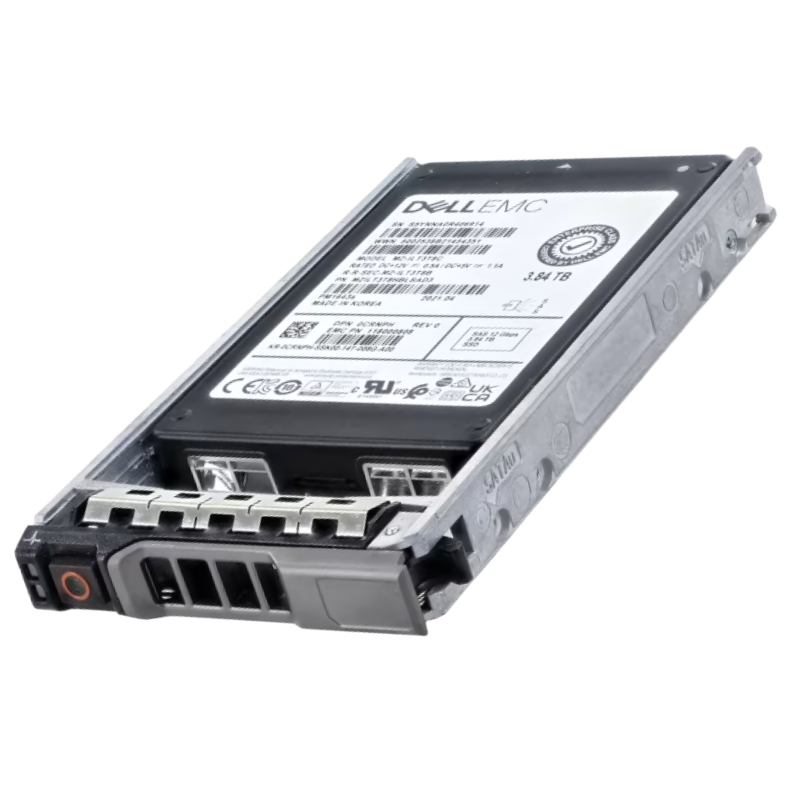


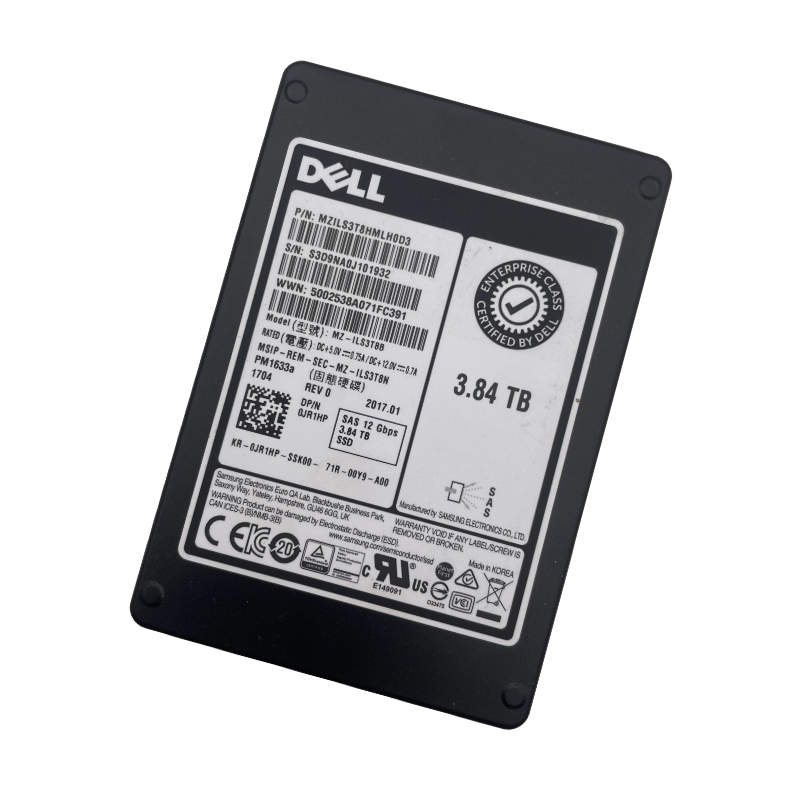
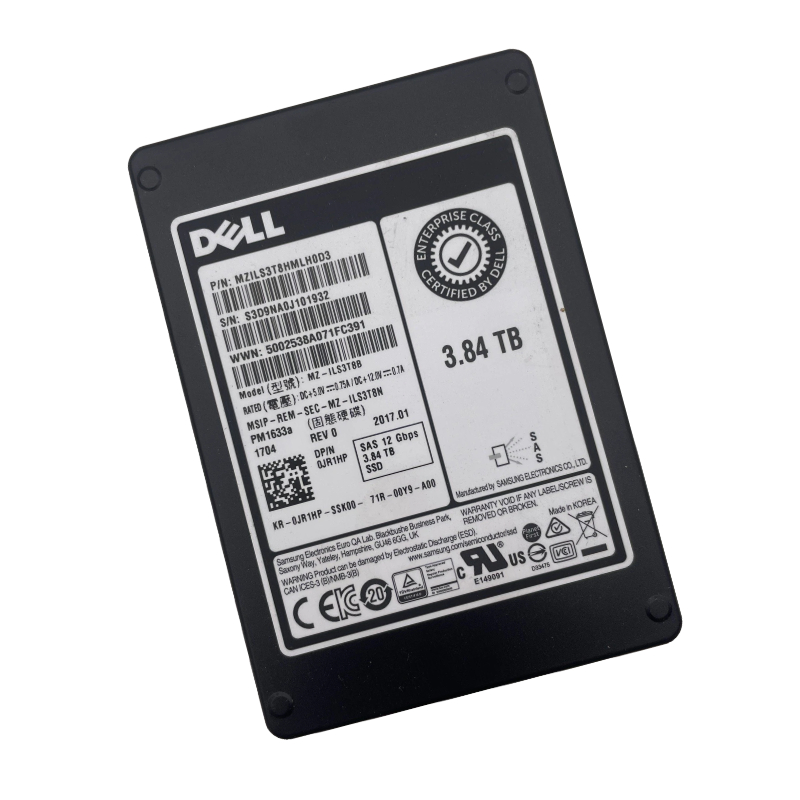
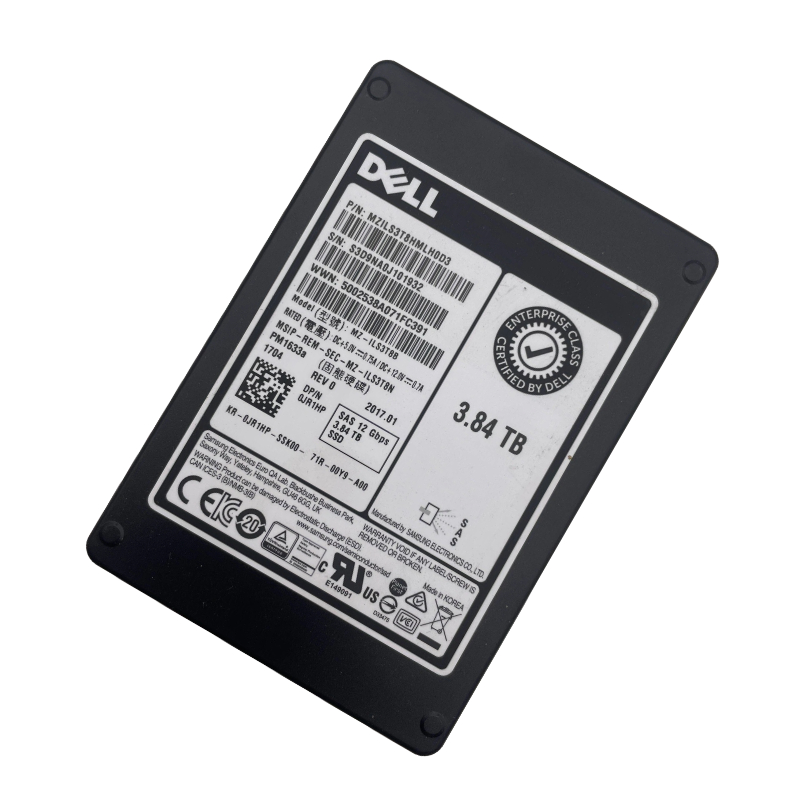
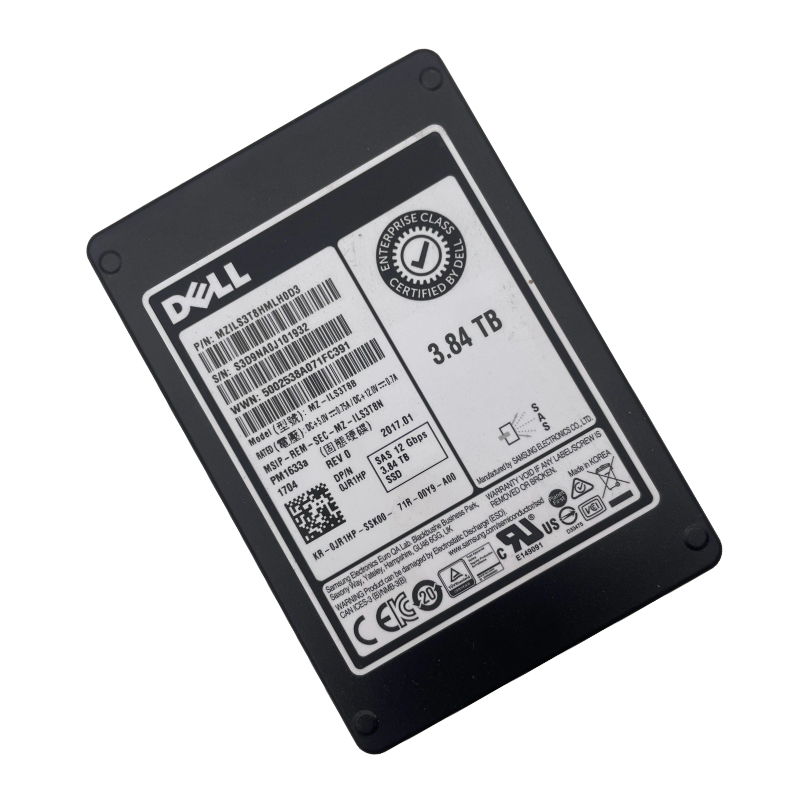
Dell TVTG3 3.84TB SAS SSD 12GBPS Read Intensive. Excellent Refurbished with 1 year replacement warranty
The Dell TVTG3 3.84TB Mixed-Use MLC SAS-12Gbps SFF hot-plug solid state drive represents a cornerstone offering within enterprise server storage, positioned for customers who require a balance of sustained write endurance, consistent low latency, and predictable performance in mixed read/write workloads. The category groups drives engineered for modern data center demands: database transactions, virtualization farms, mixed application servers, and latency-sensitive business services running on Dell PowerEdge platforms. This product line emphasizes reliability, compact SFF form factor compatibility, enterprise-class SAS connectivity at 12Gbps, and the benefits of multi-level cell (MLC) NAND tuned for mixed-use endurance characteristics. The category page distills technical features, real-world benefits, deployment scenarios, and operational best practices to help IT teams choose the right storage component for mid- to large-scale enterprise environments.
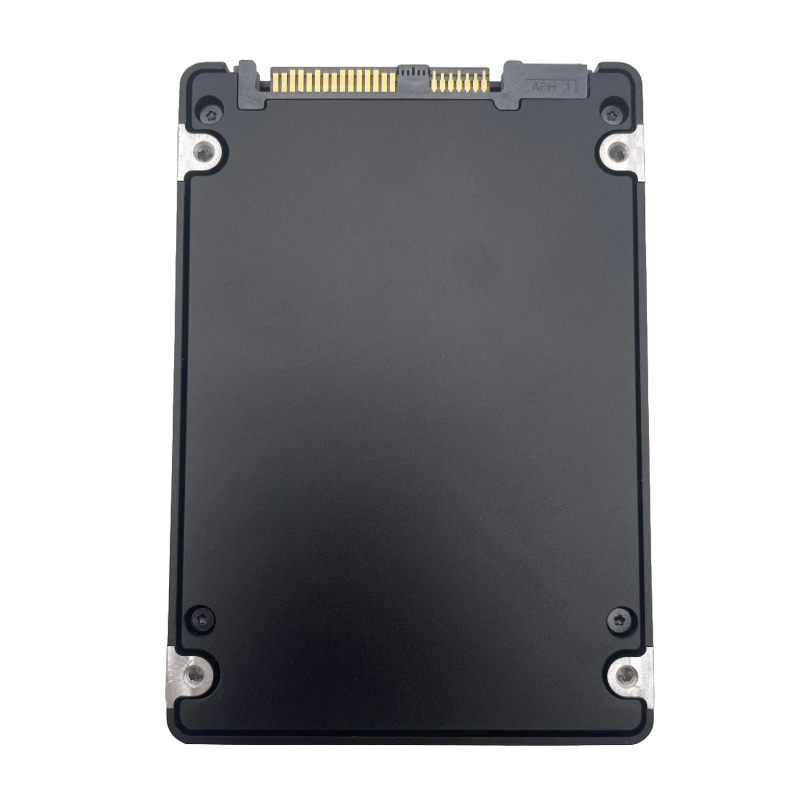
The physical design of the TVTG3 is optimized for rack-dense, high-availability server nodes. The small form factor (SFF) footprint allows the drive to be populated in 2.5-inch bays typical of modern PowerEdge chassis, enabling greater drive counts per chassis and simplifying upgrade paths from legacy spinning disks. The hot-plug capability eliminates downtime associated with service events by allowing drives to be replaced while systems remain operational, a critical requirement in redundant, clustered, or always-on deployments. The mechanical profile and connector alignment match Dell’s drive carriers and sleds, ensuring secure fit, efficient airflow, and compatibility with backplane power and SAS connections commonly delivered in Dell PowerEdge servers.
SAS-12Gbps remains the interface of choice for enterprise-class SSDs when predictable performance, dual-port redundancy, and advanced management features are required. The TVTG3’s SAS interface provides sustained throughput, hardware-level error reporting, and multipath capabilities advantageous in SAN or direct-attached storage (DAS) topologies. In multi-controller environments, dual-port SAS helps maintain uninterrupted I/O paths during controller failover, improving availability for mission-critical services. For systems that demand consistent latency at scale—virtual desktop infrastructure, database clusters, and transaction processing systems—SAS-12Gbps delivers an enterprise-grade balance between legacy compatibility and modern bandwidth needs.
Multi-Level Cell (MLC) NAND in a mixed-use configuration is engineered to handle a workload profile where read and write operations are both significant, such as databases, mail servers, and mixed virtualization host operations. Mixed-use drives are typically configured with firmware and over-provisioning strategies that improve write amplification and endurance compared with read-centric parts, while preserving higher capacity per die than single-level cell options. For infrastructure architects, this means a predictable combination of longevity and cost-efficiency: you get a higher usable capacity per drive without sacrificing the write endurance necessary for sustained transactional activity. The 3.84TB capacity in this class is well-suited for data sets that require sizable fast-tier storage while preserving drive population density across server arrays.
Drives in this category are tuned to deliver high sustained IOPS for both random reads and writes, while keeping latency within narrow bounds to maintain application responsiveness. In mixed-use scenarios, system-level factors such as queue depth, controller capability, and host multipathing will influence the realized performance. The enterprise SAS interface allows controllers to exploit parallelism across NAND channels and the drive’s internal queue to maximize IOPS at moderate to high queue depths. The predictable low-latency behavior is what differentiates enterprise SAS SSDs from consumer SATA options when used in server-class workloads.
Marketing peak throughput numbers can be compelling, but for storage architects the steady-state, long-run performance under continuous mixed workloads is the critical metric. This product category emphasizes drives that maintain a higher percentage of peak performance during sustained operation thanks to thermal controls, efficient garbage collection, and enterprise-grade power-loss protection. Systems that serve consistent mixed traffic—transactional databases, middleware, or mixed virtualized workloads—benefit from drives that minimize performance regressions when subjected to ongoing write pressure.
Compatibility with Dell PowerEdge platforms extends beyond physical fit. Drive carriers and sleds must provide proper retention, shock protection, EMI shielding, and secure connections to the backplane to support high-availability computing. Controller firmware and RAID drivers need to recognize enterprise SAS SSD attributes to manage SMART metrics, predictive failure analytics, and secure erase operations. The category emphasizes drives validated for PowerEdge systems, easing procurement and reducing integration risk when adding or upgrading drives in server fleets. Administrators should verify their specific PowerEdge model and controller firmware versions for full support of advanced drive features.
In virtualized environments where multiple virtual machines contend for I/O, mixed-use MLC SSDs reduce the latency spikes that degrade user experience. These drives excel when used as primary storage tiers for virtual machine images, boot volumes, and transient transactional workloads. The density of 2.5-inch SFF drives lets administrators increase the number of local SSDs per host, reducing the need for network-attached tiers for latency-sensitive operations and improving consolidation ratios on PowerEdge servers.
Choosing between mixed-use MLC SAS drives and read-intensive TLC or NVMe alternatives depends on workload patterns, budget, and system architecture. Mixed-use MLC provides a middle ground: greater endurance than read-optimized parts and lower per-GB cost than some high-endurance SLC variants. NVMe drives offer lower protocol overhead and higher parallelism but require NVMe-capable controllers, different backplane support, and often higher cost per drive. For environments standardized on SAS fabrics and PowerEdge controllers with SAS backplanes, the mixed-use SAS SSD is frequently the most pragmatic choice for balanced enterprise workloads.


 Contact Us
 Information
 Catalog
 Solid State Drives (SSD)
 Network Switches
 Hard Disk Drives
 HBA & Controllers
 PC & Servers
 PC & Server Memory
 CPU & Processors
 Network Routers
 Power Supplies
 Tape Drives & Libraries
 Network Devices
 Computer & Network Cables