(7% discount is applied at checkout)
Cart is empty
Your go-to destination for cutting-edge server products
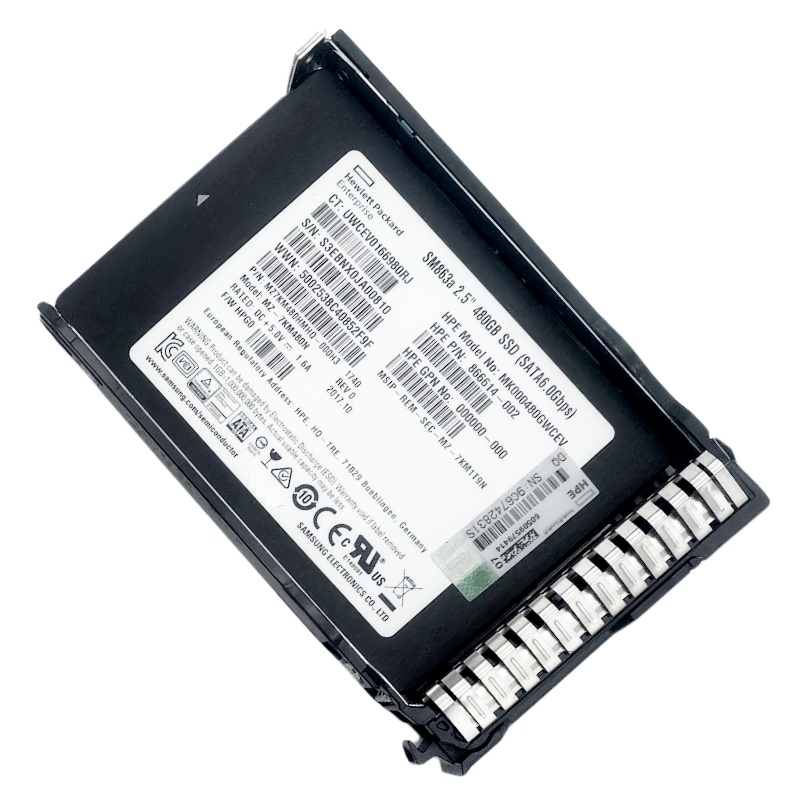


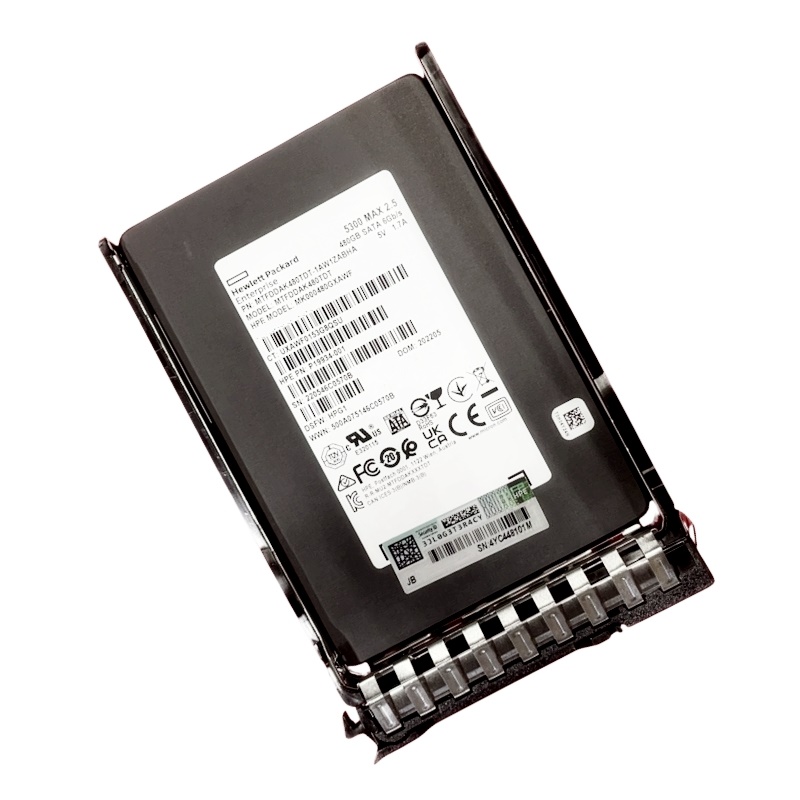
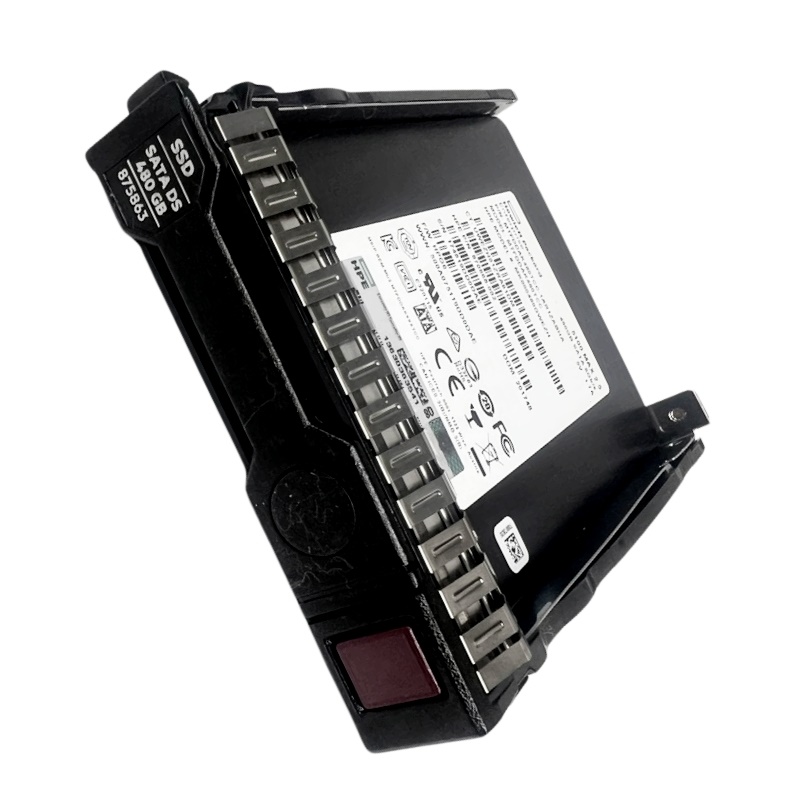
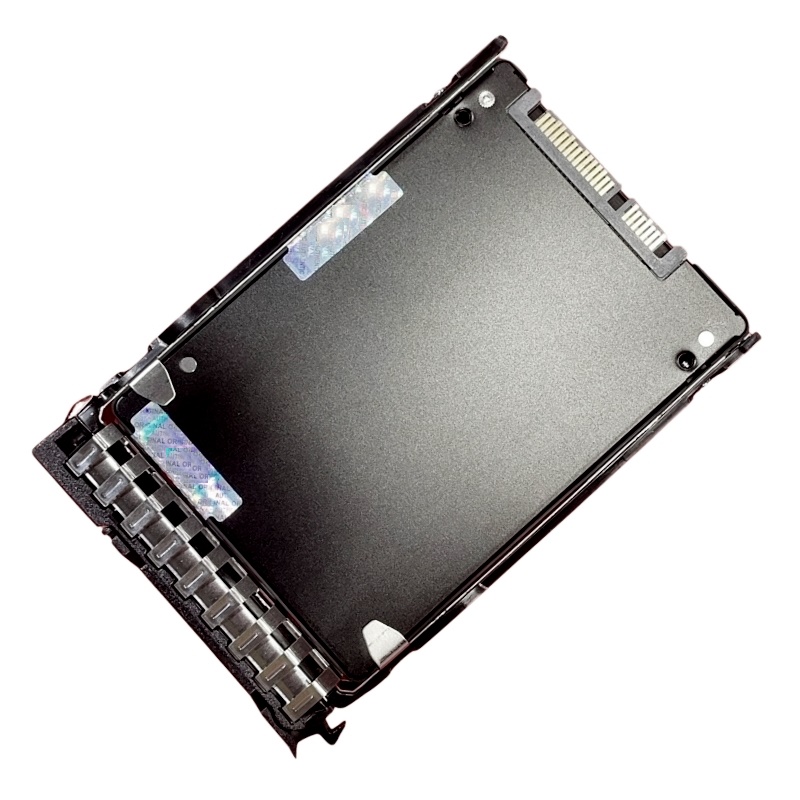
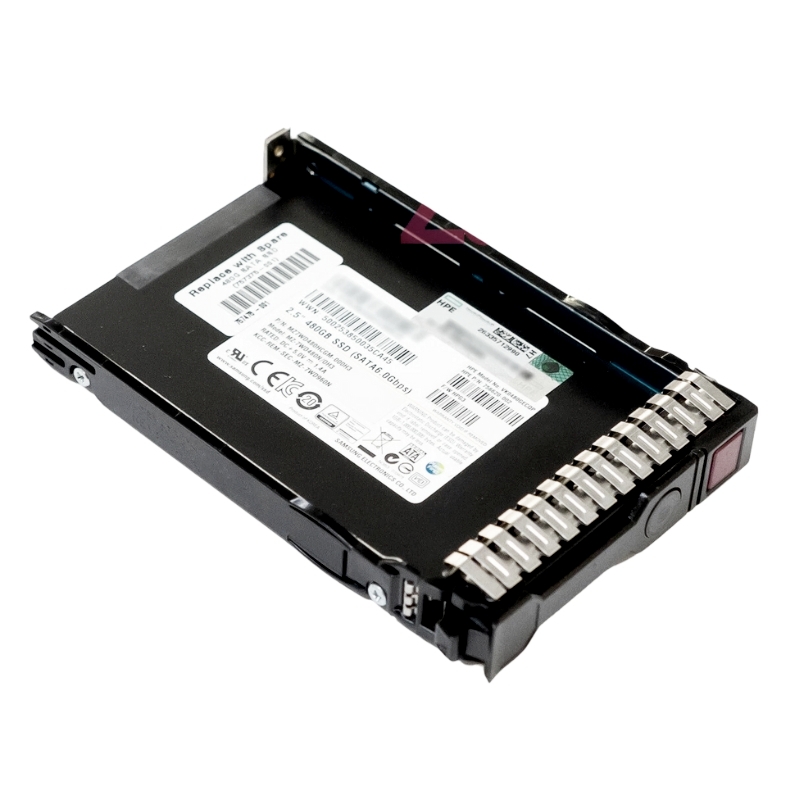
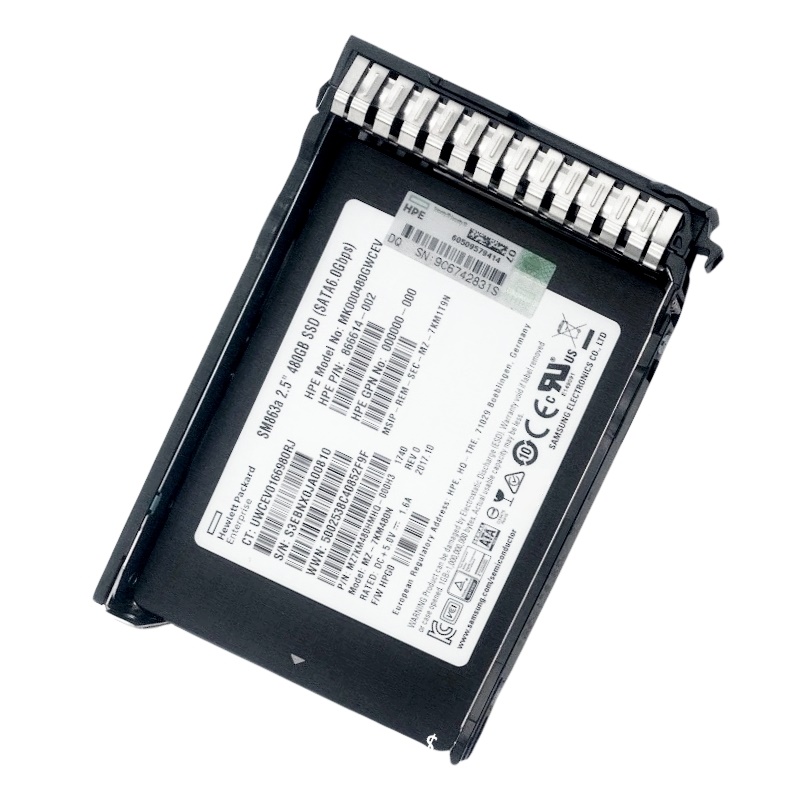
HPE 817077-001 480GB SATA-6GBPS Read Intensive-3 LFF 3.5inch SSD. Factory-Sealed New in Original Box (FSB) with 3 Year Warranty
Choosing a 3.5-inch SSD like the 805374-001 means gaining compatibility with a wide array of server bay designs without sacrificing the benefits of flash storage. Whereas 2.5-inch SSDs are common in modern systems, the 3.5-inch market remains relevant for organizations with existing infrastructure optimized for larger drive bays. The 3.5" SSD category reduces migration costs by allowing administrators to upgrade storage media without redesigning trays, shipping adapter kits, or reconfiguring sled mounting points. This continuity also simplifies maintenance procedures and spare-part inventories for IT teams operating multiple generations of HPE hardware.
The SATA 6Gbps interface delivers a well-understood and widely-supported connectivity option that is especially useful for mixed environments where NVMe support may not be available on older controllers. With SATA 6Gbps, the 805374-001 HPE 480GB drives can achieve sustained sequential throughput that significantly exceeds hard disk drives while offering vastly lower latency under random I/O. For operations prioritizing read-heavy workloads, caching layers, or OS and application storage, the SATA 6Gbps interface remains an effective and economical option.
In data centers, the 805374-001 HPE 480GB SATA SSD can be deployed as a key component of tiered storage architectures. For example, metadata stores, log ingestion systems, and front-end database caches benefit from the rapid access speed and endurance profiles of these SSDs. Administrators often place these drives in RAID configurations that prioritize both performance and resilience. The enterprise-tuned firmware and HPE-specific compatibility increase confidence when integrating into ProLiant servers, Apollo systems, or Gen8 through Gen10 family hardware where OEM compatibility is an asset rather than a guesswork exercise.
Synthetic benchmarks often present peak IOPS and sequential throughput numbers that can be useful for comparison, but real-world application performance depends on workload characteristics, controller behavior, and system tuning. For small-block random reads, the 805374-001 demonstrates the most significant advantage over HDD technologies with markedly lower latency. For sequential operations, the SATA interface can saturate at moderate levels compared to NVMe alternatives, yet it still substantially reduces transfer times for backups, restores, and bulk file movement. When planning infrastructure upgrades, administrators should map application I/O patterns and choose mixing strategies that leverage the 480GB SSD for the hottest data paths.
Endurance planning is essential whenever SSDs are used in write-intensive environments. The 480GB capacity provides a reasonable trade-off for workloads that require moderate write throughput without the cost of high-capacity enterprise NVMe drives. For logging systems or data ingestion pipelines where write amplification can occur, administrators should implement write-friendly practices such as appropriate over-provisioning, aligning filesystem settings with storage characteristics, and mixing SSDs with higher endurance media where necessary. Monitoring tools that report drive wear percentages and remaining life are invaluable for predicting replacements before failures impact operations.
Power-loss protection is a differentiating feature for many enterprise SSDs, and it addresses the need to commit inflight data to nonvolatile memory to prevent corruption during unexpected power events. Drives in the 805374-001 category often include capacitive or firmware-based mechanisms to flush volatile caches and preserve metadata integrity. This feature is particularly important in databases, transaction processing systems, and any application where sudden power interruptions can cause inconsistencies. System-level power protection and UPS integration further reduce the risk of data loss, complementing the drive-level protections built into HPE OEM units.
Compatibility is a central theme for customers evaluating the 805374-001 HPE 480GB SATA SSD. The HPE OEM SKU designation signals that these drives are intended to work seamlessly with HPE chassis, backplanes, and management controllers. System administrators should confirm microcode, firmware, and carrier tray compatibility when replacing existing drives. In most HPE ProLiant configurations, the drives can be installed in hot-swap bays, allowing for non-disruptive replacements and upgrades under the correct maintenance procedures. When used in non-HPE systems, the drives may still function as standard SATA devices, but the vendor-specific telemetry and firmware integrations could be limited.
Hot-swap capability reduces downtime during routine maintenance, and the drive's 3.5" form factor simplifies physical handling in racks where larger bays are the norm. Administrators should follow manufacturer guidance for insertion and removal, respect drive insertion direction, and ensure that drive carriers are correctly latched to avoid connectivity issues or backplane wear. Proper ESD precautions and handling procedures will further protect the drives during service operations.
Before deploying any OEM SSD, reviewing the compatibility matrix for specific server models and RAID controllers is prudent. HPE maintains validated lists for which drive SKUs are supported in which chassis and firmware versions. While the 805374-001 is commonly used across multiple ProLiant generations, administrators planning large-scale rollouts should consult HPE documentation for validated pairings and for any required firmware updates to avoid unexpected incompatibilities. RAID controllers also influence behavior; legacy controllers may not exploit all SSD features, whereas modern controllers provide advanced caching and tiering capabilities that accentuate SSD benefits.


 Contact Us
 Information
 Catalog
 Solid State Drives (SSD)
 Network Switches
 Hard Disk Drives
 HBA & Controllers
 PC & Servers
 PC & Server Memory
 CPU & Processors
 Network Routers
 Power Supplies
 Tape Drives & Libraries
 Network Devices
 Computer & Network Cables