(7% discount is applied at checkout)
Cart is empty
Your go-to destination for cutting-edge server products
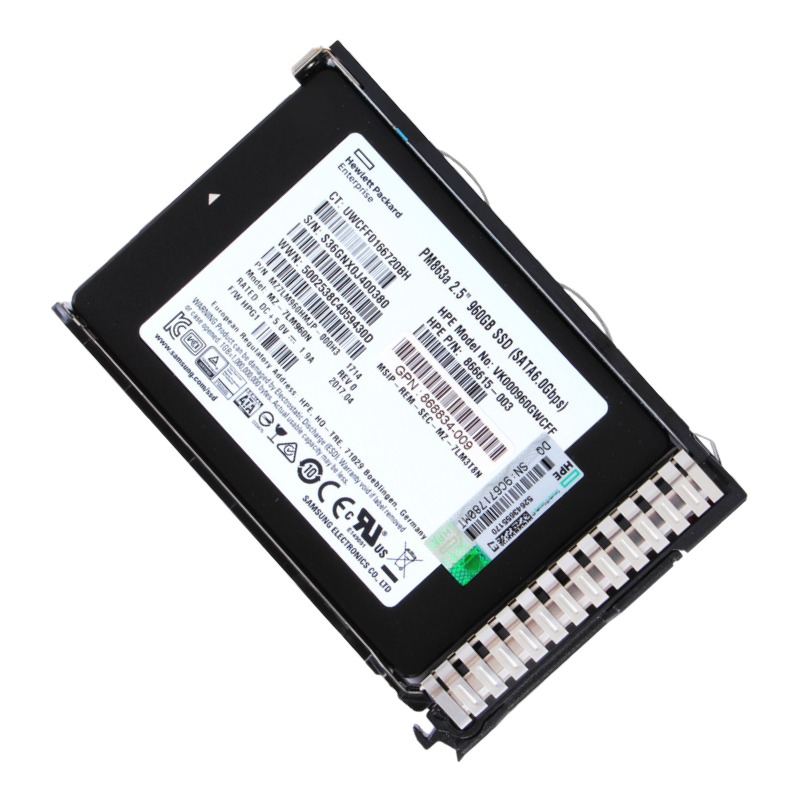


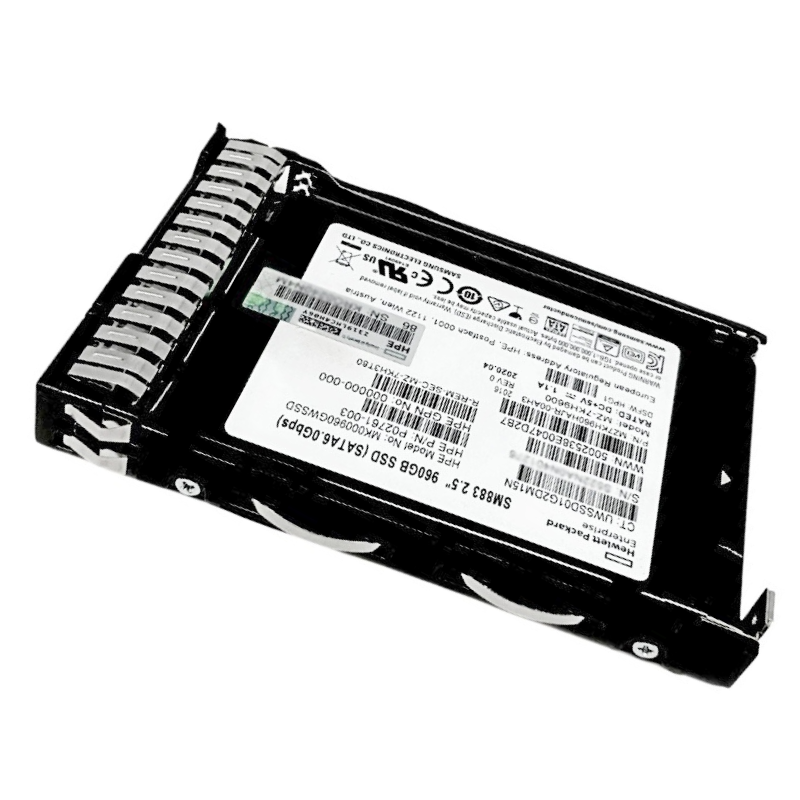
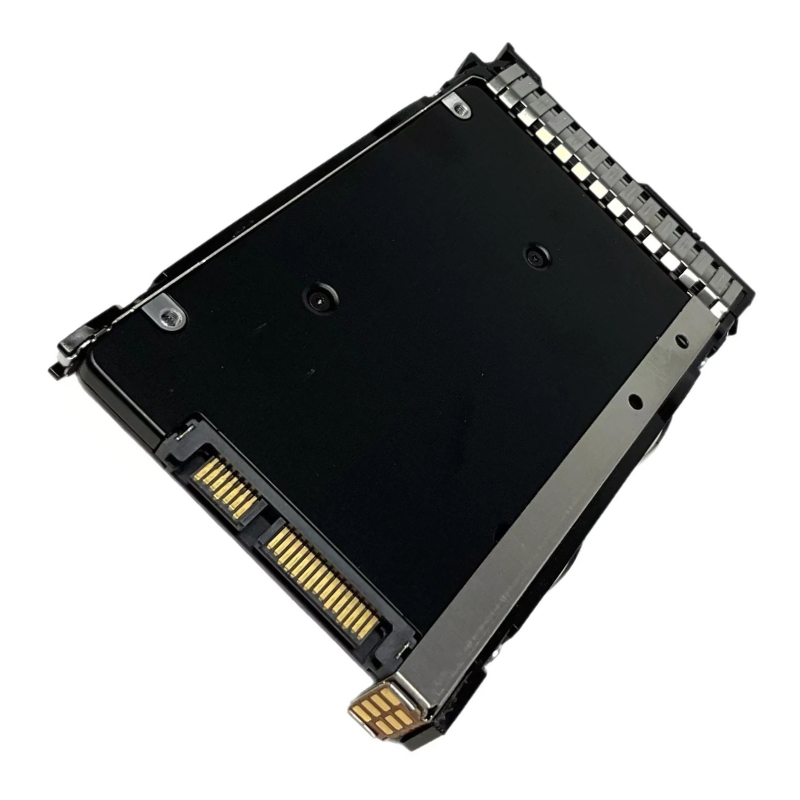
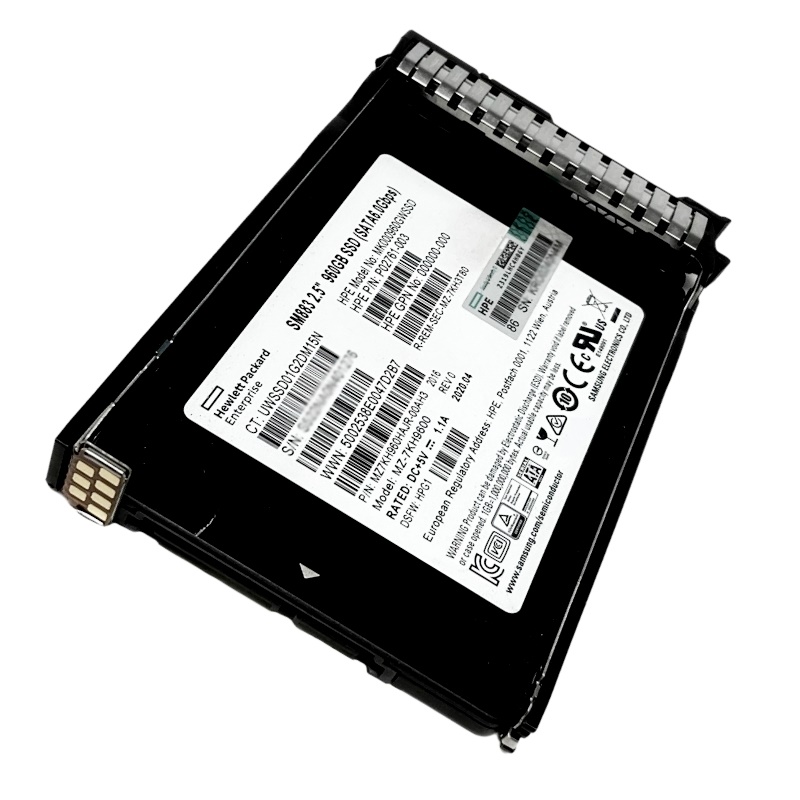
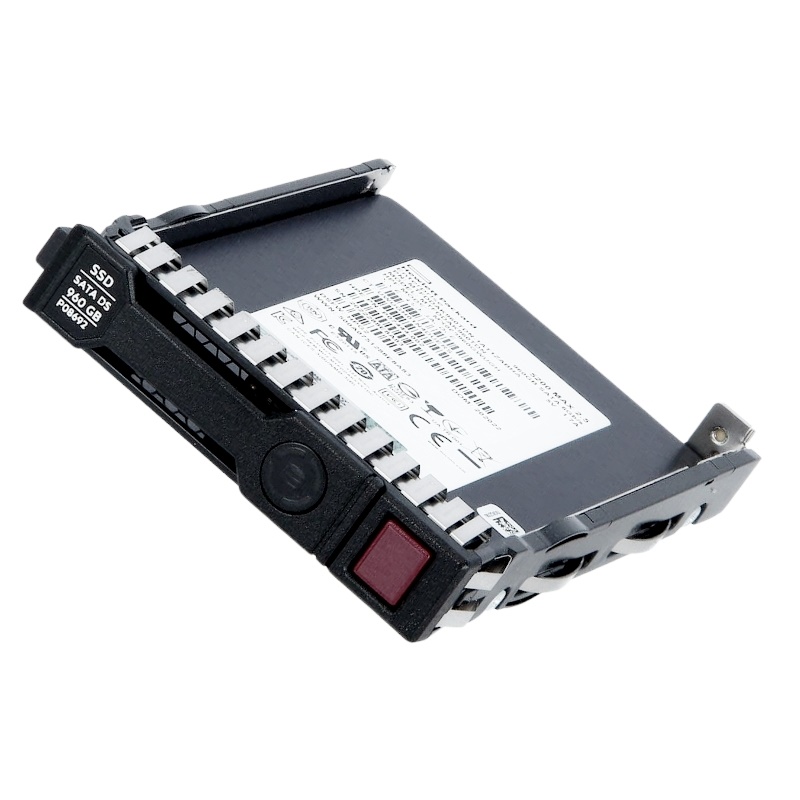
HPE 838403-004 960GB SATA 6GBPS Read Intensive SSD. Excellent Refurbished with 1-Year Replacement Warranty
The HPE 838403-004 is a high-efficiency solid-state drive designed to support read-intensive applications and data-heavy environments. With a 960GB storage capacity and SATA 6Gbps interface, it delivers fast and reliable access to critical data.
This 2.5-inch small form factor SSD is ideal for businesses needing high-speed, low-latency storage. Its read-intensive endurance makes it suitable for applications like boot drives, online analytics, virtual desktop infrastructure (VDI), and large-scale search engines.
With a solid-state architecture, this HPE SSD ensures enhanced data integrity, reduced system failures, and consistent performance for mission-critical tasks. Perfect for cloud systems, content delivery networks, and scalable storage infrastructure.
The 838403‑004 HPE 960GB SATA 6Gbps Read‑Intensive SSD belongs to a high‑performance class of enterprise solid‑state drives optimized for read‑heavy workloads. Within this category, you’ll find drives engineered for maximum read throughput, minimal latency, and stable operation under demanding database, caching, virtualization, analytics, and content delivery tasks. These drives are distinguished from write‑intensive or mixed‑use SSDs by their tailored endurance, firmware optimizations, and workload profiles.
Drives in this subcategory emphasize longevity under high read loads with moderate write usage. Key attributes and use cases include the following:
This category often spans multiple capacity points. The “960GB” variant is a mid‑range capacity in the read‑intensive class. Other typical capacity steps might include 240GB, 480GB, 1.92TB, or higher, depending on vendor lineups. Users select based on required storage plus headroom for endurance.
Within the 6Gbps SATA read‑intensive class, you’ll generally encounter:
“Read‑intensive” is a defined endurance class: it’s lower in write endurance than “mixed‑use” and “write‑intensive” SSDs, but optimized for applications where writes are modest. In markets, you’ll see these distinguished alongside mixed or write‑heavy classes, enabling buyers to choose based on workload profile.
Many deployments use the 838403‑004 as a system/boot drive within servers or virtualized hosts. Its fast read response speeds help accelerate system boot times, application loading, and OS-level operations.
Such SSDs shine as caching layers or metadata accelerators in storage clusters, file systems, and distributed storage architectures, as they relieve pressure on backend disks for repeated read operations.
In content delivery networks (CDNs), search engines, or web indexing servers, the 838403‑004 supports frequent lookups and serves high‑traffic read patterns with reduced latency and more consistent performance.
This 960GB SSD is purpose‑aligned for read workloads. In contrast:
In read‑heavy environments, this drive maintains consistent performance across its lifecycle, since the wear burden is minimal relative to write‑optimized designs. The firmware ensures stable speed and predictable behaviour as the drive approaches its rated endurance thresholds.
Given that this is an HPE OEM part, it is commonly deployed in HPE ProLiant servers, storage enclosures, and certified arrays. Ensuring the proper firmware, compatibility checks, and drive sleds are in use is critical for stability.
When used in RAID configurations (e.g., RAID 1, RAID 5, RAID 10), ensure the controller supports SSD trim or similar optimizations. Because the drive is optimized for reads, avoid RAID setups with heavy write parity or rebuild churns unless write load is acceptable.
Keep ambient operating temperatures within manufacturer boundaries, as excessive heat can degrade SSD longevity. Tie into server power‑loss protection schemes (if available) to limit data corruption during sudden outages.
Match capacity with data size plus headroom. Ensure interface compatibility (SATA 3 / 6Gbps). Confirm firmware and device health support with your system. Assess thermal environment and cooling in deployment. Plan for monitoring and proactive replacement before end of life. Consider cost per usable read capacity vs alternatives.


 Contact Us
 Information
 Catalog
 Solid State Drives (SSD)
 Network Switches
 Hard Disk Drives
 HBA & Controllers
 PC & Servers
 PC & Server Memory
 CPU & Processors
 Network Routers
 Power Supplies
 Tape Drives & Libraries
 Network Devices
 Computer & Network Cables