(7% discount is applied at checkout)
Cart is empty
Your go-to destination for cutting-edge server products
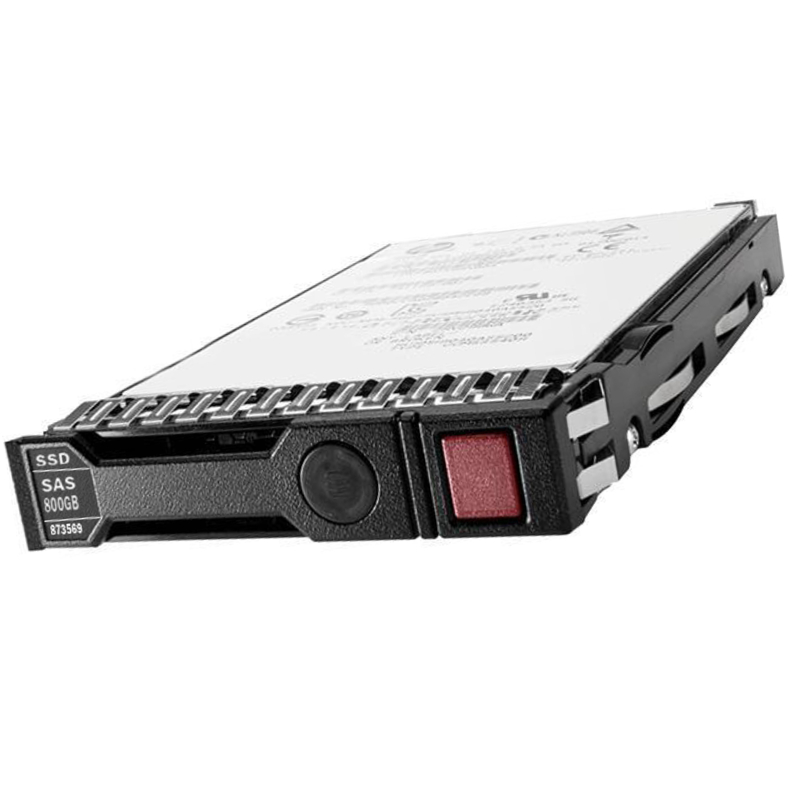


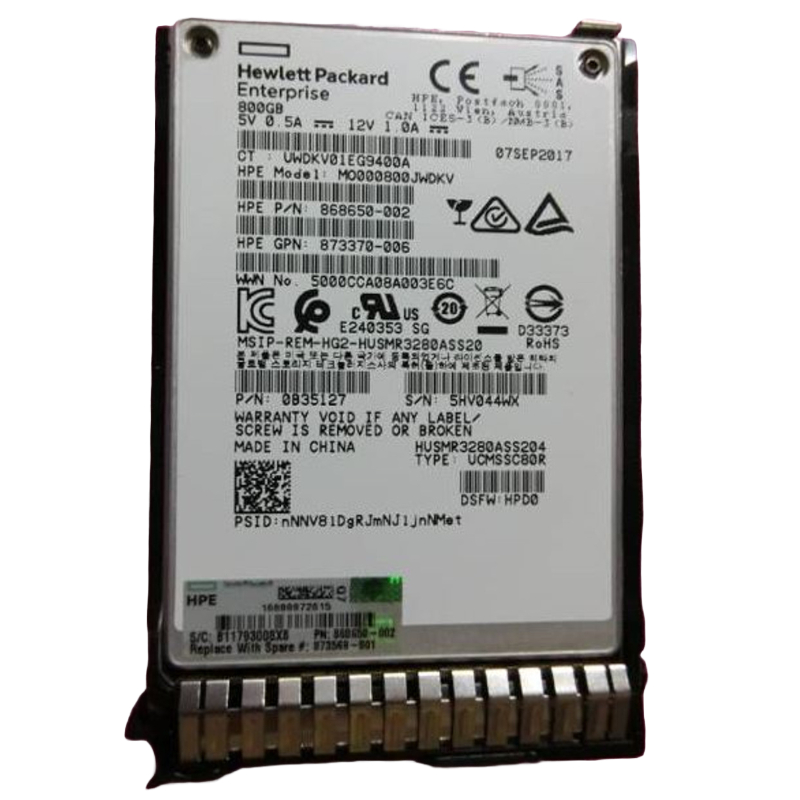
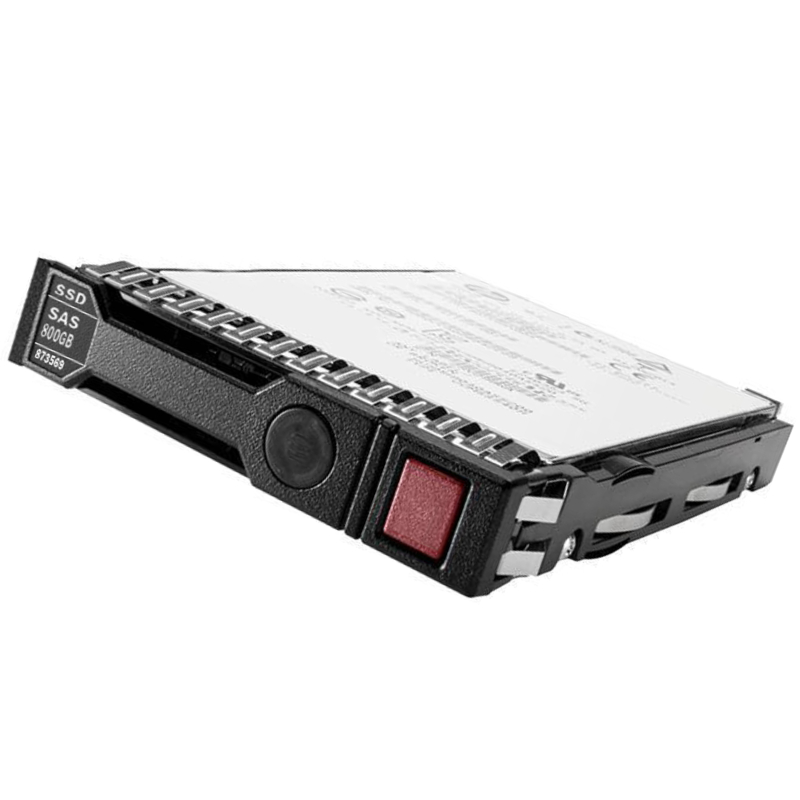
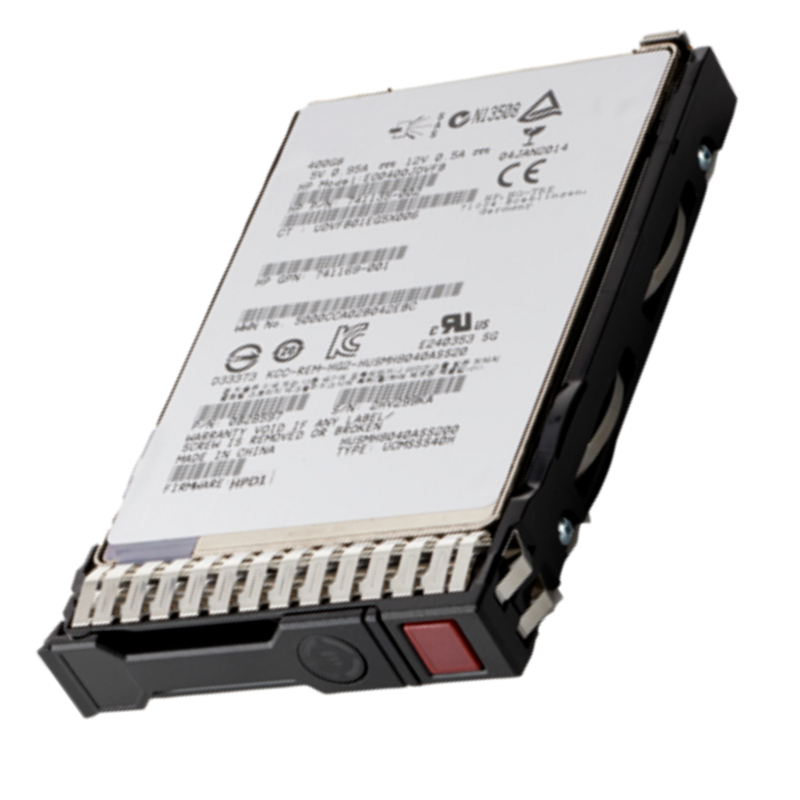
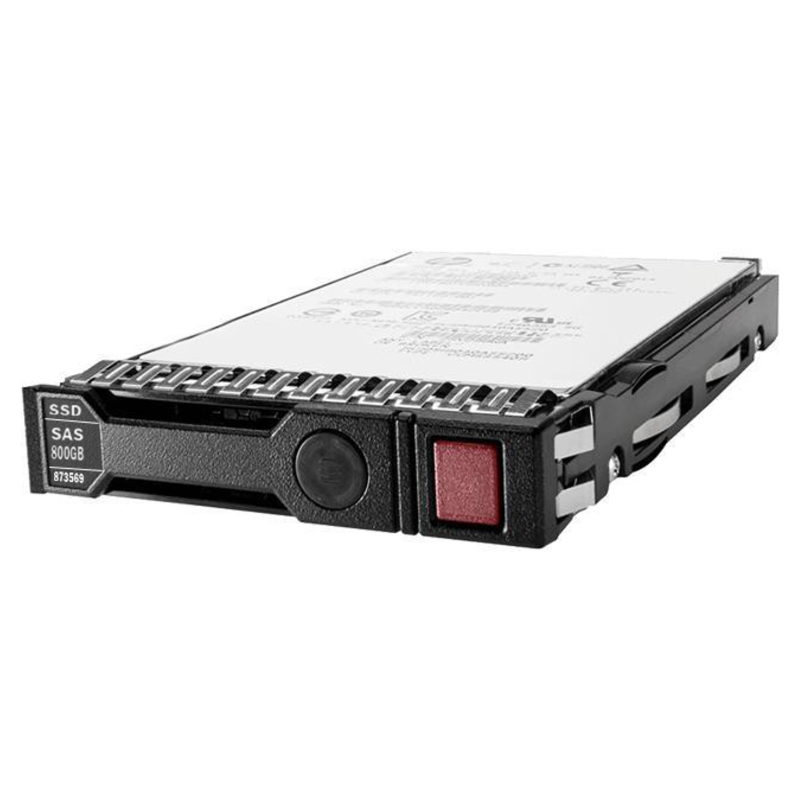
HPE 873569-001 800GB SAS 12GBPS Mixed Use SFF SSD. New Sealed in Box (NIB) 3 Years Warranty
| SKU/MPN | Warranty | Price | Condition | You save |
|---|---|---|---|---|
| 873569-001 | 1 Year Warranty | $1,323.00 | New Sealed in Box (NIB) | You save: $463.05 (26%) |
| 873569-001 | 1 Year Warranty | $304.00 | Excellent Refurbished | You save: $106.40 (26%) |
HPE 873569-001 800GB SAS-12GBPS Mixed-Use SFF SC is engineered to deliver a balanced combination of capacity, predictable performance and enterprise-grade endurance for modern server and storage arrays. This 2.5-inch small form factor (SFF) solid state drive uses the SAS 12Gbps interface to support demanding mixed-use workloads where both read and write operations are significant and sustained. The drive’s 800GB nominal capacity makes it a practical choice for tiered storage appliances, boot and application drives in hyperconverged and virtualized infrastructures, and balanced caching tiers in hybrid flash arrays. The inclusion of digitally signed firmware underscores the emphasis on platform integrity and chain-of-trust validation within enterprise environments, simplifying procurement and deployment in managed data center ecosystems that require firmware authenticity and compatibility verification.
The SAS 12Gbps interface provides a high-bandwidth, low-latency connection optimized for enterprise controllers and RAID architectures. When paired with a 2.5-inch SFF chassis, this drive enables high-density server and storage configurations, allowing more drives per chassis bay than larger form factors while preserving airflow and thermal efficiency. For administrators designing storage tiers, SAS 12Gbps offers robust link management, dual-port availability on many enterprise drives, and strong error-handling features that help maintain data integrity in multi-drive enclosures.
Mixed-use is a workload classification that signifies the drive is optimized to handle a combination of reads and writes at enterprise-class intensity. Unlike read-optimized drives that prioritize sequential or random read throughput, mixed-use SSDs are tuned to maintain consistent performance over time for applications that generate both frequent writes and reads: virtual desktop infrastructures, database transaction logs, mixed VM workloads, and mid-tier caching layers. Mixed-use drives typically achieve an advantageous balance between cost and endurance, delivering stronger write durability than read-centric parts while being more cost-effective than extreme write-intensive offerings.
Digitally signed firmware is a critical feature for organizations that need assurance that the firmware loaded onto storage devices is authentic and unaltered. Firmware signing supports secure boot chains and firmware validation during device initialization, helping to mitigate risks from tampered or incompatible firmware images. For IT teams, digitally signed firmware simplifies vendor verification and reduces the risk of unexpected behavior when drives are used in a validated HPE ecosystem. This feature also facilitates compliance with internal change-control processes and external audit requirements in regulated industries.
In production environments where latency consistency is as important as raw throughput, the HPE 873569-001 is designed to keep tail latencies low under sustained mixed traffic. Predictable I/O response times are essential for multi-tenant virtualization, database services and latency-sensitive middleware. Consistent latency translates directly to better application responsiveness for end users and more reliable service-level objectives for operations teams.
While raw throughput numbers vary by controller, queue depth and workload mix, a mixed-use SAS 12Gbps SSD is selected when storage architects require strong random IOPS performance along with respectable sequential bandwidth. When integrated into appropriate RAID levels and paired with enterprise-class HBAs or storage controllers, these drives contribute to high aggregate IOPS for clustered databases, storage pools and transactional systems, while the SAS protocol ensures resilient command handling and link-level error recovery.
Endurance for mixed-use drives is provisioned to handle moderate-to-high write volumes over the device life without unpredictable degradation. This makes the 800GB mixed-use drive appropriate for write-heavy virtual machines, bootable OS partitions with frequent updates, and caching tiers that offload hot data from spinning media. Endurance metrics — often expressed by vendors as drive writes per day (DWPD) or terabytes written (TBW) over the warranty period — are an important design consideration; mixed-use devices strike a balance between economy and write tolerance so planners can achieve longer service life without overspending on true write-intensive parts.
HPE-branded drives are typically validated to work seamlessly with a broad range of HPE ProLiant servers, storage enclosures and HPE Smart Array controllers. The digitized firmware matching and vendor-signed images reduce compatibility issues that sometimes arise when third-party drives are used. This compatibility reduces integration friction during server refresh cycles and enables unified support channels, simplifying spare part management and maintenance procedures across enterprise deployments.
For compute nodes running high-density virtualization clusters, an 800GB mixed-use SFF SSD can serve as a compact primary tier that delivers strong performance for guest operating systems and applications. In single-server deployments or small clusters, these drives bring fast boot times, snappy application launches and predictable multi-VM performance when combined with adequate CPU and memory resources. Their small footprint allows datacenter managers to populate more bays per chassis, creating powerful compute-storage nodes in hyperconverged setups.
In hybrid arrays, mixed-use SSDs are often selected for caching layers that handle write-back or write-through caching depending on the architecture. They can absorb bursts of random writes while smoothing traffic to slower persistent tiers. Because they provide a balance between endurance and cost, mixed-use drives are well suited where read/write balance matters and where cache eviction policies require durable storage under sustained load.
Operating systems and critical application stacks benefit from SSDs that offer durability and consistent performance. Using an HPE-branded 800GB mixed-use drive as a boot or system disk reduces the probability of I/O bottlenecks during startup, patch cycles, and log-heavy operations. The drives’ enterprise-grade design and signed firmware provide an added level of assurance against firmware compatibility problems that can complicate OS updates or system firmware upgrades.
When deploying these drives in RAID arrays, choose controllers and RAID levels that complement the mixed-use nature of the device. RAID levels that prioritize both redundancy and rebuild performance reduce rebuild windows and minimize performance impact during drive replacement. Proper alignment with controller cache policies and write-back/write-through settings will strongly influence observed real-world performance. Administrators should calibrate stripe sizes, queue depths, and cache algorithms based on the typical transaction size of their workloads to achieve the best balance of throughput and latency.
Maintaining optimal ambient temperature and ensuring proper airflow through drive bays are essential for preserving performance and longevity. Enterprise SSDs can throttle performance when temperatures exceed safe thresholds; therefore, rack-level cooling design and chassis fan policies should be tuned to keep drive temperatures within vendor-specified ranges. Additionally, configuring power policies that match workload patterns can save energy in heavily virtualized infrastructures without compromising performance during critical windows.


 Contact Us
 Information
 Catalog
 Solid State Drives (SSD)
 Network Switches
 Hard Disk Drives
 HBA & Controllers
 PC & Servers
 PC & Server Memory
 CPU & Processors
 Network Routers
 Power Supplies
 Tape Drives & Libraries
 Network Devices
 Computer & Network Cables