(7% discount is applied at checkout)
Cart is empty
Your go-to destination for cutting-edge server products
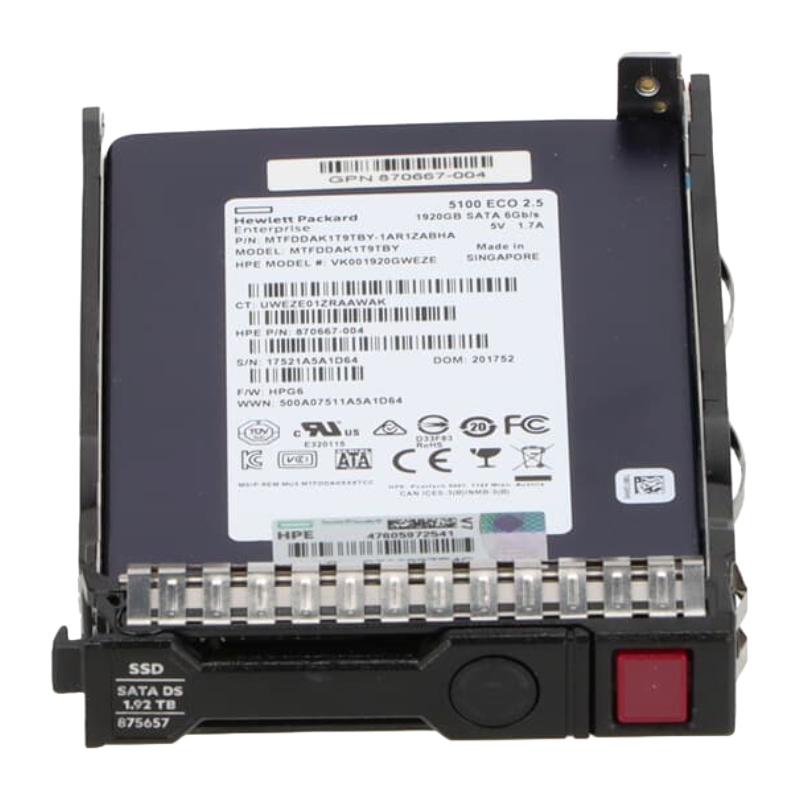


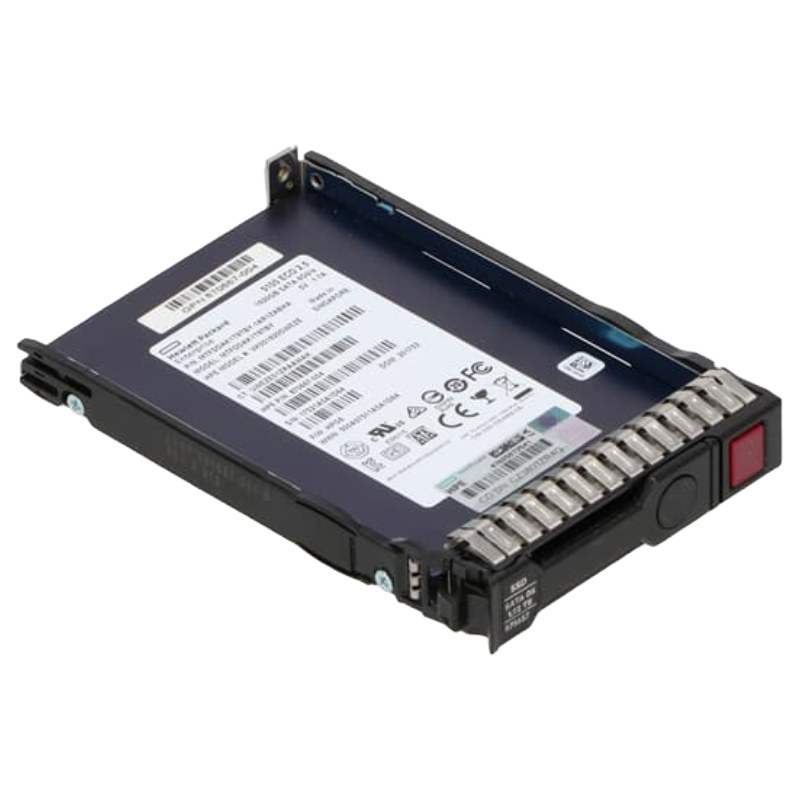
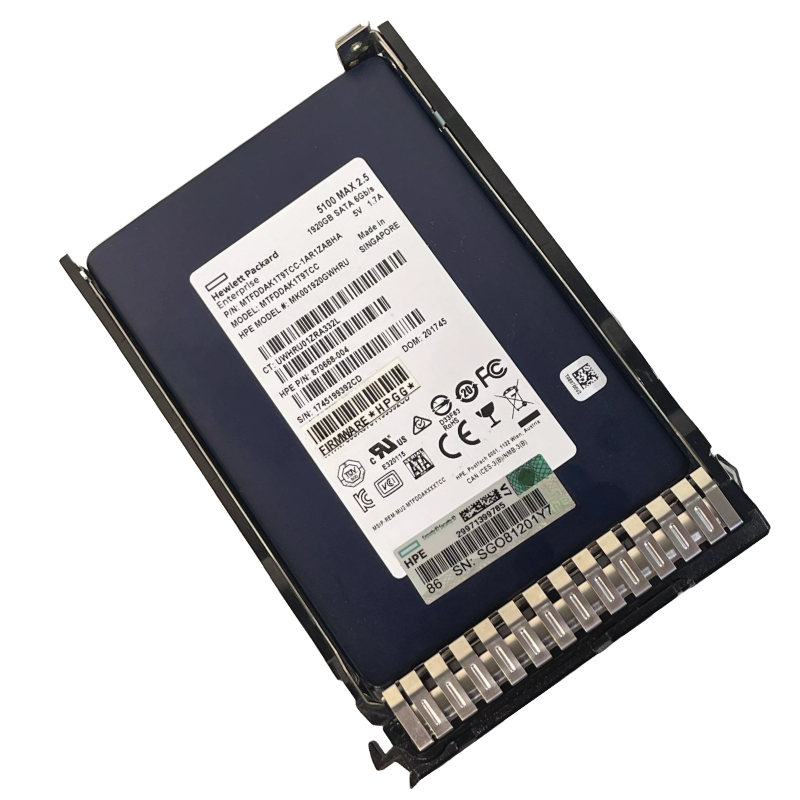
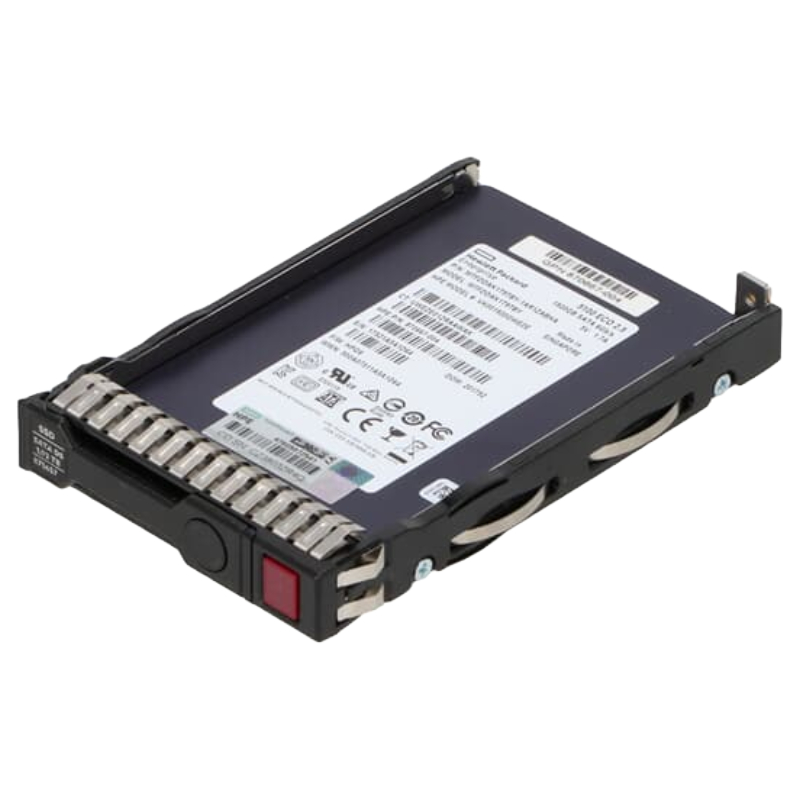
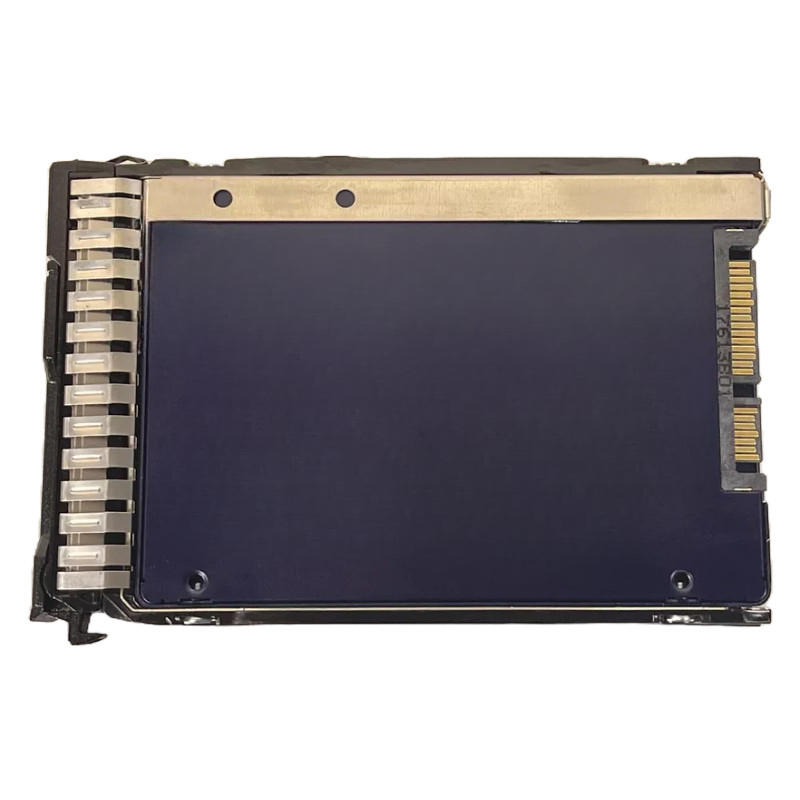
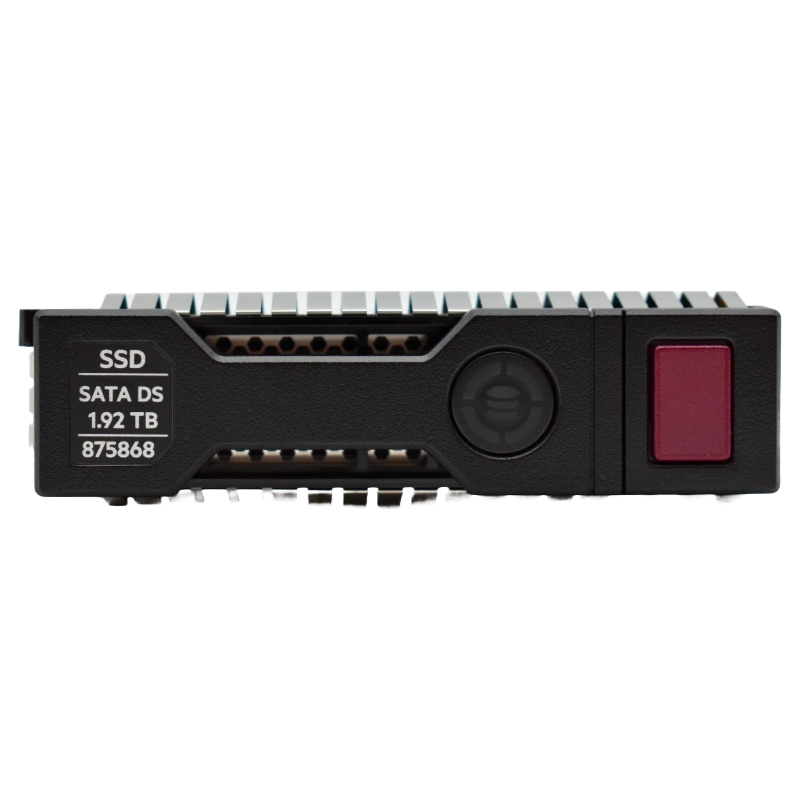
HPE P07934-K21 1.92TB SATA 6GBPS DS LPC Mixed Use Digitally Signed SSD. Factory-Sealed New in Original Box (FSB) with 3 Years Warranty
| SKU/MPN | Warranty | Price | Condition | You save |
|---|---|---|---|---|
| P07934-K21 | 1 Year Warranty | $474.00 | Excellent Refurbished | You save: $165.90 (26%) |
| P07934-K21 | 1 Year Warranty | $2,064.00 | Factory-Sealed New in Original Box (FSB) | You save: $722.40 (26%) |
The HPE P07934-K21 is a high-capacity, enterprise-grade solid-state drive engineered for mixed-use environments. Designed by Hewlett Packard Enterprise, this digitally signed SSD provides enhanced security and exceptional performance for demanding data center workloads.
Performance & Speed Metrics
The P07934‑K21 HPE 1.92TB SATA 6Gbps DS LPC Mixed Use SSD falls under the advanced enterprise mixed use storage category, a classification that bridges the gap between read-intensive and endurance-intensive drives. This category is ideal for data center applications demanding strong read/write balance, such as virtualization, database caching, analytics platforms, and high-traffic transactional workloads. Mixed use SSDs must deliver sustained performance under heavy random I/O, maintain consistent latency, and provide strong endurance over time. With features like digitally signed firmware to guard against tampering and a low‑profile converter (LPC) for flexible form factor compatibility, the P07934‑K21 exemplifies the sophisticated engineering that typifies this category.
In this category, drives are expected to deliver predictable throughput, robust random I/O performance, and high endurance metrics under realistic data center conditions. These SSDs use multi-level cell (MLC) or higher-density NAND constructions optimized for durability. They support hot-swappable, 6Gbps SATA interfaces that integrate seamlessly into standard server backplanes and storage enclosures. The presence of a converter like the LPC allows 3.5" compatibility while maintaining a low profile for drive density. Another hallmark is firmware integrity: digitally signed firmware ensures that only authenticated code can run, bolstering security for mission-critical environments. Drives in this category must also be compatible with enterprise monitoring and management frameworks, including health reporting, SMART metrics, and predictive failure alerts, to facilitate proactive maintenance.
Within the P07934‑K21 category, 1.92TB is a mid-to-high capacity range for mixed use SSDs. It strikes a balance between cost per gigabyte and endurance for workloads of moderate size. The use of a 3.5" compatible form factor via a low profile converter is designed for racks or cages that expect large form factor drives, without sacrificing density or requiring retooling of enclosures.
The SATA 6Gbps interface is a staple in enterprise storage, providing a stable, widely supported channel for data transfer. Though not as fast as NVMe interfaces, SATA remains prevalent for many storage tiers due to its ubiquity and compatibility in legacy or mixed systems. In this subcategory, the drive’s interface must support full-duplex operation, manage errors with robust ECC (error correction codes), and cohere with existing RAID controllers and backplanes.
The category typically uses enterprise-grade MLC — a balance between performance and endurance. Multi-level cell NAND offers higher capacity per die than SLC, without the cost or endurance limitations of consumer TLC. In mixed use SSDs such as the P07934‑K21, the internal firmware implements wear‑leveling strategies, overprovisioning, and reserved blocks to mitigate write amplification and extend lifespan.
A salient subcategory characteristic is digitally signed firmware, which prevents unauthorized or malicious firmware modifications. This is critical in enterprise deployments where security, integrity, and auditability are key. The P07934‑K21 is representative in the category for its use of digitally signed firmware, which helps ensure safe updates and hinders rootkit-style attacks.
One defining metric is random read/write IOPS, measured under queue depths customary in enterprise environments. The P07934‑K21 delivers impressive random read IOPS (59,000 at Q16) and peaks to 62,000 IOPS at Q32 in its class. In random write operations at Q16, it sustains 52,500 IOPS. These figures place it squarely in the upper echelon of mixed use SSDs, offering consistent throughput under concurrent I/O pressure. Drives in this category must mitigate write stalls under heavy workloads and maintain predictable performance rather than spiking or throttling drastically.
Endurance is measured in Drive Writes Per Day (DWPD) over a warranty period. In this subcategory, a rating of 5 DWPD is high—but appropriate for mixed use deployment. The P07934‑K21 is rated for 5 DWPD, supporting 17,500 TB of writes over a 30‑day sustained write period. This endurance profile ensures that the drive can handle continuous write traffic typical of caching, logging, indexing, and other persistent I/O patterns in production systems. Drives in this class commonly incorporate RAID‑style redundancy at the firmware level and background garbage collection to preserve usable capacity over time.
Mixed use SSDs must preserve low, stable latency under both light and heavy load. Any drive in this category—like the P07934‑K21—must maintain consistent latency bounds in the face of garbage collection, wear leveling, and power cycling. Latency spikes degrade application performance, especially in database or virtualization layers. Firmware in this subcategory often schedules background tasks during idle windows and prioritizes foreground operations to reduce interruptions.
A key advantage in this class is adaptability to standard drive bays. The P07934‑K21 is bundled with a low profile converter so it can function in a 3.5" bay, despite its internal architecture being slim. This enables compatibility in existing server racks without needing redesign or specialized trays. Drives in this class should be forward- and backward-compatible with future drive carriers and backplanes.
This category demands drives support hot‑swapping to maximize uptime. The P07934‑K21 meets that requirement, allowing replacement or removal without shutting down systems. Maintenance procedures in this subcategory rely on drive health logging, predictive failure alerts, and SMART metrics communicated to host controllers so that operators can plan swap‑outs before faults occur.
Drives in this category must integrate with RAID controllers, host bus adapters (HBAs), and storage management suites from major vendors such as HPE, Dell, HP, Broadcom, etc. The P07934‑K21 is typically certified within HPE storage stacks; similar drives in this class maintain cross‑vendor compatibility, supporting SMART, TRIM (or equivalent), and monitoring protocols.
Within this category, drives should maintain stable behavior under thermal and power stress. The P07934‑K21 consumes up to 6.80 W, which is moderate for enterprise SSDs. It must manage heat via thermal throttling or internal regulation while continuing to deliver consistent performance. Other drives in this subcategory use power‑saving modes, dynamic voltage scaling, and thermal sensors to protect from overheating or power anomalies.
Mixed use drives such as the P07934‑K21 are well suited for virtual machine storage tiers where read/write balance is essential. When multiple VMs run simultaneously, caching, snapshot writes, OS journal traffic, and swap file interaction generate mixed I/O patterns. A drive in this category must sustain performance across all these random operations without degradation.
In database deployments, writes and reads coexist in complex patterns: transaction logs, index updates, queries, analytics scans. Drives in the P07934‑K21 category must absorb bursts, maintain low latency, and support continuous small‑block I/O. Their endurance and balanced throughput make them suited for OLTP (Online Transaction Processing), data warehousing, and mixed-duty workloads.
Tier‑1 storage arrays often use mixed‑use drives for layers that sit between pure archival and pure caching tiers. The P07934‑K21 class handles daily writes from application logs and read requests without needing full write-intensive SSDs. It offers a cost-effective middle ground for high‑availability storage clusters, metadata storage, and caching layers in high-performance storage deployments.
Logging systems, index services, real-time analytics, and search engines generate mixed I/O over time. Drives in this category must resist wear, remain predictable, and survive sustained load. The P07934‑K21 class meets those criteria, especially when integrated with load balancing, queue optimization, and background maintenance routines.
This category encompasses enterprise SSDs that must maintain strong data integrity through power-loss protection, error correction, and firmware safeguards. The P07934‑K21 includes mechanisms to flush volatile caches and commit data in the event of sudden power loss. It also features internal ECC and integrity checks on metadata to detect and correct bit errors over time.
A category hallmark is secure firmware updates. Drives must support in‑field firmware upgrades that are digitally authenticated, preventing unauthorized code injection. The P07934‑K21’s digitally signed firmware is a baseline feature in this class, ensuring compatibility with trusted update systems and preventing security breaches.
While read‑intensive SSDs prioritize read performance at lower cost, they lack the endurance for write-heavy loads. The P07934‑K21 mixed use class offers significantly higher write durability while still preserving high read throughput—making it more versatile across a broader set of workloads. In comparison, read‑intensive models may falter when write patterns intensify.
High endurance SSDs (e.g. for logging and heavy write workloads) provide very high DWPD but at a premium cost per gigabyte. The P07934‑K21 category provides a middle ground: better endurance than read‑centric SSDs but without the price extremes of write‑intensive models. For many deployments, mixed use SSDs give the best balance of cost, performance, and durability.
NVMe SSDs offer greater throughput and lower latency, but legacy systems or cost constraints often favor SATA drives. Within the SATA mixed use class, the P07934‑K21 competes by offering enterprise‑grade performance on a familiar and widely supported interface. Organizations that do not require full NVMe speeds can leverage mixed use SATA SSDs without major architectural overhaul.
In multi‑tiered storage designs, P07934‑K21 class drives typically occupy the middle tier for “hot” but not hottest data—e.g. application metadata, cache layers, or database buffer layers. Cold data might reside on hard drives or read‑optimized SSDs, and extreme transactional tiers might use NVMe write‑optimized devices. The class benefits from caching algorithms that redirect bursts to faster tiers or SSD caches when needed.
Deployments often stripe across multiple mixed use SSDs to increase throughput and redundancy. In RAID 5, RAID 6, or erasure coding schemes, the consistent performance and endurance of P07934‑K21 drives help avoid “weak link” slowdowns from a single drive under strain. Optimal RAID stripe sizes, write alignment, and block sizing are tuned to work with the drive’s internal page and block architecture.
To extract maximal advantage from mixed use SSDs, host drivers and firmware must align queue depths, scheduling, and I/O patterns to avoid saturating internal resources. Submission queue depth, NCQ (Native Command Queuing) settings, and aligned I/O boundaries all interact with the drive’s internal wear leveling and garbage collection in this category.
Periodic firmware updates, tested under controlled scenarios, are essential for performance and security enhancements in mixed use SSDs. Yet in enterprise SHUD environments, these updates must be digitally signed and staged to avoid interruption. The P07934‑K21 class’s architecture supports non‑disruptive upgrades that preserve data and ensure continuity.
When drives approach their rated DWPD threshold or SMART predicted end of life, the class strategy shifts to replacement. The replacement drives must match capacity, endurance, interface, and firmware compatibility. In many enterprises the P07934‑K21 class is replaced proactively based on usage metrics well before outright failure.
If newer SSD classes emerge (e.g. NVMe or next-gen PCIe), P07934‑K21 class drives may be migrated into secondary tiers or archival roles rather than discarded. They may be repurposed for less demanding workloads or environments where mixed use characteristics still offer value.
At disposal, drives in this class typically undergo secure erasure or cryptographic wipe, ensuring no residual data remains. Given the enterprise sensitivity of installations, certified destruction or rigorous data sanitization is part of lifecycle policies.
Many enterprises maintain heterogeneous infrastructures mixing SATA and NVMe systems. Drives like those in the P07934‑K21 class allow enterprises to extend the life of SATA backplanes while still gaining enterprise‑grade performance. This makes them a bridge between legacy storage architectures and future upgrades.
Before deploying drives in this class, workload analysis should identify IOPS, read/write ratios, burst patterns, and average daily writes. With that data, one can validate that a 5 DWPD mixed use drive (like the P07934‑K21 class) can endure the load. Oversizing or under‑provisioning can either waste budget or cause premature wear.
New drives in this category are typically monitored in controlled staging environments before full production deployment. Baseline performance metrics, latency behavior, and temperature response are characterized over a burn‑in period to validate consistency against manufacturer specifications.
Even within robust classes, redundancy is crucial. Mixed use SSDs deployed in RAID or erasure‑coded arrays must be paired with hot spares, failover policies, and robust rebuild strategies. Given consistent performance, the P07934‑K21 class simplifies rebuild planning because drives tolerate similar loads without lagging.
Many modern systems layer drives in performance tiers. The P07934‑K21 mixed use class may be integrated as a caching or intermediate tier between NVMe and traditional HDD tiers. Intelligent caching, tiering algorithms, and automated promotion/demotion of data help maximize its utility while avoiding wear by offloading extreme write bursts to faster tiers.
Because these drives rely heavily on firmware behavior, procurement often specifies firmware revisions, validated compatibility, and support lifecycles. Drives in the P07934‑K21 class often come with preloaded, validated firmware versions and must adhere to signed update schemes to maintain security.


 Contact Us
 Information
 Catalog
 Solid State Drives (SSD)
 Network Switches
 Hard Disk Drives
 HBA & Controllers
 PC & Servers
 PC & Server Memory
 CPU & Processors
 Network Routers
 Power Supplies
 Tape Drives & Libraries
 Network Devices
 Computer & Network Cables