(7% discount is applied at checkout)
Cart is empty
Your go-to destination for cutting-edge server products
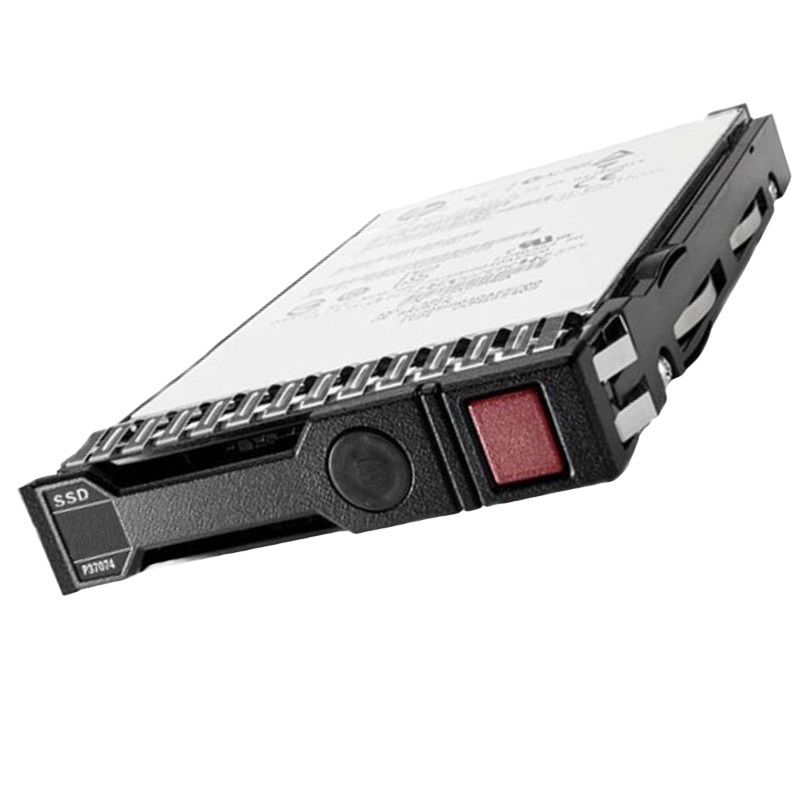


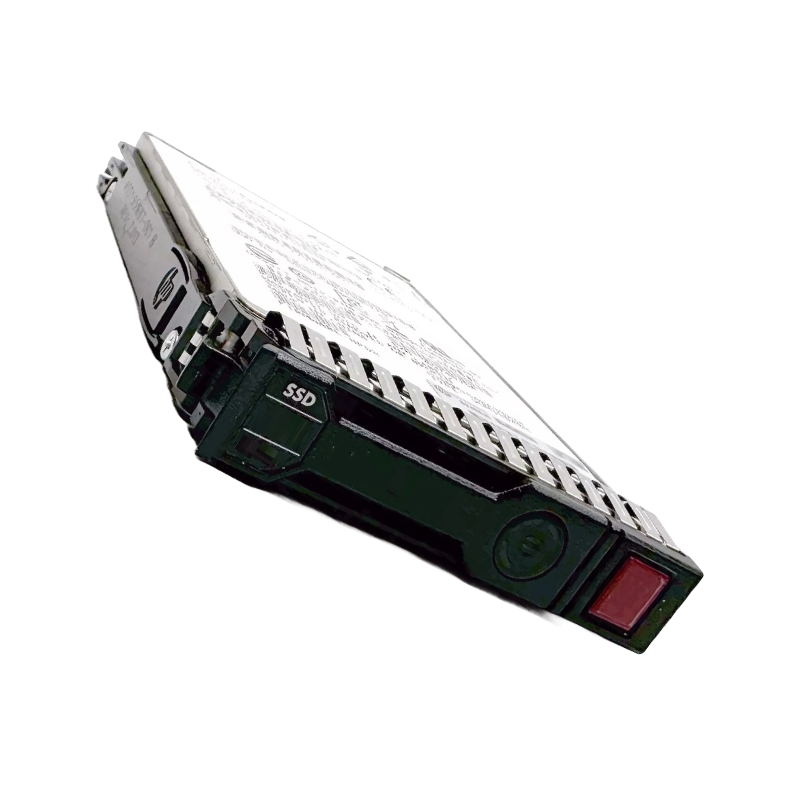
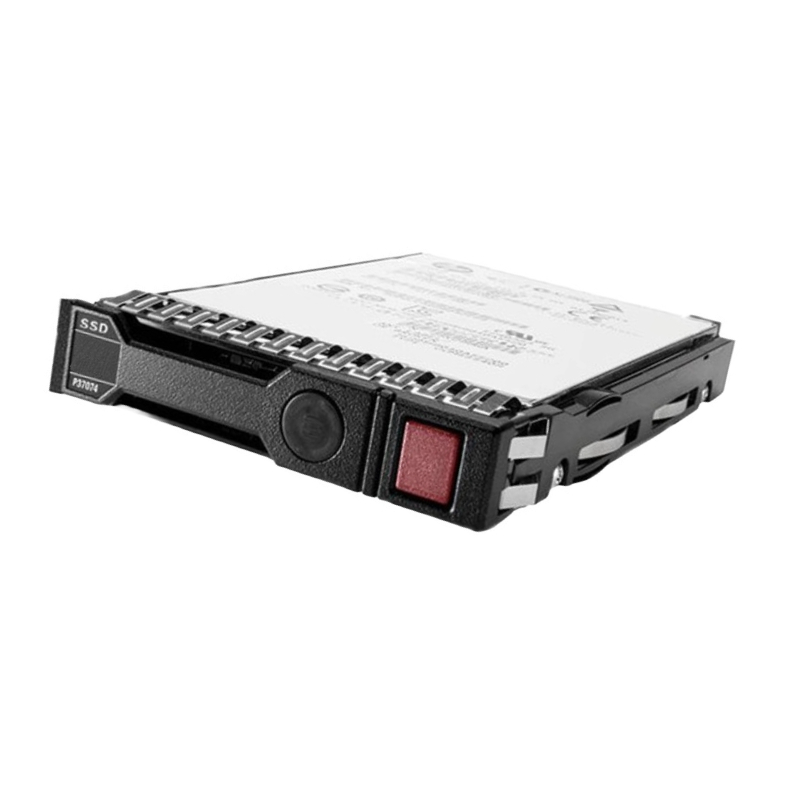
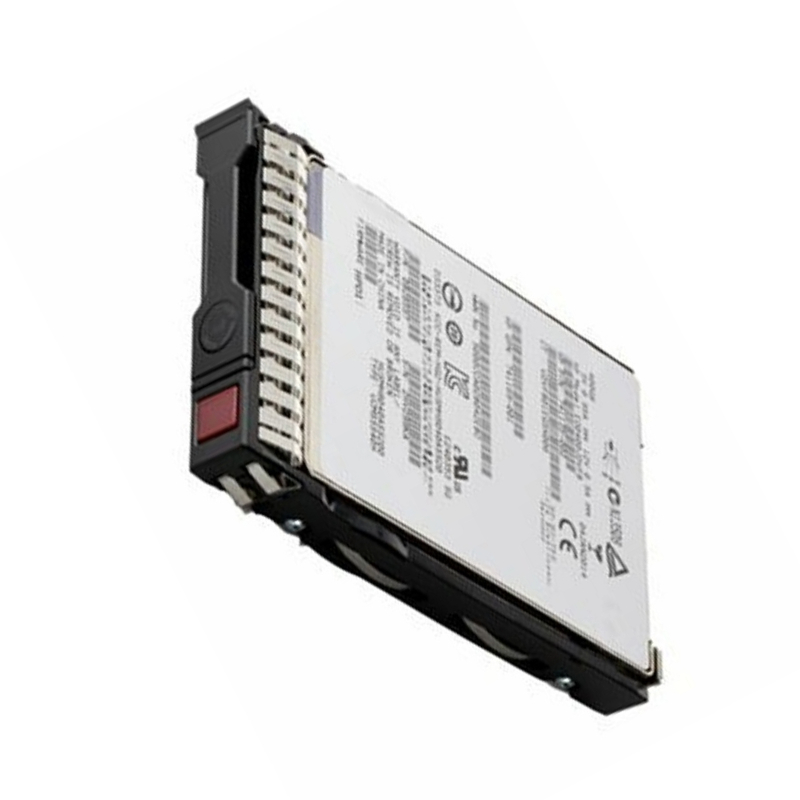
HPE P08565-001 240GB SATA 6GBPS Read Intensive SFF SC Digitally Signed Firmware Solid State Drive. Factory-Sealed New in Original Box (FSB) with 3 Years Warranty
The HPE P08565-001 is a powerful 2.5 Inch Read Intensive SSD designed for enterprise-class storage solutions. With its digitally signed firmware and advanced SATA 6Gbps interface, this SSD ensures top-tier reliability, fast data access, and superior data protection.
The category dedicated to the P08565‑001 HPE 240GB SATA 6Gbps SFF SC Read Intensive DSS Firmware SSD encompasses a specialized class of enterprise solid state drives designed to deliver reliable read‑optimized storage performance in data centers, server arrays, and high‑availability systems. Within this category, products are grouped by their read‑intensive behavior, small form factor (SFF) compatibility, Smart Carrier (SC) module packaging, and the presence of digitally signed (DS) firmware for secure integrity validation. The grouping is ideal for IT professionals, system architects, and storage procurement teams who require storage devices specifically optimized for read‑dominant workloads and multi‑tenant environments.
This category addresses SSDs that are explicitly engineered for read‑intensive tasks rather than general purpose workloads. Devices in this class, including the P08565‑001 model, emphasize high sequential read throughput and robust random read IOPS, while write capabilities are modest but reliable. Such SSDs are tailored for caching layers, read caching, content delivery nodes, indexing operations, data analytics front‑ends, and scenarios where reads vastly outnumber writes. The category also mandates a form factor of 2.5‑inch SFF and compatibility with Smart Carrier modules to support hot‑pluggable server backplanes and disk trays.
All drives classified here employ the SATA 6Gbps interface to ensure connectivity with a wide variety of server and storage platforms. This interface provides a theoretical upper bound of 600 MB/s (or roughly 548 MiB/s), but the practical throughput for read‑intensive SSDs typically approaches 500–550 MiB/s for sequential reads, with write speeds trailing. The P08565‑001, for example, achieves approximately 530 MiB/s in sequential read mode, situating it near the upper tier of SATA performance for its class.
Within this category, devices adhere to a 2.5‑inch small form factor (SFF), enabling dense deployment in rack servers and blade environments. The use of a Smart Carrier (SC) carrier type ensures compatibility with tooling, backplanes, caddies, and hot-swap trays commonly present in enterprise infrastructure. The hot‑plug functionality allows for removal or insertion of the SSD without shutting down the host system, enabling maintenance, replacement, and upgrades with minimal operational disruption. The P08565‑001 fits this standard seamlessly, providing reliable mechanical and electrical compatibility.
Flash memory technology is a critical discriminant within this drive category. Most offerings, including the P08565‑001, utilize Multi‑Level Cell (MLC) NAND, which provides a balance of performance, endurance, and cost. Read‑intensive drives do not demand the same write endurance as write‑intensive or general‑purpose SSDs, so the firmware and error correction logic are tuned to favor read stability and long term retention. The category’s firmware often includes advanced error recovery, wear leveling, and protection features tailored to read dominance, ensuring consistent behavior over extended deployment periods.
A distinguishing attribute of this category is the inclusion of digitally signed (DS) firmware. Drives in this class must validate firmware authenticity on each initialization to thwart unauthorized modifications or malicious firmware attacks. This digital signature ensures firmware integrity and compatibility with secure boot and trusted platform modules. The P08565‑001 is a prime example, where its firmware is signed cryptographically to prevent tampering and to support higher levels of data security within enterprise ecosystems.
In category benchmark results, sequential read rates often dominate the performance profile. Drives like the P08565‑001 deliver sustained read speeds around 530 MiB/s, approaching the practical ceilings of the SATA 6Gbps interface. Write throughput is comparatively modest, with the P08565‑001 able to sustain approximately 255 MiB/s. This reflects the prioritization of read operations in firmware and internal buffering strategies.
Random access performance is measured in IOPS (Input/Output Operations Per Second). In read‑intensive SSDs, random read IOPS is a critical metric, while random write IOPS are secondary but still essential for background management tasks. The P08565‑001 achieves around 66,000 random read IOPS, indicative of a strong ability to handle random small‑block access patterns common in database lookups, metadata serving, and search indexing. On the flip side, it sustains about 16,000 random write IOPS, sufficient for internal housekeeping, garbage collection, and occasional write bursts.
Within the read‑intensive SSD category, some subcategory products increase capacity beyond 240 GB to 480 GB, 960 GB, or above. These larger models retain the same architectural constraints—SATA 6Gbps, Smart Carrier, digitally signed firmware—but expand usable capacity to serve more demanding workloads or higher cache workloads. Users selecting among these must consider cost per gigabyte and the diminishing returns in throughput scaling.
While this category is strictly for read‑intensive SSDs, adjacent categories include general purpose (GP) and write‑intensive (WI) drives. General purpose options balance read and write performance and are more flexible in mixed I/O environments. Write‑intensive drives support heavy sustained write workloads as seen in logging, streaming, or big data ingestion. The P08565‑001 line remains focused on read‑centric use cases and should not be conflated with mixed or write‑heavy class segments.
One of the most common roles for drives in this category is acting as a front‑end cache layer or tier within a hierarchical storage architecture. The P08565‑001 SSD can service hot data—frequently accessed page files, metadata, search indexes, or web content—while slower back‑end storage handles capacity. Because of its strong read performance and firmware stability, it can reduce latency, offload I/O bottlenecks, and accelerate application responsiveness in hybrid storage systems.
In virtualized environments where many virtual machines boot from the same image or have common shared reads, deploying read‑intensive SSDs offers a cost‑effective performance lift. The P08565‑001 model is ideal for booting virtual instances, hosting shared OS images, or caching read activity in scale‑out virtualization layers. Its digitally signed firmware offers a layer of security ideal in multi‑tenant deployments.
Search engines, NoSQL systems, full‑text indexing engines, and metadata servers often exhibit extremely read‑biased patterns. The P08565‑001 and its class peers are built to excel under such conditions. Their firmware and architecture allow sustained lookup rates, low latency, and consistent performance even during periods of heavy parallel reads. The drives offer a robust substrate for read‑centric database acceleration.
Web servers and content distribution nodes require fast, reliable access to static content, media assets, and cached objects. The read‑intensive SSD category is well suited for these roles. The P08565‑001 can serve static files, images, scripts, and content fragments at high throughput and low latency. The Smart Carrier format and hot‑plug compatibility simplify deployment and serviceability in rack scale web server clusters.
The digitally signed firmware in this category ensures safe upgrade paths. Each SSD checks firmware authenticity before enabling operation, helping guard against firmware-level corruption or tampering. Administrators should update firmware only via authorized vendor tools and signed packages. The P08565‑001 benefits from regular firmware refreshes that may improve error handling, performance curves, or compatibility with new controllers.
In this category, firmware tuning often biases resources—cache, wear leveling, and internal buffers—toward optimizing read latency and throughput. Write buffering is present but constrained so as not to compromise read responsiveness. Administrators may tune write cache policies or controller queue depths to manage bursts without sacrificing read stability. For drives like the P08565‑001, modest write coherency operations are scheduled during idle windows.
Quality of Service (QoS) consistency is critical in multi‑tenant or real‑time systems. Drives in this class often feature firmware caps or throttling logic to prevent extreme tail latency spikes. The P08565‑001’s firmware works to maintain consistent latency under load and avoid performance degradation during background tasks like garbage collection or wear leveling. This predictability is key in enterprise environments.
Over‑provisioning (allocating extra reserved space) helps smooth performance and extend endurance. Manufacturers may ship these SSDs with built‑in over‑provisioning (for example extra 7–10 % hidden capacity). Users can also configure additional over‑provisioned space via management utilities (if supported) to improve sustained performance and lower latency. For the P08565‑001 family, following vendor recommendations on spare capacity maximizes longevity under heavy read workloads.
Independent tests comparing multiple 240 GB read‑intensive SSDs typically place the P08565‑001 near the top of sequential read rankings. In web server clusters serving static assets under heavy concurrent request loads, this category can deliver double digit percentage gains in request per second (RPS) compared to spinning disk or mixed‑workload SSDs, especially when caching static reads. Latency remains low and consistent even at high queue depths so long as write back pressure is controlled.
In metadata server benchmarks involving random 4 KiB reads dominated loads, the P08565‑001 reaches approximately 66,000 IOPS. Competing drives in its category may yield 55,000 to 75,000 IOPS depending on firmware and flash architecture. Its consistent performance under sustained load makes it a strong candidate for metadata, directory services, object storage front ends, and similar roles with heavy read concurrency.
While this category remains highly relevant in existing infrastructure, industry trends are shifting toward NVMe and PCIe SSDs for higher throughput and lower latency. Nevertheless, for backward compatibility, cost control, and existing SATA backplane ecosystems, the P08565‑001 category continues to serve a stable niche. As data centers evolve, hybrid designs may integrate both SATA read‑intensive and NVMe tiers based on workload profiles.
Modern applications increasingly exploit massive concurrency and deeper queue depths. Future SSD category designs may push incremental improvements in random read IOPS and firmware parallelism even within the SATA boundary. Devices like the P08565‑001 may get firmware refinements or tiered cache enhancements over time. This evolution ensures legacy categories remain competitive where backward compatibility is required.
Telemetry and SMART capabilities will continue to evolve. New category entrants may incorporate machine learning algorithms to anticipate failure, self‑rebalancing strategies, adaptive over‑provisioning, and more granular health predictions. The P08565‑001 class is expected to see firmware updates integrating these capabilities, offering administrators deeper insight into drive health in real time.
Administrators sometimes combine read‑intensive SSDs with general‑purpose or write‑intensive SSDs in a unified pool. In such mixed pools, firmware interoperability, thermal behavior, background task scheduling, and power management must harmonize. The P08565‑001’s firmware is engineered to co‑exist without destabilizing shared controller resources or triggering unintended throttling in adjacent drives.


 Contact Us
 Information
 Catalog
 Solid State Drives (SSD)
 Network Switches
 Hard Disk Drives
 HBA & Controllers
 PC & Servers
 PC & Server Memory
 CPU & Processors
 Network Routers
 Power Supplies
 Tape Drives & Libraries
 Network Devices
 Computer & Network Cables