(7% discount is applied at checkout)
Cart is empty
Your go-to destination for cutting-edge server products
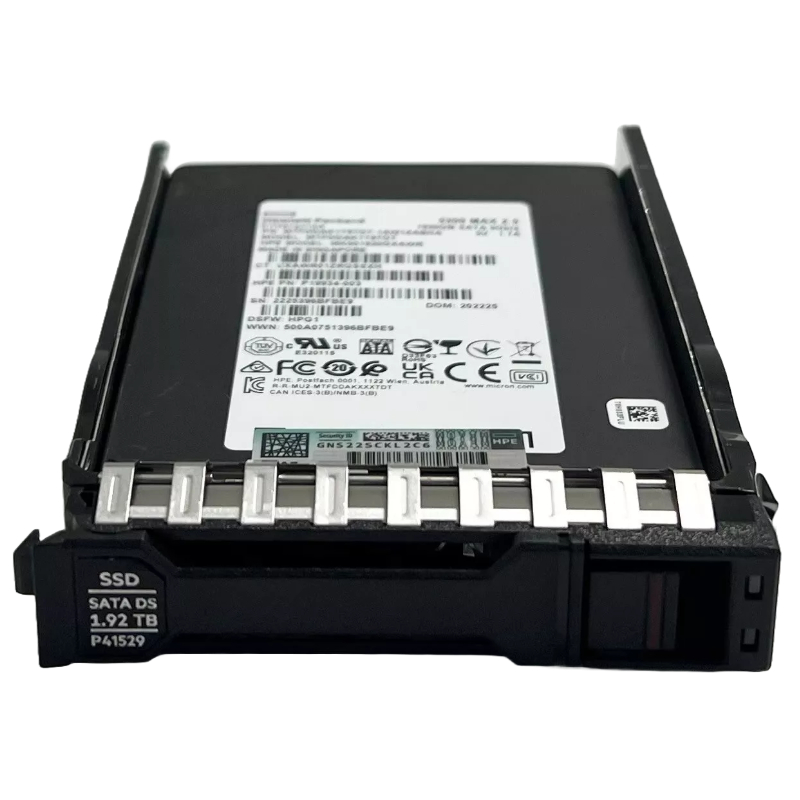


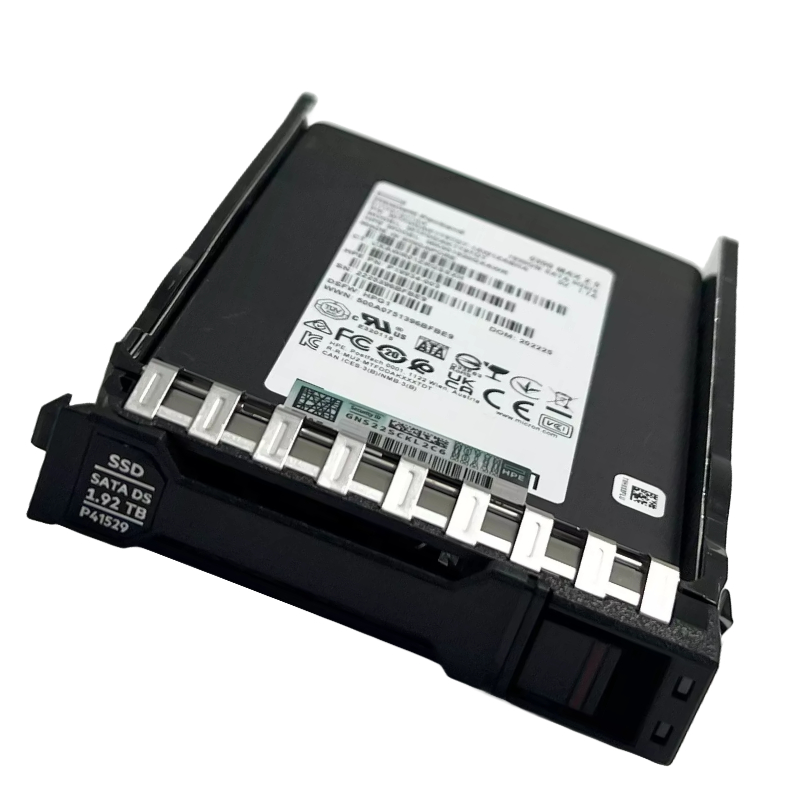
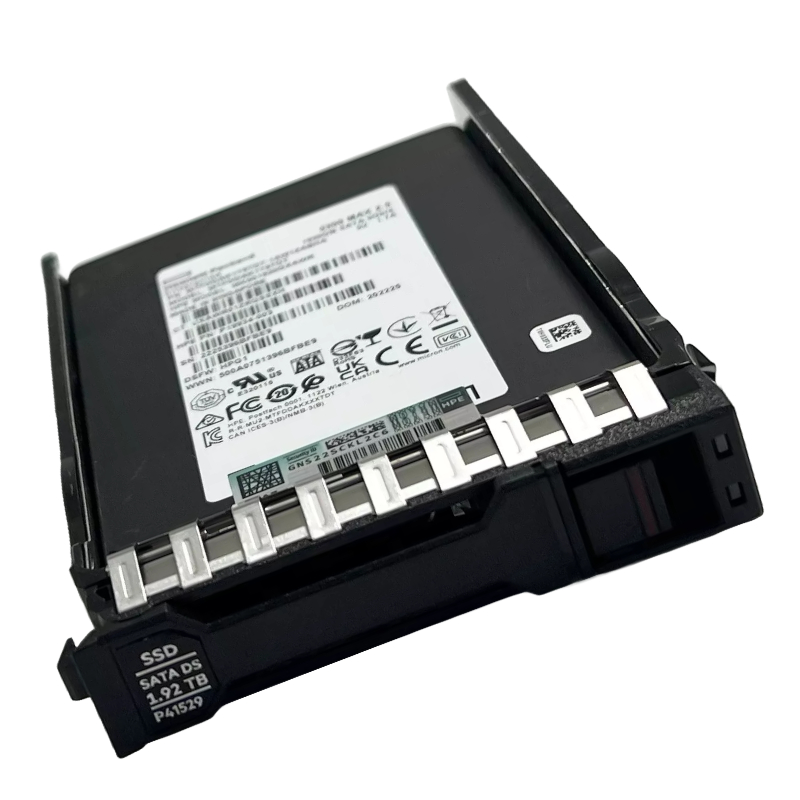
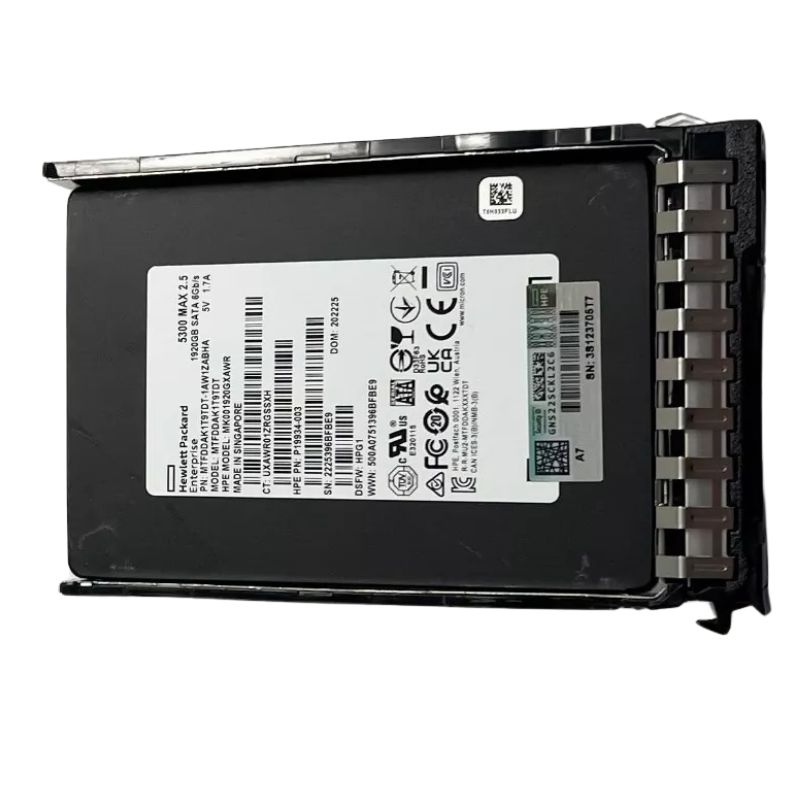
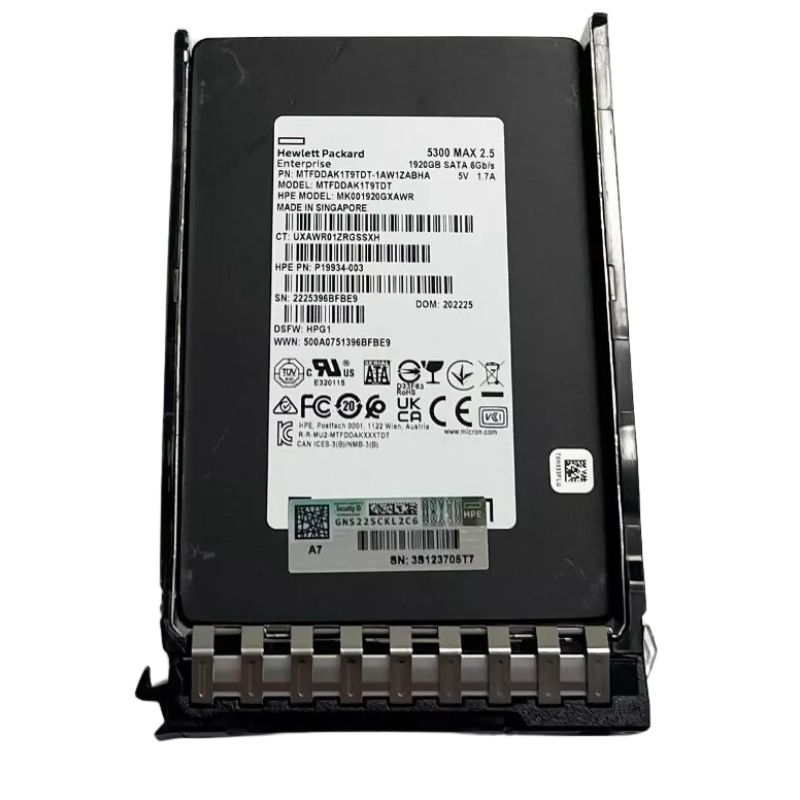
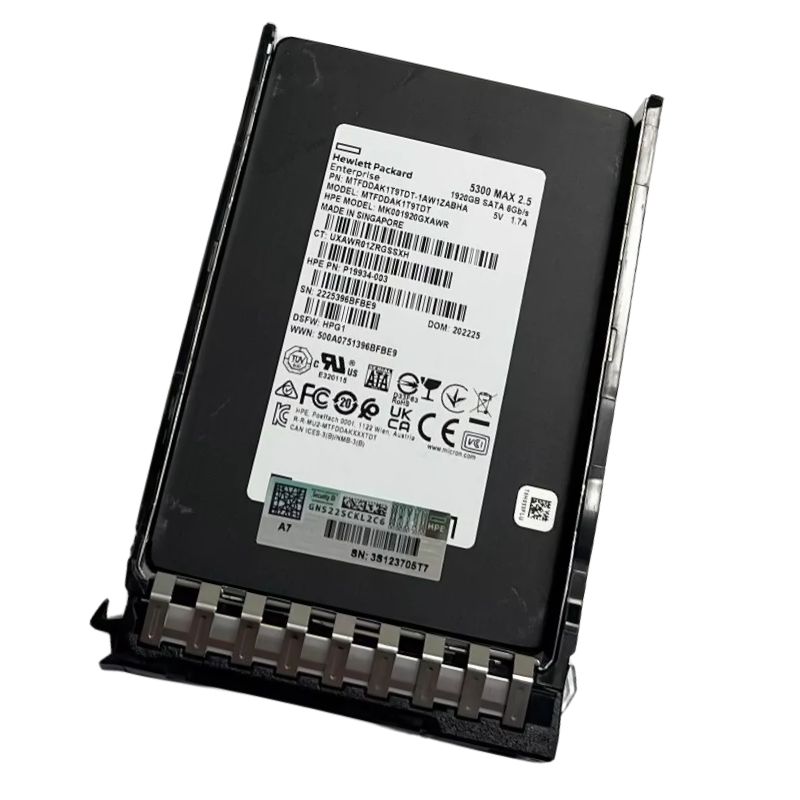
HPE P08572-001 1.92TB SATA 6GBPS Read Intensive Solid State Drive. Factory-Sealed New in Original Box (FSB) with 3 Years Warranty
| SKU/MPN | Warranty | Price | Condition | You save |
|---|---|---|---|---|
| P08572-001 | 1 Year Warranty | $426.00 | Excellent Refurbished | You save: $149.10 (26%) |
| P08572-001 | 1 Year Warranty | $1,376.00 | Factory-Sealed New in Original Box (FSB) | You save: $481.60 (26%) |
The HPE P08572-001 1.92TB SATA 6Gbps Read Intensive Solid State Drive is engineered for high-performance enterprise workloads. Designed by Hewlett Packard Enterprise, this SSD offers superior reliability, fast data access, and efficient energy consumption for data-intensive applications.
This drive uses advanced Multi-Level Cell (MLC) flash memory, delivering balanced performance and durability for enterprise tasks.
The P08572‑001 HPE 1.92 TB SATA 6 Gbps Read‑Intensive Solid State Drive (SSD) category encompasses enterprise‑grade storage modules optimized for read‑dominant workloads. Within this class you will find models engineered for reliability in datacenter environments, high throughput on sequential reads, and strong random I/O performance under heavy read demand. These SSDs are frequently deployed in environments such as data analytics clusters, virtualization layers, content delivery, caching systems, and file servers, where reads vastly outnumber writes.
In the broader HPE storage offering, the P08572‑001 series is a subclass of its read‑intensive SSD lineup, distinct from write‑intensive and mixed‑use SSD classes. While write‑intensive drives emphasize durability under heavy write activity, read‑intensive models like P08572‑001 strike a balance suited for workloads with occasional writes but sustained read demands. This positions the P08572‑001 drives in the mid‑to‑upper tier of HPE’s SSD portfolio. In the enterprise SSD taxonomy, this category sits between capacity SSDs (which favor more capacity per dollar at lower performance) and performance SSDs (which prioritize maximum throughput and endurance).
Workloads suitable for this category often include read caching layers, databases under heavy read access, content delivery networks, and backup or archival systems with frequent reads. In virtualization environments, the P08572‑001 class may serve as a read cache or content accelerator for virtual disks. In big data or analytics clusters, these SSDs help to accelerate repetitive querying and index scanning, delivering faster data retrieval performance. Web servers and application servers that predominantly serve data rather than generate it also benefit from this class: the drive ensures that latency remains minimal even under numerous simultaneous read requests.
Within the P08572‑001 class, subcategories can be defined by variations in interface or internal firmware optimization. Some variants may support advanced error correction schemes, enhanced read acceleration features, or extended temperature ranges. Others might come in different form factors or carrier configurations — for example, with intelligent smart carriers or sleds built to fit particular server architectures. Firmware versions might be tuned for specific workload patterns such as analytics, caching, or metadata serving. Even within the same raw 1.92 TB specification, performance under sustained load or burst mode may differ based on internal buffer design and controller layout. These micro‑variants can be considered subcategories within the main P08572‑001 line, tailored to distinct enterprise deployment needs.
The defining technical features of the P08572‑001 1.92 TB SATA 6 Gbps SSD category revolve around capacity, interface, read/write performance, IOPS under random access, physical form, and endurance characteristics. This section explores these attributes in detail.
The 1.92 TB capacity (approximately two terabytes) positions this segment in the upper midrange for enterprise SSDs. It provides significant storage density without crossing into extremely high cost per unit territory. For data centers requiring both storage and performance, this capacity delivers a favorable balance. Organizations needing large-scale storage arrays often mix these SSDs with higher‑capacity archival drives, using P08572‑001 models where speed matters but capacity remains substantial.
The category is built on a SATA 6 Gbps interface, which offers broad compatibility with existing server and storage infrastructure. While newer interfaces such as NVMe/PCIe provide greater throughput, SATA remains widely deployed in many existing enterprise environments, making these SSDs a drop‑in performance boost. The SATA 6 Gbps carrier provides a theoretical line rate sufficient for many read‑dominated workloads without bottleneck. Because the drive is hot‑pluggable, it integrates well into enterprise racks, enabling maintenance, replacement, or expansion with minimal downtime.
The P08572‑001 category is defined by strong sequential throughput and solid random I/O performance. Under ideal conditions, sequential read speeds reach up to 530 MiB/s, while sequential writes approach 480 MiB/s. For random I/O, the category delivers read IOPS up to 69,000 and write IOPS around 33,000. These figures highlight the drive’s strength in serving many small read requests, as is common in database query patterns or virtual disk access. The random write capability remains sufficient for metadata updates and occasional write bursts, although it is not the main design focus.
These SSDs follow a slim 7 mm height design, suitable for space-constrained blade servers and dense storage arrays. The form factor is typically SFF (Small Form Factor), enabling high-density deployment in modern server chassis. The drives incorporate hot-plug support so technicians can insert or remove them without powering down the server. Carrier types (e.g. smart carriers or sleds) are often matched to server rails or enclosures, ensuring secure mounting and thermal compatibility. Because these drives are intended for enterprise settings, vibration tolerance, shock resistance, and thermal management are part of the physical design.
Real-world performance of P08572‑001-class SSDs depends on workload profiles, system architecture, and I/O patterns. Under sustained read workloads, the drive can deliver close to its advertised sequential and random read numbers, provided thermal conditions and queuing depths are favorable. In mixed‑load scenarios (reads plus occasional writes), firmware-level, wear‑leveling and garbage collection functions maintain performance consistency. If write bursts occur, the drive may temporarily reduce performance to manage internal buffer flushing, but the overall impact is minimized because the architecture is tuned for read intensity.
With appropriate queue depth (e.g. QD32 or higher in multi‑threaded environments), these SSDs maintain low response times. In latency-sensitive applications such as online query processing or high‑volume API servers, this category performs especially well. Because the drive is optimized for reads, access times for read operations remain consistent even under multi‑user concurrency. Writes may experience slightly higher latency during background housekeeping tasks, but overall the design minimizes latency spikes to maintain predictable performance.
While write‑intensive drives boast very high endurance ratings, the P08572‑001 read‑intensive SSDs are engineered to sustain a significant but moderate amount of writes across their lifespan. They incorporate advanced error correction, wear leveling algorithms, and overprovisioning to prolong life and maintain data integrity. In enterprise settings, SMART monitoring, health reporting, and telemetry features help system administrators forecast drive replacement timing. Redundant RAID architectures typically complement individual drive reliability.
Successfully incorporating P08572‑001 SSDs into a storage infrastructure requires careful attention to factors such as compatibility, firmware, cooling, power budget, and workload alignment. The drives must be validated against the server’s storage controller, backplane, and hot‑plug sled design to guarantee full functionality. Firmware upgrades may unlock newer features or improve stability, so maintaining up‑to‑date firmware is recommended. Thermal conditions are critical; ensuring adequate airflow and rack design helps avoid thermal throttling. Since these are enterprise class devices, power consumption under idle and active states must be factored into system design.
The SATA 6 Gbps interface ensures compatibility with most modern RAID and HBA controllers. However, particular care must be taken to ensure the controller supports advanced features (e.g. NCQ, TRIM, SMART pass‑through) properly. In some legacy servers, compatibility quirks may reduce performance, so validation testing is prudent. The drives are backward compatible in lower SATA speeds, albeit with reduced performance. Integration testing is recommended in lab environments before deploying into production.
Under continuous load, SSDs generate heat. In dense racks where airflow can be constrained, the P08572‑001 class SSDs must be positioned where airflow is sufficient. Thermal throttling, if triggered, can reduce drive performance to protect internal components. Because the 7 mm form factor is relatively slim, maintaining efficient airflow along the drive’s surface is essential. Monitoring drive temperature via telemetry and taking corrective action when thresholds are exceeded helps sustain performance consistency.
Enterprise SSDs must balance performance with power efficiency. The P08572‑001 series is designed to draw modest power in idle and active states. In environments where many drives are deployed in parallel, the cumulative power draw becomes significant, so choosing energy‑efficient SSDs is key. By optimizing controller logic and firmware, these drives deliver high throughput without excessive power overhead.
Within the enterprise SSD landscape, the read‑intensive 1.92 TB SATA class is often compared to mixed‑use and write‑intensive classes. Mixed‑use drives strike a compromise between read and write performance, suitable for general-purpose workloads. Write‑intensive SSDs prioritize durability and heavy write loads, making them ideal for logging, transaction engines, or caching write bursts. The P08572‑001 class is specifically tuned for scenarios where read load dominates, offering stronger read performance per dollar than mixed‑use models while avoiding the premium cost of full performance SSDs. Compared to NVMe or PCIe SSDs, SATA read‑intensive drives offer ease of integration and cost control, albeit with lower maximum throughput. For many legacy architectures and read‑heavy workflows, this tradeoff is acceptable and often preferred.
To maximize the benefits of P08572‑001 SSDs, administrators should tune storage stacks, align I/O patterns, monitor health, and manage firmware updates. Performance is highly sensitive to queue depths, alignment of block boundaries, and workload mix. Ensuring that aligning partitions and data blocks to the drive’s internal strip size yields optimal throughput. Where possible, running I/O in larger bursts or higher queue depths can drive the drive closer to its rated performance numbers. Avoiding small random writes, or batching them, reduces fragmentation and background overhead. Monitoring performance counters and adjusting storage tiering helps maintain responsiveness.
Firmware updates for P08572‑001 SSDs may include bug fixes, stability improvements, or performance enhancements. It is essential to follow HPE’s firmware release guidance and apply compatible versions only after validating in test environments. Some updates may unlock additional performance modes or power optimization features. Always record the prior firmware version and maintain a rollback plan to guard against incompatibilities.
Smart logging and health telemetry are integral to enterprise SSDs. The P08572‑001 series supports reporting of metrics such as media wear, error counts, temperature, and life remaining. These metrics should feed into predictive replacement workflows so that SSDs are replaced before failure. Using a data center’s monitoring stack, alerts can trigger early swaps, minimizing risk of downtime and data loss.
In multi-tier storage designs, P08572‑001 SSDs may serve as a high‑performance read tier above slower HDD or archival layers. Frequently accessed data, indexes, or caches can be migrated or cached to this SSD class to reduce latency. In such hybrid architectures, automated tiering software or policies place hot data on the SSD tier and colder content on slower media. This approach enables cost-effective scaling: only the most accessed data earns the premium of SSD speed.
When deploying the P08572‑001 class across data center racks, organizations must think about capacity planning, refresh cycles, procurement strategies, and redundancy. Because performance scales linearly in many workloads, adding more SSD units can increase throughput proportionally. Lifecycle management involves planning for drive replacements over time, anticipating firmware support windows, and ensuring spare units are available. Procurement decisions should weigh unit cost, performance per dollar, warranty, support agreements, and compatibility.
As storage demands grow, scaling with additional 1.92 TB units keeps performance predictable and modular. Dense server trays or blade systems can host multiple drives; planning airflow, power, and backplane bandwidth is essential as capacity grows. In some cases, future migrations to higher‑capacity SSDs or newer interfaces (e.g. NVMe) may be anticipated — which can influence the decision to adopt P08572‑001 class devices today.


 Contact Us
 Information
 Catalog
 Solid State Drives (SSD)
 Network Switches
 Hard Disk Drives
 HBA & Controllers
 PC & Servers
 PC & Server Memory
 CPU & Processors
 Network Routers
 Power Supplies
 Tape Drives & Libraries
 Network Devices
 Computer & Network Cables