(7% discount is applied at checkout)
Cart is empty
Your go-to destination for cutting-edge server products
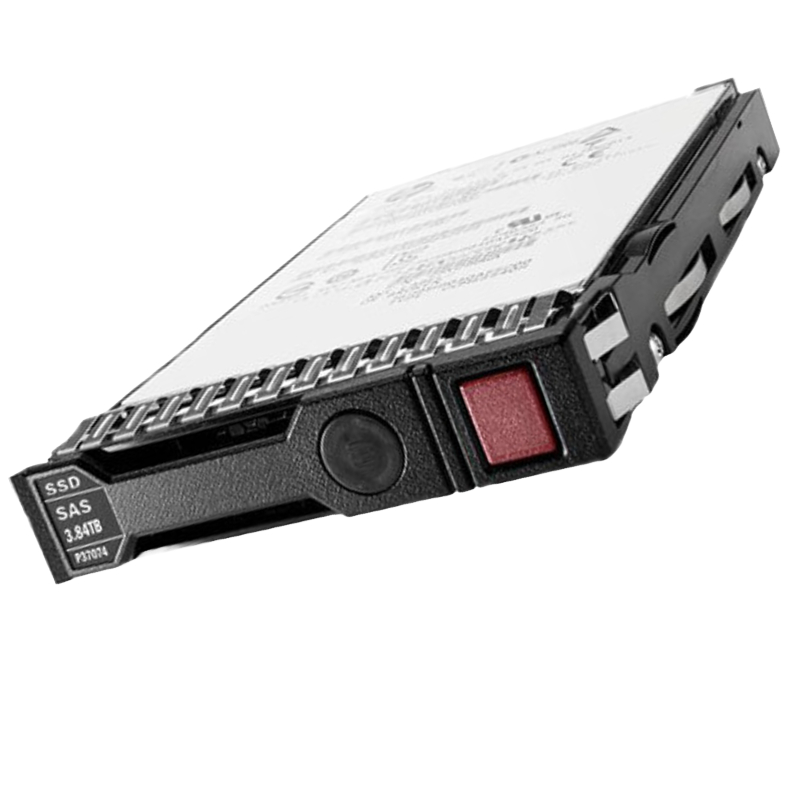


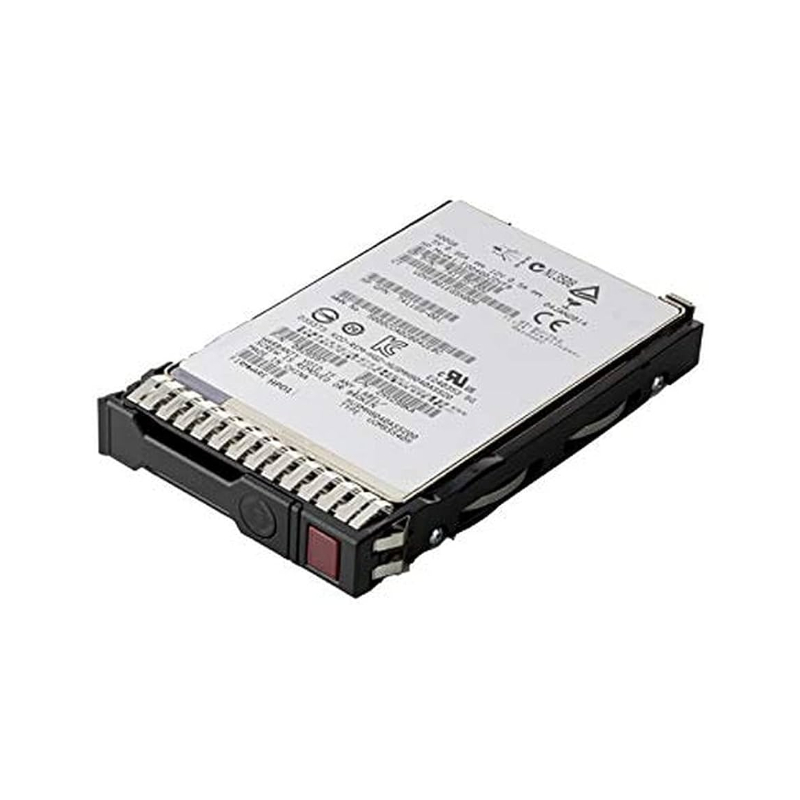
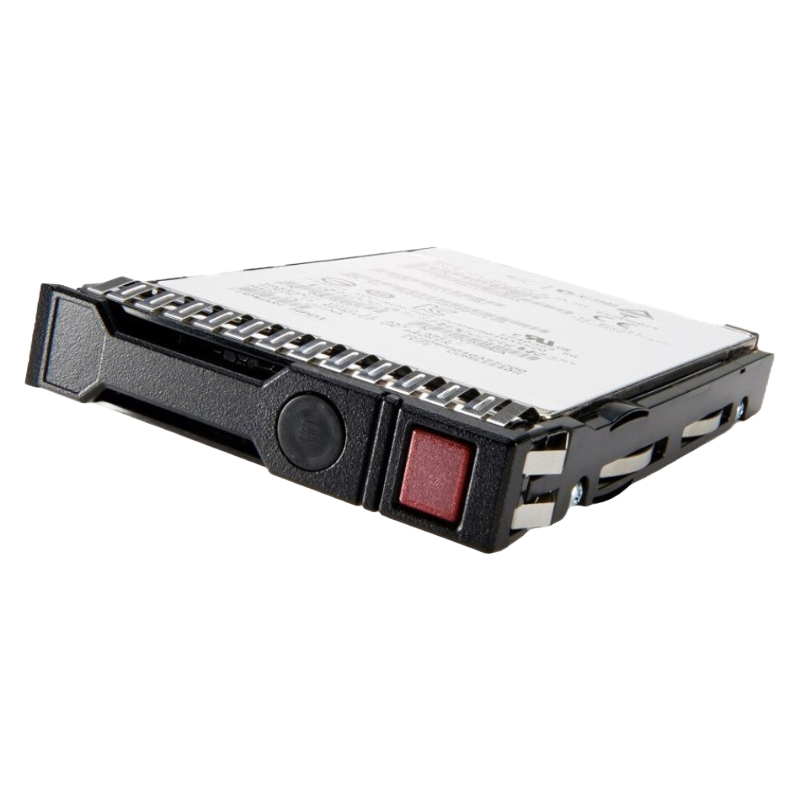
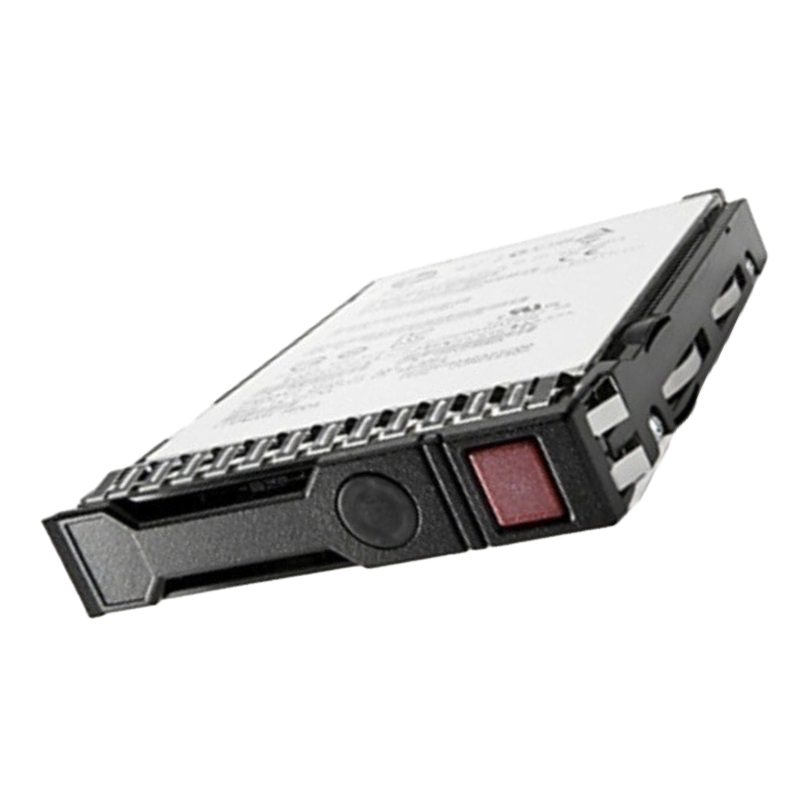
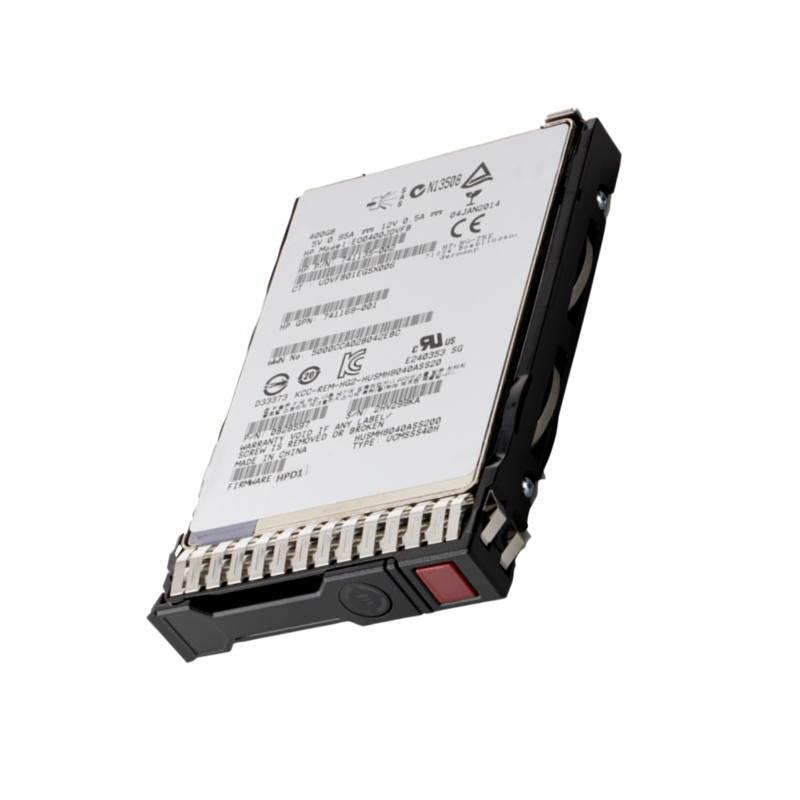
HPE P08632-001 3.84TB SATA 6GBPS Mixed Use Solid State Drive. Excellent Refurbished with 1 year replacement warranty
| SKU/MPN | Warranty | Price | Condition | You save |
|---|---|---|---|---|
| P08632-001 | 1 Year Warranty | $1,947.00 | Factory-Sealed New in Original Box (FSB) | You save: $681.45 (26%) |
| P08632-001 | 1 Year Warranty | $1,320.00 | Excellent Refurbished | You save: $462.00 (26%) |
The P08632‑001 HPE 3.84TB SATA 6Gbps Mixed Use SSD fits squarely into this category, serving data center environments that demand both performance and endurance without the tradeoffs faced by drives optimized purely for caching or archive tasks.
In the realm of enterprise storage solutions, the mixed‑use solid state drive (SSD) segment bridges the gap between read‑intensive and write‑intensive applications. This category represents drives engineered to endure a balanced workload composition of reads, writes, and mixed I/O operations. The P08632‑001 HPE 3.84TB SATA 6Gbps Mixed Use SSD fits squarely into this category, serving data center environments that demand both performance and endurance without the tradeoffs faced by drives optimized purely for caching or archive tasks.
Mixed‑use SSDs such as the HPE P08632‑001 are designed to deliver consistent throughput, low latency, and sustained endurance under real‑world enterprise loads. Unlike purely read-optimized or write-optimized models, mixed‑use SSDs manage a combination of random writes, sequential reads, and background tasks. This balance makes them ideal for virtualized infrastructures, medium-tier databases, log storage, analytics workloads, and general-purpose tiered storage.
The defining characteristics of the P08632‑001 family and its peers include high reliability, firmware integrity, and endurance metrics suited for enterprise demands. The SATA 6Gbps interface ensures compatibility with mature server architectures, while the hot-pluggable design allows maintenance without system downtime. With a 2.5‑inch form factor and smart carrier support, these drives integrate seamlessly into modern rack servers and storage enclosures.
At the flash level, triple-level cell (TLC) NAND memory remains the workhorse of this class, offering a favorable balance of cost, capacity, and performance. Manufacturers implement robust error correction, wear leveling, and overprovisioning tactics to extend drive longevity under mixed workloads. Digitally signed firmware further ensures data integrity by locking down the firmware image against unauthorized modifications, a critical feature in data-sensitive environments.
Endurance ratings in this category typically fall around a few drive writes per day (DWPD), reflecting the expectation that the drive will see both reads and writes in moderate amounts daily. Performance numbers often cite sustained sequential throughput, random I/O latency (particularly for 4KiB transfers), and full drive performance under mixed I/O patterns. These drives are engineered to maintain consistent performance over time, even as cells age.
Drives in the P08632‑001 class often come in multiples of terabytes, with 3.84TB being a common mid‑to‑high capacity offering. The 2.5‑inch form factor remains predominant because it supports high density in server chassis and allows for efficient cooling and mechanical integration. These specifications make the SSD suitable for a wide variety of enterprise systems, from blade and rack servers to hybrid storage platforms.
The SATA 6Gbps (also known as SATA III) interface continues to be viable in many environments due to its broad hardware support and predictable performance characteristics. Although PCIe/NVMe SSDs offer higher bandwidth, SATA 6Gbps remains adequate for many balanced workloads, especially when latency and consistency are more critical than raw throughput. Mixed‑use SSDs rely on SATA’s maturity and ubiquity while leveraging controller efficiencies and optimized data paths to extract maximum performance within that bandwidth.
The ability to hot-swap the drive is a critical operational requirement in enterprise systems, enabling maintenance or replacement without downtime. The P08632‑001 and similar models adopt smart carriers that align power, signal, and eject mechanisms without manual handling of connectors. This design minimizes downtime and risk in data center operations.
Triple-level cell (TLC) NAND is the flash memory staple for mixed‑use SSDs in this category. To achieve lasting reliability, manufacturers embed advanced firmware mechanisms: wear leveling distributes writes evenly across memory cells, error correction codes (ECC) detect and correct bit errors, and overprovisioning reserves spare flash capacity for maintenance tasks. The inclusion of digitally signed firmware ensures that only authenticated code can execute, protecting against firmware corruption or malicious tampering—a key attribute for mission‑critical environments.
Endurance in this class is typically expressed in DWPD (Drive Writes Per Day) over a warranty period. The P08632‑001 variant supports up to about 3.10 DWPD sustained over its service life, which is well suited for balanced workload profiles. This rating implies that the drive can endure writing nearly three times its capacity daily for every day of operation under its rated term. In addition, manufacturers may provide a 30‑day writes metric, reflecting cumulative endurance over a shorter interval—this helps system planners gauge medium‑term write demands.
Enterprise mixed‑use drives must excel in both sequential and random access patterns. In the P08632‑001 class, sequential throughput may reach external transfer speeds of up to 600 MB/s, with maximum sequential reads around 525 MiB/s and maximum sequential writes around 480 MiB/s. These numbers demonstrate the drive’s ability to handle large streaming data and bulk transfer cases. Yet beyond streaming, these drives also deliver competitive random I/O performance, particularly for 4KiB random reads under queue depth 1—average latency might remain around 110 microseconds in real-world conditions.
For mission-critical applications, consistent I/O latency is as important as peak bandwidth. Mixed‑use SSDs ensure that latency remains predictable across varied workloads by throttling internal operations such as garbage collection and wear leveling. By smoothing internal tasks, the result is stable latency even during heavy write bursts, enabling the drive to maintain Service Level Agreements (SLAs) in enterprise applications.
In virtualized platforms and hyperconverged setups, storage must service a mix of read and write operations from multiple virtual machines. The P08632‑001 class handles this mixed I/O elegantly, enabling VM boot, swap, logging, and data access to run concurrently without performance cliffs. Its endurance metrics and stable latency make it well suited for moderate to heavy VM hosting, caching tiers, and metadata storage.
Mid‑tier databases (e.g. no‑SQL stores, OLTP clusters, time-series databases, log‑centric systems) often generate a blend of reads, writes, updates, and background indexing tasks. Mixed‑use SSDs provide the ideal balance: enough write endurance to handle constant updates, and the performance to support analytic reads. In data analytics nodes where datasets are in constant flux, these drives serve as an essential intermediate tier between memory and cold archival storage.
Many storage architectures adopt hierarchical tiers—hot, warm, and cold. The mixed‑use SSD tier sits in the “warm” region, absorbing variable loads that are too hot for hard disk drives but do not demand the highest bandwidth of NVMe. The P08632‑001 class is well suited as a caching or performance tier, accelerating database indexes, metadata tables, or other frequently accessed content without overinvesting in the top-tier SSD class.
For environments with variable workloads—such as file servers, collaboration platforms, email clusters, content management systems, and backup staging—mixed‑use SSDs offer a robust compromise. The flexible performance envelope handles bursty writes, heavy reads, and background maintenance without degenerating as usage conditions evolve.
Drives in the P08632‑001 category were validated for compatibility with a wide range of servers in a particular vendor’s portfolio. These include Gen10 and Gen10 Plus systems, often in 2.5‑inch bay configurations. Engineers can deploy these SSDs across multiple server families without worrying about firmware mismatches or unsupported hardware. Because the drive uses a standard SATA interface and smart carrier design, mechanical and electrical compatibility is largely assured across certified platforms.
Firmware is a critical element. In this class, updates may be cryptographically signed to ensure only authorized images are accepted. Administrators must remain current with firmware revisions to benefit from performance tweaks, fixes, and diagnostic improvements. The vendor typically provides management utilities or integrated server tools to monitor drive health, map wear metrics, and schedule proactive replacements when thresholds approach defined limits.
Enterprise drive choices must accommodate the thermal envelope of server enclosures and airflow patterns. The P08632‑001 class is engineered for typical rack environments, drawing moderate power while maintaining consistent performance across temperature ranges. Proper cooling and airflow management are vital to prevent thermal throttling or firmware safety modes. System integrators should verify enclosure specs and confirm that ambient temperatures remain within recommended thresholds.
While the mixed‑use SSD class does support deployment within RAID arrays, planners must consider wear leveling across drives, overprovisioning impact, and consistency across drive generations. Mixed workloads mean that balancing write stress is important across the array. Using homogeneous drives from the P08632‑001 class helps maintain performance symmetry. Fault tolerance and redundancy schemas such as RAID‑5, RAID‑6, or erasure coding should be tuned based on application priority, considering the endurance, rebuild speed, and background operation impact on performance.
Many mixed‑use SSD systems benefit from additional overprovisioning beyond factory defaults. By reserving extra capacity for firmware internal use, the drive can better manage wear leveling and reduce write amplification. System administrators can choose to leave a portion of the 3.84TB unallocated, effectively boosting drive longevity under mixed access patterns.
Designing workloads to operate at moderate queue depths and exploit internal parallelism helps achieve optimal throughput. Mixed‑use workloads should be mapped to queue depths that prevent saturation or bottlenecks. In typical enterprise OS and virtualization environments, tuning I/O schedulers or using native NVMe emulation layers (when applicable) can align transaction dispatching to the drive’s internal architecture for smoother performance.
During idle or off-peak windows, background tasks such as garbage collection, defragmentation (logical mapping), or health scanning may execute. The mixed‑use SSD class is engineered to amortize such tasks across time to avoid performance drops. However, configuring host system schedules to avoid heavy host I/O during these maintenance windows can further preserve user-facing performance. Many controllers also support prioritization of foreground traffic over internal housekeeping to maintain service consistency.
Read‑intensive SSDs are optimized for environments dominated by read traffic, offering lower cost per GB but constrained write endurance. In contrast, the P08632‑001 class offers higher durability and better write tolerance at some performance cost. In deployments where writes are significant but not overwhelming, mixed‑use drives deliver better longevity and service continuity than read‑only models.
Write‑intensive SSDs boast very high endurance—perhaps 10+ DWPD—but at a premium cost. For workloads not continuously writing at maximum levels, mixed‑use drives strike the sweet spot, offering adequate endurance at more efficient cost, while avoiding the overkill of specialty write models. For many enterprise customers, mixed‑use represents optimal ROI balancing endurance, performance, and expense.
Within hierarchical storage designs, mixed‑use SSDs are positioned above spinning media and below top-tier NVMe flash. This tiered approach ensures cost-efficiency. P08632‑001 class drives deliver performance uplift for frequently accessed datasets without overspending on ultra‑high-end flash. Their balance of throughput, latency, and endurance gives system architects flexibility in workload placement.
After powering up storage systems, a ramp period allows the drive to stabilize thermal and internal mapping behavior before full production load. This period lets background tasks adapt gradually, reducing initial performance dips or latency spikes. By throttling I/O during warm-up, the system can transition smoothly to full throughput.
Mapping workloads by I/O intensity, read/write ratio, and random vs sequential mix helps determine ideal placement on the mixed‑use tier. Transactional services, metadata operations, and small footprint databases benefit from being in this class. Workloads with sustained extreme writes or purely archival reads might better live elsewhere in the stack.
The mixed‑use SSD class supports integration with common enterprise protocols such as SCSI, SAS controllers with SATA passthrough, and storage array controllers. In hybrid arrays, the P08632‑001 series works interchangeably with other SSD tiers as long as the host supports SATA 6Gbps and adheres to standard commands and timings. Because many server platforms already embed SATA infrastructure, adoption cost is minimized.
The category benefits from a vendor‑provided firmware toolkit that offers health monitoring, diagnostics, firmware upgrades, and event logging. Administrators should deploy management agents that tie into server management frameworks (OEM controllers, iLO, remote management interfaces) to surface drive alerts, threshold crossings, and predicted wear events. This ecosystem alignment ensures that the drive functions not as a standalone device but as part of a managed storage infrastructure.
In planning drive rotation or replacement, administrators should consider installing new drives before wear thresholds are exceeded. Because mixed‑use SSDs accumulate wear both from reads and writes, tracking aggregate write volume plus wear indicators is essential. Replacement paths should preserve performance consistency by selecting drives from the same family or specification class, avoiding performance perforation due to mixing drive classes.
As SSD controllers evolve, future mixed‑use drives may adopt machine learning techniques to anticipate workload patterns and dynamically adjust internal mapping, garbage collection, or cache behavior. These advances will push the envelop of performance stability under random mixed I/O, especially for workloads that shift between read- and write-focused phases.
While triple-level cell (TLC) NAND is standard today, some future mixed‑use SSDs might begin to adopt quad-level cell (QLC) or even five-level cell (5LC) flash as controller intelligence and error correction advance. These changes could push raw capacities higher while retaining endurance through careful firmware and overprovisioning strategies.
Some emerging devices combine SATA or SAS fallback paths with NVMe or PCIe lanes to provide backward compatibility while enabling future performance modes. Mixed‑use SSDs in this hybrid category will benefit from deployment flexibility, letting devices run in legacy modes while offering upgrade paths to higher bandwidth.
In forward-looking drive designs, firmware may automatically adjust internal overprovisioning based on observed workload patterns. For instance, when a drive senses it is under write-heavy bursts, it might allocate additional spare blocks temporarily and revert when activity stabilizes. This adaptive endurance scaling can improve lifespan without overallocating static reserve blocks.
In software-defined storage (SDS) systems, mixed‑use SSDs like the P08632‑001 class often form the backbone of hybrid storage tiers. SDS frameworks can expose tiering policies that dynamically migrate hot or warm data into this class, while colder data resides on HDD or archival media. The balance of throughput, latency, and endurance makes this SSD class ideal for SDS caching, journaling, and tiering layers.
Storage platforms are increasingly embedding analytics pipelines that ingest drive telemetry to predict failures or performance degradation. Mixed‑use SSDs feed rich health metadata into these systems through SMART logs and vendor APIs. By analyzing patterns across thousands of drives, predictive models help time replacements and preempt wear-induced issues. In the P08632‑001 class, careful telemetry integration ensures that automatic systems can optimize workload placement and schedule maintenance proactively.


 Contact Us
 Information
 Catalog
 Solid State Drives (SSD)
 Network Switches
 Hard Disk Drives
 HBA & Controllers
 PC & Servers
 PC & Server Memory
 CPU & Processors
 Network Routers
 Power Supplies
 Tape Drives & Libraries
 Network Devices
 Computer & Network Cables