(7% discount is applied at checkout)
Cart is empty
Your go-to destination for cutting-edge server products
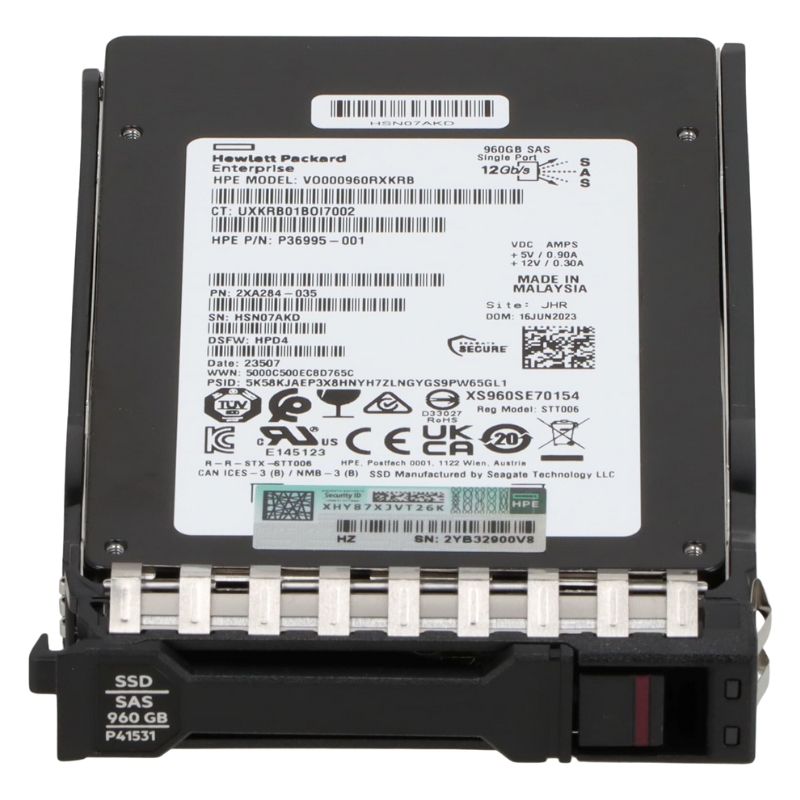


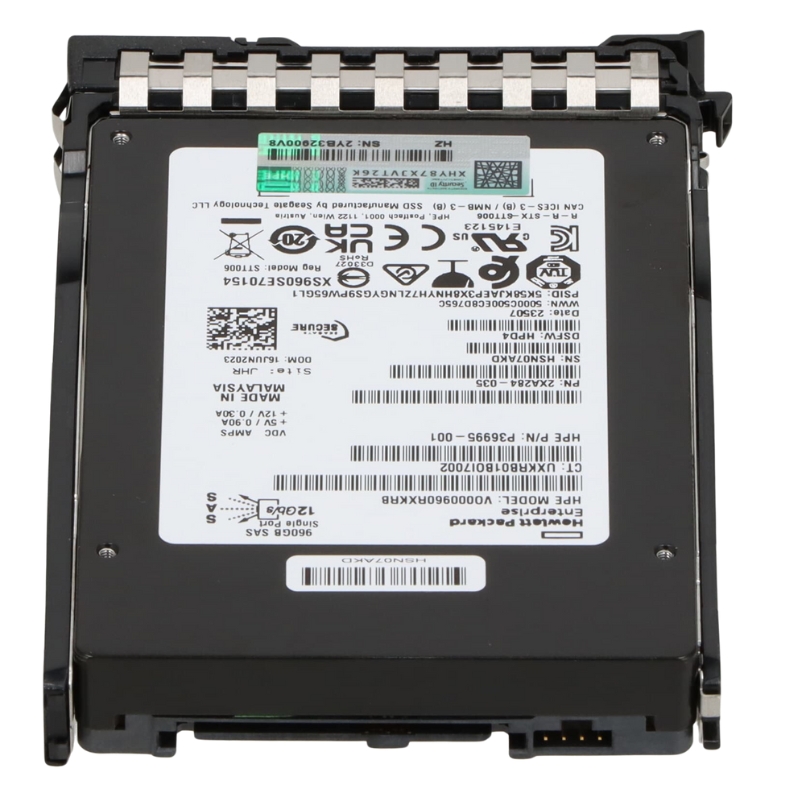
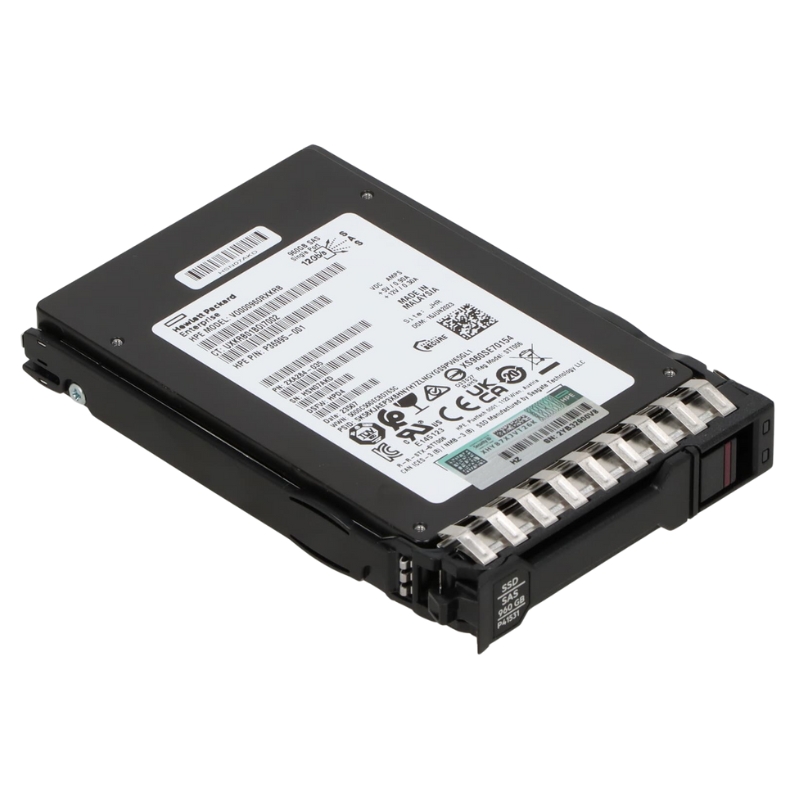
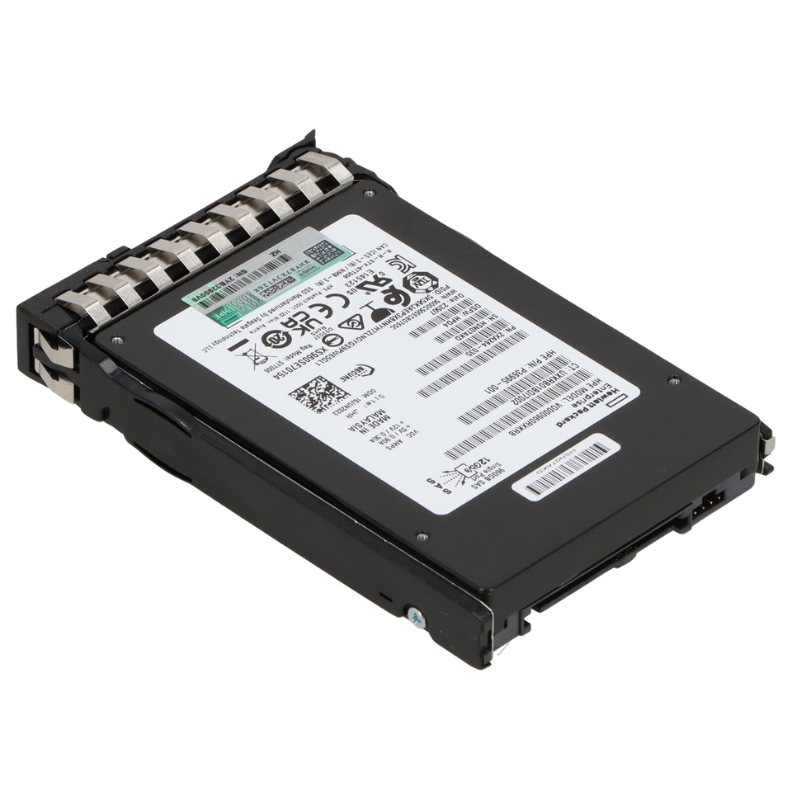
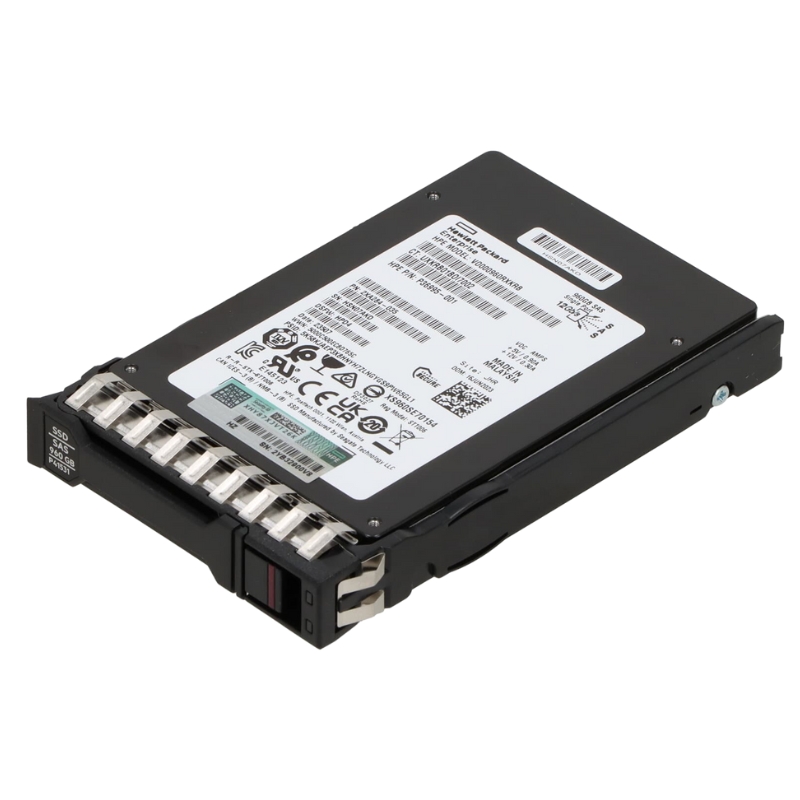
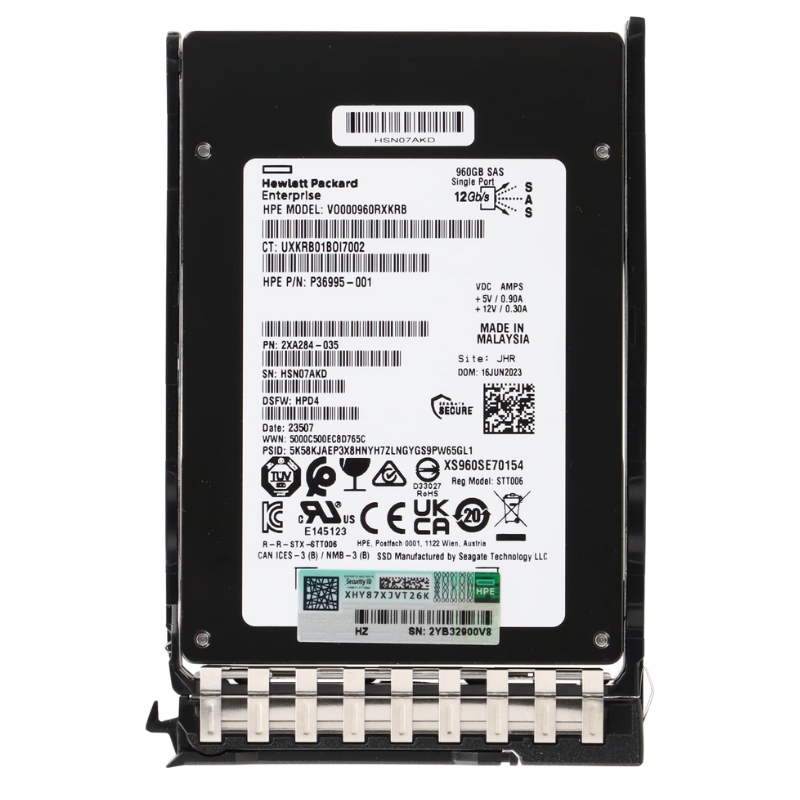
HPE P41531-001 960GB SAS 12GBPS 2.5 Inch SFF Read Intensive SSD. Factory-Sealed New in Original Box (FSB) with 3 Year Warranty
HPE P41531-001 960GB SAS Read-Intensive SSD
The HPE P41531-001 960GB SAS 12G Read-Intensive SFF Solid State Drive is a high-performance, energy-efficient, and hot-swappable storage solution tailored for modern enterprise environments. Designed with Digitally Signed Firmware for secure integration and consistent operation, this SSD ensures reliability, stability, and long-term durability in data-centric infrastructures. It is engineered to deliver faster read speeds, lower latency, and exceptional data transfer efficiency for businesses relying on HPE ProLiant Gen10 Plus servers and similar systems.
The HPE P41531-001 960GB SAS 12Gb/s 2.5-inch Small Form Factor (SFF) Read-Intensive Solid State Drive is purpose-built for enterprise storage tiers where read performance, latency consistency, and high availability are primary requirements. This category of drives is tailored for environments such as virtualization read caches, large-scale file servers, analytics engines, content delivery and media libraries, search indexes, and other workloads that predominantly service read requests. The drive bridges the gap between high-capacity spinning media and the ultra-low latency of write-optimized enterprise SSDs by delivering an optimized balance of capacity, throughput, and cost per gigabyte for read-dominant workloads.
Interface: SAS 12Gb/s (second-generation SAS) — enterprise-class connectivity with dual-port options and compatibility with a wide range of HPE servers and controllers.
Form Factor: 2.5-inch SFF — compact footprint suitable for dense server and storage arrays, hot-swap trays, and modern enclosures.
Workload Profile: Read-intensive — optimized firmware and media provisioning to favor sustained read throughput and consistent latency over heavy random write endurance.
Capacity Point: 960GB — strikes a balance between usable capacity and predictable performance characteristics without the higher cost of larger, write-endurance focused SSDs.
Enterprise Reliability Features: Power-loss protection, SMART telemetry, error correction, and firmware features that integrate with HPE storage management ecosystems.
The SAS 12Gb/s interface provides an enterprise-grade link with higher bandwidth than 6Gb/s SAS and SATA variants, enabling improved sequential throughput and lower latency for demanding read patterns. In server and SAN deployments, SAS often provides dual-port capability, which allows a drive to be accessed through two independent controllers or paths — a critical feature for high-availability setups and multipath I/O. For operations that require redundancy (for example, active/passive controllers or clustered file systems), SAS dual-porting supports non-disruptive failover and improves mean time to data recovery.
The 2.5-inch SFF form factor is now the predominant choice for modern servers and storage shelves because it supports greater drive density per chassis and reduces power and cooling overhead compared with 3.5-inch media. SFF drives are typically used in hot-swap carriers that permit tool-less drive replacement and allow service technicians to refresh storage without powering down systems—critical for enterprise SLAs.
Drives in this category typically run firmware optimized for read caching and background media maintenance tasks like wear leveling, garbage collection, and read-centric caching behaviors. Firmware plays a major role in managing the tradeoffs between sustained throughput, background write amplification, and drive longevity. HPE-branded or HPE-qualified drives are often certified for specific firmware revisions to ensure compatibility with Smart Array controllers and server management tools.
Enterprise SSDs commonly include SMART reporting and detailed telemetry that allow administrators to monitor health, endurance remaining, and predictive failure indicators. Advanced drives may support features such as power-loss protection capacitors, Data at Rest Encryption (optional Self-Encrypting Drive — SED), and enhanced error correction that reduce the risk of uncorrectable read errors.
Monitor drive health via HPE Integrated Lights-Out (iLO) and Onboard Administrator.Firmware updates and drive inventories through HPE OneView and server management suites.
Interoperability testing with HPE Smart Array controllers and ProLiant server families ensures predictable behavior in supported configurations.
When planning deployments, ensure that server firmware, RAID/controller drivers, and the chassis backplane support 12Gb/s SAS links and the 2.5-inch form factor. HPE certified drives are validated to work with a broad range of ProLiant and Apollo systems as well as HPE storage arrays; however, always confirm compatibility matrices for the precise server model and controller revision. Multipath and dual-controller topologies require appropriate cabling and backplane design to exploit SAS dual-porting.
Use manufacturer-approved carriers and sleds to preserve airflow and mechanical fit. Hot-swap serviceability is a key operational benefit — ensure hot-swap procedures are documented and that your OS and RAID controller support online replacement and rebuild for minimal service disruption.
Keep drive firmware and RAID controller drivers current to benefit from performance improvements, bug fixes, and compatibility updates. Many firmware updates enhance background media maintenance algorithms or address corner cases that could impact rebuild times. When applying updates in enterprise environments, follow validated update paths and test in a non-production environment where possible.
Read-intensive SSDs fit naturally into multi-tiered storage strategies. A common pattern places faster, smaller write-optimized SSDs (or NVMe cache layers) at the top for transient write acceleration, read-intensive SAS SSDs for a middle tier that houses hot datasets, and high-capacity HDDs for cold storage. This configuration delivers strong read performance and capacity efficiency without resorting to a full all-flash array.
For enterprise resilience, use RAID configurations appropriate for the performance and redundancy needs of your workloads. RAID 10 delivers excellent performance and redundancy at the cost of usable capacity, while RAID 6 or RAID 5 may be selected to increase usable space while tolerating drive failures. Consider rebuild times and the impact on overall array performance; read-optimized SSDs often speed rebuilds compared to HDDs, but controller settings and rebuild policies still matter.


 Contact Us
 Information
 Catalog
 Solid State Drives (SSD)
 Network Switches
 Hard Disk Drives
 HBA & Controllers
 PC & Servers
 PC & Server Memory
 CPU & Processors
 Network Routers
 Power Supplies
 Tape Drives & Libraries
 Network Devices
 Computer & Network Cables