(7% discount is applied at checkout)
Cart is empty
Your go-to destination for cutting-edge server products


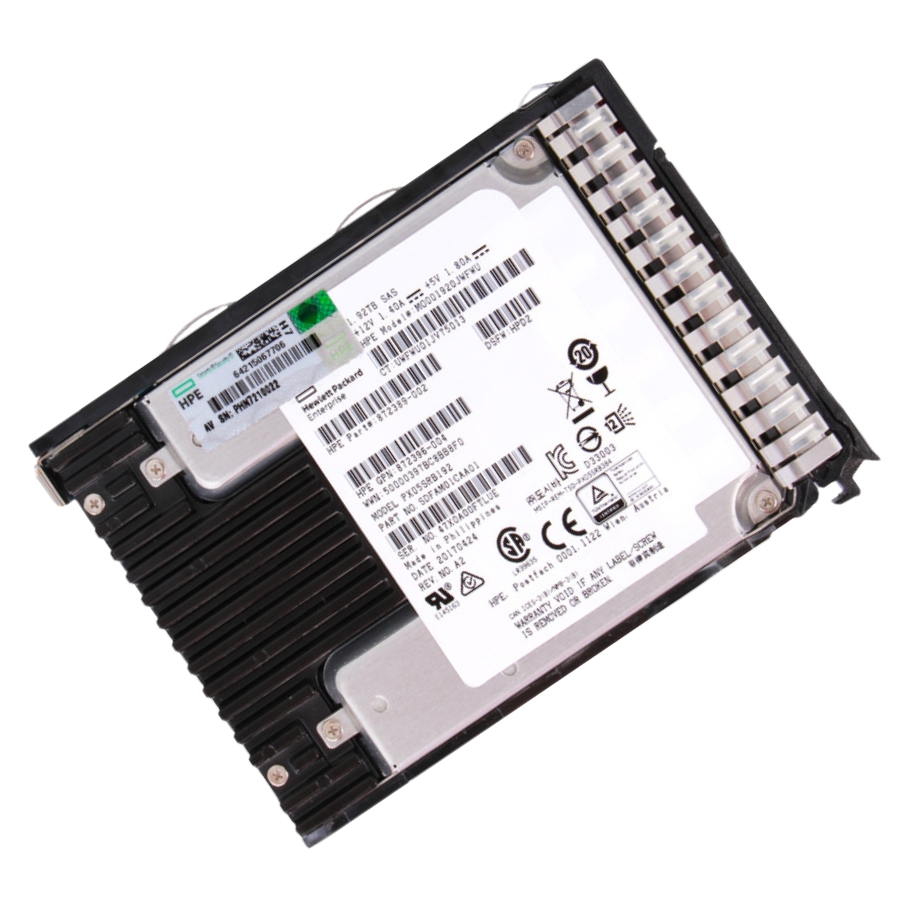
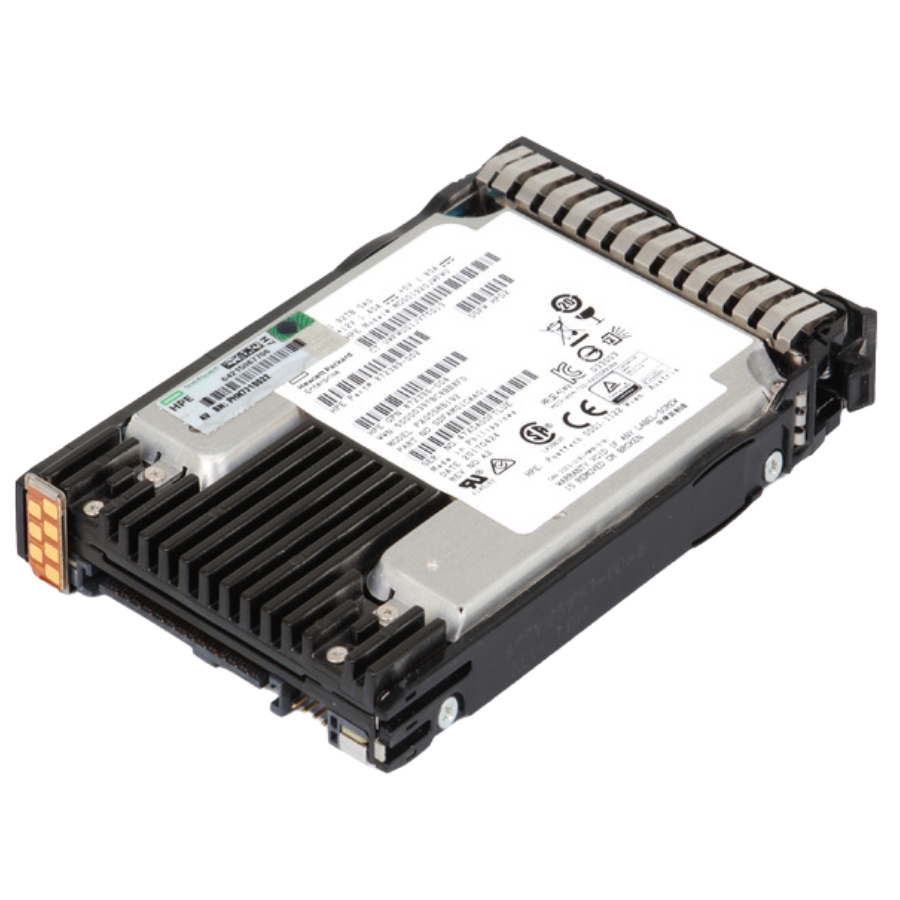
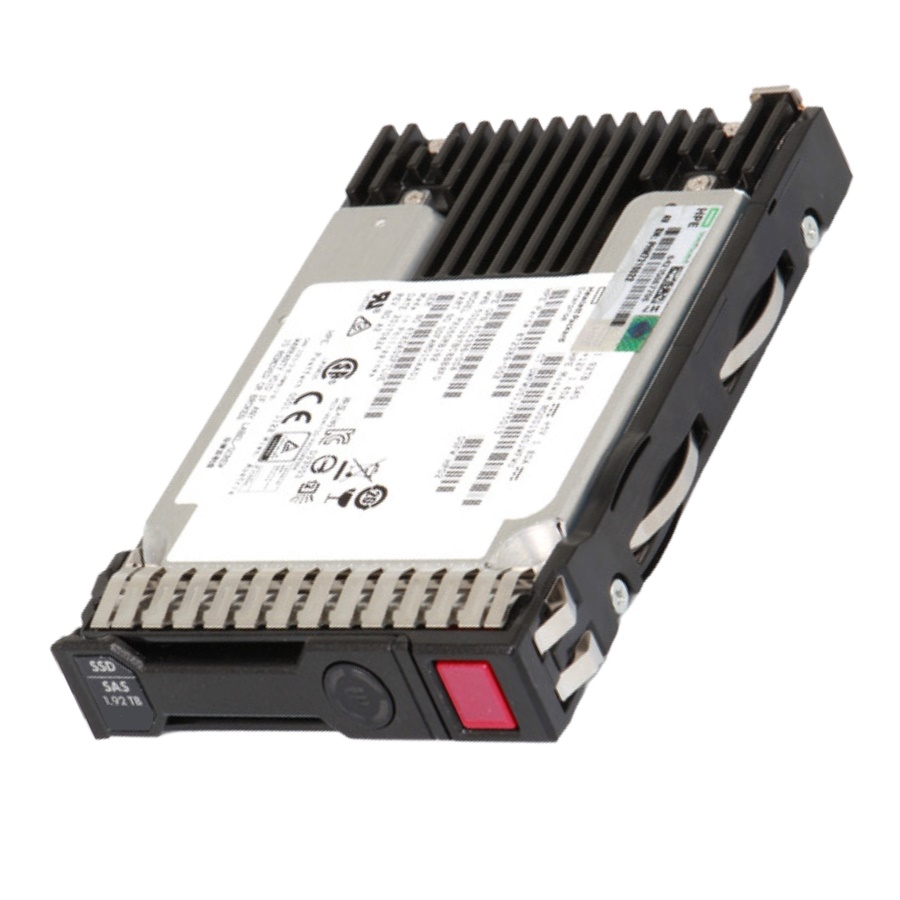
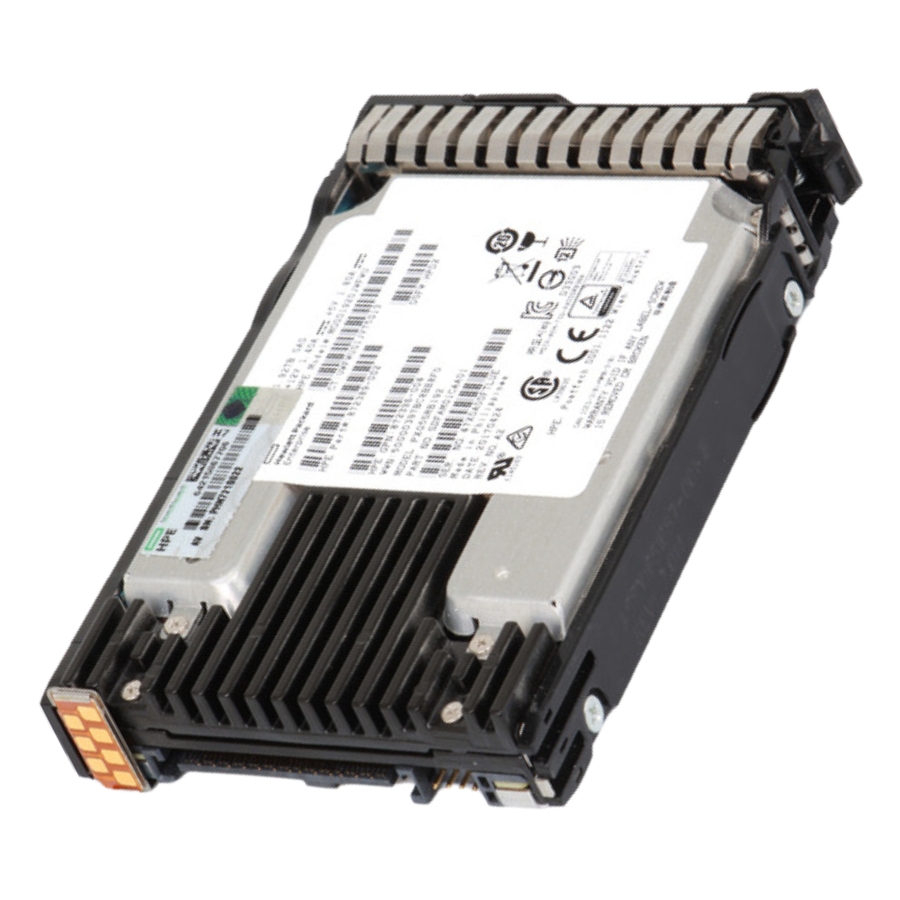
HPE P41536-001 1.92TB SAS 12GBPS SSD Mixed Use BC Hot Swap. Factory-Sealed New in Original Box (FSB) With 3 Years Warranty
| SKU/MPN | Warranty | Price | Condition | You save |
|---|---|---|---|---|
| P41536-001 | 1 Year Warranty | $1,487.00 | New (System) Pull | You save: $520.45 (26%) |
| P41536-001 | 1 Year Warranty | $1,662.00 | Factory-Sealed New in Original Box (FSB) | You save: $581.70 (26%) |
Enterprise-grade solid-state drive optimized for mixed workloads. The HPE P41536-001 is a 1.92 TB SAS (12 Gb/s) SFF (2.5") SSD featuring TLC flash, digitally-signed firmware and hot-swappable tray support for HPE ProLiant systems and other compatible storage platforms.
Designed for demanding mixed-use environments where balanced read/write performance and low latency matter.
The HPE P41536-001 represents a high-performance 1.92TB solid state drive engineered specifically for enterprise storage environments requiring consistent performance and exceptional reliability. This Mixed Use SAS SSD delivers the optimal balance of read and write performance, making it suitable for a wide range of business-critical applications where storage responsiveness directly impacts operational efficiency.
The Mixed Use designation of the HPE P41536-001 indicates its engineering for environments where the write workload typically falls between 10-30% of total operations. This balanced approach ensures that the drive can efficiently handle database transactions, virtualization workloads, and collaborative applications where both data retrieval and data creation occur frequently throughout operational cycles.
Enterprise SSDs are typically categorized by their intended workload patterns. Read-Intensive (RI) drives are optimized for scenarios where data retrieval dominates, featuring lower write endurance but cost-effective performance for archival or reference data. Write-Intensive (WI) drives offer heightened endurance for write-heavy applications like logging or data capture. The Mixed Use classification of the P41536-001 positions it as the versatile solution for general enterprise applications where workload patterns vary and predictability is challenging.
SAS (Serial Attached SCSI) represents the enterprise standard for storage connectivity, offering significant advantages over SATA interfaces in mission-critical environments. The dual-port capability inherent to SAS technology provides redundant pathways to the storage device, ensuring continuous data availability even in the event of a controller failure—a critical feature for high-availability systems.
With a theoretical maximum transfer rate of 12 gigabits per second, the SAS interface on the P41536-001 delivers approximately twice the bandwidth of previous-generation 6Gb/s SAS drives. This enhanced throughput reduces data transfer bottlenecks, particularly important in storage environments supporting multiple virtual machines, database servers, or high-transaction applications where storage latency directly impacts user experience and application responsiveness.
The HPE P41536-001 maintains full backward compatibility with 6Gb/s and 3Gb/s SAS infrastructures, allowing organizations to deploy these drives in existing storage systems without requiring complete infrastructure overhaul. This compatibility protection ensures investment security while providing a clear performance upgrade path for aging storage environments.
Business Critical represents HPE's highest endurance classification for solid state drives, indicating that the P41536-001 is engineered for demanding 24/7 operation in performance-sensitive environments. This classification encompasses not just the raw write endurance (typically measured in Drive Writes Per Day), but also includes enhanced reliability features, extended warranty coverage, and performance consistency under sustained workload conditions.
The P41536-001 offers exceptional endurance with specifications that typically reach 3-5 Drive Writes Per Day (DWPD) over its 5-year warranty period, translating to petabytes of written data throughout its operational lifespan. This endurance level ensures that organizations can deploy the drive in applications with moderate to heavy write patterns without concerns about premature wear-out or performance degradation.
As a Business Critical component, the P41536-001 incorporates advanced error correction, power-loss protection, and sophisticated wear-leveling algorithms that distribute write operations evenly across all available NAND cells. These technologies work in concert to maintain data integrity, prevent unexpected downtime, and deliver consistent input/output operations per second (IOPS) throughout the drive's operational life.
The 1.92TB capacity point represents an optimal balance between storage density and performance characteristics. This specific capacity allows for efficient storage allocation in RAID configurations while providing substantial space for operating systems, applications, and data within a compact 2.5-inch form factor. The capacity is achieved through intelligent over-provisioning that reserves a portion of the NAND flash for background operations, garbage collection, and wear leveling.
Enterprise SSDs like the P41536-001 typically feature significant over-provisioning (often 20-28% beyond the advertised capacity) to maintain consistent performance under heavy workloads. This reserved space allows the drive controller to manage write amplification effectively, execute garbage collection processes without impacting host operations, and maintain performance consistency even as the drive approaches capacity limits.
Larger capacity SSDs generally deliver higher performance than their lower-capacity counterparts due to increased parallelism opportunities across more NAND flash packages. The 1.92TB capacity of the P41536-001 enables the drive controller to distribute operations across multiple NAND channels simultaneously, resulting in higher IOPS and lower latency compared to drives with smaller capacities using similar NAND technology.
The hot-plug capability of the P41536-001 allows for drive installation or removal while the storage system remains powered on and operational. This feature is essential for maintaining continuous service availability in enterprise environments where scheduled downtime is unacceptable. Hot swap functionality enables proactive maintenance, capacity expansion, and failed drive replacement without disrupting services dependent on the storage infrastructure.
Proper hot swap procedures require coordination with the storage system's management software to ensure the drive is logically prepared for removal before physical extraction. Most HPE storage systems provide visual indicators (typically LED lights) to signal when a drive is safe to remove. Following manufacturer guidelines for hot swap operations prevents data corruption and ensures the storage array can properly reconstruct redundancy if configured in a RAID environment.
While cold swapping (powering down the system before drive replacement) remains an option for maintenance, the hot swap capability of the P41536-001 eliminates the service disruption associated with system shutdowns. This distinction becomes increasingly important as organizations pursue higher service level agreements (SLAs) and implement always-on infrastructure designs for critical business applications.
The P41536-001 delivers exceptional performance across both random and sequential workload patterns. Random performance, measured in Input/Output Operations Per Second (IOPS), determines how effectively the drive handles multiple simultaneous small requests typical in database and virtualization environments. Sequential performance, measured in megabytes per second (MB/s), impacts large file transfers and streaming data applications.
Consistent low latency is a hallmark of enterprise SSDs like the P41536-001. The drive maintains predictable response times even under heavy load conditions, ensuring that application performance remains stable during peak usage periods. Advanced Quality of Service (QoS) features within the drive controller prioritize critical I/O operations to maintain service levels for business-critical applications.
Unlike consumer-grade SSDs that may deliver impressive short-term burst performance but throttle under sustained workloads, the P41536-001 is engineered to maintain consistent performance levels during continuous operation. This sustained performance characteristic is achieved through advanced thermal management, intelligent garbage collection algorithms, and sufficient over-provisioning to handle extended write operations without performance degradation.
The P41536-001 is validated for use across a broad range of HPE ProLiant servers, HPE Synergy systems, and HPE storage solutions including HPE Primera, HPE 3PAR, and HPE MSA platforms. This comprehensive compatibility ensures that organizations can standardize on a single drive model across multiple infrastructure components, simplifying spare parts inventory and operational procedures.
As a genuine HPE component, the P41536-001 includes firmware specifically tuned for HPE storage environments and integrates seamlessly with HPE management tools including HPE OneView, HPE SSMC (Storage System Manager), and HPE iLO (Integrated Lights-Out) management. This integration provides enhanced monitoring capabilities, predictive failure analysis, and simplified firmware maintenance through centralized management interfaces.
While optimized for HPE environments, the P41536-001 maintains standard SAS interface compatibility that enables operation in third-party storage systems supporting 12Gb/s SAS connectivity. However, organizations should verify specific compatibility with non-HPE systems and understand that advanced management features may require HPE-specific management infrastructure to access fully.
The P41536-001 excels in virtualized environments where multiple virtual machines generate concurrent, random I/O patterns. Its balanced read/write performance and consistent latency characteristics make it ideal for hypervisor boot volumes, virtual machine storage, and virtualization management components in private cloud and hybrid cloud deployments.
Database applications including SQL Server, Oracle Database, and MySQL benefit significantly from the low latency and high IOPS capabilities of the P41536-001. The drive's Mixed Use designation makes it particularly suitable for Online Transaction Processing (OLTP) systems where read and write operations occur with similar frequency throughout operational cycles.
In High-Performance Computing (HPC) and big data analytics environments, the P41536-001 provides the storage performance necessary to keep computational elements supplied with data. Its high sequential read performance accelerates data loading phases, while strong random write capabilities support intermediate calculation results and logging operations.
Media and entertainment applications leverage the P41536-001 for content repository storage where rapid access to large media files is essential. The drive's capacity and performance characteristics make it suitable for video editing workflows, content distribution networks, and streaming media platforms requiring consistent storage performance.
The P41536-001 utilizes Triple-Level Cell (TLC) NAND flash memory, which stores three bits of data per memory cell. While historically associated with consumer-grade storage, advancements in error correction, wear leveling, and write amplification management have enabled TLC technology to meet enterprise reliability requirements while providing superior cost-per-gigabyte value compared to Single-Level Cell (SLC) or Multi-Level Cell (MLC) alternatives.
At the heart of the P41536-001 resides a sophisticated storage controller featuring multiple processing cores, dedicated DRAM cache, and advanced algorithms for wear leveling, bad block management, and error correction. The controller coordinates data placement across multiple NAND flash packages while implementing power-loss protection mechanisms that ensure data integrity during unexpected power interruptions.
Enterprise SSDs require robust protection against data corruption during power failure events. The P41536-001 incorporates both architectural and component-level power-loss protection, typically including capacitors that provide sufficient temporary power to complete in-progress write operations and flush cache contents to non-volatile storage when primary power is interrupted.
Compared to SATA-based solid state drives, the P41536-001 offers significantly higher performance through its SAS 12Gb/s interface, dual-port redundancy for high availability, and enhanced reliability features tailored for 24/7 operation. While SATA SSDs may present a lower acquisition cost, the SAS architecture delivers superior total cost of ownership in mission-critical environments through reduced latency, higher throughput, and improved availability.
When compared to read-intensive SAS SSDs with similar capacity, the P41536-001 provides substantially higher write endurance and consistent performance under mixed workload conditions. While read-intensive drives may offer cost advantages for archival or reference data scenarios, the Mixed Use classification of the P41536-001 ensures optimal performance across diverse application patterns without write performance limitations.
While NVMe technology delivers higher theoretical performance through PCIe interfaces, the P41536-001 remains relevant in environments where SAS infrastructure is already deployed, when dual-port redundancy is required, or where cost-per-terabyte considerations favor SAS solutions. The extensive compatibility of SAS technology across server generations provides investment protection that may not be available with emerging NVMe architectures.


 Contact Us
 Information
 Catalog
 Solid State Drives (SSD)
 Network Switches
 Hard Disk Drives
 HBA & Controllers
 PC & Servers
 PC & Server Memory
 CPU & Processors
 Network Routers
 Power Supplies
 Tape Drives & Libraries
 Network Devices
 Computer & Network Cables