(7% discount is applied at checkout)
Cart is empty
Your go-to destination for cutting-edge server products
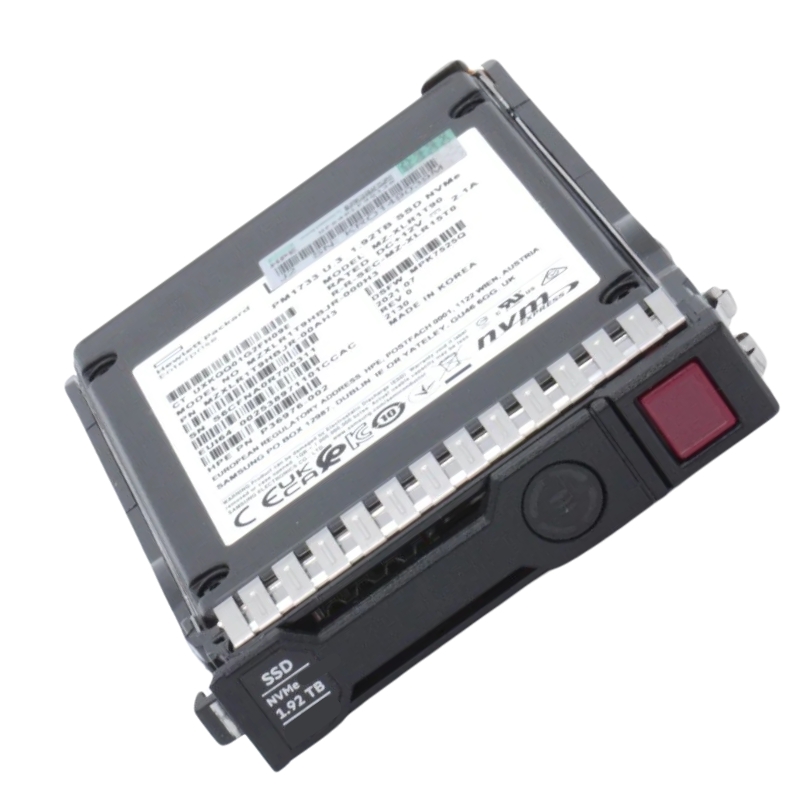


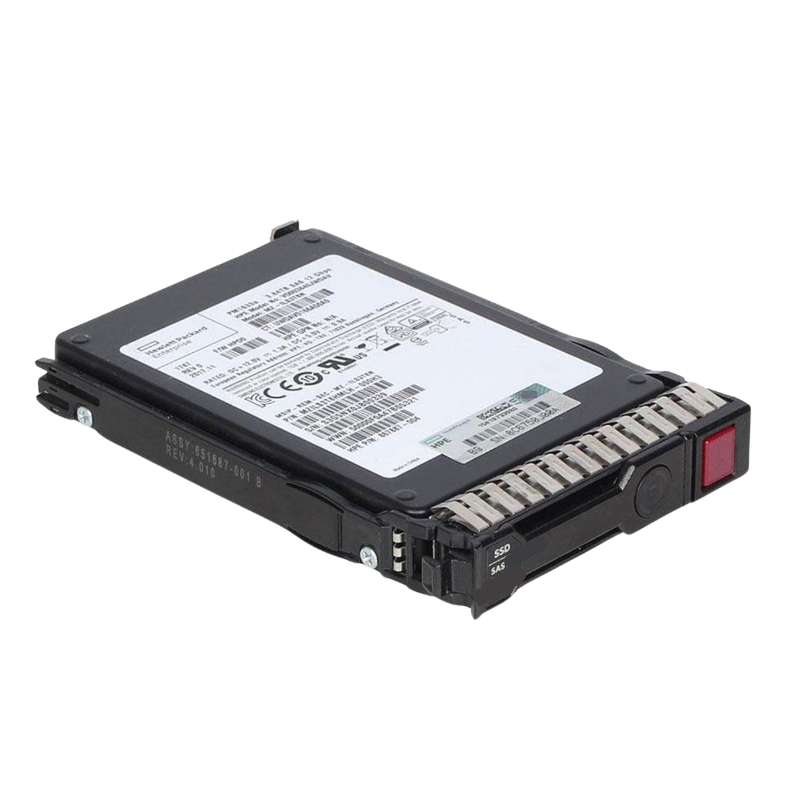
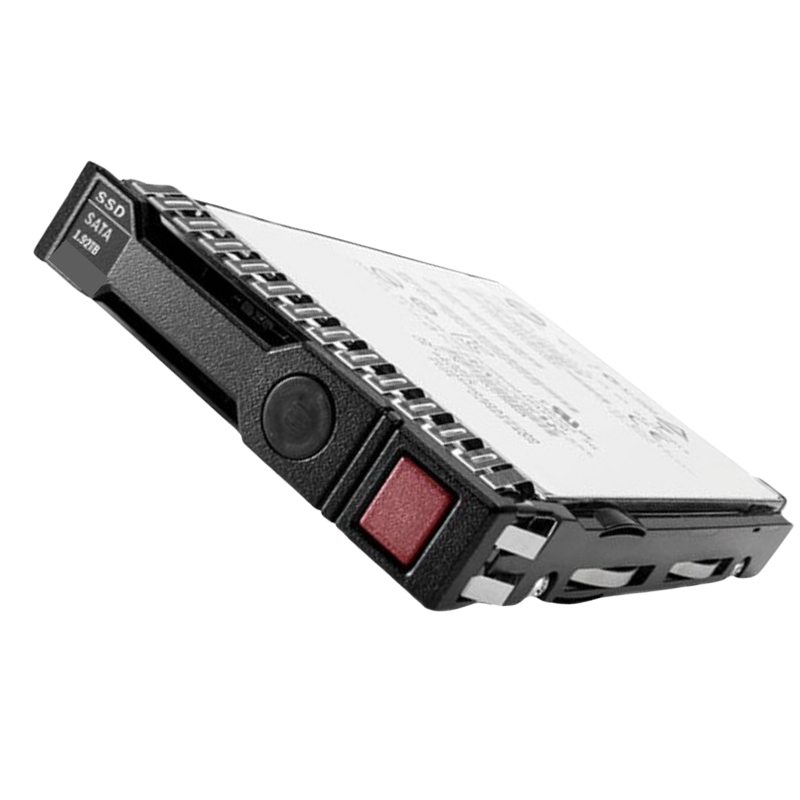
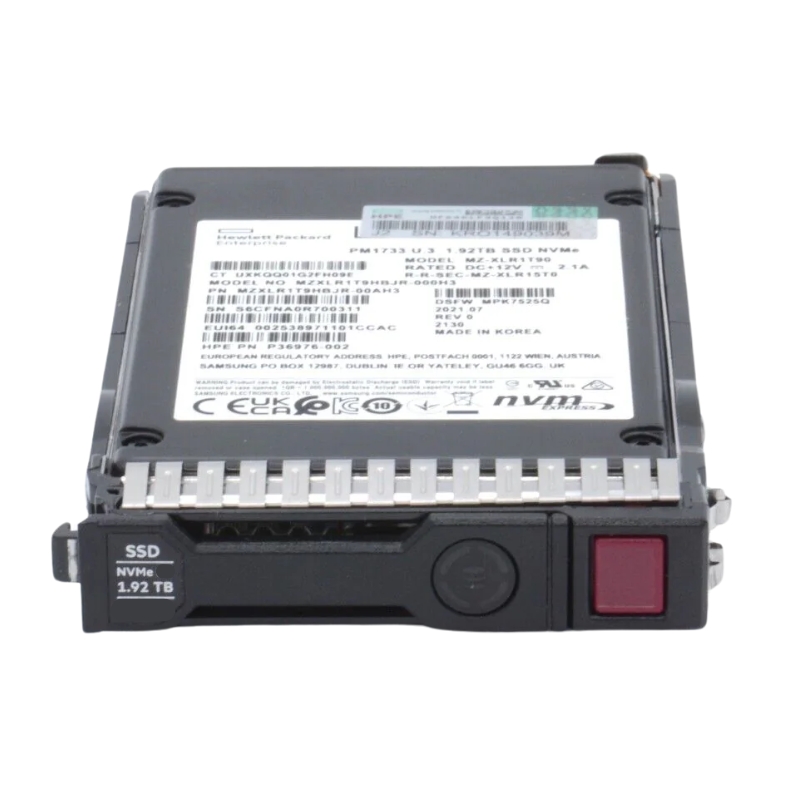
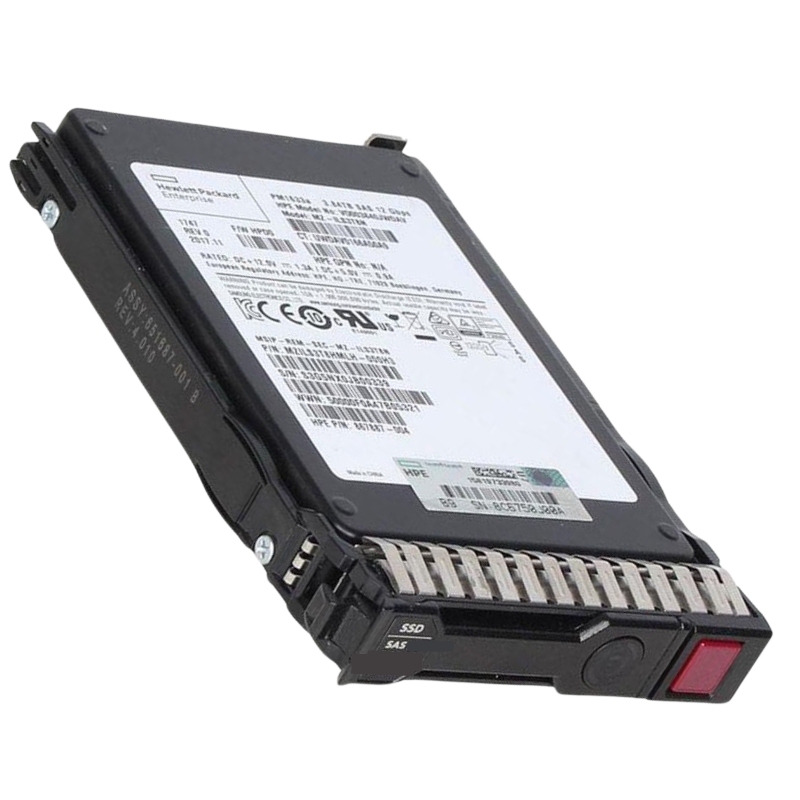
HPE P41563-001 1.92 TB Solid State Drive PCI 4.0 NVME SFF Read Intensive. Excellent Refurbished with 1 year replacement warranty
The HPE P41563-001 is a high-performance 1.92 TB read-intensive solid-state drive designed for enterprise storage solutions. Leveraging PCIe 4.0 NVMe technology, this internal SSD delivers fast and reliable data access for demanding workloads.
The HPE P41563-001 represents the pinnacle of enterprise-grade storage technology, specifically engineered for read-intensive workloads in modern data centers. This 1.92TB PCIe 4.0 NVMe drive combines exceptional performance, reliability, and efficiency in a small form factor (SFF) design, making it an ideal solution for organizations seeking to accelerate their storage infrastructure while maintaining optimal total cost of ownership.
Leveraging the cutting-edge PCI Express 4.0 interface, the HPE P41563-001 delivers significantly enhanced performance compared to previous generation PCIe 3.0 drives. With double the bandwidth per lane (2 GB/s vs. 1 GB/s in PCIe 3.0), this drive achieves remarkable transfer speeds that eliminate storage bottlenecks and accelerate data access for critical applications.
The drive delivers exceptional read performance with sequential read speeds reaching up to 7,000 MB/s and random read performance exceeding 1,000,000 IOPS. These specifications make it particularly well-suited for read-intensive applications where fast data access is crucial for maintaining optimal system performance and user experience.
While optimized for read-intensive workloads, the P41563-001 maintains respectable write capabilities with sequential write speeds up to 3,800 MB/s and random write performance reaching 220,000 IOPS. The drive features a endurance rating of 1.3 Drive Writes Per Day (DWPD), meaning it can withstand having its entire capacity rewritten 1.3 times daily throughout its warranty period, ensuring long-term reliability in demanding enterprise environments.
The HPE P41563-001 utilizes high-quality 3D TLC NAND flash memory, carefully selected and optimized for enterprise workloads. This technology provides an optimal balance between performance, endurance, and cost-effectiveness. The advanced flash management algorithms ensure consistent performance across various workload types while maximizing the lifespan of the NAND cells.
Sophisticated wear leveling algorithms distribute write operations evenly across all available NAND blocks, preventing premature wear on specific areas of the drive. Combined with advanced bad block management and error correction capabilities, these features significantly enhance the drive's reliability and data integrity over its operational lifetime.
At the heart of the P41563-001 lies a high-performance NVMe controller specifically designed for enterprise workloads. The custom firmware includes numerous optimizations for read-intensive applications, including intelligent read-ahead caching, advanced queue management, and quality of service (QoS) features that ensure consistent performance even under heavy load conditions.
The 2.5-inch Small Form Factor design enables high storage density in limited physical space. This compact form factor allows organizations to maximize their storage capacity per rack unit, reducing data center footprint and associated costs while maintaining exceptional performance characteristics.
Despite its compact size, the drive incorporates advanced thermal management features, including optimized power consumption profiles and efficient heat dissipation mechanisms. These features ensure stable operation even in high-density server configurations where cooling can be challenging.
The P41563-001 is designed for seamless integration into HPE ProLiant, Apollo, and Synergy server platforms. The drive's physical dimensions and connector specifications comply with industry standards, ensuring compatibility with various backplanes and storage enclosures across HPE's server portfolio.
For relational databases such as Microsoft SQL Server, Oracle Database, and MySQL, the P41563-001 provides exceptional performance for read-heavy operations including complex queries, reporting, and business intelligence workloads. The low latency and high IOPS capabilities significantly reduce query response times, improving overall application performance.
In virtualized infrastructure and Virtual Desktop Infrastructure (VDI) deployments, the drive excels at handling boot storms and concurrent user operations. The high read performance ensures quick virtual machine startup times and responsive user experiences, particularly in non-persistent VDI scenarios where read operations dominate.
The drive is ideally suited for content delivery networks, web servers, and media streaming applications where read performance is critical. The ability to serve large numbers of concurrent read requests makes it perfect for hosting frequently accessed content, static assets, and media files.
For big data analytics platforms and data warehousing solutions, the P41563-001 accelerates data processing by providing fast access to large datasets. The high sequential read performance benefits analytical queries that scan substantial portions of stored data, reducing time-to-insight for business intelligence applications.
With a specified endurance of 1.3 DWPD over its 5-year warranty period, the P41563-001 is built to withstand the rigorous demands of 24/7 enterprise operation. This endurance rating ensures the drive can handle substantial write workloads despite being categorized as read-intensive, providing additional headroom for mixed workload scenarios.
The drive incorporates advanced power loss protection circuitry that ensures data integrity during unexpected power failures. This feature includes capacitors that provide sufficient power to complete pending write operations and flush cache contents to non-volatile storage, preventing data corruption and maintaining consistency.
Sophisticated error correction codes (ECC) and end-to-end data protection mechanisms safeguard data integrity throughout the storage stack. These features detect and correct errors that may occur during data transmission or storage, providing an additional layer of protection against data corruption.
The P41563-001 implements sophisticated QoS mechanisms that ensure consistent performance delivery across varying workload conditions. These features include latency management, IOPS throttling, and priority-based scheduling that maintain performance predictability for critical applications.
Intelligent caching algorithms optimize read performance by anticipating data access patterns and preloading frequently accessed data into high-speed buffers. These algorithms adapt to workload characteristics, maximizing cache hit rates and reducing effective access latency.
With support for NVMe's multi-queue architecture, the drive can efficiently handle parallel I/O operations from multiple CPU cores and applications. This capability eliminates the I/O bottleneck issues common in legacy storage technologies and maximizes performance in multi-core server environments.
The P41563-001 is certified and optimized for use across HPE's server portfolio, including ProLiant DL, ML, and BL series, Apollo high-performance computing systems, and Synergy composable infrastructure. This ensures optimal performance, management integration, and reliability when deployed in compatible HPE systems.
The drive supports a wide range of enterprise operating systems, including Windows Server, Linux distributions (Red Hat Enterprise Linux, SUSE Linux Enterprise Server, Ubuntu Server), and VMware ESXi. Comprehensive driver support and compatibility testing ensure stable operation across these environments.
Beyond direct-attached storage configurations, the P41563-001 can be integrated into HPE storage arrays and hyperconverged infrastructure solutions. This flexibility allows organizations to leverage the drive's performance characteristics across various architectural approaches.
The drive incorporates multiple power management states that optimize energy consumption based on workload demands. These features include aggressive low-power modes during idle periods and dynamic power scaling during active operation, reducing overall energy costs in data center environments.
Optimized thermal design minimizes heat generation, reducing cooling requirements and associated energy costs. The solid-state design operates silently, contributing to improved working environments in office-adjacent data centers and laboratory settings.
The P41563-001 complies with major environmental regulations including RoHS (Restriction of Hazardous Substances) and REACH, ensuring minimal environmental impact throughout its lifecycle. The drive's energy-efficient operation also contributes to reduced carbon footprint in data center operations.
The PCIe 4.0 interface ensures compatibility with current and future server platforms, providing investment protection as organizations transition to newer infrastructure. The backward compatibility with PCIe 3.0 systems maintains flexibility for heterogeneous environments.
As the NVMe specification evolves with features like NVMe over Fabrics (NVMe-oF) and zoned namespaces, the P41563-001 provides a foundation for adopting these technologies while delivering immediate performance benefits in current deployments.
The drive's performance characteristics support scalable deployment patterns, allowing organizations to start with smaller configurations and expand storage capacity while maintaining consistent performance profiles. This scalability ensures the storage infrastructure can grow with business requirements.


 Contact Us
 Information
 Catalog
 Solid State Drives (SSD)
 Network Switches
 Hard Disk Drives
 HBA & Controllers
 PC & Servers
 PC & Server Memory
 CPU & Processors
 Network Routers
 Power Supplies
 Tape Drives & Libraries
 Network Devices
 Computer & Network Cables