(7% discount is applied at checkout)
Cart is empty
Your go-to destination for cutting-edge server products
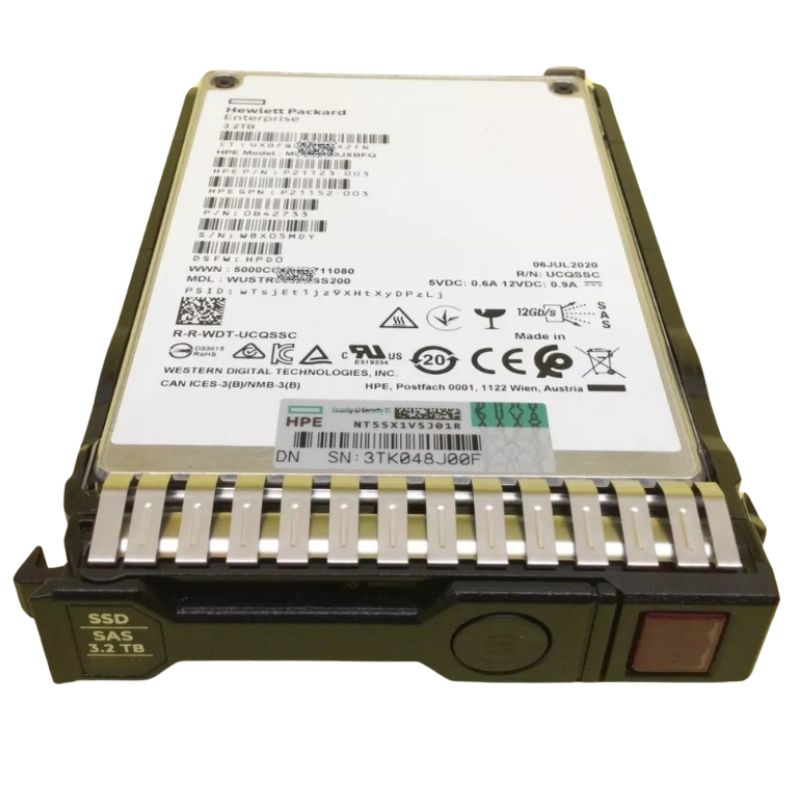


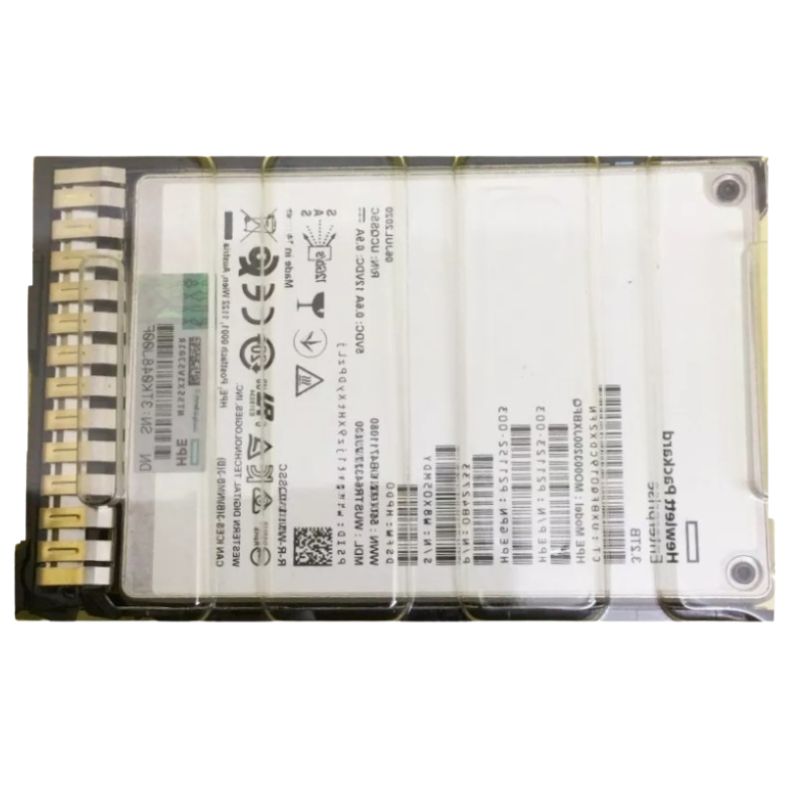
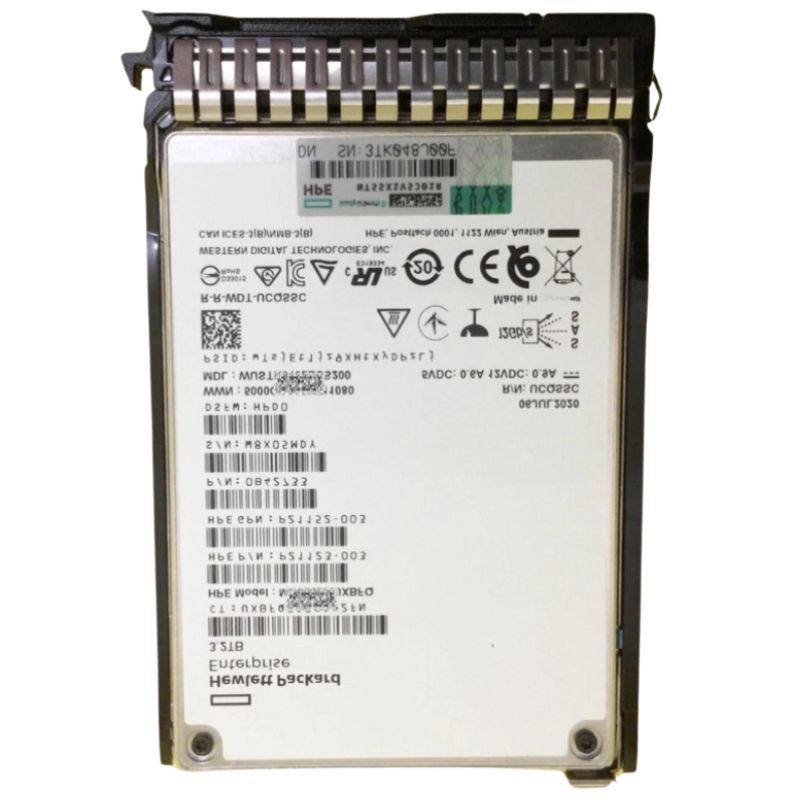
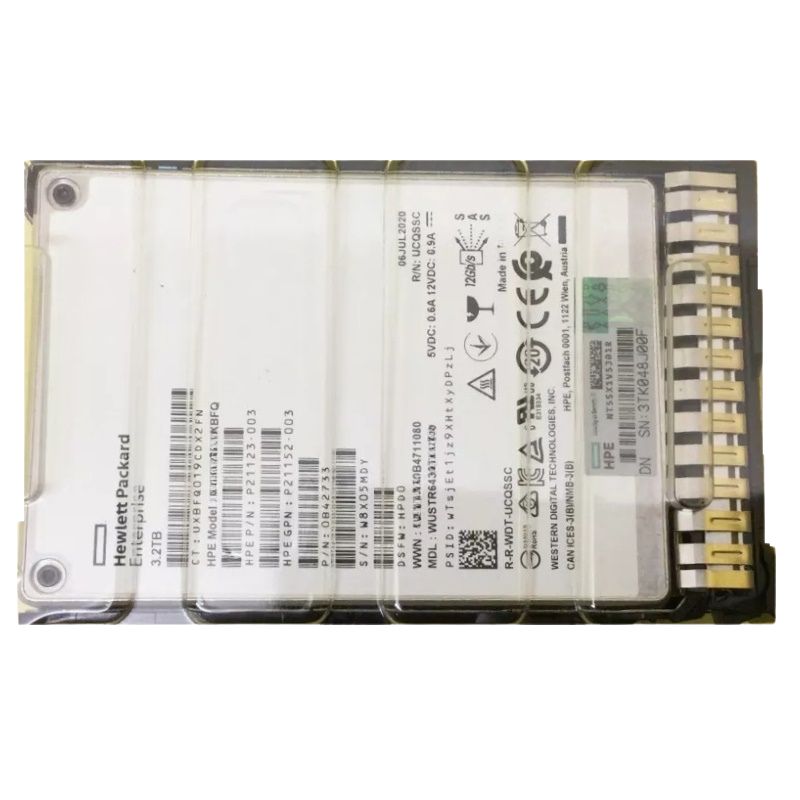
HPE P42574-003 Server SAS 12Gbps SFF SSD 3.2TB. Excellent Refurbished with 1-Year Replacement Warranty
High-performance HPE solid state drive engineered for data-center workloads. The P42574-003 is a hot-swappable, dual-ported 2.5" SAS SSD with 3.2TB storage capacity, optimized for mixed-use applications and ProLiant Gen10 servers.
Technical & Extended Details
Purpose-built for HPE ProLiant Gen10 platforms, this drive is suitable for a wide range of enterprise deployments including performance servers, all-flash arrays, and software-defined storage nodes.
The HPE P42574-003 represents enterprise-grade storage engineering at its finest, designed specifically for demanding server environments that require exceptional performance and reliability. This 3.2TB SAS SSD delivers the perfect balance of capacity, speed, and endurance that modern data centers require for their most critical workloads.
With a substantial 3.2TB storage capacity in a 2.5-inch Small Form Factor (SFF) design, this drive optimizes storage density while maintaining compatibility with industry-standard server bays. The SFF configuration allows for maximum storage density in rack-mounted servers, making it ideal for environments where physical space is at a premium but storage requirements continue to grow exponentially.
The Serial Attached SCSI (SAS) 12Gbps interface represents the pinnacle of storage connectivity technology, offering significant advantages over SATA alternatives. With dual-ported architecture for redundancy, full-duplex capability, and enhanced error recovery capabilities, the SAS interface ensures data integrity and availability that enterprise applications demand.
Enterprise workloads demand consistent high performance, and the HPE P42574-003 delivers exceptional IOPS across both read and write operations. With optimized controller technology and advanced NAND management, this drive maintains consistent performance even under sustained heavy workloads, eliminating the performance degradation often associated with consumer-grade SSDs.
Sub-millisecond latency ensures that applications receive data with minimal delay, crucial for database operations, virtualization environments, and real-time analytics processing. The advanced controller architecture minimizes command overhead while intelligent caching algorithms anticipate data requests to maintain optimal response times.
The SAS interface's dual-port capability provides redundant pathways for data access, a critical feature for high-availability environments. This architecture allows simultaneous access from multiple host connections, ensuring continuous operation even if one path experiences failure. For mission-critical applications where downtime is not an option, this redundancy provides the foundation for robust storage infrastructure.
Unlike half-duplex interfaces, the full-duplex capability of SAS 12Gbps enables simultaneous read and write operations at full speed. This bidirectional data flow effectively doubles the available bandwidth compared to interfaces that cannot operate in full-duplex mode, making it particularly valuable for mixed-workload environments where both read and write operations occur concurrently.
The HPE P42574-003 utilizes enterprise-grade multi-level cell (eMLC) NAND flash memory specifically engineered for write-intensive applications. This technology balances cost-effectiveness with superior endurance compared to consumer-grade MLC flash, providing the perfect solution for environments where both performance and longevity are paramount.
With a Total Bytes Written (TBW) rating significantly higher than consumer SSDs, this drive is built to handle the rigorous write cycles typical of server applications. Advanced wear-leveling algorithms distribute write operations evenly across all available memory cells, while bad block management and over-provisioning ensure consistent performance throughout the drive's operational lifespan.
Full compatibility with Windows Server editions ensures optimal performance for Microsoft-based infrastructures. The drive's advanced features are fully accessible through standard Windows storage drivers, while HPE-specific utilities provide enhanced monitoring and management capabilities for enterprise deployment.
Comprehensive support for major Linux distributions and hypervisors including VMware vSphere, Microsoft Hyper-V, and Citrix XenServer makes this drive versatile across diverse IT environments. The drive's consistent performance characteristics are particularly valuable in virtualized environments where multiple virtual machines contend for storage resources.
For Online Transaction Processing (OLTP) databases such as Microsoft SQL Server, Oracle Database, and MySQL, the HPE P42574-003 provides the low latency and high IOPS necessary for rapid transaction processing. The drive's consistent performance under mixed read/write workloads ensures that database operations proceed without storage-induced bottlenecks.
Data warehousing applications benefit from the drive's high sequential read performance and capacity, enabling rapid data retrieval for complex analytical queries. The 3.2TB capacity provides substantial storage for large datasets while maintaining the performance characteristics needed for business intelligence and reporting workloads.
In virtualized environments, the P42574-003 excels at hosting multiple virtual machines with diverse workload characteristics. The drive's ability to handle concurrent I/O from multiple sources makes it ideal for VDI implementations, application virtualization, and server consolidation projects where storage performance is critical to overall system responsiveness.
For hyper-converged infrastructure deployments, the combination of high capacity and performance in a single drive enables efficient resource utilization while maintaining service level agreements. The drive's compatibility with HPE Synergy and other composable infrastructure solutions provides flexibility for modern data center architectures.
Research institutions and scientific computing environments benefit from the drive's ability to rapidly process large datasets common in genomic research, climate modeling, and engineering simulations. The sustained write performance ensures that computational results can be stored without impeding ongoing calculations.
Video production and media processing applications require both high capacity for large media files and consistent performance for real-time editing and rendering. The P42574-003's combination of capacity and speed makes it suitable for collaborative editing environments and content creation workflows.
The drive implements comprehensive data protection through multiple layers of error correction, including advanced BCH ECC algorithms that correct multi-bit errors. Protection extends throughout the data path with parity protection on the internal data bus and cyclic redundancy check (CRC) on data transfers between the host and drive.
Enterprise-grade power loss protection circuits ensure that in-flight data is preserved during unexpected power interruptions. This feature includes both planar capacitors for rapid energy storage and advanced firmware algorithms that manage the controlled shutdown process, guaranteeing data integrity even during power failure events.
Comprehensive Self-Monitoring, Analysis and Reporting Technology (S.M.A.R.T.) implementation provides early warning of potential drive issues before they impact system availability. Enterprise-specific attributes monitor wear indicators, error rates, and performance metrics to facilitate proactive maintenance and replacement planning.
Integration with HPE systems management tools provides enhanced health monitoring beyond standard S.M.A.R.T. capabilities. HPE Smart Storage Administrator (SSA) offers detailed drive analytics, predictive failure analysis, and seamless integration with HPE support systems for automated alerting and service dispatch.
For read-dominated workloads such as content delivery, data analytics, and database query processing, the drive's architecture prioritizes read latency reduction through intelligent caching algorithms and optimized NAND access patterns. The controller dynamically adjusts resource allocation to maintain optimal read performance during sustained operations.
Balanced read/write environments benefit from the drive's ability to efficiently manage concurrent operations without significant performance degradation. Advanced queue depth optimization and command scheduling ensure that mixed workloads typical of general server applications receive consistent performance across varying I/O patterns.
When deploying multiple P42574-003 drives in RAID configurations, specific considerations maximize performance and reliability. For write-intensive applications, RAID 10 provides optimal performance while maintaining redundancy, while capacity-focused deployments may utilize RAID 6 for additional fault tolerance at the expense of write performance.
Proper operating system configuration ensures that the drive's capabilities are fully utilized. Recommendations include appropriate partition alignment, file system selection optimized for SSD characteristics, and I/O scheduler configuration that matches the workload profile to extract maximum performance from the storage investment.
While SATA SSDs offer cost advantages, the P42574-003 SAS SSD provides significant benefits in reliability, performance consistency, and feature completeness. The dual-port architecture, higher queue depths, and enhanced error recovery make SAS the preferred choice for mission-critical applications where data availability is paramount.
Although NVMe offers higher peak performance, SAS SSDs maintain advantages in mixed workload environments, compatibility with existing infrastructure, and cost per gigabyte for capacity-oriented deployments. The P42574-003 represents the optimal balance for organizations requiring enterprise reliability with proven technology.


 Contact Us
 Information
 Catalog
 Solid State Drives (SSD)
 Network Switches
 Hard Disk Drives
 HBA & Controllers
 PC & Servers
 PC & Server Memory
 CPU & Processors
 Network Routers
 Power Supplies
 Tape Drives & Libraries
 Network Devices
 Computer & Network Cables