(7% discount is applied at checkout)
Cart is empty
Your go-to destination for cutting-edge server products
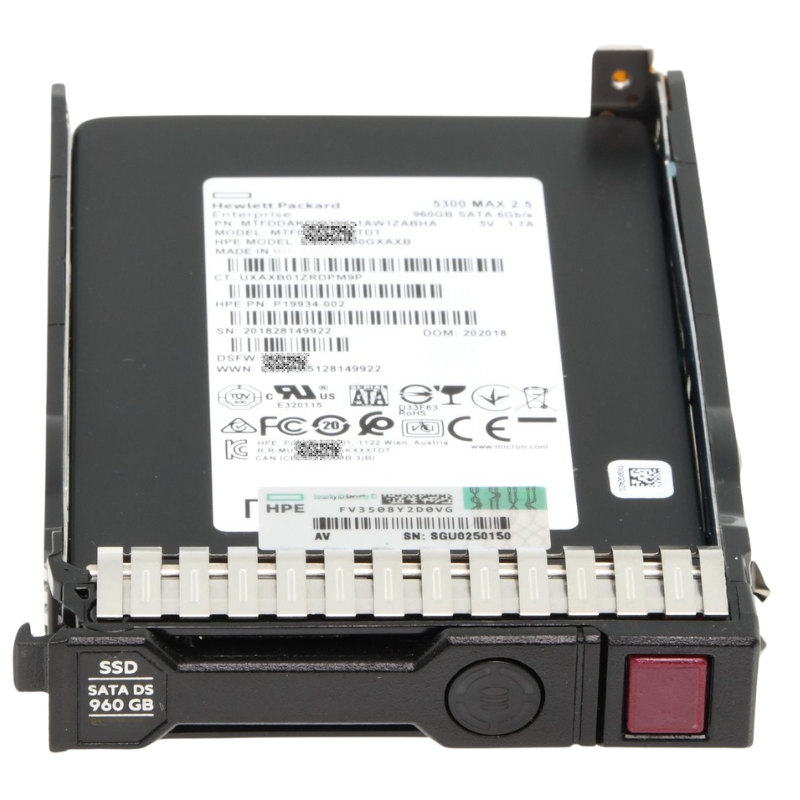


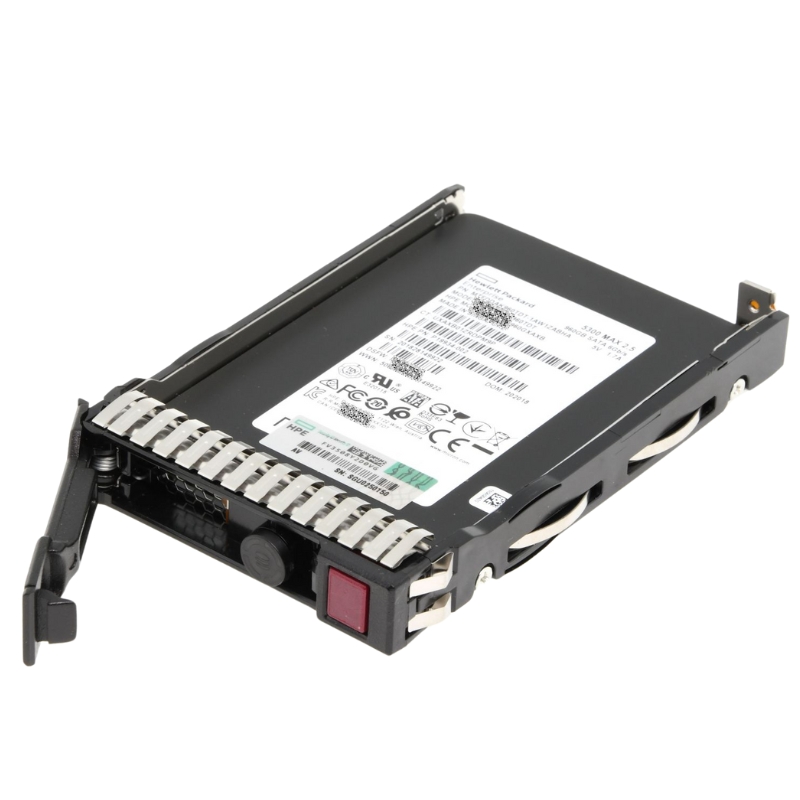
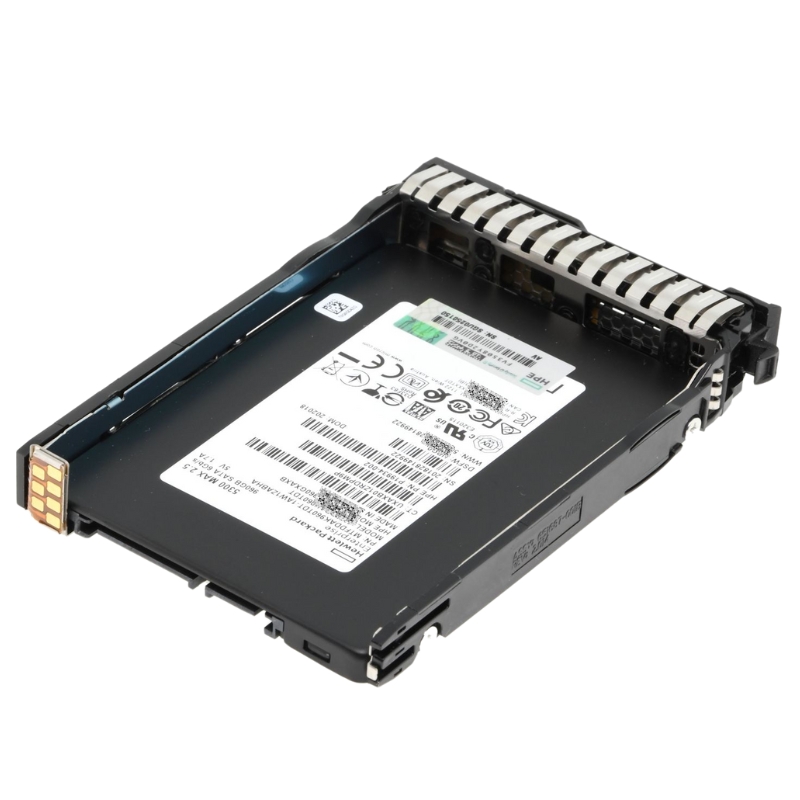
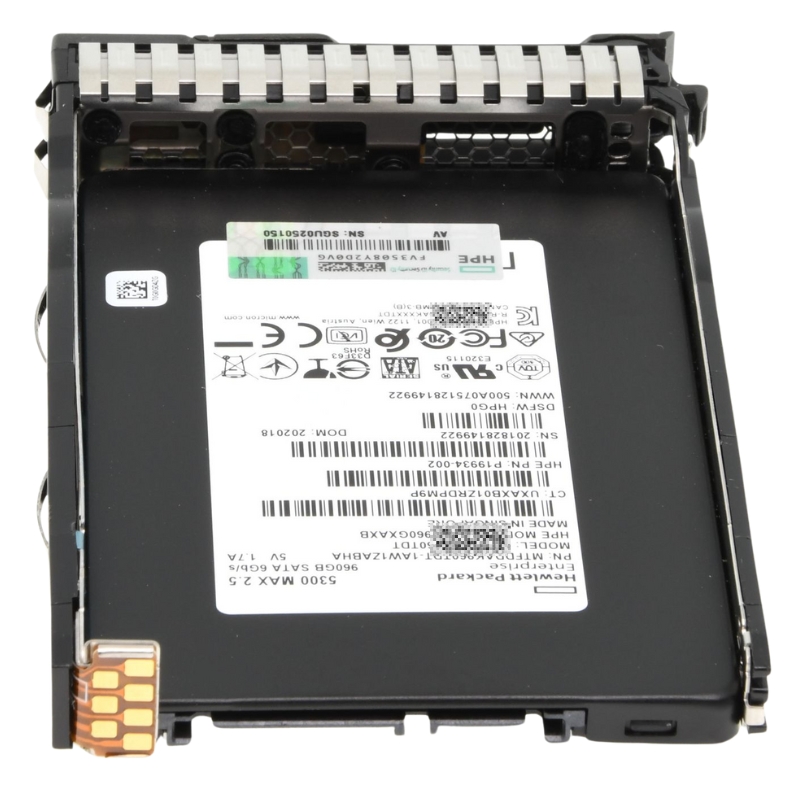
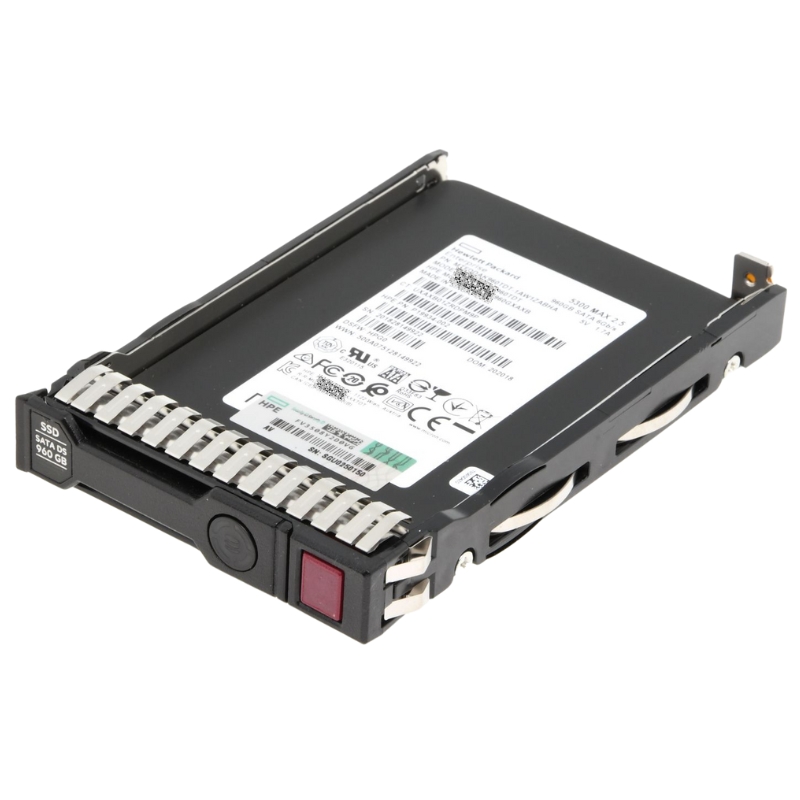
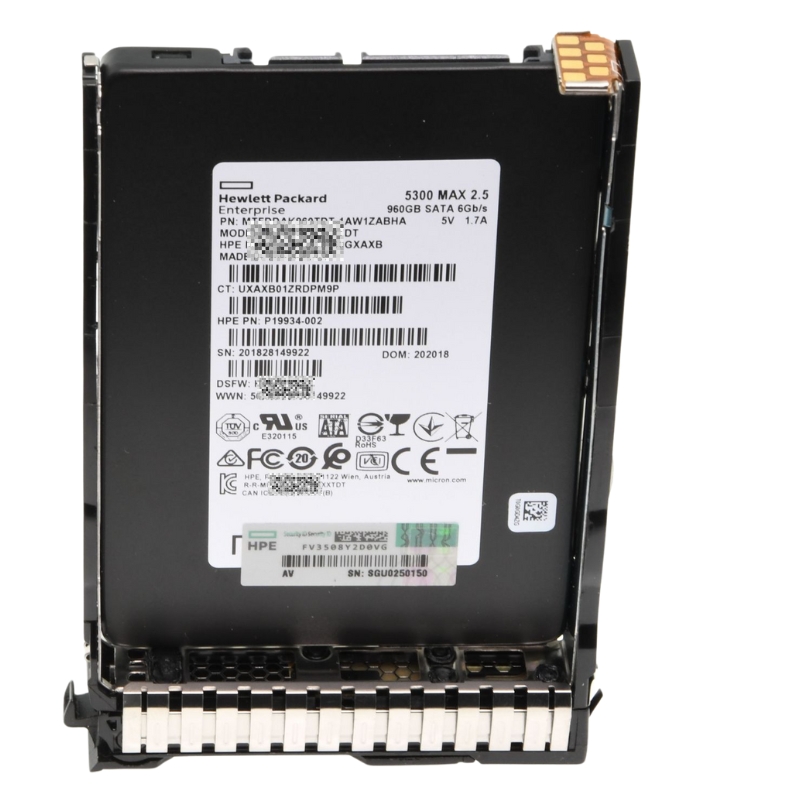
HPE P44008-H21 960GB DS SATA 6GBPS Basic Carrier Read Intensive SSD. Factory-Sealed New in Original Box (FSB) with 3 Years Warranty
The HPE P44008-H21 960GB hot-swap SSD is designed to provide exceptional storage performance and reliability. Engineered with a compact 2.5-inch form factor and advanced TLC NAND technology, it offers the ideal solution for read-intensive workloads on mainstream compute platforms.
HPE P44008-H21 960GB DS SATA 6GBPS Basic Carrier Read Intensive SSD represents a focused solution for enterprise and data-center environments that demand consistent read performance, high reliability, and compatibility with HPE server ecosystems. This category description explores the product’s defining characteristics, technical profile, operational advantages, and the practical scenarios where an HPE P44008-H21 drive delivers meaningful value. Buyers searching for “960GB read intensive SSD,” “HPE SATA 6Gbps enterprise SSD,” or “Basic Carrier SSD for HPE servers” will find detailed, on-target content that addresses selection criteria, deployment considerations, and performance expectations.
HPE designed the P44008-H21 series to meet the needs of read-heavy workloads where high sequential throughput and sustained low-latency access to large data sets are central. Typical use cases include web caching, content delivery, analytics query acceleration, boot and OS volumes in virtualized hosts, and read-mostly databases. The 960GB capacity position balances cost per GB with usable capacity for mid-tier application stores, while the read-intensive endurance rating ensures a favorable lifetime under read-biased I/O patterns.
Enterprises operating large-scale read-biased applications—such as log analytics, static content serving, and archival retrieval systems—benefit from drives optimized for predictable read performance rather than the higher write endurance of mixed- or write-intensive drives. The HPE P44008-H21 960GB model is tuned to deliver deterministic read latency and throughput at a competitive price point, allowing organizations to scale storage capacity without overspending on unnecessary write endurance.
This category emphasizes several technical attributes that matter when sizing and selecting SSDs for enterprise deployments: interface and connect capability, performance characteristics (throughput and IOPS), endurance class, reliability metrics such as MTBF, and management features like SMART reporting and firmware signing. The HPE P44008-H21 is a SATA 6Gbps device, presented in a Basic Carrier suitable for HPE chassis, offering a balance between capacity, performance, and long-term reliability.
Featuring the well-established SATA 6Gbps interface, the P44008-H21 SSD is designed to fit into HPE Basic Carrier trays commonly used in ProLiant servers and HPE storage enclosures. The SATA interface remains essential for compatibility across broad legacy and current-generation server inventories, simplifying upgrades and replacements without requiring infrastructure changes like switching backplanes or controllers.
Performance expectations for this category focus on consistent read throughput and low-latency random read IOPS. The 960GB capacity supports sizable working sets while maintaining steady-state performance across sustained read workloads. For administrators optimizing for read latency and throughput, the HPE P44008-H21 model provides an appealing balance: higher read performance than traditional HDDs, with latency levels suitable for interactive queries and web-service response times.
Sequential read performance is often the headline metric for content-serving and backup-restore tasks, while random read IOPS are critical for database index lookups and virtual desktop workloads. Drives in this category are engineered to sustain high sequential reads and robust random read IOPS under typical data-center queue depths encountered in web and virtualization stacks.
Although categorized as read intensive, the P44008-H21 supports writes sufficient for normal maintenance tasks, periodic updates, and background writes. Designers and procurement teams should note the endurance rating is lower than mixed- or write-intensive enterprise SSDs; therefore, write-heavy applications such as high-frequency logging or large-scale ingest pipelines are better served by higher-endurance classes. For read-mostly deployments, the lower endurance class reduces cost while remaining fit for purpose.
Reliability is a foremost consideration in enterprise purchases. HPE drives are often supplied with vendor-signed firmware to ensure compatibility and to guard against unauthorized firmware modifications that could jeopardize data integrity. The P44008-H21 is built with enterprise-grade NAND, advanced wear-leveling algorithms, and power-loss protection mechanisms appropriate for its endurance class. These features combine to minimize the risk of data corruption and to ensure predictable drive behavior across operational lifecycles.
One of the advantages of selecting an HPE-branded drive is firmware validation for specific HPE server and storage platforms. Firmware validation reduces risks that arise from mismatched or non-certified drives. IT teams deploying at scale should validate firmware compatibility matrices with their HPE platform documentation and ensure that drives are provisioned with HPE-approved firmware images as part of lifecycle management.
Choosing the right drive for the right workload and deploying it with best practices yields the best return on investment. For the 960GB P44008-H21, consider the following deployment strategies: pair with RAID levels that offset lower write endurance but increase redundancy, use the drive for read-caching tiers in hybrid arrays, and avoid using read-intensive drives as primary storage for write-heavy logs or temporary swap files. Thoughtful pairing of SSDs with the right controller settings and caching policies will maximize both performance and service life.
When used in RAID arrays, read-intensive SSDs provide faster rebuild times and improved read response across an array. Select RAID levels based on redundancy and rebuild speed requirements; RAID 10 often offers superior rebuild characteristics for mixed workloads, whereas RAID 6 may be chosen when prioritizing storage efficiency with fault tolerance. Ensure controllers and controllers’ firmware understand SSD characteristics to avoid over-aggressive rebuild or background patrols that could inadvertently stress drives.
SSDs generate less heat than high-performance HDDs but are nevertheless sensitive to thermal extremes. HPE Basic Carrier designs usually include airflow channels and thermal sensors, so ensure rack airflow patterns and drive-fan policies meet vendor recommendations. Maintaining recommended operating temperatures extends NAND lifecycle and helps preserve predictable performance under sustained loads.
Understanding where a read-intensive SATA SSD sits relative to mixed-use NVMe or write-intensive SSDs helps procurement teams align purchase decisions with workload demands. The P44008-H21 occupies a cost-effective niche: more responsive than HDDs and sometimes more economical than NVMe for large-scale read-heavy deployments. It is less appropriate for extremely I/O-intensive transactional databases that need NVMe low-latency and high write endurance. Evaluate costs not only by unit price but also by total cost of ownership, factoring in power, cooling, and management overheads.
SATA 6Gbps remains widely supported and attractive for large fleets of servers where maximum per-slot bandwidth is not the primary bottleneck. NVMe provides substantially lower latency and higher parallelism but often at higher per-GB cost. For environments where read latency under heavy parallelism is not the binding constraint, SATA read-intensive drives deliver compelling value and simpler integration.
Read-intensive drives trade write endurance for cost efficiency. For many use cases—content hosting, cold-cache tiers, and OS images—the write rate is low and predictable, making read-intensive drives ideal. For mixed-use scenarios with frequent updates, IT managers should evaluate mixed-use SSD options which provide greater write endurance and often come with higher performance ceilings under balanced workloads.
Benchmarks in lab environments help set expectations but real-world application performance may vary depending on queue depth, concurrency, and controller behavior. When spec’ing the P44008-H21, run workload-specific benchmarks—such as read-only analytics scans, web-cache read patterns, or VM boot storms—to quantify benefits and to tune controller write cache, read-ahead, and scheduler policies for the observed workload profile.


 Contact Us
 Information
 Catalog
 Solid State Drives (SSD)
 Network Switches
 Hard Disk Drives
 HBA & Controllers
 PC & Servers
 PC & Server Memory
 CPU & Processors
 Network Routers
 Power Supplies
 Tape Drives & Libraries
 Network Devices
 Computer & Network Cables