(7% discount is applied at checkout)
Cart is empty
Your go-to destination for cutting-edge server products
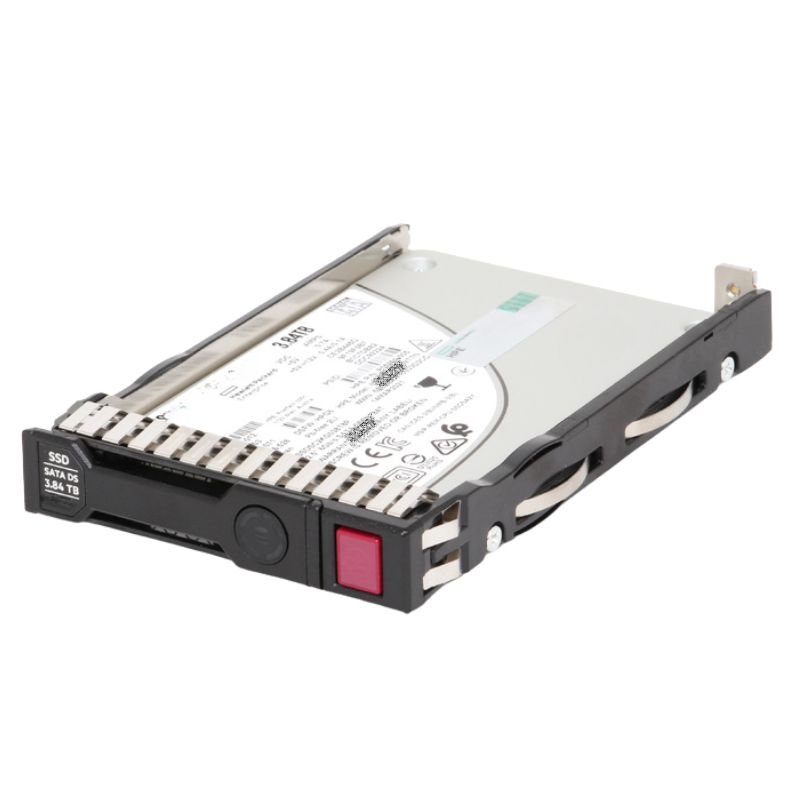


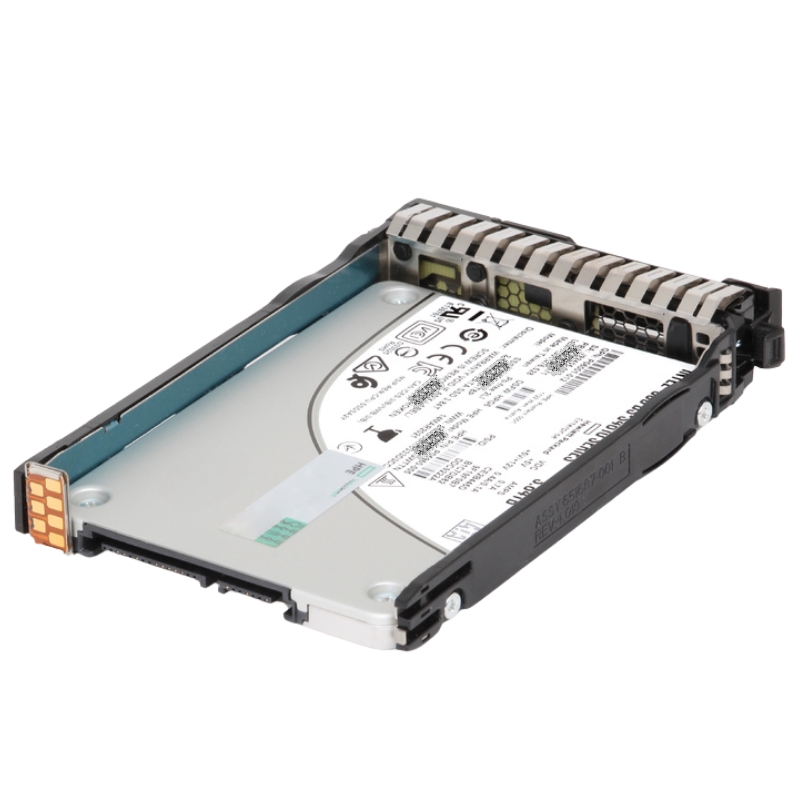
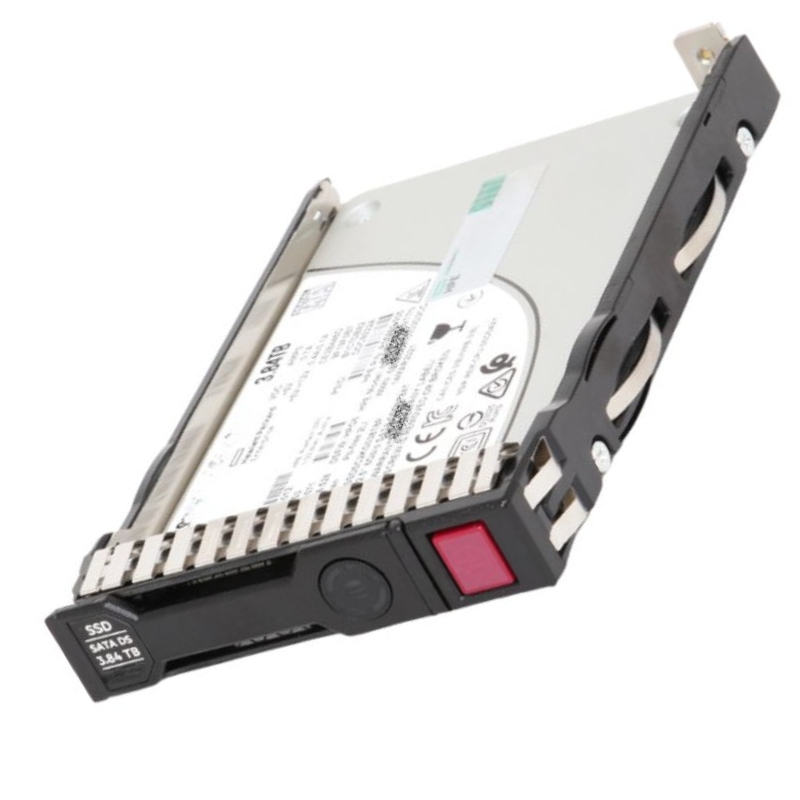
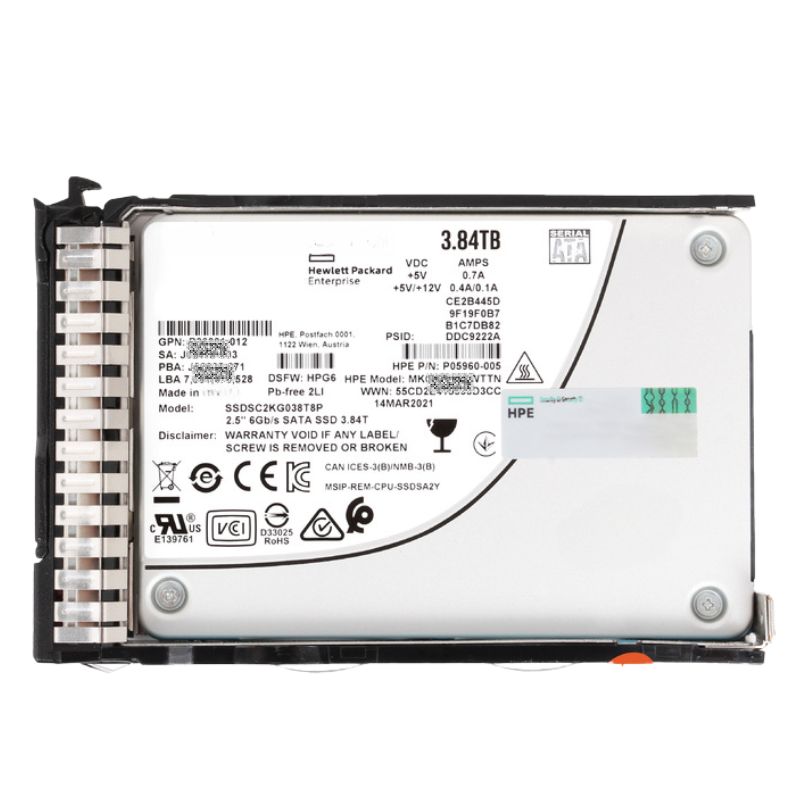
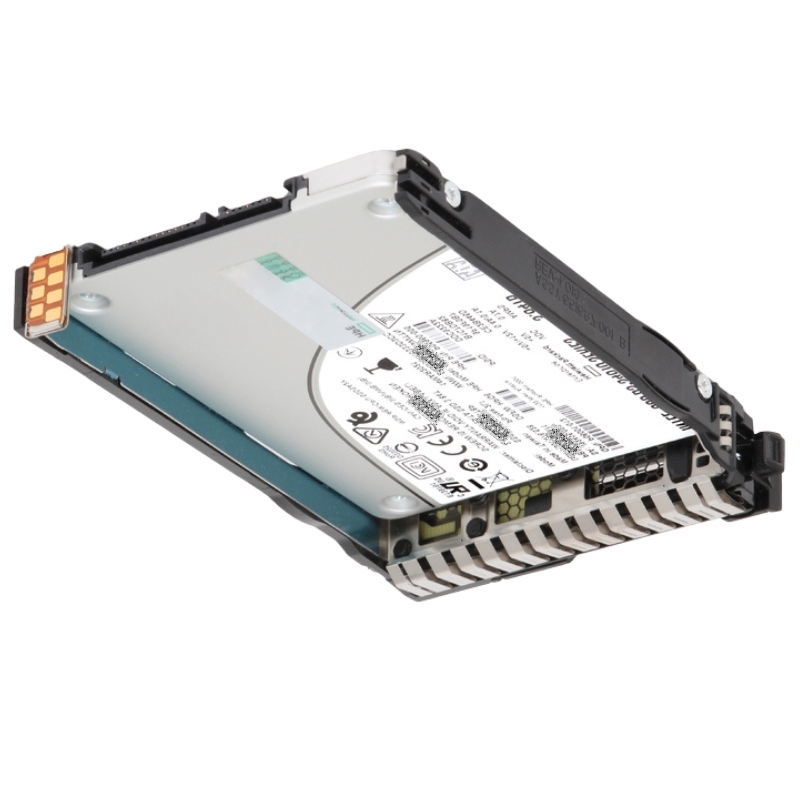
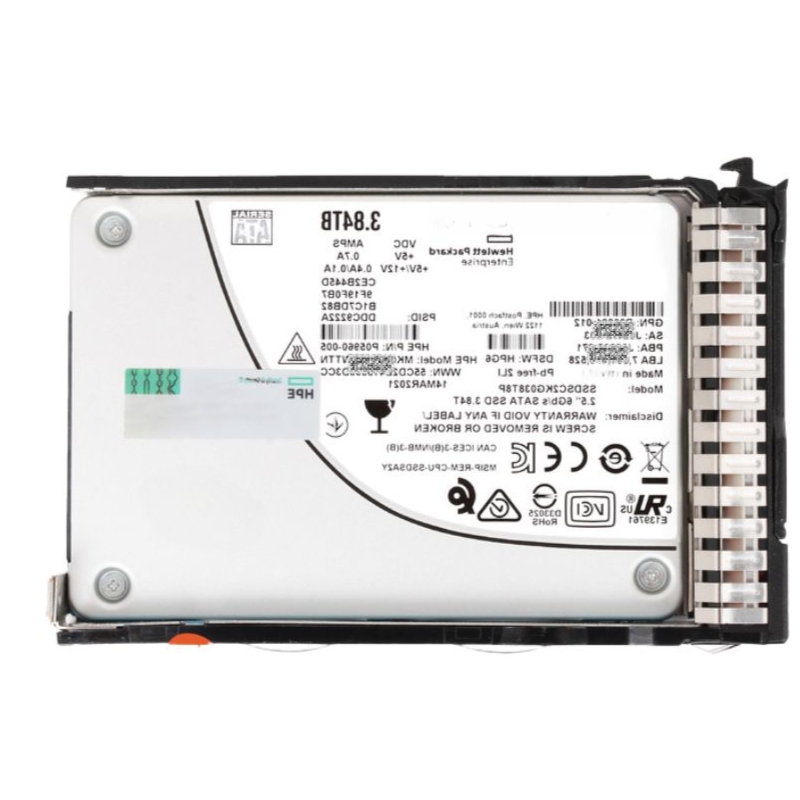
HPE P44010-B21 3.84TB SATA-6GBPS SFF Signed Firmware Hot Swap SSD. New (System) Pull with 1 year replacement warranty.
| SKU/MPN | Warranty | Price | Condition | You save |
|---|---|---|---|---|
| P44010-B21 | 1 Year Warranty | $1,290.00 | Excellent Refurbished | You save: $451.50 (26%) |
| P44010-B21 | 1 Year Warranty | Contact us for a price | New (System) Pull |
HPE P44010-B21 3.84TB SATA-6GBPS SFF Signed Firmware Hot Swap SSD represents a purpose-built solid state drive designed for modern enterprise storage arrays, rack servers, and mission-critical data center environments. Combining a dense 3.84TB capacity in a small form factor (SFF) with SATA 6Gbps interface compatibility and digitally signed firmware, this class of SSD addresses the performance, reliability, and security requirements of enterprises that need predictable throughput, low latency, and simplified maintenance. This category description explores the technical differentiators, deployment scenarios, compatibility considerations, lifecycle management, and buying guidance for organizations evaluating HPE P44010-B21 class drives or their equivalent multi-vendor alternatives.
At 3.84TB, these SFF drives deliver high-capacity storage in a compact 2.5-inch footprint suitable for dense server and storage platforms. Capacity density is essential for consolidating virtual machines, hosting large databases, and supporting virtualization infrastructures where maximizing usable TB per chassis reduces footprint and power costs. Enterprises replacing spinning media with high-density SSDs realize tangible gains in random I/O performance while fitting more usable capacity into existing drive bays.
The P44010-B21 SATA 6Gbps (SATA III) interface remains widely supported across server platforms and HPE storage controllers, offering a balance between legacy compatibility and modern throughput expectations. For mixed environments where NVMe may not be universally supported, SATA 6Gbps SFF SSDs provide an optimal upgrade path from legacy HDDs and older SSDs. System integrators appreciate that these drives plug seamlessly into many HPE ProLiant servers and HPE storage shelves that accept 2.5-inch SATA devices, simplifying migrations and hardware refresh cycles.
Digitally signed firmware is a crucial security attribute for enterprise SSDs. Signed firmware ensures that only manufacturer-approved firmware images are accepted by the drive during updates, reducing the risk of malicious or corrupted firmware being loaded. In regulated industries and security-sensitive deployments, firmware integrity contributes to compliance posture by enabling IT teams to demonstrate secure supply chain and firmware management practices. The presence of signature validation also simplifies operations by aligning with HPE’s firmware update workflows and signed-image verification tools.
Hot swap readiness is a must for 24x7 data centers that cannot tolerate extended downtime for maintenance. These HPE-class drives are designed for hot-swap replacement, allowing service technicians to replace or upgrade drives without powering down servers or taking storage arrays offline. This capability reduces planned maintenance windows and enables rapid field replacement for failed devices, minimizing the risk of service interruption for critical applications.
Enterprise SATA SSDs in this category typically excel at delivering high random read and write IOPS compared to rotational media. While absolute IOPS figures can vary by firmware tuning and workload, the architecture of an SSD brings orders-of-magnitude improvements for random access patterns common to databases, virtualization, and transactional applications. For mixed workload environments that combine reads and writes, the controller firmware and NAND management strategies help sustain consistent performance under heavy concurrency.
Sequential read and write throughput on SATA 6Gbps devices is bounded by the interface and internal controller pipelines, making them ideal for workloads with moderate to high sequential transfer sizes such as backups, media processing, or large file staging. Organizations designing tiered storage strategies often place sequential-heavy workloads on SATA-class SSDs when NVMe-tier resources are reserved for ultra-low latency transactional services.
One of the most important advantages of enterprise SSDs over HDDs is latency predictability. Lower and more consistent I/O latency improves application responsiveness and user experience for interactive workloads. HPE-class drives incorporate firmware mechanisms such as background garbage collection scheduling and thermal management policies to reduce latency spikes and maintain steady performance even as drives approach high utilization levels.
Endurance metrics like drive writes per day (DWPD) and total bytes written (TBW) are central to assessing the suitability of an SSD for a given workload. Drives in this category are engineered with endurance characteristics tuned for enterprise read-intensive or mixed-use scenarios, and purchasing decisions should align with the I/O profile and expected write amplification of the application. Capacity planning must account for endurance limits to avoid premature device retirement and to ensure predictable TCO over the product lifecycle.
Enterprise SSDs implement advanced error correction codes (ECC), wear leveling, and power-loss protection to ensure data integrity under adverse conditions. Features such as capacitors or internal buffer preservation can help commit in-flight data during sudden power events. These safeguards are especially important in RAID configurations, database clusters, and storage arrays where the integrity of cached writes is critical to application correctness.
The P44010-B21 HPE-class drives are validated for interoperability with ProLiant servers, Synergy compute modules, and select HPE storage arrays. Hardware compatibility matters for firmware updates, RAID controller compatibility, and supportability. When deploying 3.84TB SATA SFF SSDs in HPE systems, administrators should consult HPE compatibility matrices and firmware bundles to ensure that drive firmware revisions are aligned with system BIOS and controller firmware for optimal performance and long-term support.
RAID controllers interact closely with drive firmware to manage rebuilds, error recovery, and background media scans. Choosing drives from a validated list reduces the likelihood of incompatibility during RAID rebuilds or long-running scrubs. Administrators should coordinate firmware update strategies across controllers and drives to prevent mismatches and follow HPE's recommended update paths to maintain certification and warranty coverage.
Thermal conditions affect SSD lifespan and performance. Hot-swap SFF drives in densely populated chassis can experience elevated temperatures; therefore, ensuring adequate airflow and following vendor thermal guidelines is vital. Power management features, including adaptive power states and low-power idle modes, help reduce data center energy consumption without sacrificing performance when I/O demand is low. Monitoring for thermal throttling events allows administrators to rebalance workloads or improve cooling before significant performance degradation occurs.
Using hot spares and maintaining spare drive inventories accelerates recovery from media failures. In clustered or array configurations, maintaining a pool of pre-configured hot spares allows RAID arrays to begin rebuilds immediately after a drive failure, reducing vulnerability windows. Documenting compatibility and firmware requirements for spare drives ensures compatibility during emergency replacements and reduces the chance of failed rebuilds due to firmware mismatches.
High-density SATA SFF SSDs are well-suited to virtualization and virtual desktop infrastructure (VDI) workloads where high random IOPS and low latency improve VM boot storms and application responsiveness. Their capacity density allows many VMs to be hosted per server while maintaining predictable performance metrics important to service-level agreements.
Databases with read-intensive or mixed read/write patterns benefit from SSD acceleration. Organizations often place hot tablespaces or log files on SSD tiers to reduce query response times. Using SATA-class SSDs for application-level caching or secondary tiers offers a cost-effective way to accelerate database performance without deploying NVMe across the entire storage estate.
For remote offices and edge compute nodes where space, power, and serviceability are constrained, hot-swap SFF drives simplify onsite maintenance while offering enterprise-class reliability. The ability to replace drives quickly on-site without specialist downtime procedures reduces operational complexity for remote IT staff or managed service providers.


 Contact Us
 Information
 Catalog
 Solid State Drives (SSD)
 Network Switches
 Hard Disk Drives
 HBA & Controllers
 PC & Servers
 PC & Server Memory
 CPU & Processors
 Network Routers
 Power Supplies
 Tape Drives & Libraries
 Network Devices
 Computer & Network Cables