(7% discount is applied at checkout)
Cart is empty
Your go-to destination for cutting-edge server products
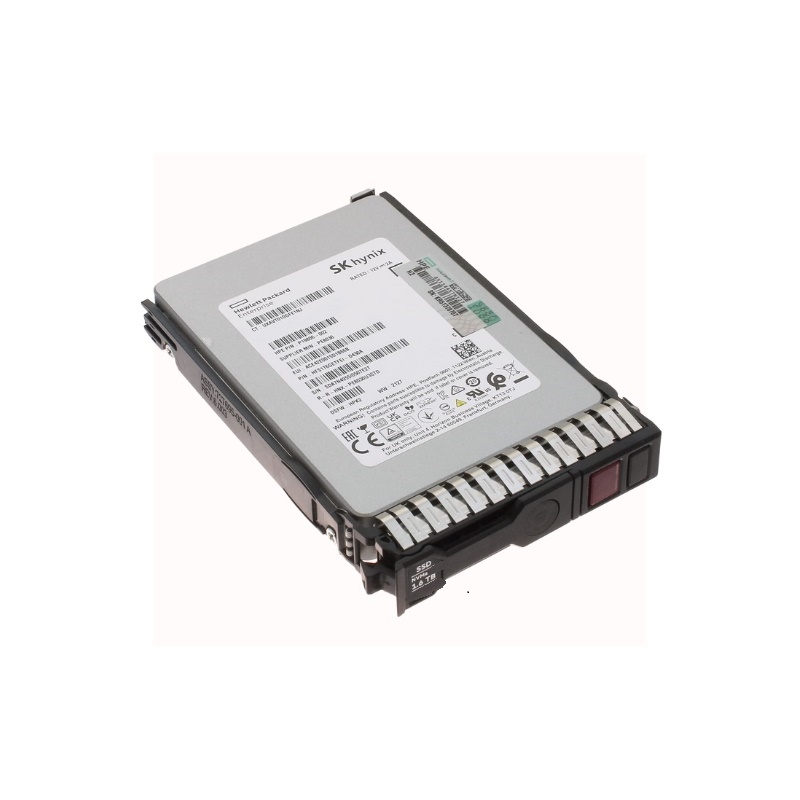


HPE P48125-001 1.6TB SSD NVMe. Excellent Refurbished with 1 year Replacement Warranty
NVMe is a storage protocol designed from the ground up to leverage the capabilities of non-volatile memory, specifically NAND flash. It operates over the high-speed PCI Express bus, directly connecting the storage media to the system's CPU. This stands in stark contrast to older protocols like SATA and SAS, which were architected for the mechanical latencies of spinning hard disk drives. SATA, for instance, was a bottleneck even for SATA SSDs, as its single command queue could only handle 32 commands at a time. NVMe shatters this limitation by supporting up to 64,000 command queues, each capable of holding 64,000 commands simultaneously. This massive parallel processing capability drastically reduces I/O contention and software stack overhead, resulting in exponentially lower latency and higher Input/Output Operations Per Second. For applications involving real-time analytics, large-scale databases, and virtualized infrastructures, this architectural shift is transformative.
The primary benefit of NVMe's architecture is its dramatic reduction in latency. Latency, the delay between a request for data and the response, is the critical metric for application responsiveness. The HPE P48125-001, by utilizing the NVMe protocol, can achieve access times measured in microseconds, compared to milliseconds for HDDs or even high-end SATA SSDs. This low latency directly translates to faster transaction processing, quicker database queries, and a more responsive user experience for enterprise applications. Concurrently, the high IOPS capability means the drive can handle a tremendous number of small, random read and write operations concurrently. This is the typical workload profile for server environments, where thousands of virtual machines or database threads may be requesting data simultaneously. The combination of ultra-low latency and high IOPS ensures that storage is no longer the primary bottleneck in the data path, allowing CPUs and memory to operate at their full potential.
The category of enterprise NVMe drives is quantitatively defined by rigorous performance and endurance metrics. The HPE P48125-001 1.6TB model is engineered to meet specific thresholds that cater to demanding workloads.
Enterprise drives are characterized by their consistent performance under load. The HPE P48125-001 is designed to deliver high sequential read and write speeds, which are crucial for data transfer-intensive tasks such as video streaming, large-scale backups, and scientific simulations. While exact figures can vary based on the specific hardware platform and workload, drives in this category typically achieve sequential read speeds in the range of several gigabytes per second. More importantly for server workloads, the random read write performance is exceptional. This drive is built to sustain high random IOPS, which is a measure of how well it can handle numerous small, non-sequential data requests. This capability is vital for OLTP databases, virtualization hosts, and email servers where data is rarely accessed in a contiguous, linear fashion. The drive's internal controller, DRAM cache, and the quality of the NAND flash work in concert to maintain this high level of random performance, even as the drive fills with data.
Endurance is a defining characteristic that separates consumer SSDs from enterprise-grade models like the HPE P48125-001. Endurance is quantified as the Total Bytes Written, which represents the total amount of data that can be written to the drive over its operational lifetime. A related metric is Drive Writes Per Day, which specifies how many times the entire drive's capacity can be written to every day over its warranty period. For a 1.6TB drive in this category, the DWPD rating is typically substantial, often ranging from one to three or more, depending on the specific endurance tier. This means that over a five-year warranty, one could write between 1.6TB and 4.8TB of data to the drive every single day without exceeding its rated lifespan. This high endurance is achieved through the use of high-grade, multi-level cell NAND flash and sophisticated wear-leveling algorithms in the drive's firmware that distribute write cycles evenly across all memory cells.
Relational database management systems such as Microsoft SQL Server, Oracle Database, and MySQL, as well as NoSQL databases like MongoDB and Cassandra, are profoundly sensitive to storage latency. The time taken to read an index or write a transaction log directly impacts the overall performance of the application and the number of concurrent users it can support. Deploying the HPE P48125-001 as the primary storage for database volumes, transaction logs, and redo logs can drastically reduce query times and increase transaction throughput. The low latency ensures that database operations are not waiting on storage I/O, while the high random read performance accelerates data indexing and lookup operations. For in-memory databases, the drive serves as an ultra-fast persistent store for checkpoints and data recovery, ensuring that even in the event of a system failure, data can be reloaded into memory with minimal delay.
Modern data centers are built on virtualization and containerization platforms like VMware vSphere, Microsoft Hyper-V, and Kubernetes. These environments create intense and unpredictable storage workloads, as a single physical host may be running dozens of virtual machines or hundreds of containers, all competing for storage resources. A boot storm, where many VMs start up simultaneously, can overwhelm traditional storage. The HPE P48125-001, with its high IOPS and low latency, is ideal for housing virtual machine disks, container images, and the hypervisor itself. It eliminates I/O blender effect, a phenomenon where random I/O from multiple VMs gets serialized into a single queue on a slow drive, causing performance to plummet. By providing a high-bandwidth, low-latency storage pool, this drive ensures that virtualized applications perform as if they were running on bare metal, maximizing consolidation ratios and improving return on investment.
Artificial intelligence, machine learning, and high-performance computing workloads are characterized by their need to process massive datasets. During the training phase of a machine learning model, the algorithm must repeatedly access large sets of training data. If this data is stored on slow storage, the powerful GPUs and CPUs involved in the computation will sit idle, waiting for data to be fed to them. This is known as the starvation problem. The HPE P48125-001 acts as a high-performance data lake, capable of streaming training datasets to compute resources at speeds that keep them fully utilized. Similarly, in HPC applications for scientific research, financial modeling, and engineering simulations, the ability to quickly load initial conditions and write out massive result sets is critical for achieving timely results and maximizing the utilization of expensive compute clusters.
Integration with HPE server hardware is a key aspect of this product's category. HPE ProLiant and Apollo servers often feature dedicated, hot-pluggable U.2 bays that are designed for optimal airflow and connectivity. When paired with an HPE Smart Array controller or an HPE NVMe baseboard controller, the drive can be managed at a hardware level. These controllers provide advanced capabilities such as drive caching, which can use a portion of the server's RAM or an optional flash-backed write cache to accelerate write performance further. They also handle the RAID functionality for NVMe drives, allowing administrators to create redundant arrays for data protection without relying solely on software-based RAID, which can consume valuable CPU cycles. This tight hardware integration ensures that the drive operates within its specified thermal and electrical parameters, as defined by HPE's rigorous testing and validation processes.
HPE Integrated Lights-Out is a dedicated management processor embedded in HPE servers. One of its critical functions is hardware health monitoring, which extends directly to the HPE P48125-001 SSD. Through iLO, an administrator can remotely view the health status, temperature, and SMART attributes of the drive without booting the host operating system. This provides proactive monitoring, alerting IT staff to potential drive failures before they result in data loss or system downtime. iLO can be configured to send alerts via email or SNMP traps when drive parameters, such as remaining spare blocks or uncorrectable errors, exceed predefined thresholds. This deep level of integration simplifies storage maintenance and is a significant advantage over using third-party drives that may not report health data as comprehensively to the HPE management ecosystem.
For organizations invested in the HPE portfolio, HPE InfoSight offers a cloud-based AI-driven operations platform. When deployed in an HPE server, the P48125-001 drive's operational data can be fed into InfoSight. The platform's analytics engine correlates data from thousands of systems worldwide to identify patterns and predict problems. It can, for example, detect a subtle performance degradation in a drive that might indicate a future failure, allowing for a planned, proactive replacement during a maintenance window long before a catastrophic failure occurs. This transforms storage management from a reactive to a predictive model, dramatically increasing overall infrastructure availability and reducing unplanned downtime.


 Contact Us
 Information
 Catalog
 Solid State Drives (SSD)
 Network Switches
 Hard Disk Drives
 HBA & Controllers
 PC & Servers
 PC & Server Memory
 CPU & Processors
 Network Routers
 Power Supplies
 Tape Drives & Libraries
 Network Devices
 Computer & Network Cables