(7% discount is applied at checkout)
Cart is empty
Your go-to destination for cutting-edge server products


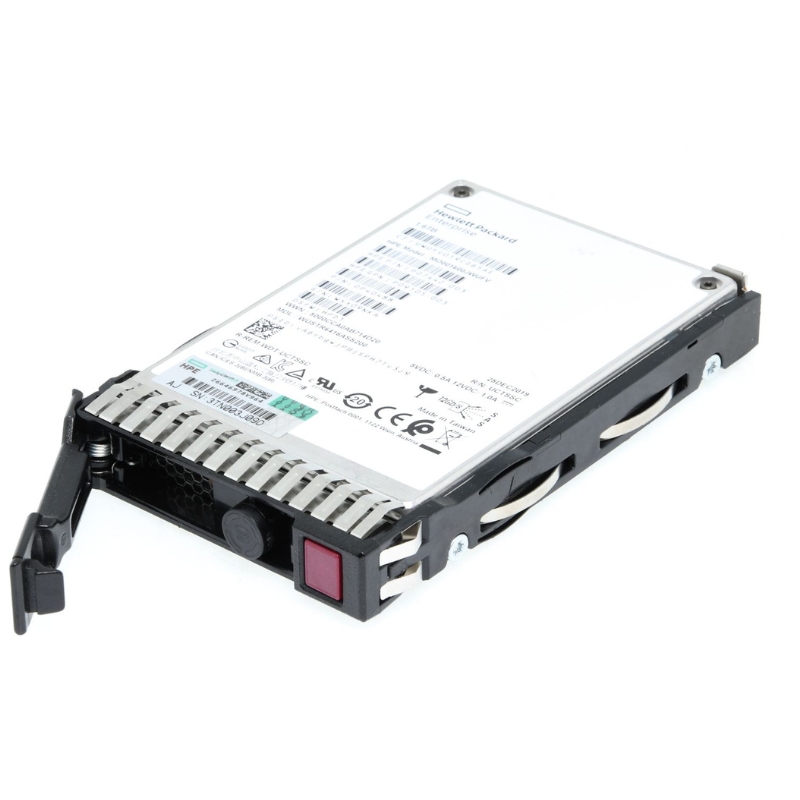
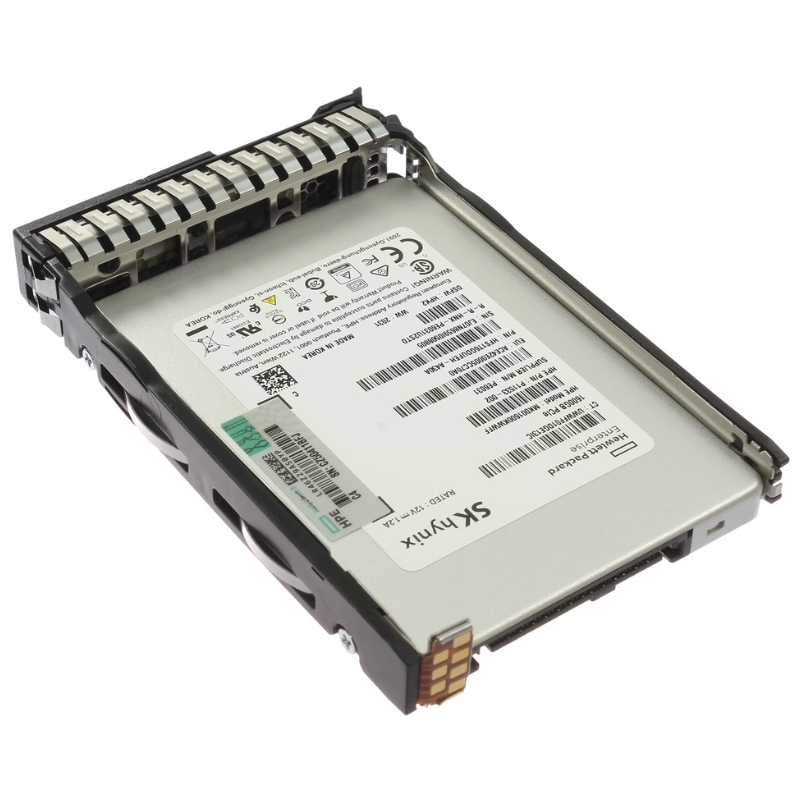
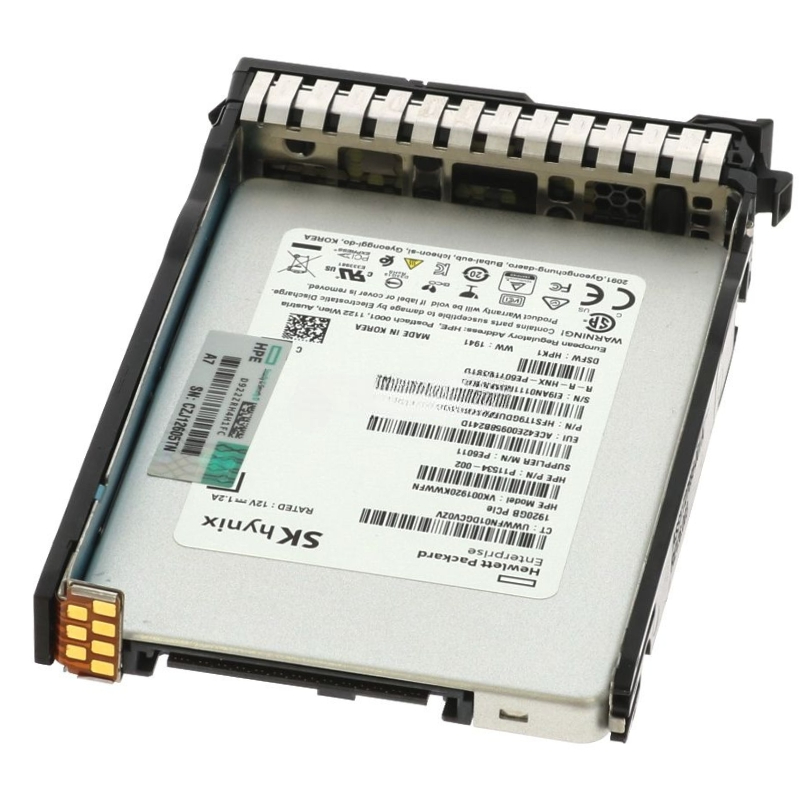
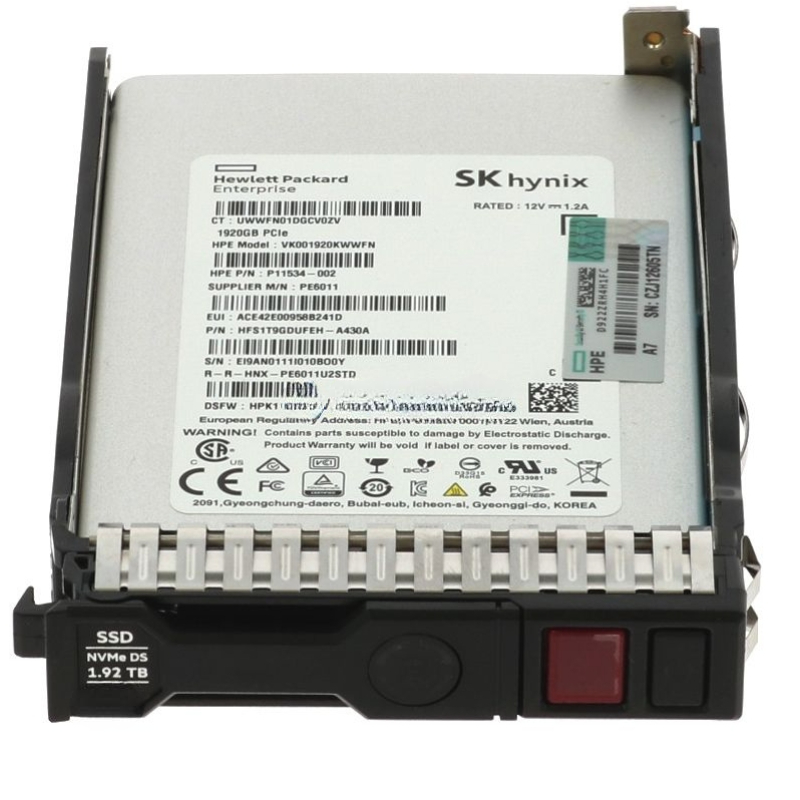
HPE P48224-001 1.92TB NVMe Read Intensive SFF Bc U.3 TLC SSD. Excellent Refurbished with 1-Year Replacement Warranty
Discover the high-performance HPE P48224-001, a 1.92TB read-intensive NVMe solid state drive engineered for enterprise storage solutions. This comprehensive guide covers everything from technical specifications to compatible server systems.
The HPE P48224-001 1.92TB NVMe Read Intensive SFF BC U.3 TLC SSD represents a powerful solution for enterprises seeking high-performance storage optimized for read-intensive workloads. Built on advanced NVMe technology, this solid-state drive delivers ultra-low latency, consistent high throughput, and exceptional reliability, making it suitable for data centers, cloud infrastructures, and enterprise-level applications that demand rapid data access and efficient storage management. By leveraging Triple-Level Cell (TLC) NAND technology, the P48224-001 ensures optimal balance between performance, endurance, and cost-efficiency, allowing organizations to scale their storage environments without compromising speed or reliability.
The HPE P48224-001 SSD utilizes NVMe (Non-Volatile Memory Express) protocol, which is engineered to exploit the full potential of modern NAND flash memory. Unlike traditional SATA-based SSDs, NVMe drives connect directly to the PCIe bus, providing faster data transfer rates and significantly reduced latency. This drive achieves peak sequential read speeds that accelerate access to frequently used datasets, supporting mission-critical applications such as databases, virtualization, and real-time analytics. The NVMe interface is particularly advantageous for workloads that involve high-volume read operations, as it minimizes bottlenecks associated with older storage protocols.
Designed for read-intensive applications, the HPE P48224-001 delivers remarkable throughput and Input/Output Operations Per Second (IOPS). With NVMe Gen4 support, it leverages the higher bandwidth of PCIe 4.0 to facilitate rapid data retrieval across multiple channels simultaneously. Enterprises can benefit from predictable performance even during peak operational periods, ensuring smooth execution of critical workloads. The SFF (Small Form Factor) U.3 design further enhances system compatibility, allowing data centers to achieve high-density storage configurations without sacrificing performance or power efficiency.
The TLC NAND technology integrated into the HPE P48224-001 is particularly suited for environments where read operations dominate over write operations. Read-intensive applications, including online transaction processing, data warehousing, content delivery networks, and analytics platforms, benefit from the drive’s ability to deliver sustained performance without degradation. The drive’s firmware is fine-tuned to reduce read latency, optimize data path efficiency, and manage wear leveling effectively, extending the operational lifespan of the SSD while maintaining consistent performance across all storage tiers.
Reliability is a cornerstone of the HPE P48224-001 design. Equipped with advanced error correction algorithms, end-to-end data protection, and power loss protection features, the drive ensures data integrity under all conditions. The drive’s endurance rating is engineered to accommodate high read workloads over extended operational periods, making it suitable for environments that require continuous 24/7 availability. HPE’s rigorous quality standards ensure that each SSD delivers predictable performance and durability, minimizing risks of downtime and data loss for enterprise deployments.
The HPE P48224-001 features a U.3 Small Form Factor (SFF) design, offering compatibility with modern HPE ProLiant servers and storage arrays. The U.3 interface supports NVMe, SAS, and SATA drives, allowing flexible deployment within heterogeneous storage environments. The compact SFF design allows data centers to achieve higher drive density, optimizing rack space without compromising airflow or cooling efficiency. This configuration is especially beneficial for enterprises seeking to maximize storage capacity within limited physical space while maintaining performance standards.
The U.3 interface provides hot-plug functionality, enabling administrators to replace or upgrade drives without shutting down the server, thereby maintaining continuous operational uptime. This feature is critical for enterprise environments where downtime can lead to productivity loss and revenue impact. Integration with HPE Smart Storage technology ensures seamless monitoring, health reporting, and firmware management, streamlining administrative tasks and enhancing overall storage reliability. The drive’s small form factor further allows integration into high-density storage arrays and all-flash configurations, supporting a range of enterprise applications.
The HPE P48224-001 NVMe SSD is engineered with power efficiency in mind. Optimized power consumption not only reduces operating costs but also lowers the thermal footprint within server racks. Advanced thermal throttling mechanisms and heat spreaders ensure the drive operates within safe temperature ranges even under heavy workloads. This balance between performance and power efficiency is particularly important for data centers aiming to minimize energy consumption while maintaining high levels of compute and storage throughput. Effective thermal management extends the lifespan of the SSD and reduces the risk of performance throttling due to overheating.
Read-intensive workloads can place significant stress on storage devices, potentially leading to performance variability. The HPE P48224-001 SSD maintains consistent performance even under sustained high-load conditions, thanks to its robust NVMe controller and optimized firmware algorithms. Predictable latency and sustained IOPS allow enterprise applications to perform reliably, supporting database queries, analytics operations, and virtual machine environments without degradation. This consistency is a vital factor in meeting service level agreements and maintaining user satisfaction in enterprise IT infrastructures.
To safeguard critical enterprise data, the HPE P48224-001 incorporates advanced error correction code (ECC) technology that detects and corrects data errors in real-time. End-to-end data protection ensures that information remains intact during transfer and storage, minimizing risks of corruption. Power loss protection further secures in-flight data during unexpected outages, preserving data integrity and preventing potential system failures. These features collectively ensure that organizations can rely on this SSD for high-demand applications where data accuracy and reliability are paramount.
Modern databases and data warehouses demand storage that can handle frequent read requests efficiently. The HPE P48224-001 SSD reduces latency for query execution, enabling faster transaction processing and data retrieval. Its high IOPS and sequential read speeds contribute to improved performance in read-heavy operations, facilitating quicker reporting, analysis, and decision-making. Enterprise resource planning systems, customer relationship management platforms, and financial services applications benefit from this enhanced responsiveness, ensuring that critical business processes operate smoothly.
Content delivery networks and media streaming services rely on fast, consistent read performance to deliver data to users without buffering or delays. The HPE P48224-001 ensures rapid access to frequently requested content, improving user experience and service reliability. High-speed sequential read capabilities allow large media files, software updates, and web content to be distributed efficiently, minimizing latency and optimizing bandwidth usage. For media-rich applications and services, this SSD provides a dependable backbone for high-performance storage operations.
The HPE P48224-001 NVMe SSD is compatible with a wide range of HPE ProLiant servers, storage enclosures, and all-flash arrays. Its U.3 interface supports mixed storage environments, allowing organizations to combine NVMe, SAS, and SATA drives within the same system. Integration with HPE OneView and Smart Storage management tools simplifies monitoring, firmware updates, and predictive failure analysis. IT administrators can gain real-time insights into drive health, endurance, and performance metrics, enabling proactive maintenance and reducing operational risks.
HPE has incorporated enterprise-class firmware into the P48224-001, ensuring stability, security, and compatibility with mission-critical applications. Security features such as self-encrypting drive (SED) support, secure erase, and data-at-rest encryption provide protection against unauthorized access, aligning with organizational compliance requirements. Firmware updates can be applied without disrupting workloads, ensuring that the SSD remains up-to-date with the latest performance and security enhancements. These capabilities make the drive suitable for regulated industries and sensitive data environments.
By adopting the HPE P48224-001, enterprises invest in a storage solution designed for future workloads and evolving data center requirements. Its NVMe Gen4 interface, read-intensive optimization, and scalable architecture allow organizations to expand storage capacity and performance as data demands increase. Whether deployed in hybrid cloud infrastructures, on-premises data centers, or high-performance computing clusters, this SSD provides a foundation for modern enterprise storage strategies. Its reliability, efficiency, and performance ensure that organizations can meet current and future demands without frequent hardware replacement or costly upgrades.


 Contact Us
 Information
 Catalog
 Solid State Drives (SSD)
 Network Switches
 Hard Disk Drives
 HBA & Controllers
 PC & Servers
 PC & Server Memory
 CPU & Processors
 Network Routers
 Power Supplies
 Tape Drives & Libraries
 Network Devices
 Computer & Network Cables