(7% discount is applied at checkout)
Cart is empty
Your go-to destination for cutting-edge server products


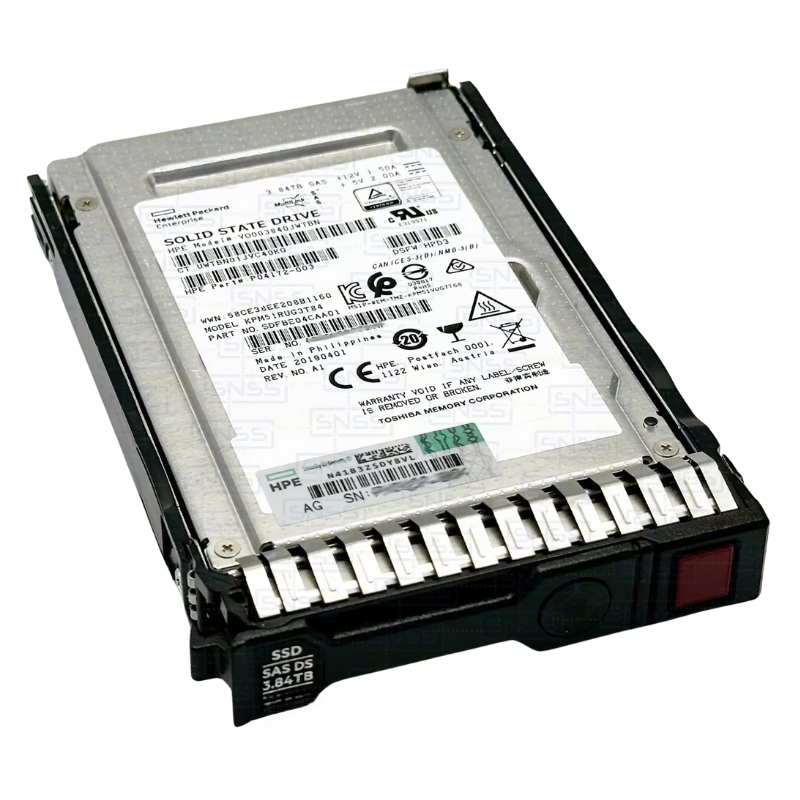
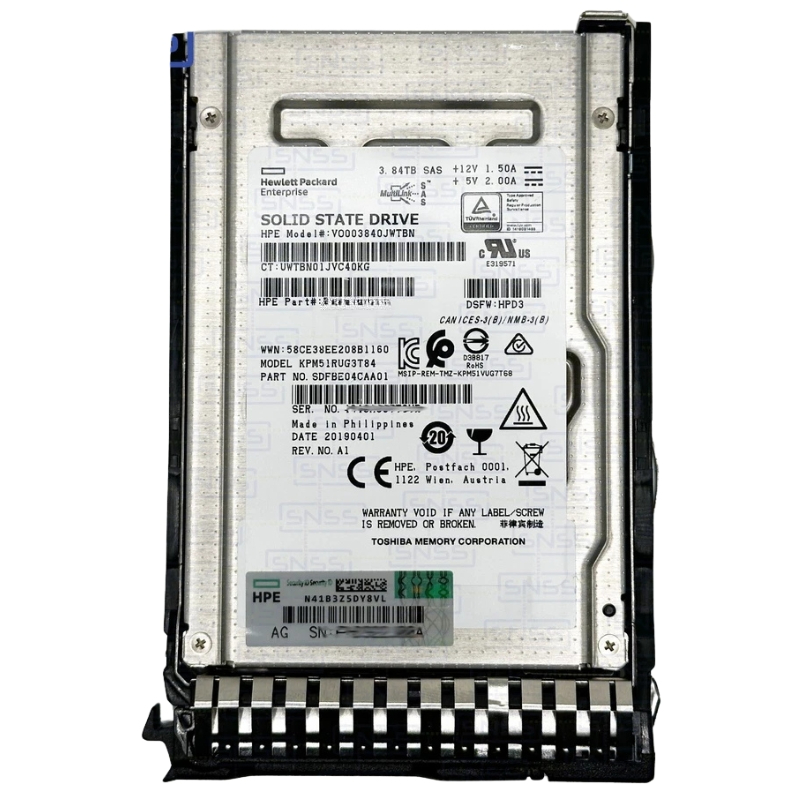
HPE P49034-B21 SAS-12GBPS SSD 3.84TB Read Intensive SC. New Sealed in Box (NIB) with 3 years Warranty
| SKU/MPN | Warranty | Price | Condition | You save |
|---|---|---|---|---|
| P49034-B21 | 1 Year Warranty | $1,188.00 | Excellent Refurbished | You save: $415.80 (26%) |
| P49034-B21 | 1 Year Warranty | $2,042.00 | New Sealed in Box (NIB) | You save: $714.70 (26%) |
HPE 3.84TB SAS 12GBPS Read‑Intensive SFF SC SSD
Elevate server storage with an enterprise-grade, read‑optimized solid-state drive engineered for HPE ProLiant Gen10 and Gen10 Plus systems. This multi‑vendor compatible SFF SC hot‑plug SSD delivers dependable throughput, strong endurance for read‑heavy workloads, and seamless integration with SAS 12G infrastructures.
Key benefits and highlights
The SAS-12Gbps interface provides enterprise-grade connectivity with full-duplex data transfer and robust command handling for multi-path environments. For the HPE P49034-B21 line, SAS ensures compatibility with HPE ProLiant servers, HPE storage arrays, and a wide range of enterprise-class HBAs and RAID controllers that support 12Gb/s SAS lanes. This interface supports predictable latency characteristics and mature enterprise features such as domain validation, enclosure management, and dual-port redundancy—critical for highly available systems.
The 3.84TB capacity point is commonly used in enterprise systems to balance per-drive capacity with rack-level density and performance. It provides ample space for large read datasets, indexes, or system images while maintaining strong I/O response under concurrent access. Many drives in this category also support advanced on-drive data services such as compression and capacity-optimized controllers, which can help improve effective utilization in some workloads.
Read-intensive SSDs are validated and rated for higher proportions of read cycles versus write cycles. The endurance metrics and drive life are specified by manufacturers in drive writes per day (DWPD) or total terabytes written (TBW). For read-centric deployments, this class of SSDs typically offers lower write endurance guarantees compared to mixed-use or write-intensive models, but they compensate with high read performance and lower cost per GB. Understanding endurance metrics is essential when planning replication, snapshotting frequency, and background maintenance tasks that may introduce additional writes.
Read-optimized drives in this category deliver low-latency responses for read requests, very high random read IOPS, and sustained sequential throughput for large block transfers. Latency can be a critical differentiator in database and virtualization use cases where microsecond-level improvements translate to application responsiveness gains. While specific numbers vary by firmware and host configuration, buyers should evaluate these drives against realistic benchmark scenarios—such as 4K random read and 64K sequential read—performed in their intended environment or comparable testbeds.
Enterprise SSDs are designed to maintain consistent performance even as drive capacity is utilized. Controller algorithms, over-provisioning, and background garbage collection behaviors are tuned to reduce latency spikes and throughput drops. For system designers, it's important to account for steady-state behavior and to monitor performance over time as occupancy and write amplification evolve.
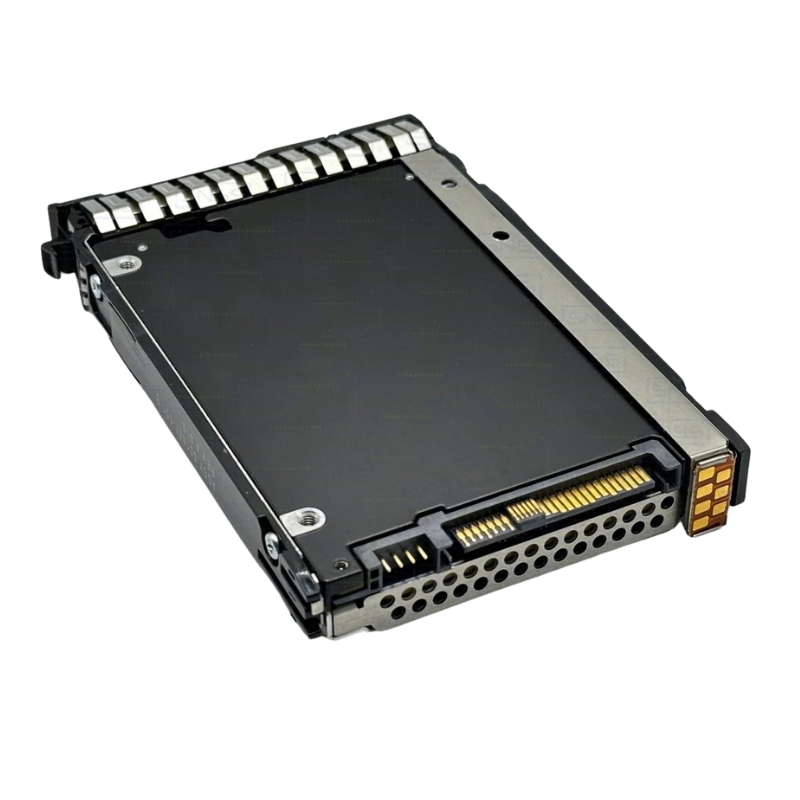
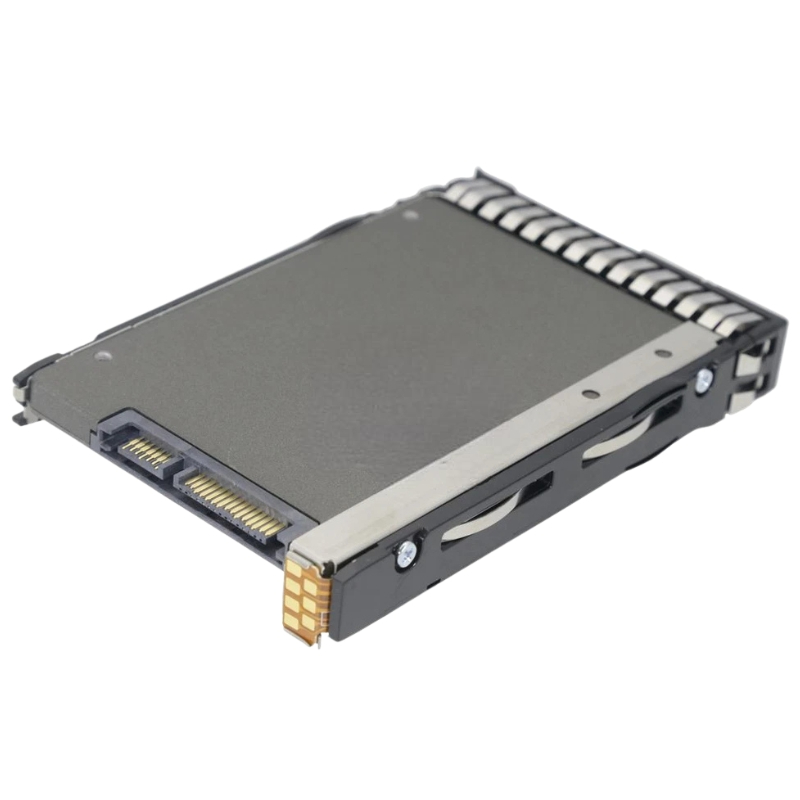
Drives in the HPE P49034-B21 category are commonly offered in 2.5-inch enterprise form factors compatible with hot-swap trays or sleds used in HPE servers and storage enclosures. Their mechanical design simplifies insertion and removal during maintenance windows and supports consistent airflow and thermal dissipation when installed in dense racks.
Power draw and heat dissipation are key determinants of drive selection in dense deployments. Read-intensive SSDs generally consume less power under read-dominant workloads compared to write-heavy activity, but peak power can occur during background tasks such as block erasure or firmware updates. Ensure your storage chassis and cooling systems can sustain the thermal load at full populate to avoid throttling or reduced service life. Use vendor tools to monitor drive temperature and fan curves to maintain optimal operating conditions.
The HPE P49034-B21 SAS-12GBPS 3.84TB Read Intensive SC SSD is engineered for interoperability within HPE environments. It is designed to work with HPE ProLiant series servers, HPE Smart Array controllers, and HPE storage enclosures. Confirm compatibility with firmware matrixes and server BIOS versions when deploying across mixed hardware generations. Compatibility matrices and product compatibility lists from HPE should be consulted when in doubt to ensure feature parity—especially for advanced features like HPE drive health telemetry and proactive spare support.
Enterprise-grade RAID controllers and HBAs that support SAS 12Gb/s are primary integration points for this category. When used in RAID groups, these drives can deliver improved effective performance and higher resilience. Consider RAID level selection carefully: RAID 10 or mirrored configurations provide superior write performance and rebuild times, while RAID 6 or erasure-coded configurations offer better raw capacity efficiency with varying rebuild complexity. SSD-aware controllers that support features such as TRIM/pass-through and intelligent rebuild prioritization can minimize rebuild impact and preserve I/O responsiveness.
Drives in this category typically expose SMART attributes and vendor-specific telemetry for health monitoring. Key SMART fields to watch include media and ECC error counts, spare block usage, temperature, power-on hours, and accumulated host writes. Integrating drive telemetry into centralized monitoring and alerting systems allows administrators to proactively identify drives approaching end-of-life thresholds or experiencing emerging issues before failures occur.
Firmware plays a critical role in drive behavior, stability, and performance. Regularly check for vendor-released firmware updates that address compatibility, security, or performance enhancements. When updating firmware in production, follow vendor guidance to schedule maintenance windows, verify compatibility with host controllers, and ensure that redundant paths remain available throughout the update process. Many HPE deployments leverage orchestration tooling to coordinate firmware updates at scale.
In the event of a drive failure, rapid and reliable rebuilds are crucial for data availability. SSDs rebuild faster than HDDs in many cases, but the rebuild load can still stress the remaining array members. Employ strategies such as spare pool sizing, staggered rebuild priorities, and temporary offloading of non-critical workloads during rebuilds. Additionally, consider leveraging features like snapshots, replication, or asynchronous mirroring for extra protection against data corruption or multiple-failure scenarios.
When planning capacity, account for overheads such as RAID parity, metadata, and any recommended over-provisioning zone (typically reserved by the drive for wear leveling and performance). Also factor in snapshots, replication snapshots, index growth, and application-level buffer caches. For read-intensive tiers, effective capacity can be increased through deduplication and compression at the storage array level if supported, but verify real-world gains against sample data sets.
Decide whether to scale by adding more drives to an existing array (scaling up) or by adding additional nodes (scaling out). Scaling up can be simpler and more cost-effective for incremental capacity increases. However, scaling out provides architectural benefits: improved parallelism, rack-level redundancy, and easier linear scaling of network and IO bandwidth. The HPE P49034-B21 category supports both approaches, but storage architects should align the chosen model with long-term growth forecasts and application distribution.
Many enterprise SSDs support hardware-based data-at-rest encryption (SED). If implementing SEDs, ensure encryption keys are managed securely using key management systems (KMS) and are integrated with enterprise policies for vaulting and rotation. Encryption reduces risk if drives leave the data center or are decommissioned, but key management lifecycle must be robust to avoid accidental data loss.
End-to-end data integrity features—such as end-to-end CRC, power-loss protection capacitors, and error-correcting code (ECC)—help minimize silent data corruption. Drives designed for enterprise environments typically include these protections; confirm specific drive-level guarantees and how they interact with controller-level integrity checks and checksums.
The HPE P49034-B21 SAS-12GBPS 3.84TB Read Intensive SC SSD sits in the read-intensive tier, offering a balance of capacity and read performance with lower per-GB cost compared to write-intensive options. Mixed-use drives are tuned for balanced read/write workloads and provide higher endurance at a higher price; write-intensive SSDs are optimized for heavy write cycles (e.g., caching layers, heavy logging) and often come with higher endurance ratings and a premium price. Choosing the correct class reduces total cost of ownership while ensuring SLA adherence.
The HPE P49034-B21 SAS-12GBPS 3.84TB Read Intensive SC SSD category equips storage architects with a read-optimized solution that fits a wide range of enterprise scenarios. By aligning drive selection with workload characteristics, monitoring telemetry proactively, and adhering to firmware and compatibility guidance, organizations can achieve significant performance improvements for read-centric applications while controlling storage TCO. Use this category page as a living document—update specifications, compatibility notes, and real-world benchmark summaries as deployments evolve to keep procurement and operations teams informed and aligned.


 Contact Us
 Information
 Catalog
 Solid State Drives (SSD)
 Network Switches
 Hard Disk Drives
 HBA & Controllers
 PC & Servers
 PC & Server Memory
 CPU & Processors
 Network Routers
 Power Supplies
 Tape Drives & Libraries
 Network Devices
 Computer & Network Cables