(7% discount is applied at checkout)
Cart is empty
Your go-to destination for cutting-edge server products
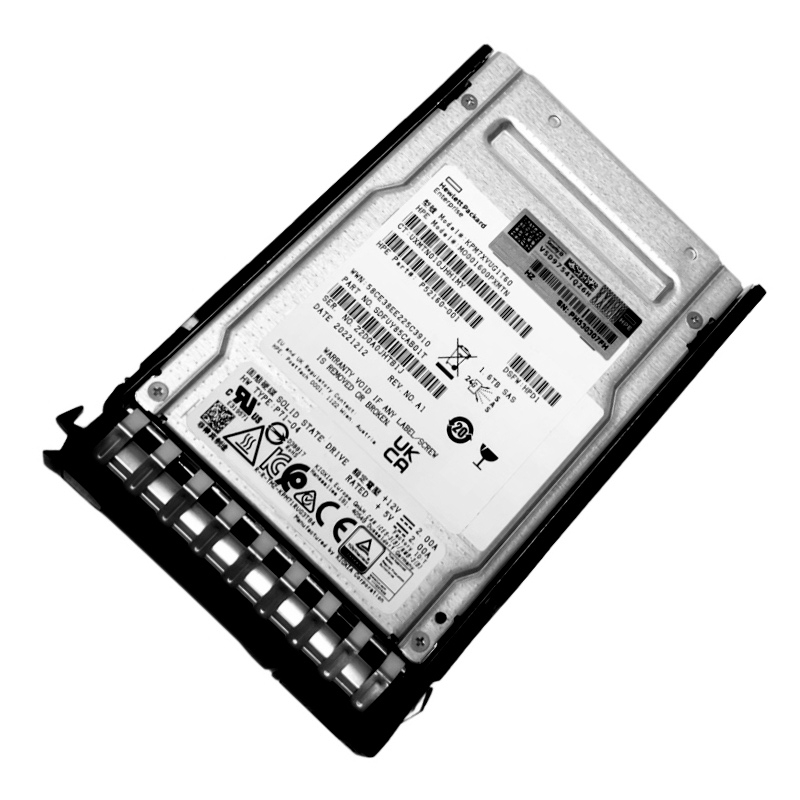


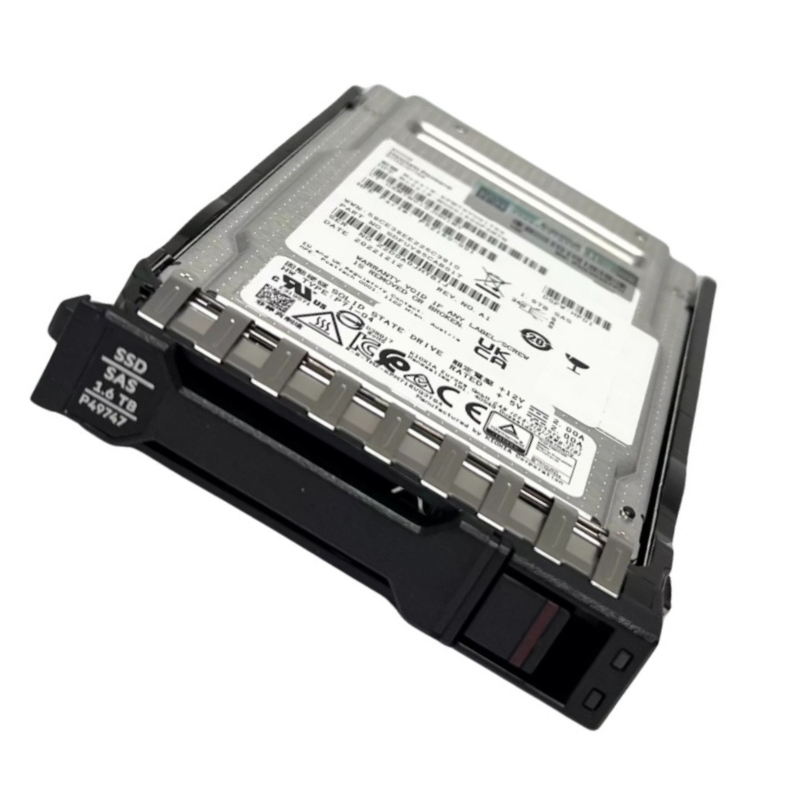
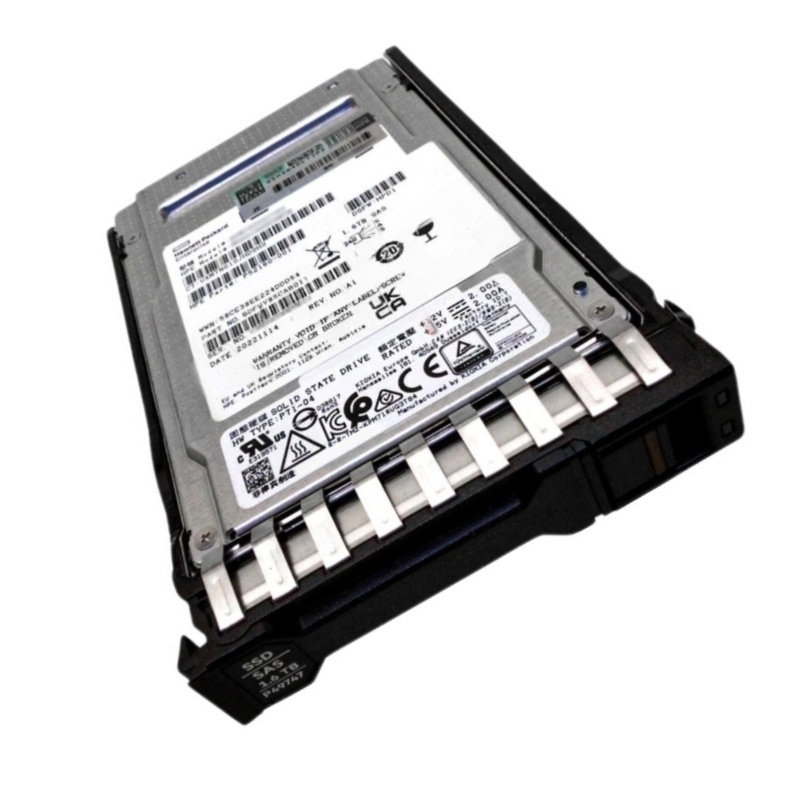
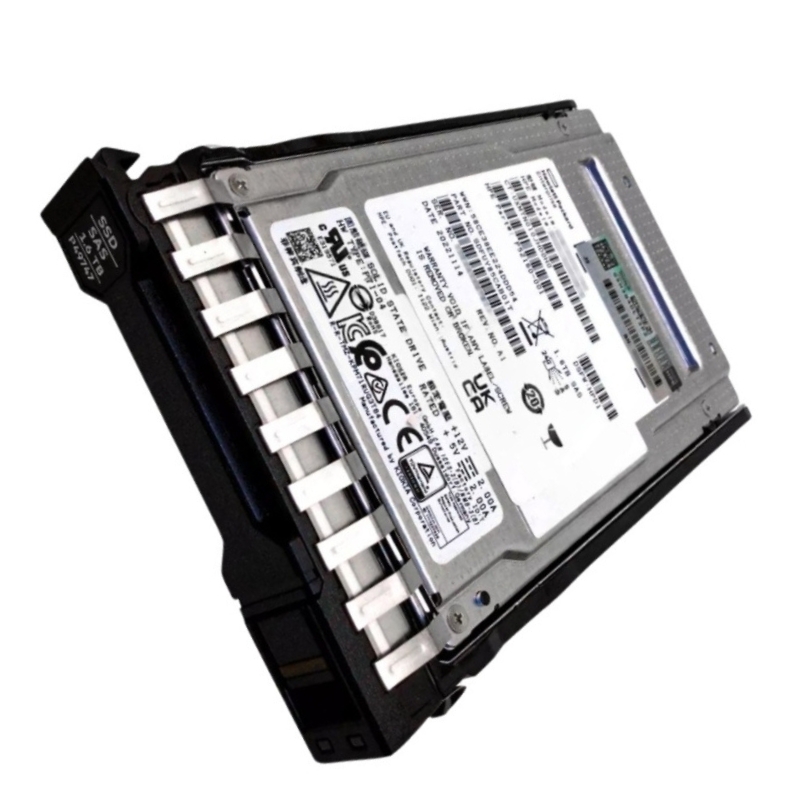
HPE P49329-B21 1.6TB SSD SAS 24GBPS Mixed Use SFF for Servers. New Sealed in Box (NIB) 3 Years Warranty
Compatibility Highlights
The HPE P49329-B21 represents the pinnacle of enterprise storage technology, combining substantial 1.6TB capacity with cutting-edge SAS 24Gbps interface performance. This Mixed Use SSD is engineered specifically for modern server environments where high throughput, low latency, and exceptional endurance are non-negotiable requirements. As organizations increasingly deploy data-intensive applications and virtualization at scale, the P49329-B21 delivers the performance characteristics and reliability needed to support business-critical operations while providing investment protection through advanced features and comprehensive compatibility.
SAS-4 (24Gbps) technology represents a quantum leap in storage interface performance, delivering double the bandwidth of previous-generation 12Gbps SAS while introducing enhanced signal integrity, improved power efficiency, and advanced management capabilities that redefine enterprise storage expectations.
The 24Gbps SAS interface incorporates sophisticated technological advancements that enable unprecedented data transfer rates while maintaining the reliability and compatibility that have made SAS the enterprise storage standard for decades.
With theoretical transfer speeds up to 24 gigabits per second per port, the SAS-4 interface eliminates storage bottlenecks in even the most demanding environments. This enhanced bandwidth is particularly beneficial for artificial intelligence workloads, real-time analytics, high-performance computing, and large-scale virtualization deployments where rapid data access directly impacts business outcomes and user experiences.
Advanced signal conditioning, including Decision Feedback Equalization (DFE) and transmitter pre-emphasis, ensures reliable data transmission at higher speeds across varying cable lengths and backplane configurations. These innovations maintain data integrity while reducing bit error rates compared to previous SAS generations.
Despite its advanced capabilities, the P49329-B21 maintains comprehensive backward compatibility with 12Gbps and 6Gbps SAS infrastructures through sophisticated auto-negotiation features, ensuring seamless integration into existing environments while providing a clear performance upgrade path.
The drive automatically negotiates the optimal connection speed with compatible controllers and expanders, allowing organizations to deploy the P49329-B21 in heterogeneous environments that may include previous-generation SAS components without requiring immediate infrastructure overhaul.
The 1.6TB capacity point represents an optimal balance between storage density, performance sustainability, and cost efficiency for a wide range of enterprise applications, from database systems to virtualized infrastructure and analytics platforms.
At 1.6TB, this SSD enables significant storage consolidation compared to lower-capacity alternatives, reducing the number of drives required to achieve target capacity while maintaining or improving overall system performance and reliability.
Higher capacity drives directly translate to reduced physical infrastructure requirements, enabling organizations to store more data in less rack space while simplifying cable management, reducing power distribution complexity, and optimizing data center floor space utilization.
When evaluating storage solutions, the P49329-B21 delivers superior cost-per-gigabyte metrics compared to lower-capacity SSDs while providing additional savings through reduced power consumption, cooling requirements, and management overhead across the storage infrastructure.
The 1.6TB capacity is strategically positioned to deliver optimal performance characteristics while providing substantial storage for demanding enterprise workloads, making it suitable for both capacity-oriented and performance-sensitive applications.
The "Mixed Use" classification indicates that this SSD is specifically engineered to handle balanced read and write workloads, delivering consistent performance for applications where both data retrieval and data creation occur frequently throughout operational cycles.
Mixed Use SSDs feature significantly higher write endurance compared to Read-Intensive models, with the P49329-B21 offering enterprise-class Drive Writes Per Day (DWPD) ratings that ensure long-term reliability under demanding write-intensive operations.
Sophisticated wear-leveling algorithms distribute write operations evenly across all available flash memory cells, preventing premature wear on specific regions of the NAND flash and extending the practical lifespan of the drive beyond minimum specifications.
Intelligent over-provisioning strategies allocate additional flash capacity beyond the advertised 1.6TB user-accessible space, providing reserved resources for garbage collection, wear leveling, and bad block management that maintain consistent performance throughout the drive's operational life.
The Mixed Use design philosophy ensures that neither read nor write performance is compromised, delivering a harmonious performance profile that adapts dynamically to varying workload demands without requiring administrative intervention.
Unlike Read-Intensive SSDs that prioritize read performance at the expense of write capabilities, the P49329-B21 maintains strong performance for both operations, typically delivering 75-85% of peak read performance for write operations under sustained mixed workload conditions.
The 2.5-inch Small Form Factor (SFF) represents the industry standard for enterprise storage density, enabling organizations to maximize storage capacity within constrained physical space while maintaining optimal thermal and power efficiency.
The compact 2.5-inch form factor allows for significantly higher storage density compared to traditional 3.5-inch drives, enabling organizations to store more data in less physical space while reducing overall infrastructure footprint and complexity.
Modern servers and storage arrays designed for 2.5-inch drives can accommodate up to 24 or more drives in a 2U chassis, enabling petabyte-scale storage in compact footprints that optimize data center space utilization and power efficiency.
Reduced physical size and weight compared to 3.5-inch alternatives simplify installation, maintenance, and shipping logistics while putting less physical stress on server chassis and storage enclosures, potentially extending the lifespan of supporting infrastructure.
The 2.5-inch form factor features optimized thermal characteristics that facilitate efficient cooling in densely populated server and storage configurations, contributing to improved reliability and potentially lower cooling costs.
Sophisticated temperature monitoring and adaptive performance management ensure optimal operation within specified thermal envelopes, automatically adjusting operation to prevent overheating while maintaining maximum possible performance under challenging environmental conditions.
The P49329-B21 delivers exceptional performance characteristics that accelerate application responsiveness, reduce transaction times, and support concurrent operations across multiple workloads and users in demanding enterprise environments.
Comprehensive performance testing demonstrates the drive's capability to handle intensive enterprise workloads while maintaining consistent operation under varying conditions and utilization levels.
With sequential read speeds exceeding 2100MB/s and write speeds up to 1200MB/s, this drive significantly outperforms previous-generation SAS solutions and meets or exceeds performance requirements for most enterprise applications including large-scale database systems, virtualization platforms, and high-performance computing environments.
Random performance metrics showcase the drive's capability to handle database and virtualization workloads, with up to 300,000 read IOPS and 100,000 write IOPS at queue depth 256. This performance level supports thousands of virtual machines or millions of database transactions simultaneously without performance degradation.
The drive features consistently low read latency (typically under 80 microseconds) and write latency (typically under 12 microseconds), which translates to faster application response times and improved user experiences for latency-sensitive applications such as financial trading systems, real-time analytics, and interactive databases.
Enterprise applications require predictable storage performance under varying workload conditions. The P49329-B21 delivers exceptional QoS with consistent latency profiles and throughput guarantees even during peak utilization periods.
Advanced flash management, sophisticated garbage collection algorithms, and intelligent write buffering maintain consistent performance throughout the drive's lifespan, with minimal performance degradation as the drive fills with data or undergoes extensive write cycles.
The P49329-B21 is specifically engineered for seamless integration into modern server environments, with features and capabilities that maximize performance, simplify management, and ensure reliable operation in demanding 24/7 operational scenarios.
While optimized for HPE ProLiant servers, the drive maintains compatibility with a wide range of server platforms from multiple vendors, providing deployment flexibility across heterogeneous IT environments and reducing vendor lock-in concerns.
Extensive compatibility testing ensures reliable operation with server platforms from major vendors including Dell, Cisco, Supermicro, and others, though some advanced management features may require specific HPE infrastructure for full functionality.
Comprehensive driver support and certification across major operating systems including Windows Server, Linux distributions, VMware ESXi, and other enterprise platforms ensures reliable operation and optimal performance in diverse server environments.
Advanced management capabilities provide comprehensive visibility into drive health, performance metrics, and operational status through standard interfaces and vendor-specific management platforms.
Extended S.M.A.R.T. attributes provide detailed insight into drive health, wear levels, performance characteristics, and environmental conditions, enabling proactive maintenance and capacity planning based on actual usage patterns rather than theoretical specifications.
Enterprise storage demands exceptional reliability and endurance characteristics to ensure continuous operation, data integrity, and predictable performance throughout the product lifecycle in demanding 24/7 operational environments.
With an impressive 2.5 million hours MTBF rating, the P49329-B21 demonstrates exceptional reliability that exceeds typical enterprise requirements, contributing to lower total cost of ownership through reduced replacement costs and maintenance overhead.
The 1.6TB capacity, SAS 24Gbps performance, and Mixed Use endurance profile make the P49329-B21 suitable for a wide range of enterprise applications where high performance, substantial storage capacity, and enterprise reliability are required.
Server virtualization platforms including VMware vSphere, Microsoft Hyper-V, and KVM benefit from the balanced read/write performance and substantial capacity of the P49329-B21, supporting hundreds of virtual machines with varying workload characteristics in consolidated environments.
Large-scale VDI implementations present challenging storage requirements with boot storms, user login activity, and application usage patterns. The high IOPS capability and consistent latency of the P49329-B21 ensure responsive user experiences during peak utilization periods with thousands of concurrent users.
Transactional databases such as Microsoft SQL Server, Oracle Database, MySQL, and PostgreSQL benefit from the low latency and high IOPS capabilities of the P49329-B21, accelerating query processing and transaction completion times for business-critical applications.
Both Online Transaction Processing and Online Analytical Processing systems benefit from the balanced performance characteristics of Mixed Use SSDs, with the P49329-B21 efficiently handling the random I/O patterns of OLTP and the sequential operations of OLAP workloads within unified database environments.
Modern analytics platforms and data lakes benefit from the balanced performance characteristics of Mixed Use SSDs, which can efficiently handle both the write-intensive data ingestion phases and read-intensive query processing that characterize big data environments at enterprise scale.
The P49329-B21 incorporates sophisticated enterprise features that enhance security, improve management efficiency, and ensure optimal operation in complex storage environments.
Multi-layered security implementation protects data at rest, ensures firmware integrity, and facilitates secure drive retirement while maintaining compliance with enterprise security policies and regulatory requirements.
Trusted Computing Group Enterprise Storage Security Subsystem Class compliance provides a standardized framework for storage security, including authentication, access control, and cryptographic sanitization capabilities that meet enterprise security requirements.
Cryptographic erase functionality enables rapid data sanitization by cryptographically shredding encryption keys, rendering all stored data permanently inaccessible for secure drive repurposing, retirement, or compliance with data protection regulations.
Advanced power loss protection mechanisms ensure data integrity during unexpected power failures, completing in-progress writes and maintaining data consistency without corruption even during unplanned power events.
Enterprise-grade power loss protection utilizes capacitor-based backup systems that provide sufficient energy to complete pending write operations and flush cache contents to non-volatile storage during power failure events, ensuring data persistence and consistency.
Understanding how the P49329-B21 compares to alternative storage technologies helps organizations make informed procurement decisions based on their specific requirements, constraints, and strategic objectives.
While NVMe offers superior performance in certain scenarios, SAS technology provides distinct advantages in shared storage environments, dual-port redundancy, and compatibility with existing infrastructure that may make it more suitable for specific deployment scenarios.
SAS maintains its advantage in shared storage configurations where multiple hosts need to access the same storage devices, a common requirement in high-availability clusters, certain virtualized environments, and scale-out storage architectures.
The backward compatibility of SAS-4 drives protects existing infrastructure investments while providing a clear performance upgrade path, unlike NVMe which often requires complete infrastructure overhaul including controllers, cables, and management software.
While Read-Intensive SSDs prioritize cost-effectiveness for predominantly read-oriented workloads, Mixed Use SSDs like the P49329-B21 offer higher endurance for balanced workloads, making them suitable for a broader range of enterprise applications with unpredictable or mixed workload patterns.
Understanding specific workload patterns including read/write ratios, IOPS requirements, and capacity growth projections ensures that the P49329-B21 is deployed in scenarios where its Mixed Use characteristics provide maximum value compared to Read-Intensive or Write-Intensive alternatives.
The SAS 24Gbps interface provides substantial headroom for future performance requirements, while the 1.6TB capacity accommodates data growth trends. These characteristics make the P49329-B21 a strategic investment that can support evolving business needs without requiring premature infrastructure replacement.


 Contact Us
 Information
 Catalog
 Solid State Drives (SSD)
 Network Switches
 Hard Disk Drives
 HBA & Controllers
 PC & Servers
 PC & Server Memory
 CPU & Processors
 Network Routers
 Power Supplies
 Tape Drives & Libraries
 Network Devices
 Computer & Network Cables