(7% discount is applied at checkout)
Cart is empty
Your go-to destination for cutting-edge server products


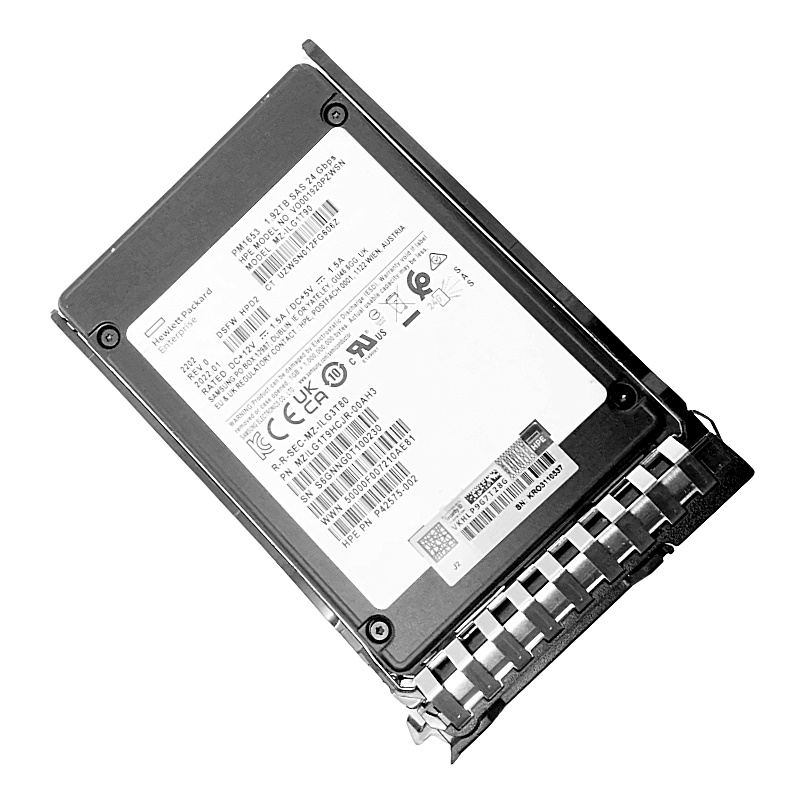
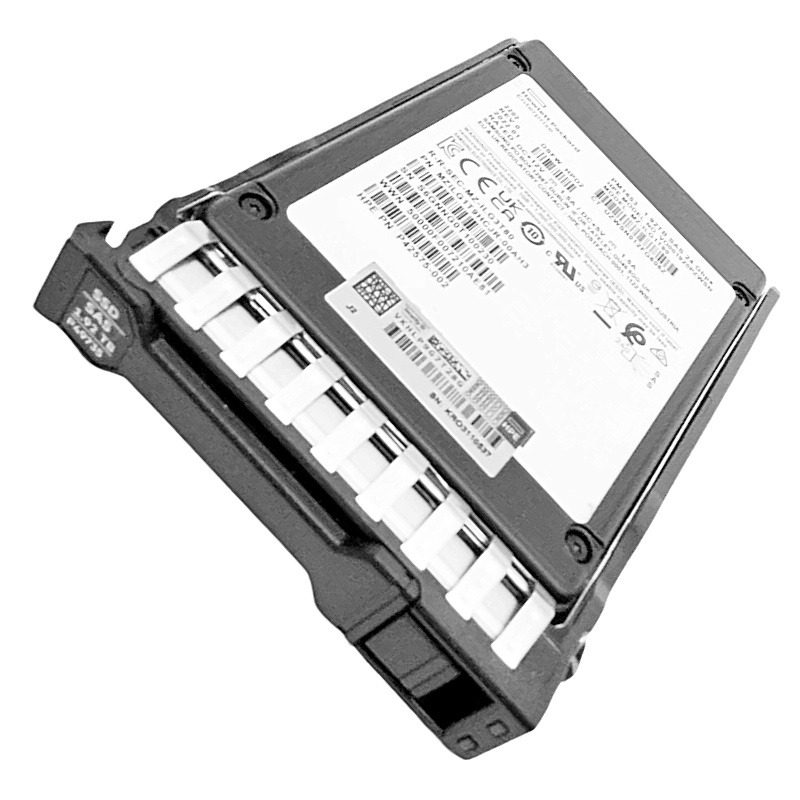
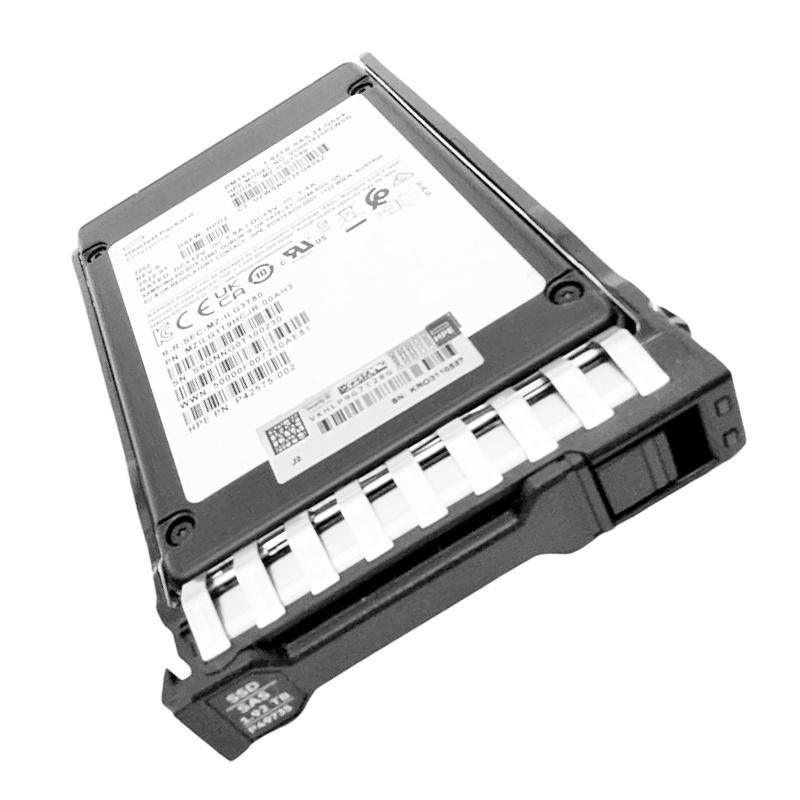
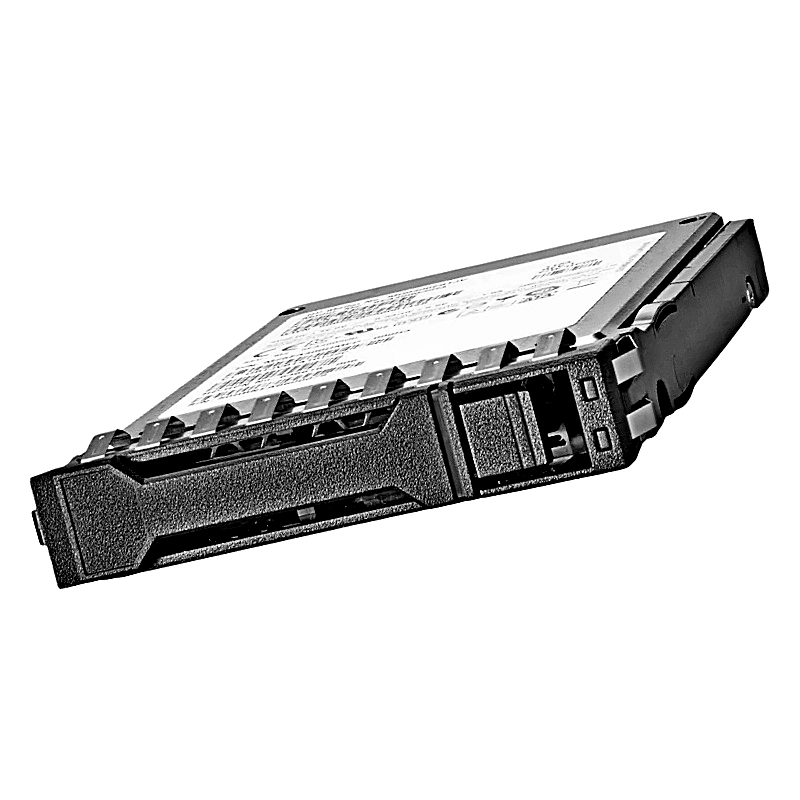
HPE P49726-001 1.92 TB SSD SAS 24GBPS Read Intensive SFF SC Digitally Signed Firmware Hot Swap. Excellent Refurbished with 1 year replacement warranty
A high-availability, read-optimized 2.5-inch SFF SSD engineered for data center workloads. This HPE-manufactured module (MPN: P49726-001) combines SAS 24Gb/s connectivity with hot-pluggable convenience and firmware integrity safeguards to deliver predictable performance and simplified serviceability.
The drive ships with digitally-signed firmware—an essential safeguard in regulated and security-conscious deployments. Signed firmware verifies authenticity at update/install time, reducing the attack surface from unauthorized firmware images and ensuring vendor-validated behavior.
Built for HPE server and storage ecosystems but compatible with any platform that supports SAS 24Gb/s 2.5" enterprise drives. This drive is particularly well-suited to these scenarios:
The hot-swappable 2.5" SFF design facilitates quick replacements and reduces mean time to repair (MTTR). Color-coded trays and vendor-specific carrier options simplify field swaps in dense rack environments.
This model is engineered to strike an optimal balance between performance, security, and operational simplicity for read-centric workloads. Enterprise operators will appreciate the signed firmware, SAS 24Gb/s throughput, and proven HPE manufacturing pedigree.
The HPE P49726-001 1.92TB SAS 24Gbps 2.5-inch Read Intensive SFF Solid State Drive (SSD) is a purpose-built enterprise storage component designed to deliver predictable read performance, low latency and robust compatibility with HPE server and storage platforms. This category centers on high-performance, hot-swappable SAS SSDs with digitally signed firmware for secure, validated operation in data center and enterprise-class deployments. These drives are optimized for read-dominant workloads such as virtualization, web serving, content delivery, analytics and read-cache tiers in hybrid storage architectures.
HPE P49726-001, 1.92TB SAS SSD, 24Gbps SAS, 2.5-inch SFF, read intensive solid state drive, digitally signed firmware, hot swap SSD, enterprise SAS drive, HPE compatible SSD, server-grade flash storage.
The defining capacity for this SKU is 1.92TB presented in a standard 2.5-inch small form factor (SFF). The 2.5" SFF packaging enables high drive density in server chassis and storage arrays, allowing dense configurations in blade, rack and tower systems while maintaining thermal and serviceability advantages over larger form factors.
These drives employ a Serial Attached SCSI (SAS) interface rated at 24Gbps. The high-speed SAS link preserves enterprise-grade signal integrity, multi-drop topologies and full-duplex communication required for mixed I/O workloads. SAS 24Gbps provides the throughput headroom needed by read-centric SSDs when used in high-concurrency environments, enabling sustained transfers and low queuing delays for mission-critical applications.
The "read intensive" designation indicates that the NAND media and firmware are tuned to maximize read throughput and latency consistency across predominantly read workloads. Compared with mixed-use or write-intensive classes, read-intensive drives trade lower write endurance for improved cost-per-GB and predictable read performance — a strong fit for caching layers, virtual desktop infrastructure (VDI) read caches, large object stores and analytics-heavy roles.
Digitally signed firmware (Secure Code, SC) is a security and compatibility feature that ensures the drive firmware has been cryptographically validated by HPE. Signed firmware reduces the risk of corruption, unauthorized modification, or firmware-level incompatibilities by only allowing approved firmware images to run on the drive. For enterprise fleets, this increases reliability, simplifies certified updates and supports regulated environments that require traceability and secure firmware provenance.
Hot-swap capability allows drives to be removed and replaced without shutting down the host system, crucial for high-availability environments. HPE hot-swap design includes mechanical form factor, shock and connector specifications that align with HPE chassis trays and backplanes—minimizing downtime and enabling straightforward field replacement or capacity upgrades.
Read-intensive SAS SSDs deliver low-latency random reads and high sequential read throughput, particularly on SAS 24Gbps channels. Performance at scale is influenced by drive firmware, host controller capabilities, RAID settings, queue depth and the nature of the workload (random vs sequential, request size distribution). When deployed in HPE servers and controllers that support full SAS bandwidth, these drives help reduce application latency and increase throughput for read-dominant services.
Read-oriented workloads — such as database query serving, boot storms and VDI read patterns — benefit from low random-read latency. The drive's controller and enterprise-grade NAND are tuned to provide consistent I/O latencies under sustained read loads and typical production queue depths, reducing tail-latencies that can harm application responsiveness.
For large-block sequential reads (for example, content distribution or streaming analytics), the 24Gbps SAS interface gives the drive ample bandwidth to stream large datasets with minimal host-side bottlenecks. Properly architected storage tiers will leverage these drives as either primary read tiers or read cache layers to accelerate sequential read operations.
Endurance for read-intensive SSDs is optimized for workloads with a much higher proportion of reads than writes. Write-endurance metrics vary across NAND types and firmware, but the read-intensive classification indicates a balance chosen to lower cost-per-GB while providing acceptable write lifetimes for cache and read-heavy application tiers. In real deployments, administrators should pair endurance expectations with expected write amplification, background maintenance (e.g., garbage collection) and RAID write amplification to estimate drive longevity.
Enterprise SAS SSDs incorporate features for data integrity, such as power-loss protection algorithms, end-to-end data path protection, and SMART telemetry for predictive health monitoring. Combined with HPE system-level monitoring, these capabilities help data center operators detect issues early and perform proactive replacements before failures impact availability.
The digitally signed firmware reduces operational risk. HPE's firmware release and validation process aims to ensure compatibility with controller microcode and server platform BIOS/UEFI. Administrators should adopt firmware management best practices — staging updates, validating in test environments and applying signed updates through HPE's supported lifecycle tools — to maintain stability while keeping drives current.
Self-monitoring, analysis, and reporting technology (SMART) metrics provide critical insights into drive health. Enterprise-class drives surface telemetry such as media wear indicators, uncorrectable error counts, temperature, and remaining write capacity to centralized management tools. Integrating SMART alerts into HPE OneView or server management consoles simplifies fleet health tracking.
This drive category is engineered for seamless integration with HPE ProLiant servers, HPE Synergy and select HPE storage enclosures that accept 2.5" SAS SFF drives. Using certified HPE drives helps ensure proper backplane support, SAS controller compatibility and access to vendor support. For new deployments, check server and controller firmware matrixes to confirm end-to-end interoperability.
Enterprise RAID controllers — including hardware RAID and software-defined storage controllers — can combine multiple read-intensive SSDs to form read-optimized RAID sets. Consider controller write-back/write-through caching policies, battery or capacitor-backed cache, and RAID rebuild behavior; read-optimized drives accelerate read paths but rebuild times and write amplification during rebuilds require careful architectural planning.
The 2.5-inch form factor and standard SAS connector are compatible with HPE drive caddies and sleds specifically designed for the P49726-001 sizing and mechanical tolerances. When retrofitting drives into mixed fleets, confirm tray keying, indicator LED behavior and caddy compatibility to avoid mechanical or signaling issues.
Hot-swap service is an operational requirement in many enterprise datacenters. Replace drives only following the vendor's prescribed procedures: migrate workloads, place RAID arrays into the appropriate degraded mode, and initiate rebuilds or resilvering through supported management interfaces. The hot-swap capability in this category minimizes downtime and supports rolling maintenance windows.
Digitally signed firmware enforces firmware authentication at boot and during updates. This cryptographic mechanism prevents unauthorized or corrupted firmware images from executing, protecting against firmware-level attacks and accidental firmware mismatches. In regulated industries, signed firmware contributes to compliance and auditability by providing a verifiable chain-of-custody for firmware images.
While some enterprise SSDs include self-encrypting drive (SED) capabilities, the presence of digitally signed firmware is a separate security layer focused on code integrity. When encryption is required, verify whether the specific HPE SKU supports SED or Opal standards and whether key management integration with HPE platform encryption or third-party key managers is supported.
A common architecture uses read-intensive SAS SSDs as a cache or upper tier in a multi-tier storage hierarchy. In front of slower HDD capacity tiers, these SSDs serve hot data and reduce average latency for user-facing workloads. Combined with intelligent caching algorithms and tiering policies, the P49726-001 class of drives can dramatically reduce response times while optimizing cost-per-GB across the solution.
Hybrid arrays that combine SSDs and HDDs benefit from a balance of performance and capacity. HPE controllers and array management software often include adaptive caching and tiering features that automatically promote frequently read blocks to SSD tiers. When deploying these drives, configure caching thresholds and monitor hit rates to ensure the expected performance gains.
Virtual desktop infrastructure (VDI) and read-heavy database workloads see substantial gains from read-optimized SSD tiers. Boot storms and correlated read bursts are especially sensitive to drive latency; read-intensive SSD categories reduce boot times and query latencies for numerous concurrent users. For database acceleration, pairing these drives with memory and CPU improvements delivers balanced system-level performance enhancements.
When selecting drives, evaluate the expected read/write ratio and performance characteristics of your workload. Read-intensive SSDs like the P49726-001 are cost-effective where reads dominate. Mixed-use or write-intensive SSDs are preferable if sustained write throughput and higher DWPD (drive writes per day) are required. Consider total cost of ownership, including replacement frequency, energy consumption and management overhead, when comparing classes.
Plan capacity not only by raw storage needs but also by usable capacity after RAID overhead and reserve space for wear-leveling and over-provisioning. Scale-out architectures benefit from drives that maintain consistent performance as the array grows; ensure controllers and interconnects are sized to match aggregate bandwidth and concurrency requirements.
Verify vendor warranty terms, support SLAs and cross-shipment options. Purchasing certified HPE-branded drives — or validated alternatives approved for HPE systems — can affect warranty support and time-to-resolution for hardware issues. Procurement decisions should weigh immediate price vs long-term supportability.
Content-heavy operations benefit from the low-latency reads and sequential throughput of SAS read-intensive SSDs. When paired with caching strategies and content distribution layers, these drives accelerate page load times and reduce origin server load.
VDI environments often see high read concurrency during login storms and workload consolidation. Deploying read-intensive SSDs for user image caching and boot volumes reduces login times and improves the perceived performance for many simultaneous users.
Read-dominant analytics queries and reporting jobs that scan large datasets can benefit from SSDs that provide sustained read throughput. Position these drives as an acceleration tier for frequently accessed datasets to shorten query windows and increase reporting cadence.
Use the provided multi-level heading structure (<h2>–<h5>) to improve crawlability and to communicate content hierarchy to search engines. Ensure each heading contains relevant keywords (product SKU, interface, capacity and capability phrases) to match user search intent.
For ecommerce or category pages, include structured data such as Product schema (name, sku, brand, capacity, interface), Offer schema (price, availability) and Review schema if ratings exist. Although not embedded here, pairing this descriptive content with JSON-LD schema on the page improves rich result eligibility and clarity for search engines.
Link this category copy to related categories (e.g., "HPE Enterprise SAS SSDs", "2.5-Inch SFF Drives", "Hot-Swap Enterprise Drives") and to relevant product detail pages for individual SKUs. Use canonical tags to avoid duplicate content across similar category pages and maintain clear navigation for both users and crawlers.
Maintain recommended operating temperatures by ensuring adequate chassis airflow and clean air filters. Dense drive population in blades or storage shelves increases thermal load; employ monitoring to prevent thermal throttling which can affect performance and lifespan.
SSDs typically consume less power than equivalent-capacity HDDs, but peak and idle power characteristics vary. When planning data center power and cooling, account for aggregate drive power plus supporting controller and backplane overhead to properly size PDUs and cooling systems.
Pair detailed technical copy with high-quality product imagery, spec tables and downloadable datasheets. Provide filtering by capacity, endurance class (read/mixed/write), interface and form factor so customers can quickly compare drive families. Highlight value propositions such as "digitally signed firmware" and "24Gbps SAS" in short bullets near product thumbnails for scannability.
Where available, include vendor benchmark summaries (with methodology notes) and links to official datasheets and support matrices. Clear documentation on firmware versions, compatibility and warranty terms reduces pre-sales friction for enterprise buyers.


 Contact Us
 Information
 Catalog
 Solid State Drives (SSD)
 Network Switches
 Hard Disk Drives
 HBA & Controllers
 PC & Servers
 PC & Server Memory
 CPU & Processors
 Network Routers
 Power Supplies
 Tape Drives & Libraries
 Network Devices
 Computer & Network Cables