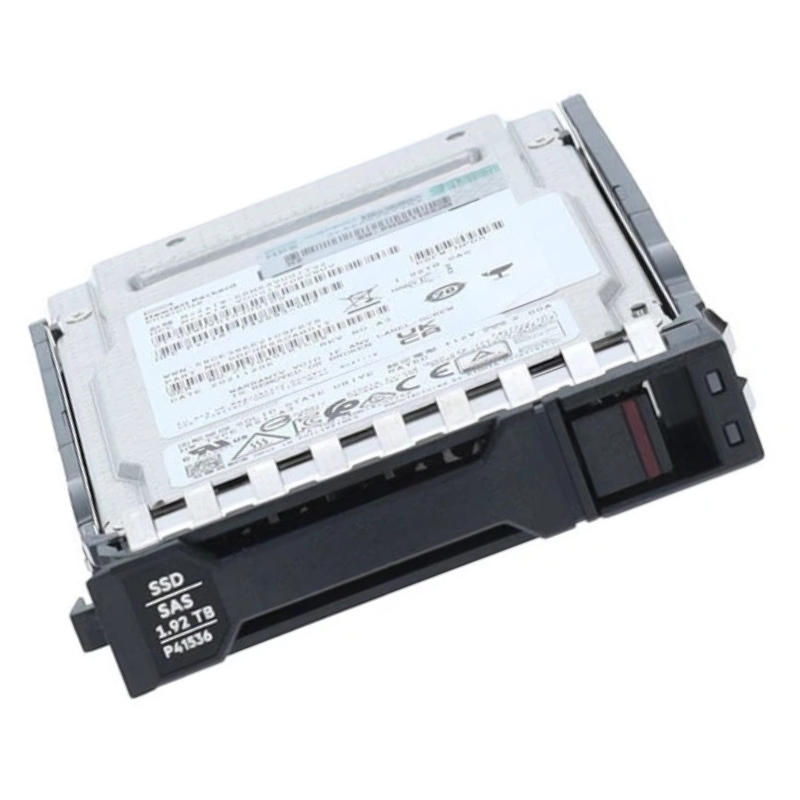
P49734-001 HPE SAS-12GBPS SSD 1.92TB RI SFF SC Hot Plug
- — Free Ground Shipping
- — Min. 6-month Replacement Warranty
- — Genuine/Authentic Products
- — Easy Return and Exchange
- — Different Payment Methods
- — Best Price
- — We Guarantee Price Matching
- — Tax-Exempt Facilities
- — 24/7 Live Chat, Phone Support
- — Visa, MasterCard, Discover, and Amex
- — JCB, Diners Club, UnionPay
- — PayPal, ACH/Bank Transfer (11% Off)
- — Apple Pay, Amazon Pay, Google Pay
- — Buy Now, Pay Later - Affirm, Afterpay
- — GOV/EDU/Institutions PO's Accepted
- — Invoices
- — Deliver Anywhere
- — Express Delivery in the USA and Worldwide
- — Ship to -APO -FPO
- — For USA - Free Ground Shipping
- — Worldwide - from $30
HPE P49734-001 1.92TB SAS SSD Reliability
The HPE P49734-001 1.92TB SAS Solid State Drive is designed to deliver exceptional performance and reliability for enterprise workloads that require high read efficiency and consistent throughput. Built for demanding data center environments, this 2.5-inch SAS-12Gbps TLC SSD is optimized for both capacity and endurance, ensuring dependable service over its entire lifecycle.
Key Highlights and Core Attributes
- Manufacturer: Hewlett Packard Enterprise (HPE)
- Part Number: P49734-001
- Form Factor: 2.5-inch, 15mm height profile
- Interface: SAS 12Gb/s for superior data transfer speeds
- Flash Type: Triple-Level Cell (TLC) NAND for read-intensive workloads
- Hot-Pluggable: Yes, enabling quick drive swaps and simplified maintenance
- Capacity: 1.92TB of enterprise-grade storage
Enhanced Read-Intensive Design
This drive is crafted to cater to read-intensive operations where fast data retrieval and stable performance are critical. Its TLC flash structure and enterprise-level firmware ensure minimal latency and consistent I/O results under high workloads.
Read and Write Performance Metrics
- Random Read IOPS: Up to 115,000 for rapid data access
- Random Write IOPS: Up to 70,000 ensuring efficient data processing
- Average Read Latency: 190µs for quick responsiveness
- Average Write Latency: 95µs ensuring smooth data flow
- Sequential Read Throughput: 1050 MiB/s for high-speed data streams
- Sequential Write Throughput: 1030 MiB/s delivering balanced performance
Endurance and Longevity
Built for dependable service, the HPE 1.92TB SAS SSD offers an endurance of 1 Drive Write Per Day (DWPD), translating to approximately 3,424 terabytes of total written data. This durability makes it a trustworthy choice for virtualized applications, analytics platforms, and mixed enterprise workloads.
Compatibility and Integration
The drive is fully certified for use with HPE ProLiant Gen10 and Gen10 Plus servers. It seamlessly integrates into HPE’s ecosystem, delivering optimized performance through intelligent firmware tuning and advanced error-correction technology. It’s an ideal upgrade for enterprises seeking improved I/O efficiency and predictable workload stability.
Optimized for Data-Centric Applications
- Perfect for read-heavy workloads like data analytics, virtualization, and content delivery
- Ensures low latency under heavy concurrent access
- Supports hot-swapping for reduced maintenance downtime
- Improves data throughput in hybrid and cloud environments
Enterprise-Grade Build Quality
The HPE P49734-001 features a robust enclosure engineered to maintain optimal thermal and electrical characteristics in dense server environments. Its 15mm form factor is compatible with standard HPE hot-swap bays, making installation straightforward and efficient.
Additional Technical Specifications
- Drive Type: SAS 12Gbps SSD
- Power Efficiency: Optimized for 24/7 uptime and reduced power consumption
- Operating Temperature Range: Engineered for consistent performance under data center conditions
- Reliability: Built-in ECC and wear-leveling for data integrity and prolonged drive lifespan
Advantages of Deploying the HPE 1.92TB SAS SSD
Deploying this enterprise-grade SAS SSD enhances system responsiveness and supports sustained performance under continuous load. It allows organizations to maximize efficiency while maintaining predictable data throughput across applications.
HPE P49734-001 1.92TB SAS Read-Intensive SSD Overview
The HPE P49734-001 1.92TB is positioned as a high-quality, enterprise-grade, read-intensive solid state drive designed for modern HPE Gen10 and Gen10 Plus server platforms. This category covers the drive itself and closely related SKUs and subcategories — drives with similar form factors, SAS 12Gb/s interfaces, hot-swap trays, multi-vendor digitally-signed firmware, and firmware compatibility designed for HPE server ecosystems. Use this category description as a continuous, resource to educate buyers, system architects, procurement teams, and administrators about selection criteria, deployment considerations, maintenance, and comparative advantages of deploying 1.92TB read-optimized SAS SSDs in enterprise datacenters.
Key attributes and search keywords
Important search phrases and keywords that this category targets include:
- HPE P49734-001 SSD
- 1.92TB SAS 12Gbps 2.5-inch SFF
- Read-intensive enterprise SSD
- Hot-plug SAS SSD with tray
- Digitally signed firmware multi-vendor
- Gen10 & Gen10 Plus server compatible SSD
- HPE server storage upgrades
- Data center read-optimized flash
Technical specifications what to expect
Products in this category are engineered for a balance of storage density, predictable read performance, and integration with HPE server firmware ecosystems. Typical technical characteristics include:
- Capacity: 1.92TB usable raw NAND capacity in a 2.5-inch SFF package — a common enterprise density for mixed workload and read-dominant datasets.
- Interface: SAS 12Gb/s (SAS-3 compatible), providing backward compatibility with 6Gb/s controllers while enabling higher sequential and IOPS performance with modern controllers.
- Form factor: 2.5-inch Small Form Factor (SFF) with standard enterprise connector and mechanical dimensions for server drive bays.
- Hot-plug support: Designed for hot-swap insertion/removal; often supplied with a drive tray or caddy specific to HPE servers for painless field servicing.
- Firmware: Digitally signed firmware enabling multi-vendor compatibility while ensuring secure boot and firmware trust policies on modern server platforms.
- Read profile: Optimized for read-intensive workloads — databases, web caching, virtualization read-heavy VDI, analytics, and content delivery.
- Endurance: Read-intensive class endurance rating; acceptable for workloads where writes are moderate rather than write-severe. (Always confirm endurance and DWPD figures from vendor datasheets for exact numbers.)
Compatibility and certified platforms
Drives labeled for HPE P49734-001 are validated for use in HPE ProLiant Gen10 and Gen10 Plus servers and typically undergo compatibility and firmware signing checks to ensure server BIOS/firmware recognizes and supports the device. Compatibility considerations include:
- HPE Gen10/Gen10 Plus server chassis and backplanes — physical fit and tray mounting.
- Supported HPE SmartArray, HPE Smart Storage controllers, and HPE SAS HBAs — verify controller firmware revisions for full support.
- Server management tools (iLO, HPE OneView) that report drive health and SMART attributes.
- Multi-vendor digitally signed firmware to allow interoperability between HPE and select qualified third-party SSD vendors while maintaining firmware trust chains.
Benefits of multi-vendor digitally signed firmware
Digitally signed firmware included with multi-vendor SSDs is increasingly common in enterprise ecosystems. The benefits are:
Security and trust
Firmware signing ensures that the server’s firmware or OS trust chain only accepts validated firmware images — protecting the platform against unauthorized or malicious firmware that could compromise storage integrity.
Interoperability and lifecycle flexibility
Multi-vendor signing helps organizations source drives from qualified suppliers without breaking server firmware validation rules. This improves procurement flexibility and helps maintain consistent firmware update practices across heterogeneous datacenter fleets.
Deployment best practices
Pre-deployment checks
- Confirm server BIOS/UEFI and HPE controller firmware versions are on recommended releases for the drive model.
- Verify drive firmware version and apply manufacturer updates where necessary — but only after confirming signed firmware compatibility with server policies.
- Document serial numbers, firmware IDs, and tray part numbers for asset tracking and support cases.
RAID and array configuration guidance
Choosing the right RAID level is a balance of performance, capacity, and resiliency:
- RAID-1/10: Best for low latency and maximum read/write performance with redundancy — suited for boot, OS, and transactional databases.
- RAID-5/6: Offers higher usable capacity but with write penalty and longer rebuild times; acceptable for read-heavy datasets when paired with SSDs that have strong endurance and power-loss protection.
- Consider controller cache settings and battery/flash-backed cache to protect write operations and speed up reads.
Thermal & power planning
High-density SSD deployments change the thermal profile of a rack. Best practices:
- Ensure adequate front-to-back airflow consistent with HPE chassis recommendations.
- Monitor drive temperature via iLO and server management tools to detect hot spots early.
- Plan UPS and power distribution to meet peak operational draw; SSDs typically consume less power than HDDs but density increases aggregate power.
Security features and data protection
Drive-level encryption and secure erase
Some enterprise SAS SSDs support drive-level encryption (SED) and secure erase features to protect data at rest and simplify decommissioning. Points to consider:
- Confirm whether the drive supports SED and which standard (e.g., TCG Opal or enterprise SAS SED specs) it adheres to.
- Use secure erase or cryptographic erase procedures when retiring drives to prevent data leakage.
- Integrate encryption key management with existing enterprise key vault practices to maintain recoverability and compliance.
Supply chain and firmware authenticity
Digitally signed firmware reduces supply-chain risk by preventing unauthorized images from being flashed. When procuring:
- Source drives from accredited distributors or directly from vendors to ensure authenticity.
- Document firmware signatures and verification steps in procurement records.
Use cases and vertical industry examples
Web services & content delivery
Read-optimized 1.92TB SAS SSDs are ideal for web servers and CDN edge nodes where rapid access to static content and low latency reads drive user experience.
Database read replicas and analytics
Reporting nodes, OLAP systems, and replicas that primarily serve read queries benefit from reduced latency and improved query response time when backed by read-intensive SSDs.
Virtualization and VDI
Read spikes during VDI boot storms and application launches can be mitigated by strategically placing read-intensive SSDs in cache tiers or desktop pools to improve user experience and reduce boot times.
High-performance computing (HPC) and scientific workloads
For read-dominated HPC checkpoints and reference dataset access, using enterprise SAS SSDs can dramatically decrease time-to-data for analytical passes.
Comparisons and buyer guidance
Choosing between SAS and NVMe
SAS 12Gbps SSDs remain an excellent choice when you need broad controller compatibility, enterprise feature sets (SED, signed firmware), and predictable performance in legacy server infrastructures. NVMe drives provide lower latency and higher parallelism (PCIe lanes) but may require NVMe-capable backplanes, drivers, and platform support.
- Choose SAS 12Gb/s when: you rely on existing SAS controllers, need broad multi-vendor support, or require SAS door compatibility with HPE backplanes and trays.
- Choose NVMe when: you require highest possible IOPS and ultra-low latency and you have infrastructure that supports NVMe end-to-end.
Capacity planning and tiering strategy
Incorporate 1.92TB read-intensive drives into an overall tiering strategy:
- Use flash as a fast read tier or cache layer in front of higher capacity HDD tiers.
- Combine with larger capacity SSDs or NVMe persistent storage for write-heavy or latency-sensitive layers.
- Estimate dataset hotness: place the hottest read datasets on SSDs for best ROI.
Content marketing angles for product pages
Create content that resonates with technical buyers and. Suggested content blocks and microcopy to include on category or product pages:
- Specs snapshot: Quick table highlighting capacity, interface, form factor, and workload class.
- Use case callouts: Bulleted examples (e.g., "Ideal for database replicas, VDI read caches, and web content nodes").
- Compatibility badges: Gen10/Gen10 Plus validated, SAS 12Gb/s, hot-plug tray included.
- Trust & security: Note digitally signed firmware and enterprise warranty/SLAs.
- Procurement kit: Add links to datasheets, firmware release notes, and HCL pages for buyer confidence.
Packaging and shipping considerations for sensitive inventory
When receiving and storing SSD inventory:

- Use ESD-safe packaging and storage bins to prevent electrostatic damage.
- Keep drives in controlled temperature ranges and avoid prolonged storage in extreme heat or humidity.
- Record IMEI/serial/factory numbers upon receipt for inventory control and future RMAs.