(7% discount is applied at checkout)
Cart is empty
Your go-to destination for cutting-edge server products
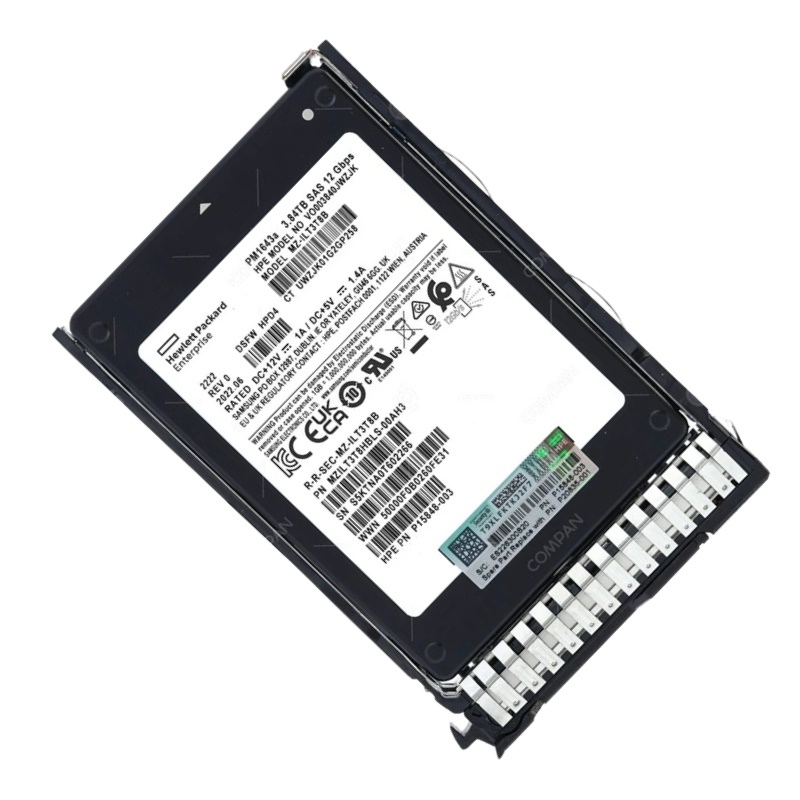


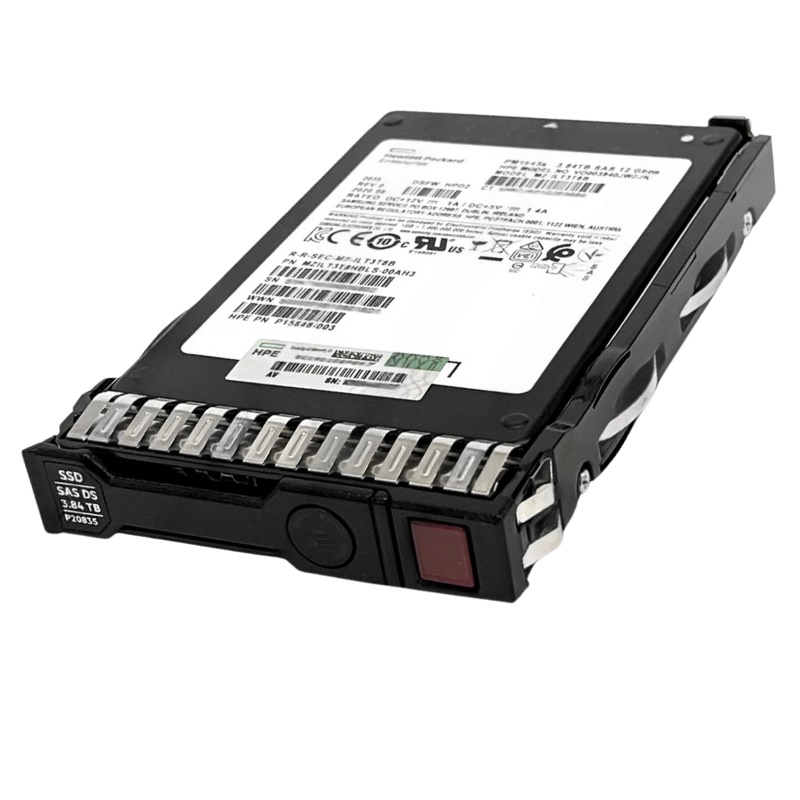
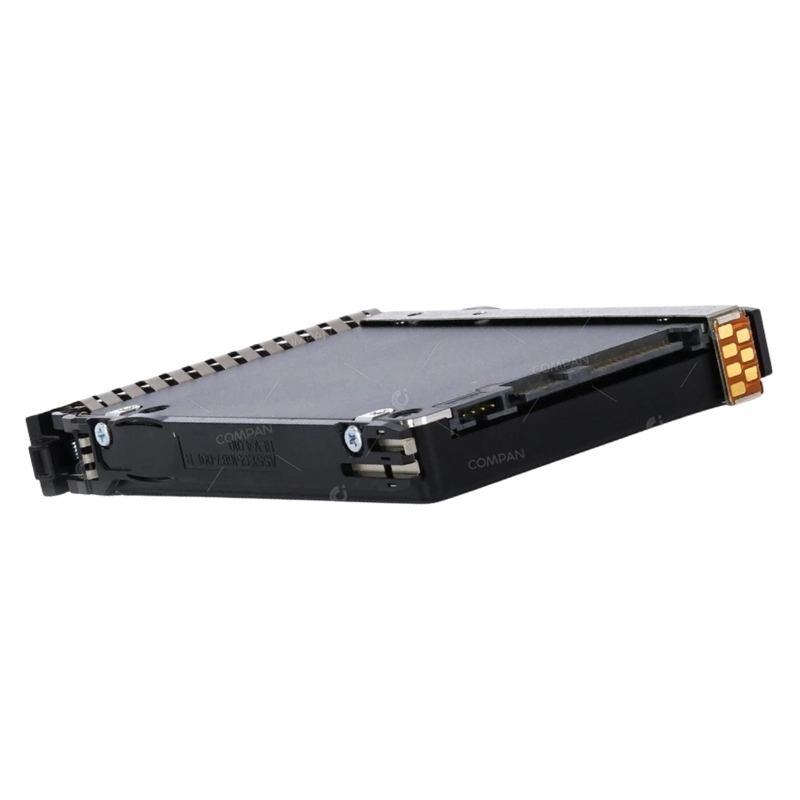
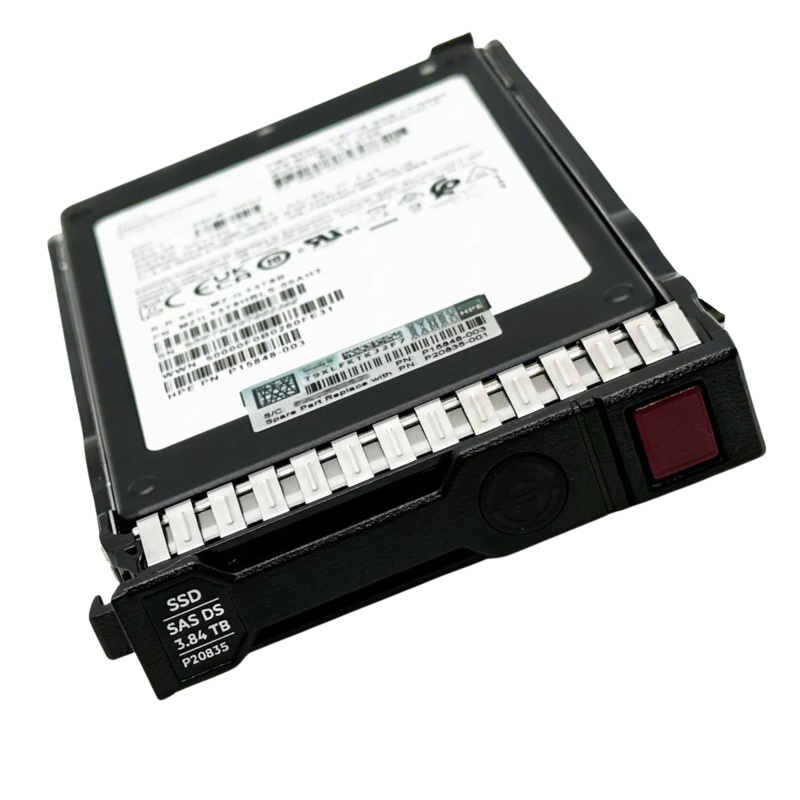
HPE P49736-001 3.84 TB SAS SSD 12GBPS Read Intensive SFF. Factory-Sealed New in Original Box (FSB) with 3 Years Warranty
The HPE 3.84TB SAS 12G Read Intensive SSD is a high-performance storage option designed for HPE Gen10 and Gen10 Plus servers. Offering exceptional reliability, strong read efficiency, and fast data throughput, this solid-state drive ensures smooth enterprise operations with consistent performance under demanding workloads.
Built with read-focused architecture, this SSD is engineered for applications where rapid access to large datasets is essential. It significantly reduces latency for analytics, virtualization, and database management systems, ensuring smooth data retrieval with lower operational overhead.
The HPE 3.84TB SAS SSD ensures consistent data integrity through enterprise-grade error correction and wear-leveling algorithms. These technologies extend the drive’s lifespan, making it a dependable choice for continuous operation in enterprise environments that demand high uptime and dependable storage performance.
The HPE P49736-001 SSD integrates seamlessly into Gen10 and Gen10 Plus architectures, ensuring optimized performance with HPE server ecosystems. Its multi-vendor support capability allows deployment across various server setups, making it a flexible and scalable storage solution for expanding IT infrastructures.
The HPE P49736-001 3.84tb SAS 12g Read Intensive SFF SC multi-vendor SSD is engineered for enterprise environments that demand consistent read-heavy throughput, low latency, and high availability in Gen10 and Gen10 Plus server platforms. This small form factor (SFF) single connector (SC) SAS 12G device delivers a blend of performance and endurance optimized for read-intensive workloads such as virtualization boot images, web and application servers, content delivery, caching layers, and analytical query engines.
Organizations that gain the most from this category include:
Enterprise-grade SSDs like the P49736-001 rely on high-performance controllers that manage flash translation layers (FTL), wear-leveling algorithms, garbage collection, and power-loss protection. The controller’s firmware is tuned to prioritize read performance and to reduce write amplification — a crucial characteristic for read-intensive classifications.
Read-intensive SSDs commonly use higher-density NAND (such as TLC or QLC variants) paired with firmware strategies that extend usable life for read-heavy use cases. Endurance is expressed as drive writes per day (DWPD) or total bytes written (TBW) over warranty period; for RI-class drives, endurance is balanced to support heavy read operations while still tolerating moderate write bursts.
Enterprise SSDs often include capacitors or other power-loss mitigation to flush volatile caches to non-volatile media during unexpected power events. Additional integrity features include end-to-end data path protection, CRC checks, and robust error correction code (ECC) to maintain data fidelity at enterprise scale.
One of the selling points for multi-vendor HPE-qualified SSDs is certification for specific server generations. The P49736-001 designation indicates compatibility with server firmware, drive cages, and RAID controllers commonly found in HPE ProLiant Gen10 and Gen10 Plus models. Certification minimizes integration risk and ensures server management tools (such as HPE iLO and Smart Storage Administrator) can monitor drive health and firmware updates effectively.
When deploying SFF drives, ensure the server’s drive backplane and hot-swap trays support the SAS 12G interface and form factor. Some enclosures may require firmware updates to the backplane or BIOS/UEFI to ensure stable operation with newer SSD models.
Enterprises often mix drives from different vendors for cost optimization or supply resiliency. Multi-vendor SSDs designed for HPE platforms maintain compatibility with HPE management and monitoring but may have vendor-specific firmware attributes. It’s recommended to document firmware levels and validate mixed-drive RAID arrays in a staging environment prior to large-scale production deployment.
VDI environments have high read demands at boot storms and login peaks. Read-intensive SSDs offer fast boot times and consistent performance when many virtual desktops draw identical base images.
Serving static content, caching database query results, or delivering application assets benefits from fast read throughput and low latency. The P49736-001 is appropriate for read-heavy front-end and caching layers.
High-density storage arrays composed of SFF read-optimized SSDs reduce space, power, and cooling costs while delivering required throughput for content distribution and media streaming services.
Analytical queries often read large datasets and require consistent I/O. Read-optimized SSDs accelerate query response times and shorten reporting cycles.
Read-intensive SSDs trade higher capacity density for moderate write endurance. Evaluate drives by DWPD (Drive Writes Per Day), TBW (Total Bytes Written), and warranty terms. Factor endurance into lifecycle planning and expected replacement timelines.
Effective wear-leveling spreads writes evenly across NAND to prevent premature hotspots. Enterprise firmware implements scrubbing, bad-block management, and remediation routines to extend usable life.
SFF SSDs pack a lot of performance into a compact envelope, so airflow and chassis cooling substantially affect reliability and performance headroom. Maintain recommended inlet temperatures and avoid mounting drives in constrained airflow zones.
While SSDs consume less power than spinning media, peak power draw during sustained activity and power-protection capacitor events should be included in datacenter power planning. Validate that power supplies and backplanes can tolerate peak inrush when multiple drives are active.
Some enterprise SSDs include hardware-based encryption (SED) supporting AES-based encryption and TCG Opal standards. If data-at-rest security is required, confirm the drive’s encryption and key-management support and integrate with your KMS or server security stack.
Use vendor-specified secure erase procedures to sanitize drives prior to decommissioning or redeployment. For drives using encryption, cryptographic erase is a fast method when supported, but verify the method meets your organization’s compliance requirements.
Multi-vendor drives designed for HPE servers will typically maintain compatibility in function and management, but firmware variations may result in slightly different performance characteristics. Maintain a matrix of vendor firmware versions and test cross-vendor arrays to ensure expected behavior in mixed environments.
Follow HPE and drive vendor guidance: update firmware using vendor-provided utilities, during maintenance windows, and after full data backups. Consider staggered rollouts to limit potential impact from a problematic firmware release.
Select 3.84 TB read-optimized SSDs when:
Design storage tiers with a blend of high-capacity RI SSDs for hot data and higher-endurance devices for write-heavy logs or persistent write caches. Use scale-out file systems or hyperconverged approaches to distribute datasets across many SSDs for both performance and resiliency.
Enterprise SSDs generally carry limited warranties tied to TBW or years in service. Confirm warranty terms, RMA procedures, and whether the drive vendor or HPE will manage replacements under warranty for multi-vendor certified devices.
Document each drive’s in-service date and track cumulative writes to plan phased replacements before the warranty expiry or predicted wear-out. Doing so avoids surprise failures and maintains consistent service levels.
Read Intensive (RI) SSDs prioritize read throughput and capacity density, offering moderate write endurance. Mixed Use (MU) drives provide higher endurance suitable for heavier write workloads (database logs, hyperconverged write traffic). Choose RI for read-heavy caching and MU for balanced read/write needs.
SSDs deliver orders-of-magnitude lower latency and higher random IOPS compared to HDDs. For workloads sensitive to latency (databases, VM boot latency), SSDs justify the premium by improving application responsiveness and reducing overall infrastructure complexity.
Before disposal or redeployment, follow industry-standard sanitization methods. For drives supporting encryption, cryptographic erase reduces time for secure decommissioning; otherwise, use vendor-approved secure erase procedures or physical destruction according to regulatory needs.


 Contact Us
 Information
 Catalog
 Solid State Drives (SSD)
 Network Switches
 Hard Disk Drives
 HBA & Controllers
 PC & Servers
 PC & Server Memory
 CPU & Processors
 Network Routers
 Power Supplies
 Tape Drives & Libraries
 Network Devices
 Computer & Network Cables