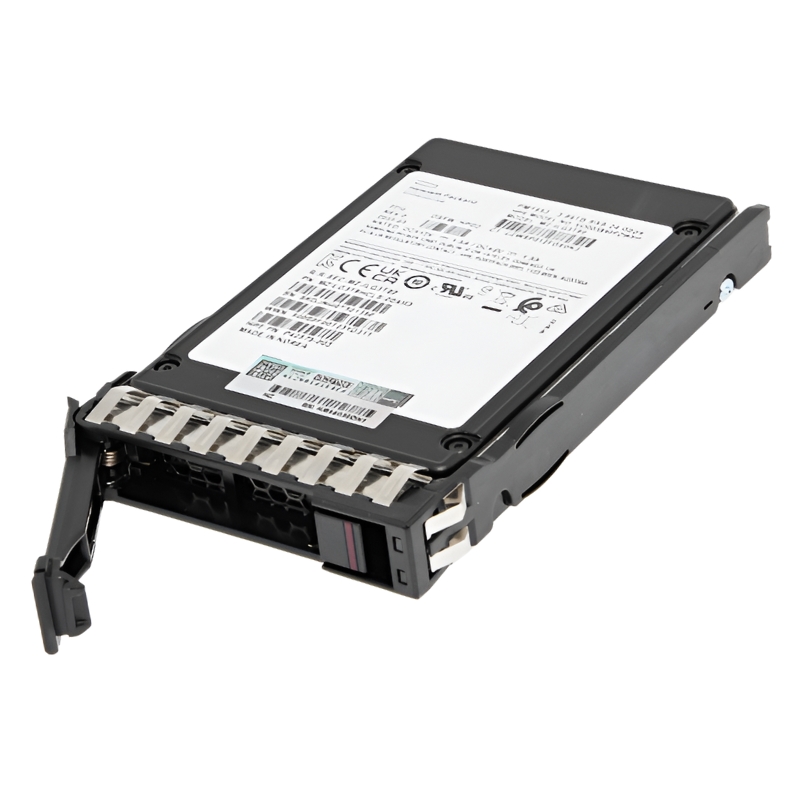
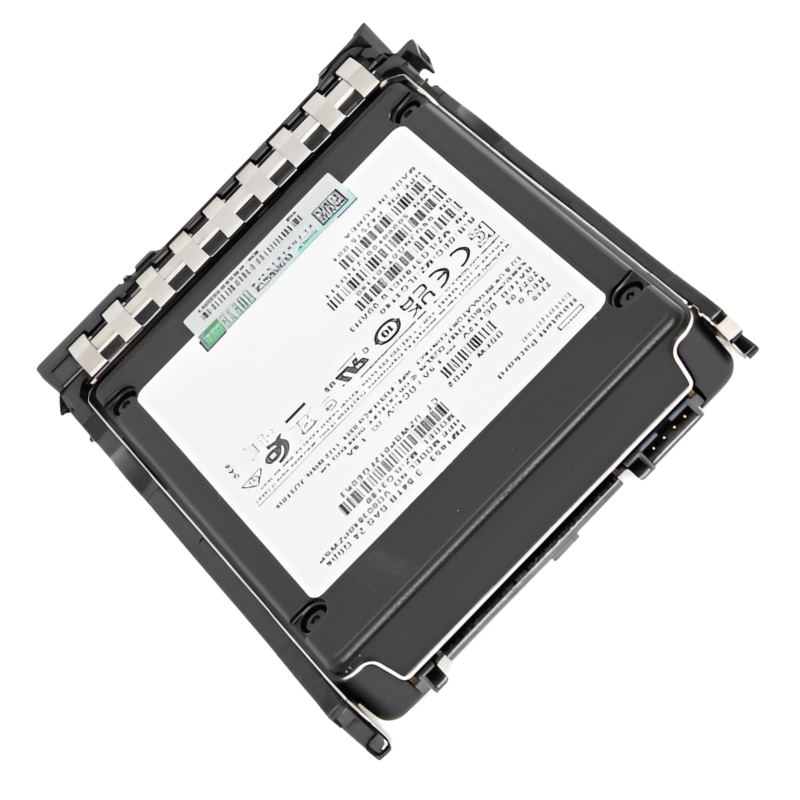
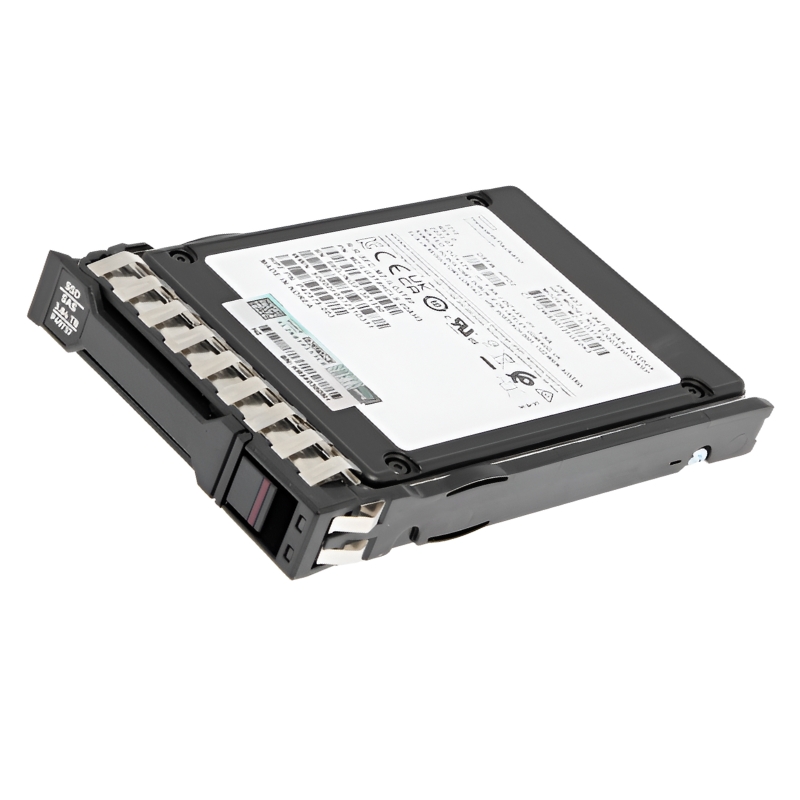
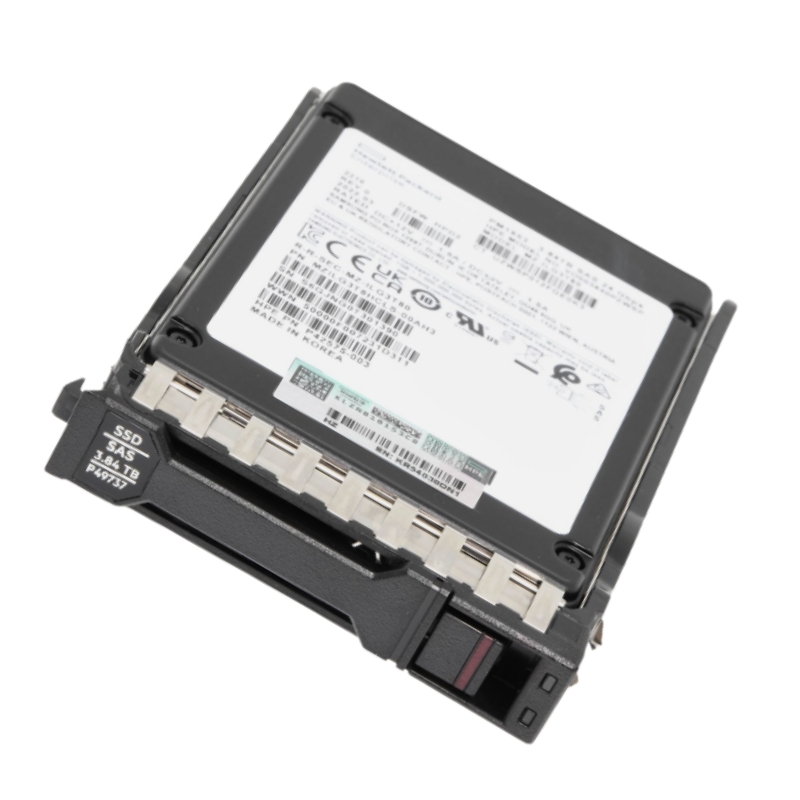
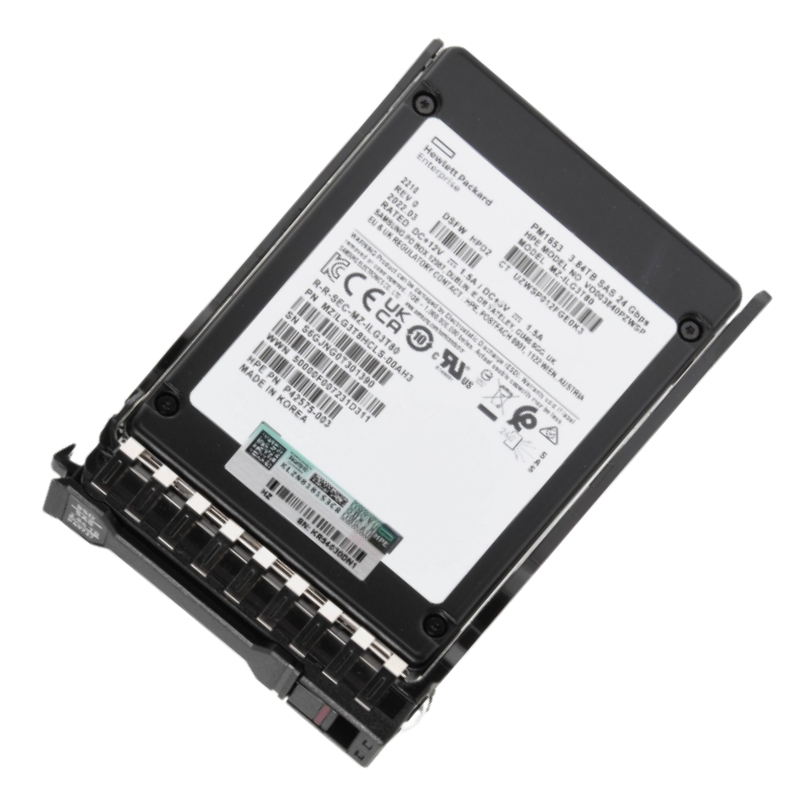
Overview of HPE 3.84TB SAS 24G Read Intensive SFF BC SSD
The HPE 3.84TB SAS 24G Read Intensive SFF BC SSD delivers exceptional performance and reliability for modern data-driven infrastructures. Designed for Gen10 Plus servers, this enterprise-grade storage device ensures high-speed data processing, enhanced scalability, and consistent throughput under heavy workloads.
Manufacturer and Product Identity
- Brand: Hewlett Packard Enterprise (HPE)
- Model Number: P49737-001
- Product Category: Enterprise Solid State Drive (SSD)
- Product Type: Read Intensive SAS 24G SSD
This storage unit exemplifies HPE’s commitment to efficient data handling and durability, making it suitable for business-critical applications where performance and uptime are paramount.
Key Technical Specifications
Built for precision and endurance, the HPE P49737-001 SSD incorporates the latest SAS 24G interface and advanced flash memory technology. Below are the essential technical characteristics:
- Storage Capacity: 3.84 Terabytes
- Drive Height: 15mm compact design
- Form Factor: Small Form Factor (SFF)
- Interface Type: SAS 24G Dual Port connection
- Plug Type: Hot-Plug ready for seamless replacement
- Carrier Type: BC (Bulk Carrier)
- Flash Memory: Triple-Level Cell (TLC) NAND
Advanced SAS 24G Interface Benefits
The integration of SAS 24G technology allows enhanced data throughput, superior error correction, and stable multi-host connectivity. This makes the drive ideal for enterprise-grade systems that demand fault tolerance and fast data synchronization.
- Ensures high bandwidth for continuous data streaming
- Supports redundancy and multi-path access for reliability
- Improves data integrity with robust communication protocols
Enterprise-Grade Design and Compatibility
Optimized for HPE Gen10 Plus servers, this SSD integrates seamlessly into existing infrastructures. Its hot-plug design simplifies maintenance, allowing replacement or scaling without system downtime.
- Fully compatible with HPE’s Gen10 Plus server ecosystem
- Supports both read-heavy and mixed-use enterprise applications
- Minimizes operational interruptions with quick-swap capability
- Delivers consistent output under sustained workloads
Endurance and Reliability Features
The HPE 3.84TB SAS 24G SSD leverages advanced flash management and wear-leveling algorithms to maximize durability. Its enterprise firmware ensures balanced performance across read/write cycles, reducing failure rates and enhancing longevity.
- Optimized for read-intensive workloads with superior stability
- Low power consumption for efficient operation
- Advanced ECC (Error Correction Code) for data protection
- Predictive failure analysis and self-monitoring support
Ideal Use Cases
This solid-state drive is tailored for mission-critical applications requiring high read efficiency and rapid data access. It fits perfectly into environments like:
- Database management and analytics
- Cloud infrastructure and virtualized systems
- High-performance computing (HPC) clusters
- Enterprise resource planning (ERP) and business intelligence tools
Why Choose HPE’s P49737-001 SSD
When comparing enterprise storage options, this model stands out for its balanced combination of speed, efficiency, and reliability. The dual-port SAS interface ensures redundancy, while TLC flash memory balances cost and performance effectively. Businesses can rely on its consistent throughput and simplified integration for optimized IT operations.
- High data transfer rate with minimal latency
- Reliable multi-vendor compatibility
- Durable build for 24/7 operation
- Energy-efficient design reducing total cost of ownership
Key Advantages at a Glance
- 3.84TB high-capacity enterprise storage
- Enhanced SAS 24G performance for rapid I/O processing
- Hot-plug SFF design for easy scalability
- Proven reliability under demanding workloads
- Optimized for HPE Gen10 Plus server environments
HPE P49737-001 3.84TB SAS 24G Product Overview
The HPE P49737-001 3.84TB SAS 24G Read Intensive SFF BC Multi-Vendor SSD for Gen10 Plus servers sits at the intersection of enterprise-grade performance, high-density storage efficiency, and server-validated compatibility. This category covers a family of small form factor (SFF) solid-state drives engineered for read-intensive workloads, using a 24 gigabits-per-second SAS interface and a 3.84 terabyte capacity point that balances cost, capacity, and endurance. The pages in this category target systems administrators, storage architects, data center managers, and procurement teams seeking server-qualified SSDs for HPE Gen10 and Gen10 Plus platforms.
Primary attributes and search-friendly descriptors
- Model: HPE P49737-001
- Capacity: 3.84 TB (usable gross capacity for enterprise workload planning)
- Interface: SAS 24G (dual-port SAS typical for enterprise redundancy)
- Form factor: SFF (2.5-inch)
- Workload profile: Read-intensive (optimized I/O for high read-to-write ratio)
- Server compatibility: HPE Gen10 / Gen10 Plus server family (firmware and multi-vendor support)
- Target use: Databases, virtualization read caches, content delivery, analytics nodes
Choose a 3.84TB SAS 24G read-intensive SFF SSD
Picking the right drive for enterprise servers is about matching workload characteristics to device strengths. The 3.84TB class provides a sweet spot for organizations that need substantial random read throughput and moderate write endurance without paying for higher-end mixed-use or write-intensive media.
Key buyer benefits
- Cost-efficiency: Read-optimized firmware and NAND selections reduce cost-per-GB compared to write-heavy SSDs.
- High I/O responsiveness: SAS 24G delivers low-latency access for IOPS-heavy read workloads.
- Server-validated compatibility: HPE part-numbered drives (P49737-001) are validated for Gen10/Gen10 Plus firmware stacks and health monitoring.
- Redundancy-ready: Dual-port SAS supports multipath configurations for uninterrupted access in SAN or direct-attach server topologies.
- Hot-plug SFF design: Easy drive replacement and dense server bay utilization.
Who benefits most from this category
This line of SSDs is ideal for:
- Read-heavy databases (OLAP, analytic queries, large-scale reporting)
- Virtual desktop infrastructure (VDI) read cache layers
- Web servers and content distribution caches
- Large-scale search indexes and metadata services
- Cold-tier consolidation where read throughput matters more than random write endurance
Technical deep dive interface, throughput, and latency
The SAS 24G interface (24 gigabits per second) is purpose-built for enterprise class connectivity. Compared to SATA and older SAS generations, SAS 24G increases link capacity and supports enterprise capabilities like dual-porting, full SCSI command set, and better error recovery.
Performance dimensions
- Sustained read throughput: Optimized for steady-state and burst read transfers — ideal for sequential and random read-heavy patterns.
- IOPS profile: High random read IOPS at low latency, which accelerates queries, metadata operations, and index lookups.
- Latency: Enterprise-class SSD controllers and firmware tuning minimize read latency and ensure consistent response times under load.
Dual-port SAS advantages for enterprise deployments
Dual-port SAS is a vital feature for mission-critical systems:
- Path redundancy: Two physical paths to the storage device reduce single-point-of-failure exposure.
- High-availability clusters: Dual-pathability simplifies multipath I/O implementations in operating systems and SAN fabrics.
- Failover and maintenance: Drives can remain online when controllers or pathways change, enabling maintenance without downtime.
Compatibility with HPE Gen10 and Gen10 Plus servers
The P49737-001 designation indicates HPE part branding and validation for specific server ecosystems. When building server configurations it's important to ensure the SSD is supported by the server's storage controller firmware and the HPE SmartArray or HPE Smart Storage Stack if used.
Validation and firmware considerations
- OEM firmware expectations: HPE-validated drives typically contain firmware tuned for HPE controllers; verify firmware revision for feature parity and stability.
- Server lifecycle support: HPE support contracts and lifecycle documentation often reference compatible part numbers — using validated drives simplifies troubleshooting.
- Multi-vendor labeling: Although the product designation includes "multi-vendor SSD," HPE P-numbers align specific SKUs to HPE compatibility testing; always cross-check HPE HCL (Hardware Compatibility List) for specific server and controller pairings.
Endurance, reliability, and read-intensive use profile
Read-intensive SSDs are specified with endurance metrics that reflect write tolerance (typically TBW — terabytes written) tuned for workloads dominated by reads. While these drives are not targeted at extremely write-heavy uses like high-frequency logging or intense swap operations, they deliver long service life in the intended workloads.
What read-intensive really means
- Endurance rating: Lower than write-intensive drives but sufficient for caches, content repositories, and read-mostly data sets.
- Wear leveling and longevity: Enterprise controllers use sophisticated wear management to extend useful life even with occasional writes.
- SMART monitoring: S.M.A.R.T. attributes and vendor-specific telemetry (e.g., media wear indicators) enable pre-failure detection and replacement planning.
Best practice—matching endurance to workload
When planning capacity and replacements, model daily write volumes and map them to the TBW or DWPD (Drive Writes Per Day) rating of the 3.84TB read-intensive drive. If measured writes exceed specification, upgrade to a higher endurance tier (mixed-use or write-optimized SSD).
Deployment patterns and architecture strategies
These SSDs can be used in multiple configurations inside enterprise environments. The most common patterns leverage them as read tiers or cache layers to accelerate storage stacks.
Common deployment topologies
- Boot and OS volumes: Fast read access for operating systems and frequent reads for binaries and libraries.
- Database read replicas: Serving analytics and reporting queries from SSD-backed replicas.
- Hypervisor cache: Read caches for virtualization hosts to improve VM boot and read-response times.
- Content delivery nodes: Local caches for frequently accessed web and multimedia content.
- Tiered storage: Part of a tiered architecture where SSDs serve hot/read-hot data and HDDs provide bulk capacity.
Software integration considerations
- Multipath I/O (MPIO): Ensure MPIO drivers are configured for dual-port SAS to maximize redundancy and throughput.
- Filesystem tuning: Align IO scheduler settings and filesystem mount options to read-heavy performance goals.
- Cache layers: Consider software caches (e.g., Linux dm-cache, bcache) or hypervisor-level caching to exploit SSD read performance.
Comparisons: SAS 24G read-intensive SSD vs alternatives
Understanding where 3.84TB SAS 24G read-optimized drives fit relative to alternatives helps in procurement decisions.
SAS 24G read-intensive SSD vs SATA SSD
- Performance: SAS 24G offers superior throughput and lower latency, with enterprise features like dual-porting not available on SATA.
- Reliability: SAS devices typically target higher endurance and robust error handling for datacenter environments.
- Cost: SATA may be cheaper per GB for archival or bulk capacity but lacks the enterprise connectivity features of SAS.
SAS 24G read-intensive SSD vs NVMe SSD
- Latency and parallelism: NVMe often delivers lower latency and higher parallel IOPS due to PCIe and NVMe protocol advantages.
- Compatibility: NVMe adoption in older server fleets may require adapter cards or motherboard support; SAS 24G offers seamless compatibility with many existing HPE backplanes and controllers.
- Use case fit: NVMe fits ultra-low-latency needs, while SAS 24G is still ideal where SAS backplanes, dual-porting, and SCSI features are required.





 Contact Us
 Information
 Catalog
 Solid State Drives (SSD)
 Network Switches
 Hard Disk Drives
 HBA & Controllers
 PC & Servers
 PC & Server Memory
 CPU & Processors
 Network Routers
 Power Supplies
 Tape Drives & Libraries
 Network Devices
 Computer & Network Cables