(7% discount is applied at checkout)
Cart is empty
Your go-to destination for cutting-edge server products
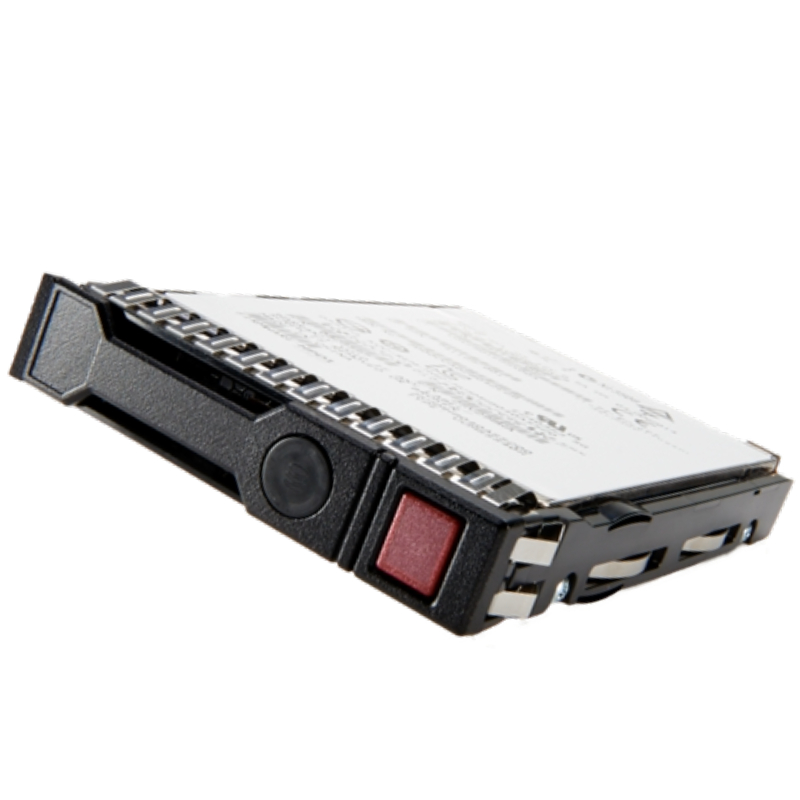


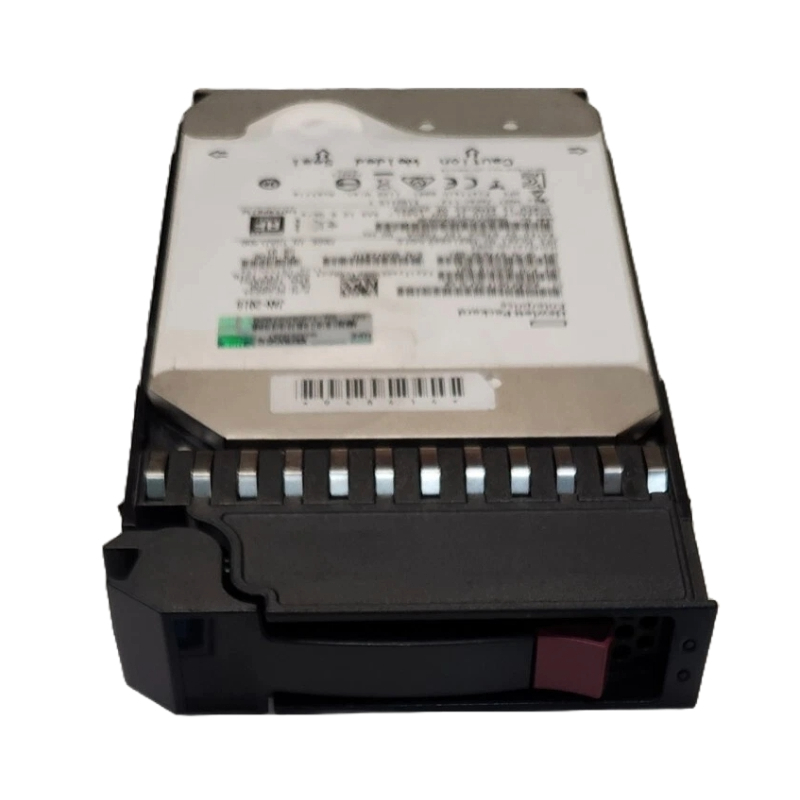
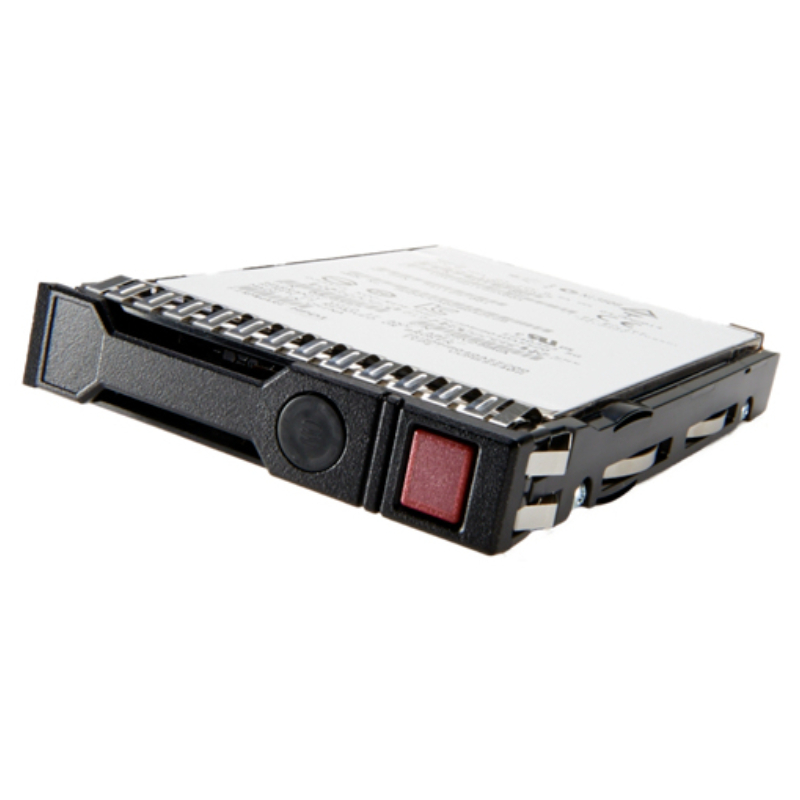
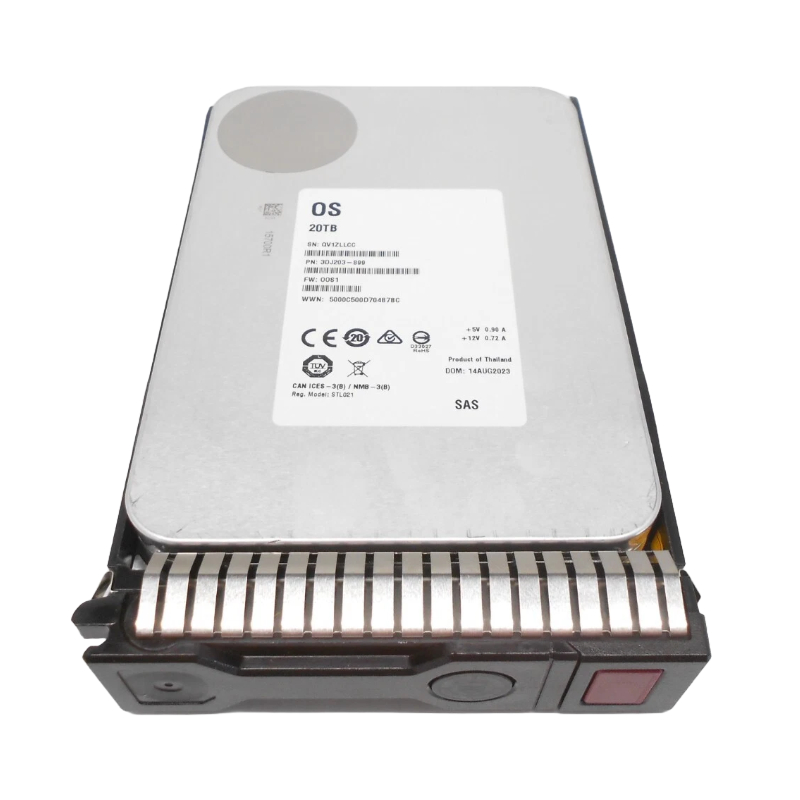
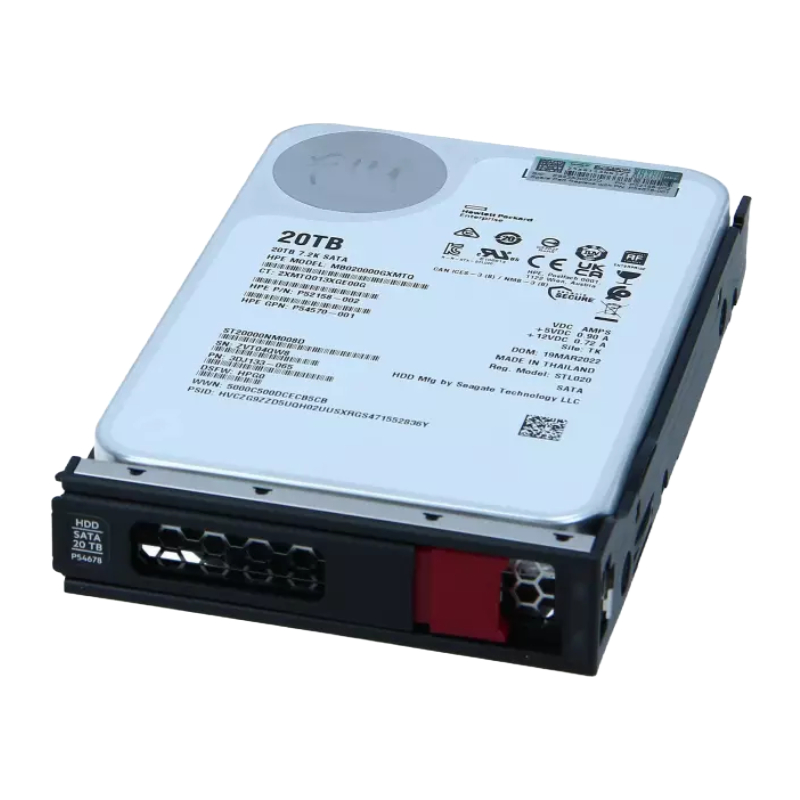
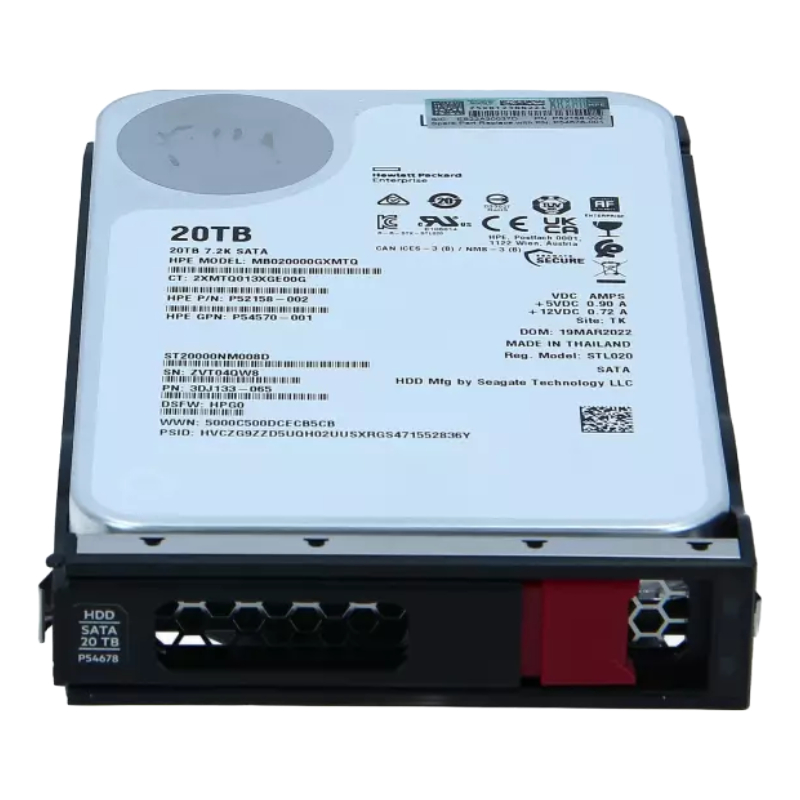
HPE P54543-B21 20TB 7.2K RPM SAS 12GBPS Hard Drive LFF Instant Secure Erase With Tray. New Sealed in Box (NIB) with 3 years Replacement Warranty
Overview of HPE 20TB 7.2K RPM SAS 12GBPS HDD
The HPE P54543-B21 is a business-grade storage solution engineered for demanding enterprise workloads, delivering reliable performance, massive capacity, and enhanced data protection features. Designed for hot-swap server environments, it ensures uninterrupted operations and scalable infrastructure support.
The HPE P54543-B21 20TB 7.2K SAS 12G LFF BC ISE SC 512e MV Helium Hard Drive belongs to a high-performance enterprise storage category designed specifically for large-scale data environments that demand extreme capacity, reliability, and sustained throughput. This category represents the evolution of traditional mechanical hard drives into highly optimized helium-sealed enterprise storage devices capable of supporting modern hybrid cloud infrastructures, data centers, virtualization clusters, and mission-critical workloads. Within this category, storage efficiency, power optimization, and secure data handling are engineered to meet the rigorous requirements of server-grade deployments where uptime and consistency are essential.
This storage category is widely recognized for combining high-capacity magnetic recording technology with SAS 12Gb/s enterprise interfaces, ensuring seamless integration into HPE ProLiant servers and compatible storage arrays. It is positioned as a cornerstone for organizations transitioning from lower-density drives to high-capacity helium-based architectures.
The architectural design of the HPE P54543-B21 series reflects a focus on maximizing storage density while minimizing mechanical resistance inside the drive enclosure. The use of helium instead of traditional air significantly reduces turbulence, allowing more platters to be placed inside the same 3.5-inch Large Form Factor chassis. This results in higher areal density and improved energy efficiency. The 12G SAS interface further enhances the architecture by enabling high-speed dual-port connectivity, which is essential for redundant enterprise storage environments.
The internal design is optimized for sustained read and write operations across large datasets. Enterprise firmware is integrated to manage workload balancing, error correction, and rotational vibration control. These architectural improvements ensure that the drive remains stable even in dense multi-drive server enclosures where thermal and mechanical stress can otherwise degrade performance.
The helium-sealed environment within this category of drives plays a critical role in reducing internal drag. Lower air resistance enables smoother platter rotation, reduced heat generation, and lower power consumption. This directly contributes to longer operational lifespan and improved reliability metrics in continuous 24/7 environments.
The SAS 12Gb/s interface is engineered for enterprise workloads that require high throughput and dual-channel fault tolerance. Unlike SATA-based drives, SAS technology provides full-duplex communication and enhanced command queuing, allowing simultaneous read and write operations without performance degradation.
The 20TB capacity class represents one of the highest-density mechanical storage solutions available in enterprise-grade HDD technology. This capacity is particularly suitable for large-scale data lakes, archival systems, and backup infrastructures where storing massive volumes of structured and unstructured data is essential. The optimization techniques used in this category ensure that the increased capacity does not compromise reliability or sustained performance.
Advanced sector mapping, error correction algorithms, and firmware-level optimization ensure that the drive maintains data integrity even under heavy write-intensive workloads. This makes it suitable for applications such as long-term data retention, compliance storage, and high-volume media repositories.
The increased capacity is achieved through precision-engineered platters that utilize high-density magnetic recording technologies. Each platter is calibrated for maximum bit density while maintaining low error rates. The helium environment ensures that multiple platters can operate without excessive friction or thermal instability.
In large enterprise environments, scalability is a key factor. The 20TB class enables organizations to reduce physical rack space requirements while increasing overall storage capacity. This leads to more efficient infrastructure planning and lower operational costs in data center deployments.
The 7,200 RPM spindle speed is optimized for balancing performance and energy efficiency in high-capacity storage systems. While not designed for ultra-low latency transactional workloads, it excels in sequential data processing, backup operations, and archival retrieval systems. The consistent rotational speed ensures predictable performance across long-duration workloads.
This category of drives is engineered to deliver stable throughput rates even under continuous operation. The firmware prioritizes sustained performance rather than short bursts, making it ideal for enterprise storage arrays where workload consistency is more important than peak speed.
The performance architecture ensures that read and write operations are balanced efficiently. Internal caching mechanisms and optimized command processing reduce bottlenecks during large file transfers and bulk data operations.
At 7.2K RPM, the drive achieves a balance between mechanical speed and power consumption. This is particularly important in data centers where hundreds or thousands of drives operate simultaneously, making energy efficiency a critical operational factor.
The 512e (512-byte emulation) format is an essential feature of this enterprise drive category, allowing compatibility with legacy systems while maintaining the advantages of modern Advanced Format technology. This hybrid structure ensures smooth integration with existing operating systems, storage controllers, and enterprise applications.
The 512e architecture allows the drive to present itself as a traditional 512-byte sector device while internally managing data in larger, more efficient physical sectors. This improves error correction capabilities and enhances overall storage efficiency.
The use of advanced ECC algorithms ensures that data integrity is preserved even in high-density storage environments. The system continuously monitors and corrects potential data inconsistencies before they impact system performance.
One of the most important advantages of the 512e format is backward compatibility with older systems that were originally designed for 512-byte sector drives. This ensures seamless migration paths for enterprises upgrading their storage infrastructure.
The Instant Secure Erase (ISE) feature integrated into the HPE P54543-B21 category provides a hardware-based method for securely erasing data without requiring time-consuming overwrite procedures. This is especially important in environments where drives are frequently repurposed or decommissioned.
ISE technology ensures that sensitive data is rendered inaccessible instantly by resetting cryptographic keys or internal access structures, depending on the implementation. This significantly reduces downtime during storage lifecycle management.
Traditional secure erase methods can take hours depending on drive capacity, but ISE dramatically reduces this process to near-instant execution. This improves operational efficiency in enterprise asset management workflows.
Organizations operating under strict regulatory frameworks benefit from ISE technology because it supports rapid compliance with data destruction policies. This is critical for industries handling sensitive customer, financial, or medical data.
The 3.5-inch Large Form Factor design is optimized for high-capacity enterprise drives like the HPE P54543-B21 series. The larger physical size allows for multiple platters, improved heat dissipation, and better long-term durability under continuous workloads.
LFF drives are commonly deployed in server storage bays and high-density storage arrays where space efficiency and cooling performance are critical considerations. The mechanical stability of the LFF design ensures reduced vibration and improved performance consistency.
Heat dissipation is a key factor in high-capacity drives. The LFF structure allows better airflow and thermal distribution, reducing the risk of overheating in densely populated server racks.
In environments where dozens or hundreds of drives operate in close proximity, vibration control becomes essential. The LFF architecture improves resistance to rotational vibration interference.
The BC carrier system is designed to ensure secure installation and hot-swap capability in HPE enterprise servers. This structural design allows IT administrators to replace or upgrade drives without shutting down the entire system, improving uptime and operational flexibility.
The carrier also ensures proper alignment and connectivity with server backplanes, minimizing the risk of connection errors and physical damage during installation or maintenance procedures.
Hot-swap capability is essential in enterprise environments where downtime must be minimized. The BC carrier allows seamless replacement of failed drives without interrupting system operations.
The carrier provides structural reinforcement that protects the drive from physical shock and vibration during operation and maintenance cycles.
This category of storage drive is optimized for a wide range of enterprise workloads, including backup systems, cloud storage infrastructure, virtualization platforms, and large-scale archival repositories. The design prioritizes sustained performance over peak burst speed, making it ideal for predictable, continuous data handling.
Workload optimization firmware ensures that read-heavy and write-heavy operations are managed efficiently without compromising system stability. This adaptability allows the drive to perform consistently in mixed workload environments.
In cloud environments, storage systems must handle unpredictable and large-scale data operations. This drive category supports such environments by providing scalable capacity and stable performance under distributed workloads.
Virtual machine hosting platforms benefit from the high-capacity and stable throughput of these drives, enabling efficient data consolidation across multiple virtual instances.
Reliability is a core design principle in the HPE P54543-B21 series. Enterprise-grade components, firmware validation, and mechanical engineering all contribute to extended operational lifespan and reduced failure rates. These drives are built for continuous 24/7 operation in mission-critical environments.
Advanced error recovery systems, predictive failure analysis, and rotational vibration compensation ensure that the drive maintains data integrity even under heavy operational stress.
The drive includes diagnostic capabilities that monitor performance indicators and identify early signs of potential hardware degradation. This allows proactive replacement before failure occurs.
Designed for enterprise environments, these drives are tested for sustained workloads over long durations, ensuring stable performance across years of continuous usage.
In modern data centers, storage density and efficiency are key operational concerns. The 20TB SAS 12G LFF helium drive category provides an optimal balance of capacity and physical footprint, enabling organizations to maximize storage per rack unit.
Integration into HPE server ecosystems ensures compatibility with enterprise management tools, RAID configurations, and high-availability storage architectures.
Higher-capacity drives reduce the number of physical units required, which in turn reduces rack space consumption and simplifies infrastructure management.
These drives are commonly deployed in redundant configurations to ensure continuous availability of data even in the event of hardware failure.


 Contact Us
 Information
 Catalog
 Solid State Drives (SSD)
 Network Switches
 Hard Disk Drives
 HBA & Controllers
 PC & Servers
 PC & Server Memory
 CPU & Processors
 Network Routers
 Power Supplies
 Tape Drives & Libraries
 Network Devices
 Computer & Network Cables