(7% discount is applied at checkout)
Cart is empty
Your go-to destination for cutting-edge server products
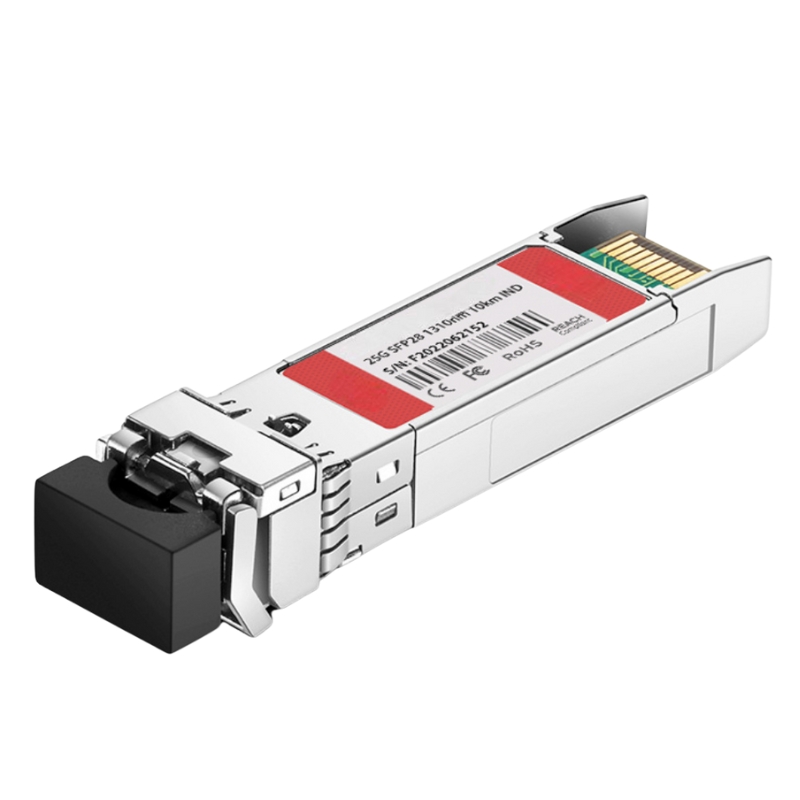


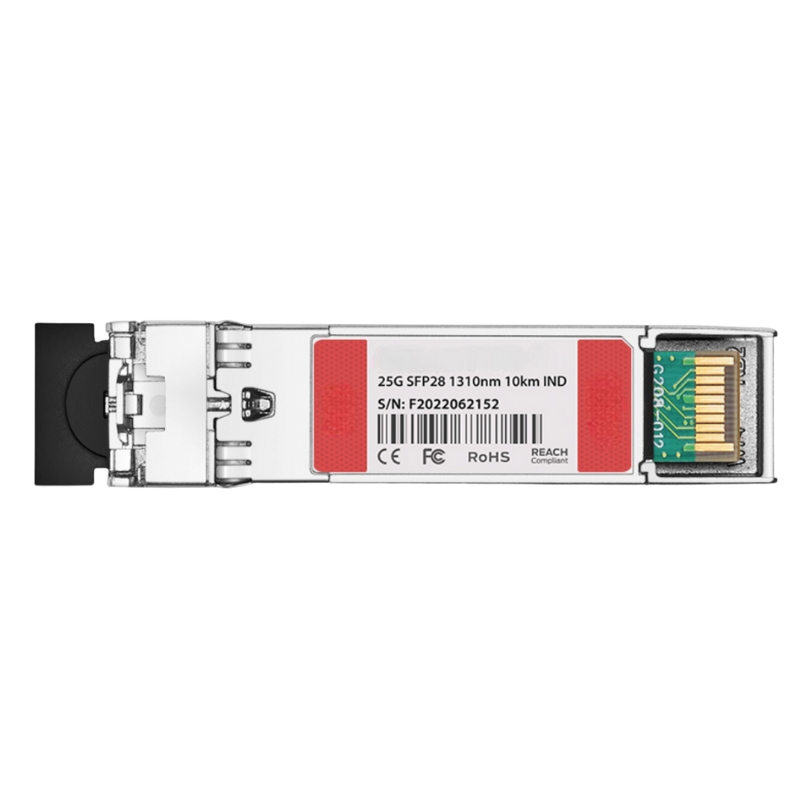
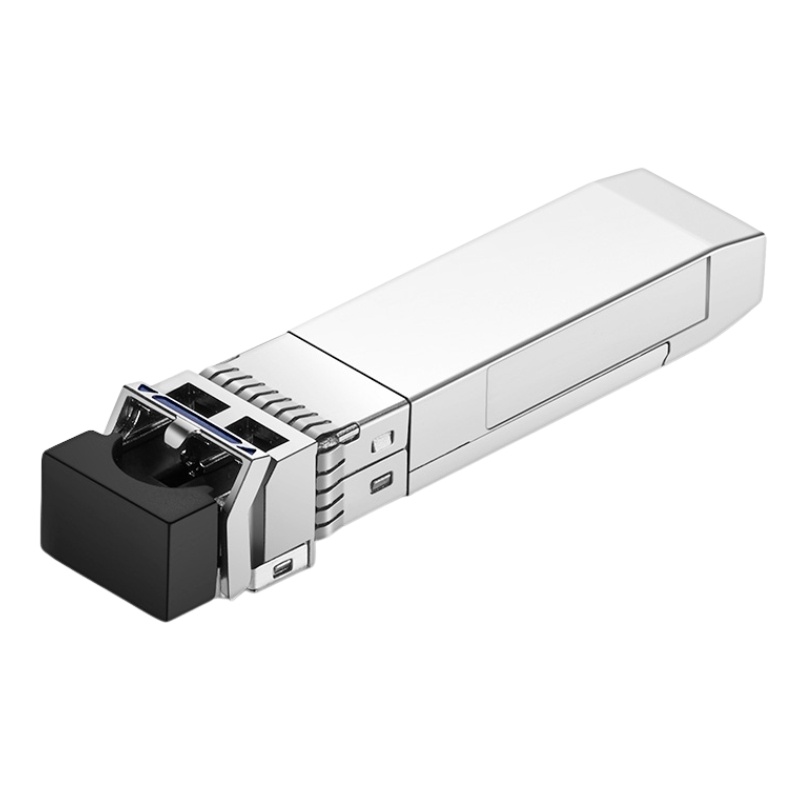
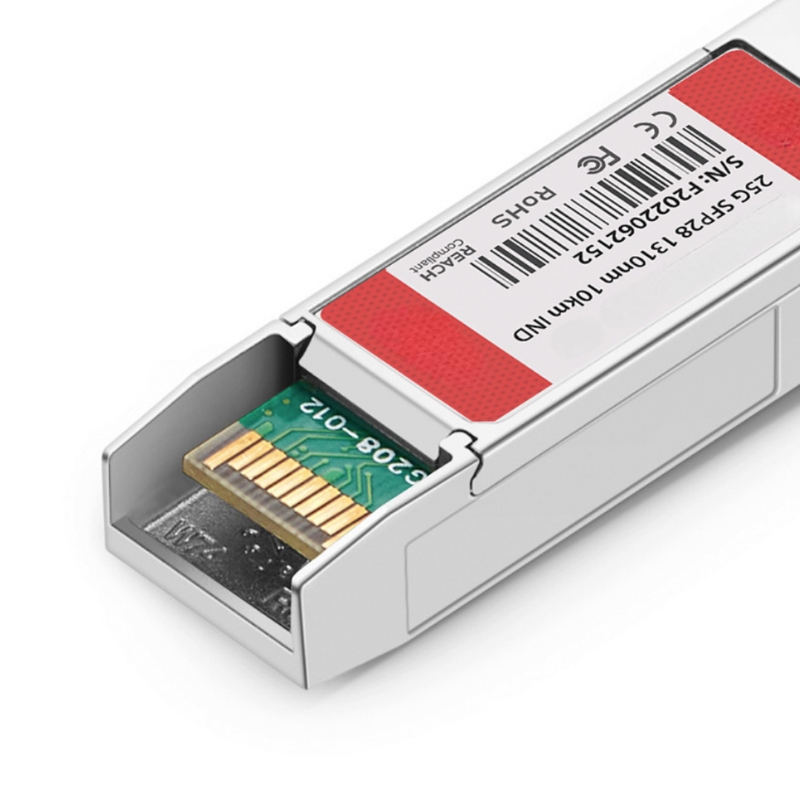
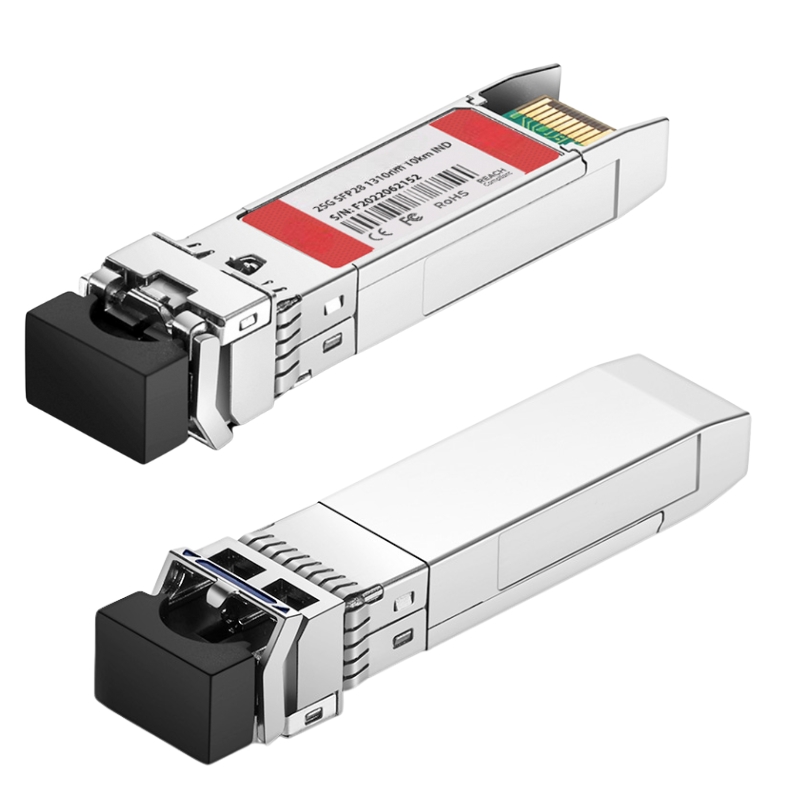
Intel E25GSFP28LRX 10GBE Transceiver LAN QSFP 28 Optics Transceiver Module. Excellent Refurbished with 1 year replacement warranty
The Intel E25GSFP28LRX is a high-performance optical transceiver module engineered for dependable high-speed Ethernet connectivity in enterprise, cloud, and data center environments. Built for 25GbE networking applications, this Intel transceiver delivers stable long-range optical communication and helps support bandwidth-intensive workloads with consistent signal integrity. Its compact pluggable design makes deployment straightforward in compatible networking hardware, while Intel’s engineering focus on reliability and interoperability makes it a practical choice for modern server and switch infrastructures. Designed for fiber-based connections, the Intel E25GSFP28LRX is well suited for organizations that require efficient network expansion, low-latency transmission, and dependable optical performance across longer distances.
The Intel E25GSFP28LRX transceiver module belongs to the advanced optical connectivity segment built for enterprise networking, high-speed server connectivity, storage traffic movement, data center uplinks, and long-distance Ethernet communication across structured fiber environments. In practical deployment language, this product category is associated with Intel Ethernet optics that support high-bandwidth transport, low-latency communication paths, and reliable signal delivery across professional network infrastructures where copper cabling is no longer the preferred medium for longer reach or cleaner electromagnetic performance. The Intel E25GSFP28LRX module is positioned in the optics family used to extend network links over fiber while preserving signal integrity, maintaining throughput consistency, and supporting modern bandwidth requirements for virtualized servers, edge systems, enterprise switching, and secure infrastructure expansion.
In a category page context, the Intel E25GSFP28LRX is best understood not only as a single transceiver model but as part of a broader optical transceiver class used to connect servers, switches, routers, storage devices, and aggregation equipment in environments where distance, thermal stability, and port density matter. Optical transceivers act as the interface between electrical signals generated by network hardware and optical signals transmitted over fiber cabling. That conversion function is one of the most important building blocks in modern network design because it allows infrastructure teams to scale beyond the limitations of short copper runs while preserving Ethernet standards, interoperability goals, and modular serviceability.
The Intel E25GSFP28LRX product family context is especially relevant for organizations moving from legacy 10 Gigabit infrastructure to 25 Gigabit Ethernet and beyond. In many real-world deployments, the optics category serves as the bridge between installed server adapters and the switching fabric that ties racks, rows, and facilities together. Instead of replacing an entire switching environment when link requirements evolve, administrators can select the correct optical transceiver type for the desired reach, fiber mode, connector type, and port compatibility. That flexibility is why the transceiver category remains a core purchasing area for enterprise networking teams, managed service providers, colocation operators, cloud infrastructure builders, and system integrators.
An optical transceiver module is one of the most important modular elements in enterprise Ethernet architecture because it gives fixed networking hardware a flexible physical media interface. Instead of hardwiring a switch or network adapter to one media type, the system can accept a pluggable optical module that determines whether the link will run over multimode fiber, single-mode fiber, direct-attach copper, or another supported interconnect. This modularity is essential in environments where infrastructure must evolve over time. A server platform installed in one generation of the data center may initially use short-range links to a top-of-rack switch, then later be repurposed for longer campus or disaster recovery links depending on workload placement and rack design.
The category surrounding the Intel E25GSFP28LRX exists because enterprises need a predictable, replaceable, and standardized optical layer between active Ethernet hardware and passive cabling systems. Transceivers simplify maintenance, upgrades, and capacity planning. If an organization expands from one row of servers to multiple halls, or if it adds new aggregation switches in a different building, the optics strategy can be adjusted without redesigning the server adapter itself. That design model lowers disruption, supports lifecycle planning, and allows network teams to keep spare modules on hand for rapid replacement in the event of a link issue.
Within high-performance Ethernet networks, transceivers also influence latency consistency, optical budget behavior, and signal quality across longer spans. The quality of the optic, the supported reach profile, and the way it is matched to the fiber plant can determine whether a link remains stable under heavy production loads. For organizations carrying storage replication traffic, virtual machine mobility, clustered application traffic, or database synchronization between sites, the transceiver category is directly tied to uptime and application performance.
The Intel E25GSFP28LRX is generally associated with Intel Ethernet optics designed for long-reach optical networking. In the wider Intel optics portfolio, long-reach modules are used when a network link must go significantly farther than the short distances typical of rack-level multimode deployments. Intel documentation for the E25GSFP28LRX identifies it as a long-range SFP28 optic intended for 25GBASE-LR class deployment over single-mode fiber, with support characteristics relevant to enterprise and data center installations that require longer optical spans and extended operating flexibility. Intel’s published optics materials position the E25GSFP28LRX within a family of server optics used for reliable Ethernet connectivity, interoperability with Intel Ethernet adapters, and migration to higher-speed network fabrics.
Because many online listings compress or simplify naming conventions, buyers sometimes encounter confusing combinations of terms such as 10GbE, 25GbE, SFP28, and QSFP28 in product titles or reseller descriptions. From a category-page perspective, the most useful approach is to explain the optical networking role of the module rather than rely solely on shorthand naming. Intel’s Ethernet optics portfolio includes both SFP28 and QSFP28 families, and those form factors serve different port architectures and deployment scales. The E25GSFP28LRX naming convention aligns with Intel’s 25G SFP28 optics family rather than a 100G QSFP28 optic family, making it part of the long-reach server and switch interconnect ecosystem for 25 Gigabit Ethernet environments. Intel also documents the module as a long-range optic that is designed for single-mode fiber use and approximately 10 kilometer reach conditions in supported deployments.
Long-reach optics address one of the most persistent design challenges in professional networking: how to preserve high-speed Ethernet connectivity when systems are separated by greater physical distances than short-range optics can support. In a small server room, short multimode runs may be enough. In a campus, multi-building enterprise, carrier hotel, university environment, hospital network, manufacturing site, or distributed colocation deployment, the required distance often exceeds the practical reach of short-range modules. Long-reach optics such as the Intel E25GSFP28LRX category are selected when the link path must move across buildings, between distribution layers, from a primary data hall to a secondary equipment room, or toward a disaster recovery facility.
Single-mode long-range optics are valuable because they provide cleaner optical transport across extended distances with lower attenuation characteristics than multimode links in long-haul scenarios. They are especially relevant in organizations that want to standardize around a campus fiber backbone or use dark fiber connections between facilities. Once those longer pathways exist, network architects can extend server or switch connectivity into spaces that would otherwise require additional active equipment or a different network design.
Long-reach optics also support consolidation strategies. Instead of deploying isolated islands of infrastructure in every building, organizations can centralize switching or compute resources in one area and connect remote racks or equipment rooms through optical uplinks. This can improve management, security policy consistency, power efficiency, and operational oversight. The transceiver category becomes a strategic enabler because it determines how far and how reliably those links can travel.
Form factor is one of the first topics enterprise buyers need to understand when evaluating optical modules. In networking, the form factor defines the physical shape, port style, and electrical interface expectations of the optic. The Intel E25GSFP28LRX belongs to the SFP28 optics class rather than the larger QSFP28 family. That distinction is critical because SFP28 and QSFP28 modules are not interchangeable. They are built for different port geometries, lane structures, and deployment roles. SFP28 is commonly used for 25 Gigabit Ethernet links on server adapters, top-of-rack switches, and aggregation equipment that expose 25G ports in a compact pluggable format. QSFP28 is commonly associated with 100 Gigabit Ethernet and multi-lane applications.
For category page visitors, this form-factor explanation reduces ordering errors and helps clarify why optics are often grouped by interface type before they are grouped by distance or wavelength. A customer selecting a long-range optic for an Intel Ethernet network adapter must ensure that the network interface card or switch port accepts an SFP28 optic if the target module is the E25GSFP28LRX. The physical port design, latch mechanism, host electrical expectations, and transceiver management behavior all follow the SFP28 standard family rather than the QSFP28 ecosystem.
Form factor also influences port density and chassis planning. SFP28 optics allow network equipment vendors to present many 25G ports in a relatively compact front-panel area. This matters in high-density server deployments where every rack unit of switch capacity matters. The ability to deploy numerous 25G links in a compact footprint makes SFP28 attractive for server access layers, storage networking, and east-west traffic inside modern data centers. A category built around the Intel E25GSFP28LRX therefore appeals to buyers looking for a balance of performance, manageable power, compact port density, and long-range optical transport.
Another important category feature is the hot-pluggable nature of optical transceivers. The Intel E25GSFP28LRX, like other enterprise optical modules, is intended to be inserted and removed from a compatible host port without the need to replace the host adapter itself. In controlled maintenance procedures, this modularity dramatically simplifies serviceability. If an optic fails, if a link needs to be repurposed, or if a network team changes a reach profile from short-range to long-range, the transceiver can be swapped while preserving the larger investment in the server adapter or switch hardware.
Hot-pluggable optics support faster troubleshooting, better spare management, and more agile network upgrades. In production environments, the ability to keep spare optics in inventory is operationally valuable. A failed module can be replaced quickly without the complexity of changing a whole network card or switch. For system integrators and resellers, this modularity also simplifies configuration options for customers with different fiber plants and reach requirements.
Fiber type is central to understanding the Intel E25GSFP28LRX category because long-range optics are designed around specific optical media characteristics. Intel support documentation for the E25GSFP28LRX indicates that it is a long-reach module intended for single-mode fiber deployment, with a recommended maximum distance of up to 10 kilometers in supported long-range use cases. Intel specifically advises using single-mode fiber for LR modules such as the E25GSFP28LRX, while short-range modules are the preferred option for multimode environments.
Single-mode fiber differs from multimode fiber in both physical characteristics and deployment role. It is designed to carry light over much longer distances with lower modal dispersion, making it suitable for campus backbones, building-to-building links, and long distribution paths. When a category page explains the E25GSFP28LRX in practical terms, it should make clear that this optic is intended for installations where long-distance, single-mode transport is required rather than short patching within the same rack row. That immediately helps customers filter whether the module matches their existing cabling plant.
Reach is not simply a marketing number. It is part of the optical design budget for the network. The total link path includes patch panels, connector losses, fiber quality, splices, and environmental factors. A long-reach optic category is therefore especially relevant for network architects who need planning headroom and predictable operation over extended paths. The E25GSFP28LRX category serves environments where administrators want the performance advantages of 25 Gigabit Ethernet while still reaching far beyond the short distances of server-row cabling.
Single-mode deployments are common in campuses, healthcare systems, financial institutions, industrial sites, and larger enterprise properties because the fiber plant may have been designed as a long-term backbone connecting multiple buildings or equipment rooms. When such organizations refresh server networking, they often need transceivers that align with that installed single-mode infrastructure. The Intel E25GSFP28LRX category fits into this requirement by providing a path for Intel-based Ethernet adapters and compatible network platforms to use existing long-haul fiber assets rather than forcing a redesign around short-range multimode optics.
From a lifecycle perspective, single-mode fiber is often chosen for its future-proofing characteristics. Even if an organization initially uses a certain speed tier, the installed single-mode cabling may later support different optical technologies and bandwidth strategies as network demand grows. That makes long-reach optics an important category for buyers who want to align current purchases with longer-term infrastructure planning.
The Intel E25GSFP28LRX category is particularly relevant in the context of Ethernet speed migration. Many organizations spent years standardizing on 10 Gigabit server networking, then reached a point where virtualization density, storage traffic, analytics workloads, media processing, and east-west application flows pushed that speed tier toward its limits. Twenty-five Gigabit Ethernet emerged as an efficient upgrade path because it provides a substantial bandwidth increase without requiring the full leap to 40 or 100 Gigabit access at every server edge. Intel’s SFP28 optics portfolio exists in part to support this migration by pairing modern Intel Ethernet adapters with optical modules that can carry 25 Gigabit links over appropriate fiber infrastructure.
For category shoppers, the practical benefit of 25 Gigabit Ethernet is improved throughput per server port, better consolidation support, and more breathing room for modern workloads. Hyperconverged infrastructure, storage replication, backup windows, software-defined networking overlays, and container-heavy environments can all place significant demand on server uplinks. A long-reach optic category gives organizations the ability to carry that higher-speed traffic across building backbones or extended distribution paths without stepping back into lower-bandwidth link designs.
Bandwidth positioning also affects switch architecture. If a server access layer uses 25G ports, the optics category becomes a tool for aligning that access layer with the physical topology of the site. A server in a nearby rack might use a short-range optic or direct-attach cable, while a remote edge server in another room or building might use a long-range optic like the E25GSFP28LRX. That flexibility allows the network to maintain a consistent logical speed tier even when the physical distance between devices changes.
Modern enterprise workloads increasingly depend on low-latency and high-throughput networking. Virtualization clusters generate constant east-west traffic between hosts and storage. Database replication pushes sustained streams of transactional data across internal links. Video processing, artificial intelligence training support, engineering simulation, and content delivery platforms can all saturate traditional network designs. In such environments, a long-reach 25G optical category supports not only bandwidth expansion but also topology flexibility.
Organizations can place compute where it makes the most sense operationally without being constrained by very short cable limitations. Backup infrastructure can live in a separate room. Security-sensitive workloads can be housed in controlled spaces. Test clusters can sit in another building while still participating in a high-speed Ethernet fabric. The transceiver category becomes a practical enabler of architectural freedom.
Enterprise transceivers are not selected on reach alone. Reliability, thermal tolerance, diagnostics, and consistent host interoperability are equally important. Intel’s optics materials for its Ethernet transceiver portfolio emphasize operating range, diagnostics support, and alignment with server and adapter ecosystems. In a production network, optics may run continuously for years inside dense switch and server environments where airflow, rack temperature, and sustained traffic loads all matter. A category page for the Intel E25GSFP28LRX should therefore highlight the operational qualities that make enterprise optics different from commodity passive cabling.
Optical modules are active components. They generate heat, use onboard electronics to manage transmission and receive functions, and expose management data that can assist with monitoring. In high-density data centers, the thermal behavior of optics influences rack planning and switch airflow strategy. Network teams often prefer modules from established vendors because predictable thermal performance and compatibility behavior reduce deployment risk. For Intel-focused server environments, optics that are designed for the Intel Ethernet ecosystem can simplify validation and operational confidence.
Reliability also extends to link stability. Long-range optics must maintain signal integrity across more demanding optical paths than short intra-rack links. This makes the quality of the module, the cleanliness of the fiber plant, and the correctness of the deployment especially important. A category description should help buyers understand that long-range optics are chosen not merely for convenience, but because they are foundational to dependable communication between critical systems.
Professional optical transceivers commonly provide digital diagnostic and management capabilities that allow administrators to observe module status, temperature behavior, optical power conditions, and other health indicators through the host device. This is valuable in troubleshooting because a network team can often detect degraded optical conditions before a link fails completely. In large environments with many fiber connections, diagnostic visibility reduces mean time to resolution and improves preventive maintenance practices.
For a category page, diagnostics matter because they elevate the optic from a passive accessory to an actively managed network component. Data center operators, managed service providers, and enterprise infrastructure teams increasingly expect visibility into every layer of the stack, including the physical optical edge. Choosing a module category aligned with enterprise diagnostics practices supports that expectation.
The Intel E25GSFP28LRX category can be applied across a wide range of professional networking scenarios. One common use case is the connection of Intel-based servers to a top-of-rack or end-of-row switch when the server is located beyond the practical reach of short-range multimode optics. Another is the extension of high-speed Ethernet connectivity from a primary data center hall to an adjacent building where backup servers, security systems, or specialized workloads are hosted. The category also fits edge computing deployments where industrial systems, regional compute nodes, or telecom-adjacent platforms need 25G connectivity back to a centralized switching layer.
In educational and research environments, long-reach optics are often used to connect departmental compute clusters or lab systems to a campus core. In healthcare, they can support links between a main hospital data center and a secondary medical office building where imaging systems, archival platforms, or application servers reside. In finance, they help move high-throughput data between secure equipment rooms without sacrificing performance or forcing short-distance design assumptions onto larger facilities.
Cloud and colocation environments can also benefit from long-range optics where customer cages, cross-connect zones, and meet-me rooms are physically separated from the switching infrastructure that serves them. Instead of deploying additional active gear solely to bridge distance, operators can use long-range optical modules to extend the Ethernet edge cleanly over existing single-mode cabling.
Server uplinks are one of the most direct application areas for the Intel E25GSFP28LRX category. A server equipped with an Intel Ethernet adapter can use a compatible long-range optic to connect into a broader fabric while maintaining 25G throughput. This is useful in virtualization hosts, storage nodes, hyperconverged systems, backup appliances, and compute clusters where traffic levels are too high for lower-speed uplinks and where physical placement is not always adjacent to the primary switch.
Storage networking is another strong fit. Backup repositories, object storage nodes, scale-out file systems, and replication targets often need large, sustained data movement. A long-range optical link helps ensure those systems can be located where power, cooling, and security requirements make sense rather than being forced into a specific rack position by cable reach limitations.
Cluster traffic in modern application environments can also justify long-range 25G optics. Distributed databases, container orchestration nodes, analytics clusters, and media rendering farms all exchange large volumes of east-west traffic. The transceiver category supports those deployments by allowing high-speed links to span greater distances while preserving the modularity of pluggable Ethernet optics.
The enduring value of the Intel E25GSFP28LRX category lies in optical modularity. Networks change. Server roles move, data centers expand, disaster recovery plans evolve, and edge computing footprints grow. Pluggable optics allow organizations to adapt to those changes without discarding every host interface or every switch platform. A server adapter can remain in service while the optic is swapped for a different reach profile. A switch can be redeployed from one room to another with the correct optical module installed. A backup cluster can be relocated to a more secure building without losing high-speed connectivity.
That modularity translates into capital efficiency, easier maintenance, and cleaner upgrade paths. It also supports standardization. Organizations that invest in Intel Ethernet infrastructure often prefer optics that fit the same ecosystem, simplifying compatibility planning and reducing operational uncertainty. In that sense, the Intel E25GSFP28LRX category is not just about one module. It represents a practical layer of infrastructure flexibility for enterprises building dependable, scalable, and long-distance Ethernet networks around fiber connectivity.


 Contact Us
 Information
 Catalog
 Solid State Drives (SSD)
 Network Switches
 Hard Disk Drives
 HBA & Controllers
 PC & Servers
 PC & Server Memory
 CPU & Processors
 Network Routers
 Power Supplies
 Tape Drives & Libraries
 Network Devices
 Computer & Network Cables