(7% discount is applied at checkout)
Cart is empty
Your go-to destination for cutting-edge server products
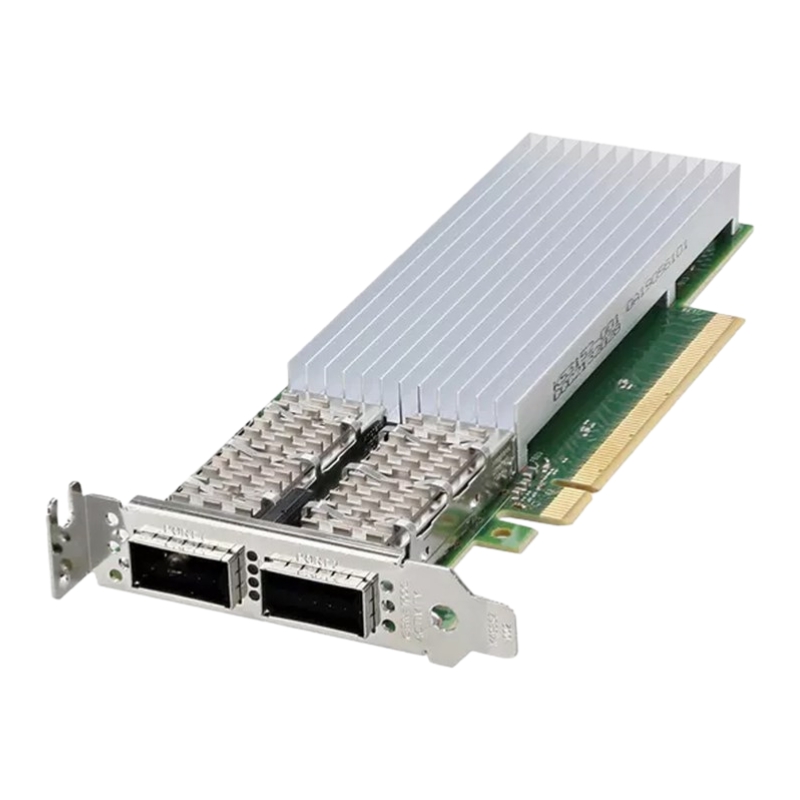


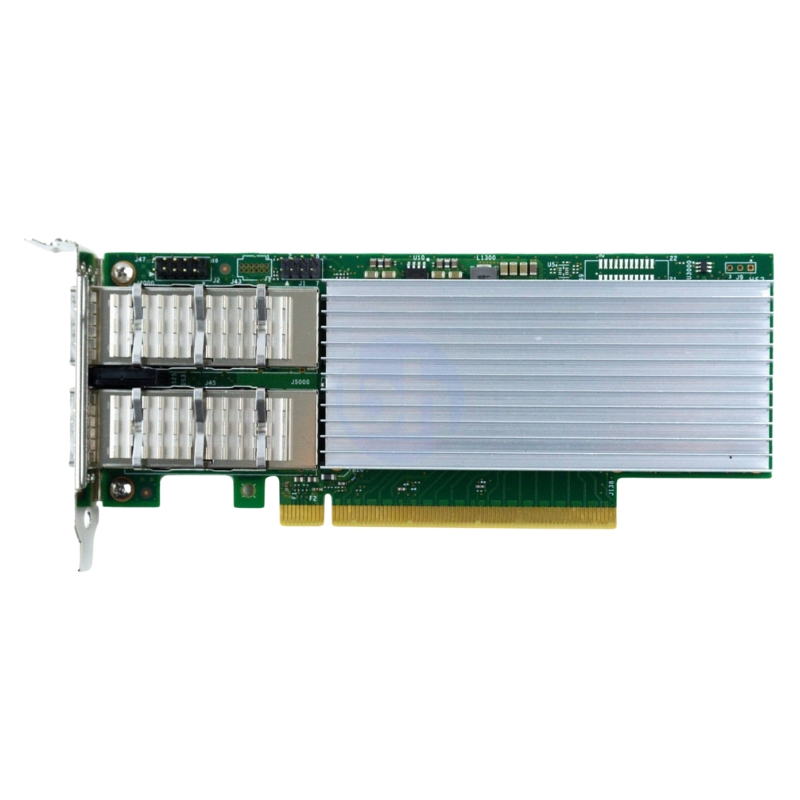
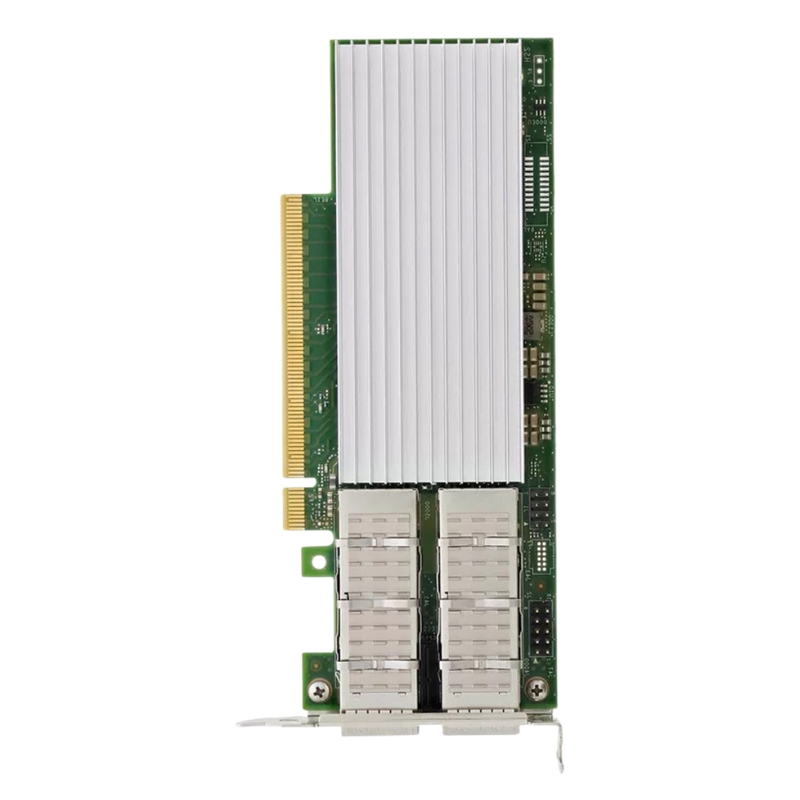
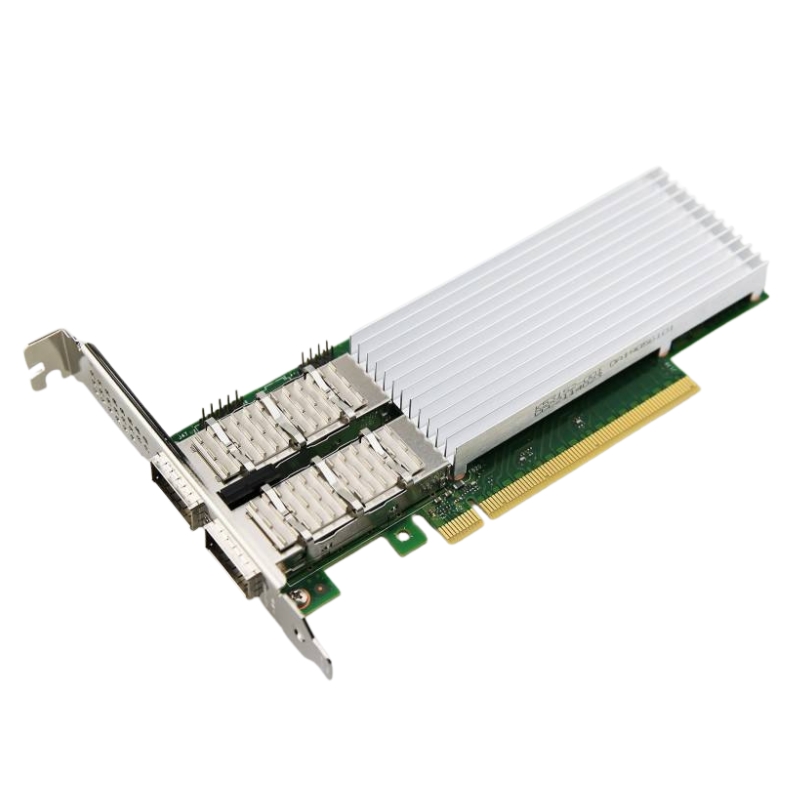
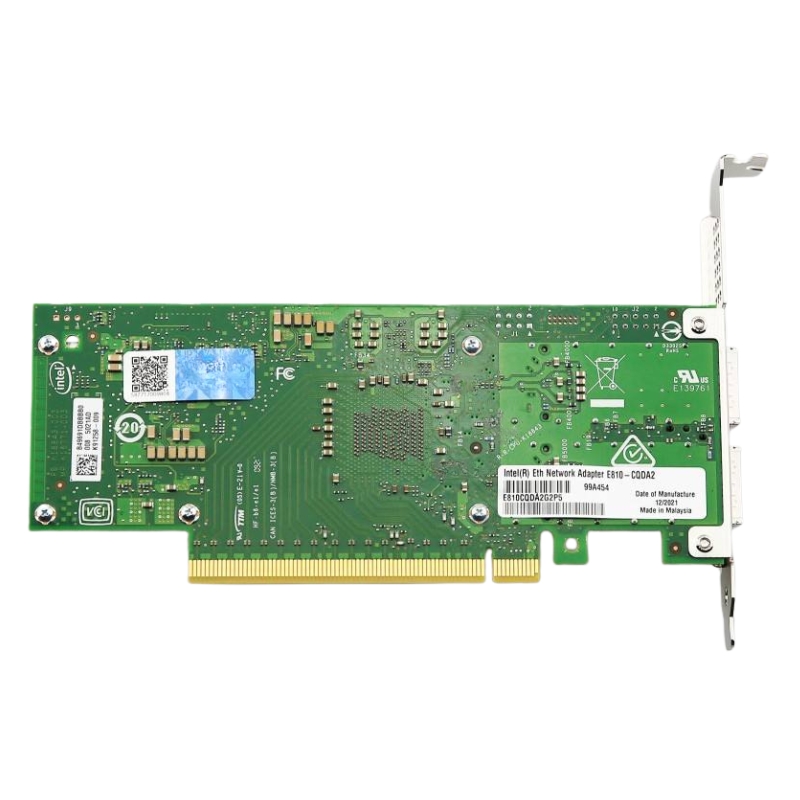
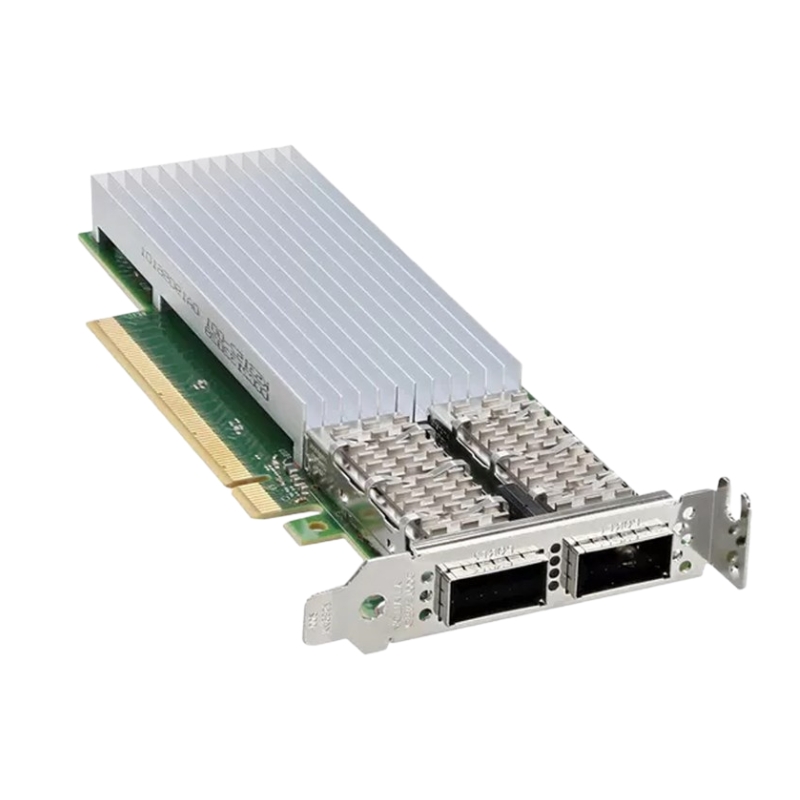
Intel E810CQDA2G1P5 Dual Port 100 GBE Adapter PCI Express 4.0X16 Ethernet Network Adapter. Factory-Sealed New in Original Box (FSB) with 3 Years Warranty
Intel E810CQDA2G1P5 Dual-Port 100Gb Adapter Overview
The Intel E810CQDA2G1P5 is a high-performance dual-port 100Gb Ethernet network adapter engineered for modern enterprise networking, cloud infrastructure, virtualization environments, and high-bandwidth data center deployments. Built with PCI Express 4.0 x16 architecture, this advanced Ethernet adapter delivers exceptional throughput, reliable connectivity, and scalable networking performance.
The modern data-driven world demands extremely high bandwidth, ultra-low latency, and scalable network infrastructure capable of supporting cloud computing, artificial intelligence workloads, virtualization clusters, and high-frequency financial systems. In this environment, the
As part of the high-end server networking category, this adapter is positioned for environments where traditional networking hardware becomes a bottleneck. Whether deployed in cloud service providers, enterprise virtualization clusters, or AI training nodes, it ensures consistent, deterministic performance under heavy data loads while maintaining efficient power utilization and advanced offload capabilities.
One of the defining characteristics of the
This architecture is particularly critical in environments where data flows are continuous and sustained, such as distributed storage systems, real-time analytics platforms, and virtualization hosts. The x16 lane configuration ensures that even under peak bidirectional traffic loads, the adapter maintains consistent throughput without throttling or packet loss.
By leveraging PCIe 4.0 x16, the adapter reduces the number of hops required for data transfer between network interface and processing units. This translates into lower latency communication paths, which is essential for high-performance computing workloads and real-time data processing applications. In modern microservices architectures, even microsecond-level improvements in latency can significantly enhance overall system responsiveness.
The dual-port configuration of this adapter allows simultaneous operation of two independent 100GbE channels. This enables network administrators to build highly dense, redundant, and scalable network architectures without requiring multiple single-port adapters. Each port can operate independently, supporting load balancing, link aggregation, or failover configurations depending on deployment requirements.
In hyperscale environments, this dual-port design reduces physical hardware footprint while increasing port density per server node. This contributes to simplified rack design, improved airflow efficiency, and reduced infrastructure complexity.
Modern data centers frequently rely on spine-leaf topologies to ensure non-blocking network communication across distributed compute nodes. The dual 100GbE interfaces of this adapter make it an ideal component in such architectures, allowing servers to connect directly to high-speed spine switches while maintaining redundancy and balanced traffic distribution.
The adapter incorporates advanced hardware offload engines that handle compute-intensive networking tasks directly on the NIC. This includes checksum offloading, segmentation offloading, and packet classification, significantly reducing CPU utilization. By shifting these workloads away from the main processor, systems gain additional compute capacity for application-level tasks.
Remote Direct Memory Access (RDMA) support enables direct memory-to-memory communication between servers without involving the CPU in data transfer operations. This capability is essential for latency-sensitive workloads such as distributed AI training, high-performance storage replication, and real-time analytics pipelines. The adapter’s architecture ensures predictable latency and high throughput consistency even under heavy cluster traffic.
Data Plane Development Kit (DPDK) compatibility allows applications to bypass the kernel networking stack entirely, enabling user-space packet processing at extremely high speeds. This is particularly useful in telecom environments, network function virtualization (NFV), and high-frequency trading systems where deterministic packet handling is essential.
Single Root I/O Virtualization (SR-IOV) enables the adapter to present multiple virtual functions to hypervisors, allowing isolated network channels for individual virtual machines. This improves security, reduces overhead, and ensures predictable performance in multi-tenant cloud environments.
Virtualization platforms benefit significantly from this capability as it reduces reliance on software-based switching while maintaining hardware-level throughput guarantees for each virtual instance.
In containerized environments such as Kubernetes clusters, high-throughput networking is critical for service-to-service communication. The adapter integrates seamlessly into cloud-native ecosystems, ensuring efficient packet routing, service mesh performance, and microservices scalability without introducing networking bottlenecks.
Despite its extremely high throughput capabilities, the adapter is engineered for efficient power utilization. Dynamic power management techniques allow it to adjust energy consumption based on traffic load, ensuring optimal performance per watt ratio. This is especially important in large-scale deployments where hundreds or thousands of network interfaces operate simultaneously.
The thermal design of the adapter ensures stable operation under sustained high traffic conditions. Heat dissipation mechanisms are designed to maintain consistent performance even in densely packed server environments where airflow may be constrained. This ensures reliability in 24/7 data center operations.
The adapter is widely supported across major enterprise operating systems, including various Linux distributions and Windows Server environments. This ensures seamless integration into existing IT infrastructures without requiring significant configuration changes or proprietary dependencies.
Regular firmware updates and driver optimizations enhance compatibility, security, and performance over time. This ensures that deployments remain future-ready and aligned with evolving networking standards and enterprise security requirements.
AI training workloads require extremely high data throughput between compute nodes, especially when distributing large datasets across GPU clusters. The dual 100GbE capability ensures that data pipelines remain saturated, reducing training time and improving model iteration speed.
Scientific simulations, weather modeling, and genomic analysis rely on fast inter-node communication. The adapter’s RDMA and low-latency capabilities make it suitable for tightly coupled HPC clusters where performance predictability is critical.
In algorithmic trading environments, microsecond-level latency advantages can influence transaction outcomes. The adapter’s architecture is optimized for deterministic packet processing, ensuring stable and predictable network behavior under extreme load conditions.
The adapter supports RDMA over Converged Ethernet version 2 (RoCEv2), enabling efficient low-latency data transfer over standard Ethernet infrastructure. This allows organizations to deploy high-performance networking without requiring specialized InfiniBand hardware.
Advanced traffic classification and quality of service mechanisms ensure that critical workloads receive prioritized bandwidth allocation. This helps maintain consistent performance for latency-sensitive applications even in congested network environments.
As organizations transition toward AI-first and cloud-native architectures, network infrastructure must scale accordingly. The adapter provides a future-proof foundation capable of supporting increasing bandwidth demands without requiring immediate hardware replacement.
Deploying 100GbE infrastructure ensures that organizations are prepared for future workload expansion. This reduces long-term upgrade cycles and allows IT teams to focus on application optimization rather than network replacement strategies.
The adapter is designed for integration into standard enterprise server platforms, allowing seamless installation into rack-mounted systems. Its compact yet powerful architecture ensures that high-speed networking does not compromise server density or airflow management.
The adapter integrates with modern 100GbE switching systems, enabling full end-to-end high-speed data paths across enterprise networks. This ensures consistent performance from server to backbone infrastructure.
Dual-port functionality allows administrators to configure redundancy and load balancing strategies, ensuring uninterrupted network availability even in case of port or link failures.
Enterprise environments require hardware that can operate continuously without degradation. This adapter is engineered for long-term stability, making it suitable for mission-critical systems where downtime is not acceptable.
To fully leverage the capabilities of the adapter, system-level optimization such as interrupt moderation tuning, buffer management, and CPU affinity configuration may be applied. These optimizations help align network performance with application requirements.
Efficient system design ensures that networking tasks do not compete excessively with compute workloads. The adapter’s offload features support balanced resource distribution, improving overall system efficiency.
The transition to hyperscale computing requires networking hardware capable of supporting massive data flows across distributed systems. This adapter provides the bandwidth and efficiency necessary to support such architectures.
As computing moves toward distributed cloud and edge deployments, high-speed connectivity becomes essential for synchronizing workloads across geographically dispersed systems. The adapter ensures consistent performance across these environments.
The


 Contact Us
 Information
 Catalog
 Solid State Drives (SSD)
 Network Switches
 Hard Disk Drives
 HBA & Controllers
 PC & Servers
 PC & Server Memory
 CPU & Processors
 Network Routers
 Power Supplies
 Tape Drives & Libraries
 Network Devices
 Computer & Network Cables