(7% discount is applied at checkout)
Cart is empty
Your go-to destination for cutting-edge server products
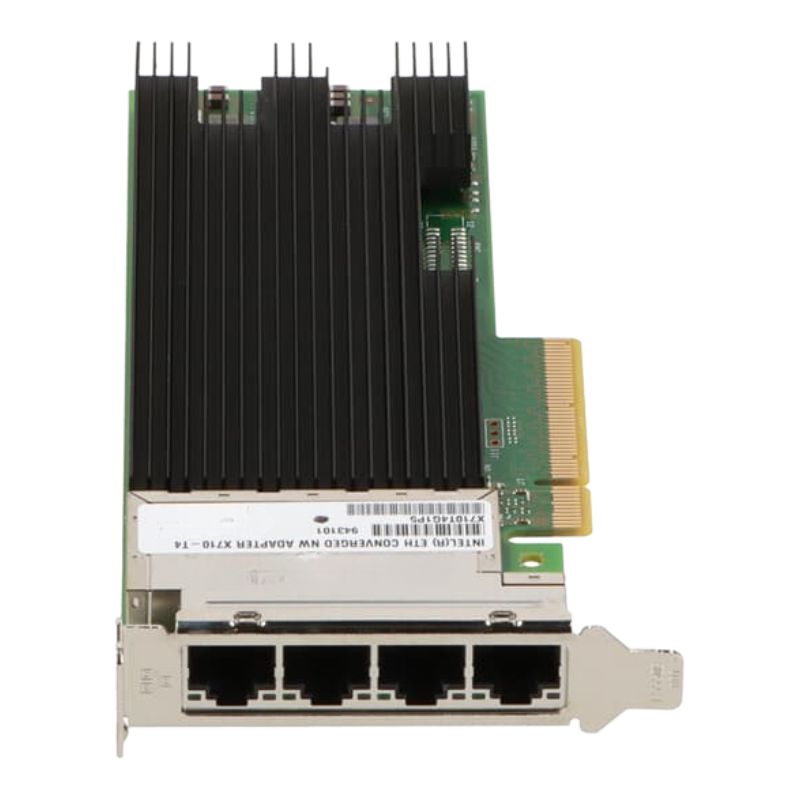


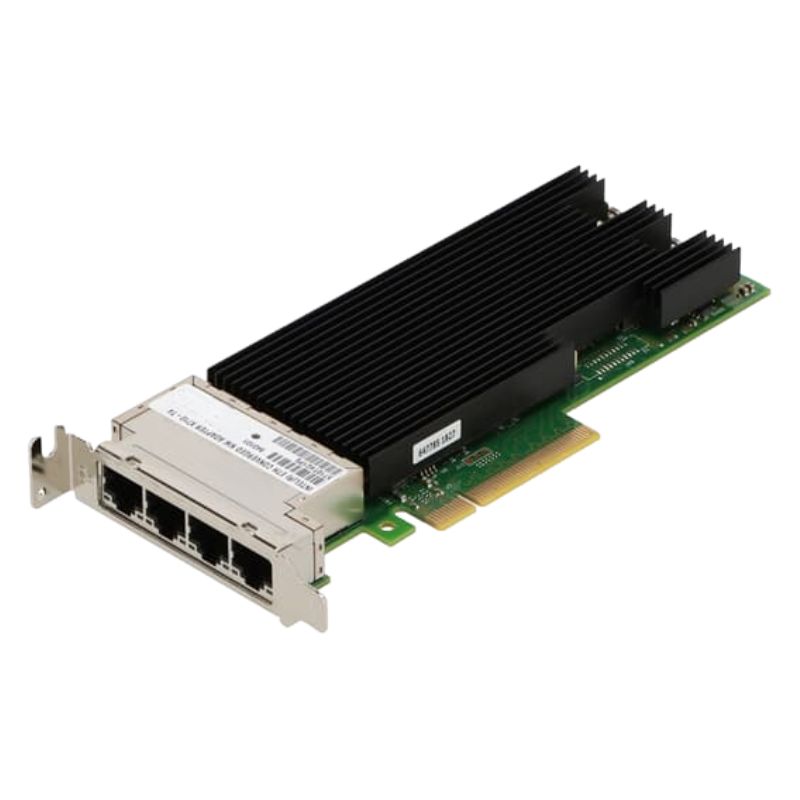
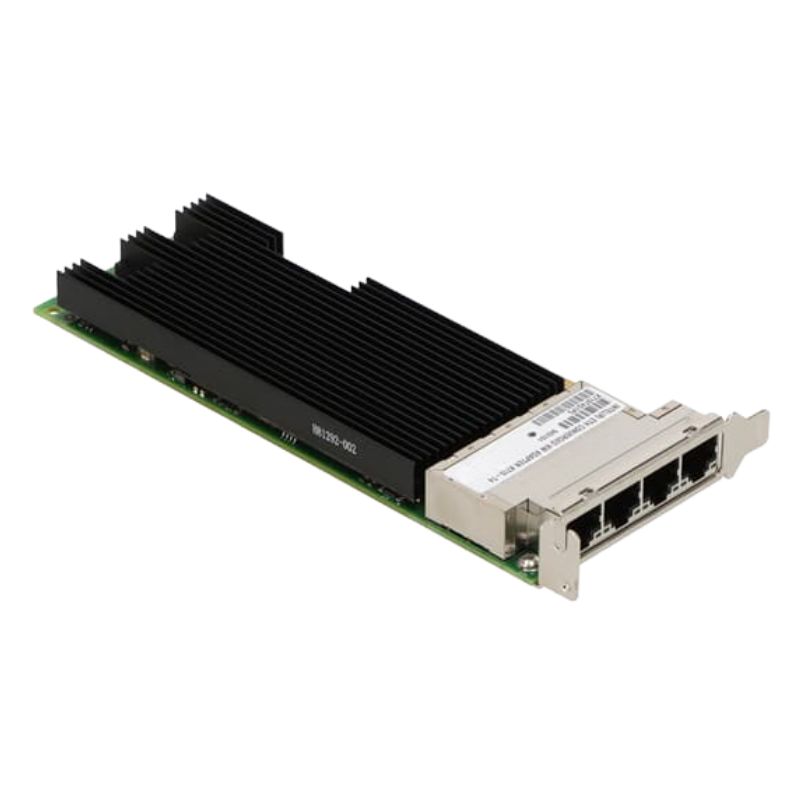
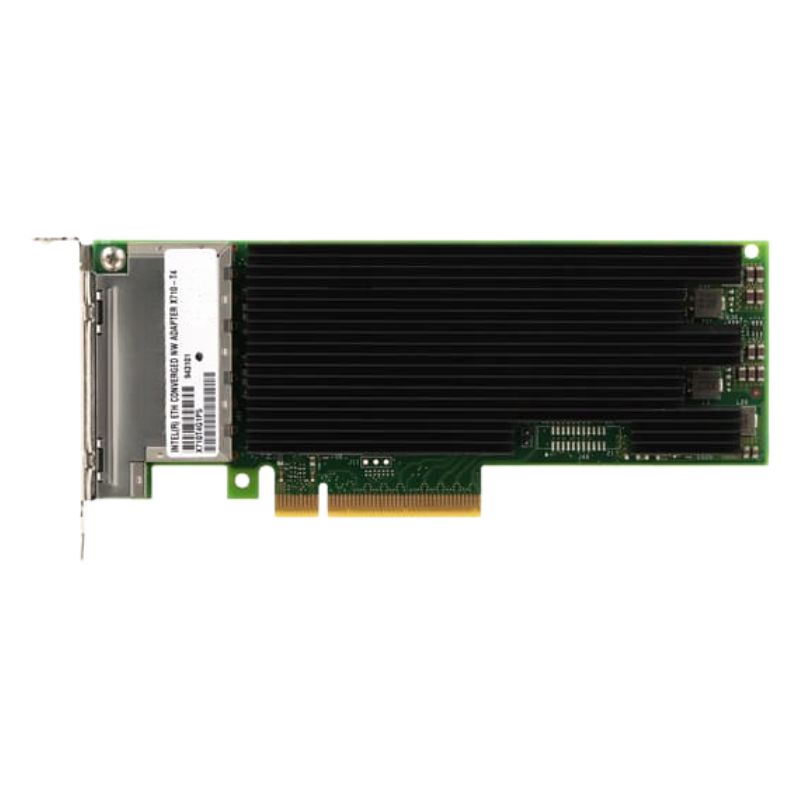
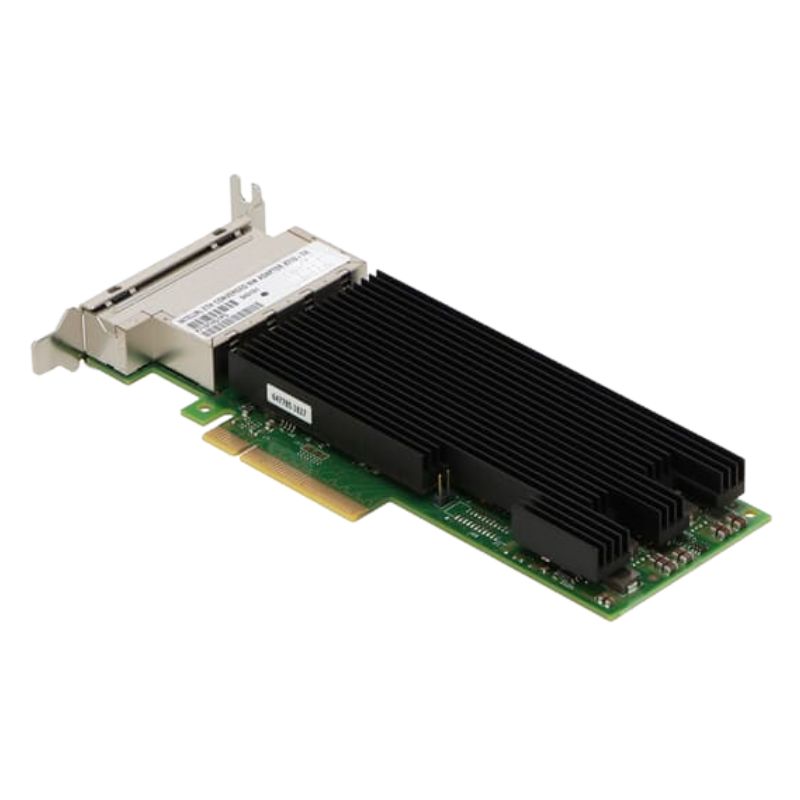
Intel X710T4 PCI Express Converged Network Adapter 4-Ports 10GBPS Ethernet. New Sealed in Box (NIB) with 3 Years Warranty
The Intel X710T4 PCI Express Converged Network Adapter is a high-efficiency, four-port 10 Gigabit Ethernet solution engineered to enhance modern data center connectivity, virtualization performance, and enterprise-grade network throughput. Designed to deliver scalable and reliable data transfer capabilities, this adapter integrates advanced converged networking functions that support both traditional networking traffic and storage workloads. By combining multiple communication protocols into a single hardware platform, it reduces overhead, simplifies infrastructure design, and improves total system efficiency. Ideal for bandwidth-intensive applications, cloud environments, and mission-critical workloads, this adapter ensures stable, low-latency performance across demanding network architectures.
The Intel X710T4 PCI Express Converged Network Adapter represents a high performance networking solution designed for modern enterprise infrastructure, data center environments, and cloud-scale computing platforms. Built on advanced controller architecture, this four port 10 Gigabit Ethernet adapter delivers reliable throughput, low latency communication, and efficient packet processing capabilities that support demanding workloads across virtualized and bare metal systems. The converged design integrates multiple networking functions into a single adapter, reducing hardware complexity while improving system scalability and operational efficiency.
This adapter is engineered to handle high density traffic environments where consistent bandwidth allocation and deterministic performance are essential. With four independent 10 Gigabit Ethernet ports, it enables flexible network segmentation, redundancy configurations, and workload distribution strategies that are critical in mission critical deployments. Its PCI Express interface ensures high speed communication between the network controller and host system, minimizing bottlenecks and maximizing data throughput in both uplink and downlink directions.
At the core of the Intel X710T4 adapter is a sophisticated network controller designed to optimize packet processing efficiency and reduce CPU overhead. The architecture supports hardware offloading techniques that handle compute intensive networking tasks directly on the adapter, freeing system resources for application processing. This approach enhances overall system efficiency and allows servers to maintain consistent performance even under heavy network load conditions.
The controller is optimized for multi queue processing, enabling simultaneous handling of multiple data streams. Each port operates independently while maintaining synchronization with system level networking policies. This allows administrators to implement advanced traffic management strategies that support virtualization environments, containerized workloads, and distributed computing architectures.
The four port configuration of the Intel X710T4 provides exceptional flexibility in network design. Each port is capable of delivering 10 Gigabit per second data transfer rates, ensuring high bandwidth availability for data intensive applications such as storage replication, virtualization clusters, database synchronization, and high performance computing tasks.
The multi port structure supports redundancy configurations where traffic can be rerouted automatically in the event of a link failure. It also allows load balancing across multiple connections, improving overall network efficiency and ensuring consistent performance under variable traffic conditions. This capability is essential for enterprise systems requiring uninterrupted connectivity and high availability.
The Intel X710T4 utilizes a PCI Express interface that ensures high speed communication between the adapter and the host system motherboard. This interface provides scalable bandwidth allocation depending on system configuration, enabling efficient data transfer between network hardware and system memory.
Integration within server environments is streamlined through standardized driver support and compatibility with major operating systems and virtualization platforms. The adapter is designed to operate efficiently in rack mounted servers, blade systems, and enterprise grade computing platforms where space efficiency and performance density are key considerations.
Virtualized environments benefit significantly from the capabilities of the Intel X710T4 adapter. It supports advanced virtualization features such as single root input output virtualization, which allows a single physical network interface to be partitioned into multiple virtual interfaces. This enables isolated network channels for virtual machines, improving security and performance consistency in multi tenant environments.
Network administrators can allocate dedicated bandwidth resources to virtual workloads, ensuring predictable performance across shared infrastructure. The adapter also reduces virtualization overhead by offloading network processing tasks from the hypervisor, allowing virtual machines to achieve near native network performance.
In data center environments, the Intel X710T4 adapter plays a crucial role in maintaining high availability and resilient network communication. Its multi port design allows for redundant path configurations that reduce downtime risks and enhance fault tolerance. In large scale deployments, these capabilities ensure continuous service availability even in the presence of hardware or link failures.
The adapter is commonly deployed in server clusters, storage systems, and distributed computing frameworks where consistent network performance is critical. Its ability to handle high throughput workloads makes it suitable for environments that process large volumes of data, including cloud hosting platforms and enterprise virtualization clusters.
One of the defining characteristics of the Intel X710T4 adapter is its ability to maintain low latency communication while processing high volumes of network traffic. The architecture is optimized to reduce packet processing delays and ensure fast transmission across network paths. This is particularly important for applications requiring real time data exchange, such as financial systems, analytics platforms, and high performance computing clusters.
The adapter supports efficient packet segmentation and reassembly processes, enabling smooth data flow even under heavy network congestion. This ensures that latency sensitive applications maintain consistent responsiveness and performance stability.
Hardware acceleration is a key feature integrated into the Intel X710T4 adapter. It supports offloading functions that reduce the computational burden on host processors. These include tasks such as checksum calculation, packet filtering, and segmentation processing. By transferring these responsibilities to dedicated hardware components, overall system efficiency is significantly improved.
This offloading capability enhances scalability in environments where large numbers of network connections must be maintained simultaneously. It ensures that server CPUs are reserved for application level workloads rather than being consumed by routine network processing tasks.
The Intel X710T4 adapter is designed with cloud computing environments in mind, offering scalability and flexibility required for dynamic resource allocation. Cloud infrastructure demands consistent performance across highly variable workloads, and this adapter provides the necessary bandwidth and reliability to support such conditions.
Its ability to integrate seamlessly into software defined networking environments allows administrators to dynamically configure network behavior based on workload requirements. This supports elastic scaling models commonly used in cloud service architectures.
Reliability is a core design principle of the Intel X710T4 adapter. It incorporates mechanisms that ensure continuous operation even under adverse network conditions. Link aggregation capabilities allow multiple ports to function as a single logical connection, increasing bandwidth while providing redundancy in case of failure.
Error detection and correction features contribute to data integrity during transmission. These mechanisms ensure that network packets are delivered accurately and efficiently, reducing the likelihood of data corruption in critical applications.
Modern IT infrastructures require scalable network components capable of adapting to evolving workload demands. The Intel X710T4 adapter provides this scalability through its multi port architecture and advanced controller design. It allows organizations to expand network capacity without requiring extensive hardware redesigns.
This adaptability makes it suitable for both small scale enterprise environments and large scale distributed systems. As network demands increase, additional adapters can be deployed to expand bandwidth and improve overall system performance.
Designed for long term operational stability, the Intel X710T4 adapter maintains consistent performance across extended usage periods. Its robust hardware design ensures durability in continuous operation environments such as data centers and enterprise server farms.
This reliability reduces maintenance requirements and contributes to lower total cost of ownership for organizations deploying large scale networking infrastructures.


 Contact Us
 Information
 Catalog
 Solid State Drives (SSD)
 Network Switches
 Hard Disk Drives
 HBA & Controllers
 PC & Servers
 PC & Server Memory
 CPU & Processors
 Network Routers
 Power Supplies
 Tape Drives & Libraries
 Network Devices
 Computer & Network Cables