(7% discount is applied at checkout)
Cart is empty
Your go-to destination for cutting-edge server products
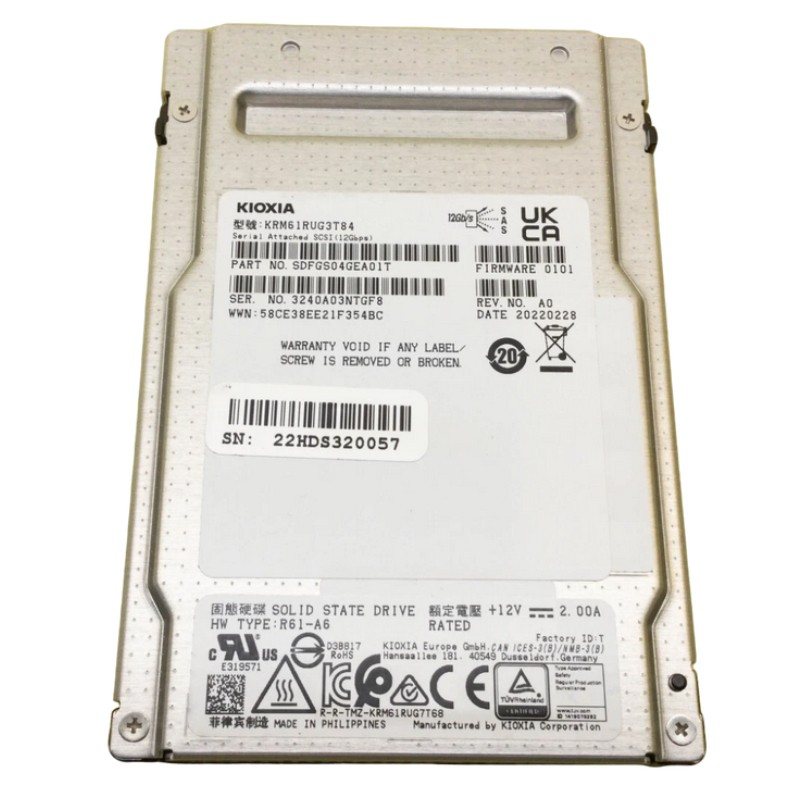


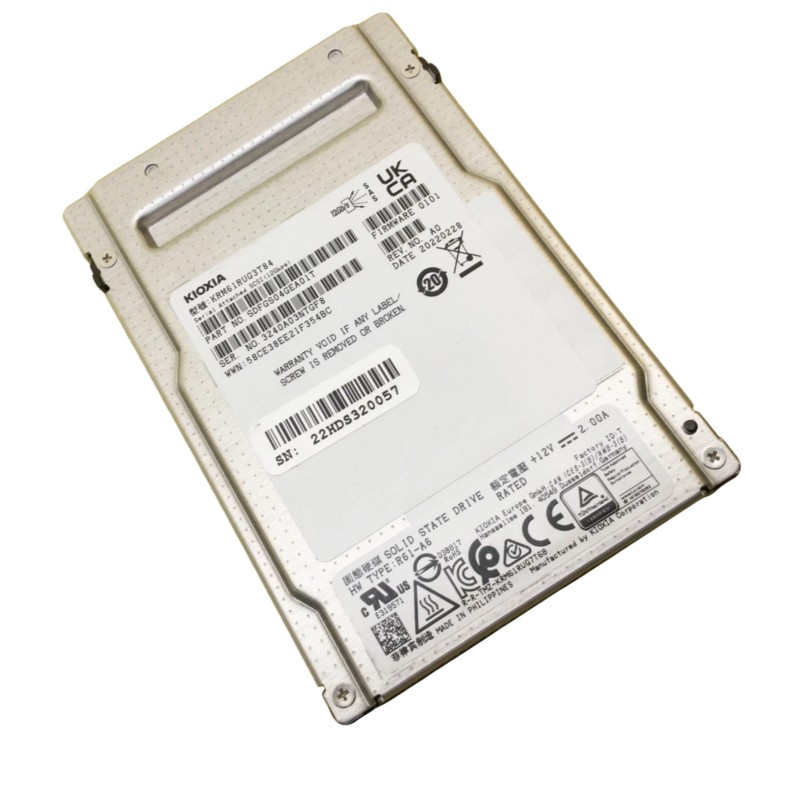
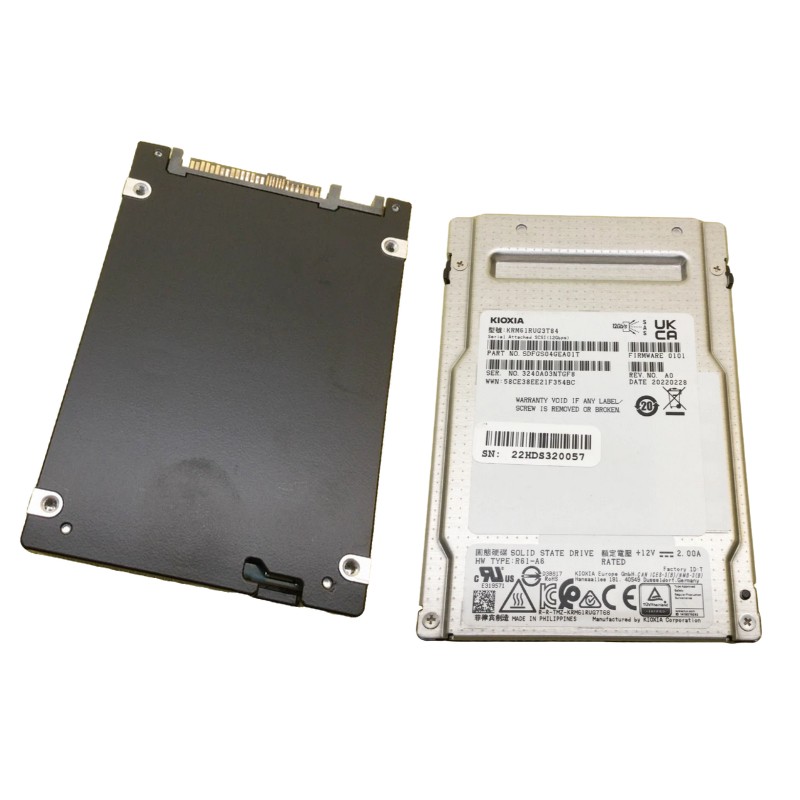
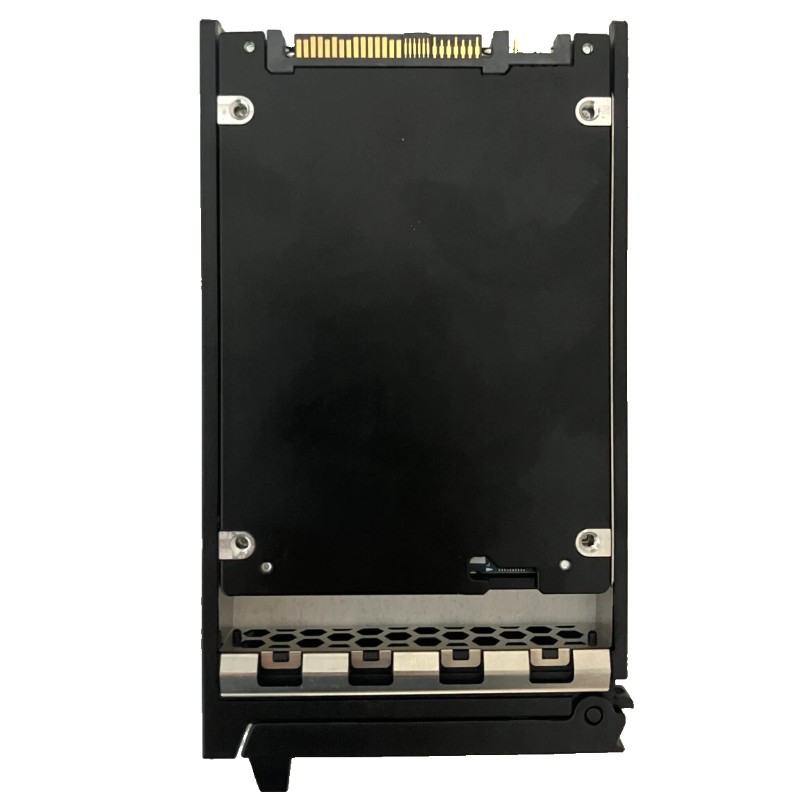
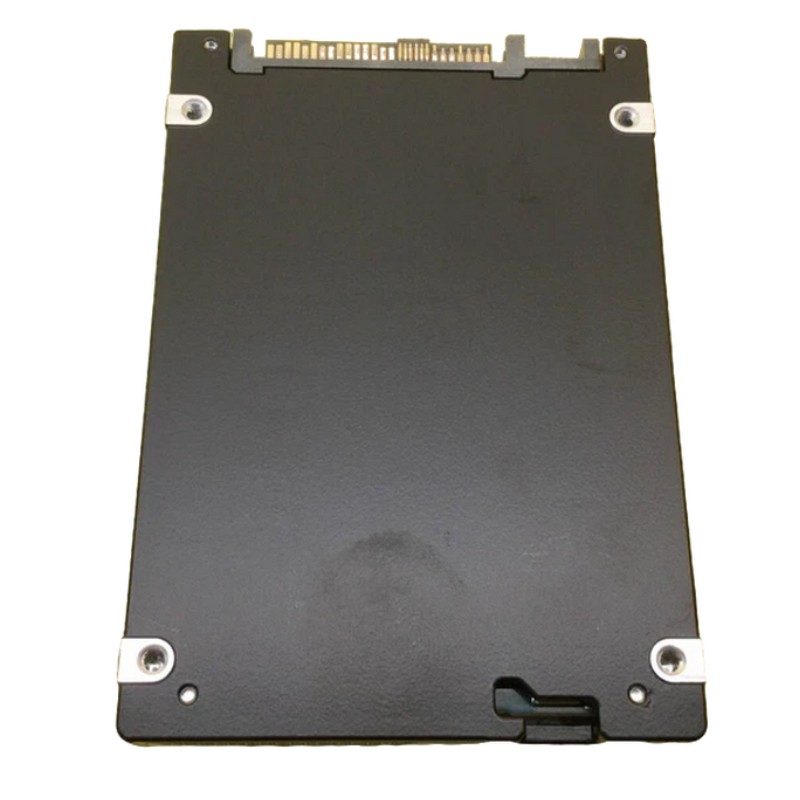
Kioxia KPM51VUG3T20 PM5-V 3.2TB SAS 12GBPS SSD. Excellent Refurbished with 1 year replacement warranty - HPE Version
Highlights of Kioxia KPM51VUG3T20 3.2TB SAS 12GBPS SSD
High-performance enterprise SSD engineered for data centers and mission-critical storage arrays. The Kioxia PM5-V (KPM51VUG3T20) provides enterprise-grade reliability, sustained throughput and low-latency random I/O for intensive workloads.
The Kioxia KPM51VUG3T20 PM5-V 3.2TB SAS 12Gbps Solid State Drive represents a high-capacity, enterprise-grade storage option engineered to address the demanding needs of modern servers, storage arrays, and mission-critical applications. Designed around a robust SAS 12Gbps interface, the PM5-V series emphasizes durability, consistent performance, and data integrity across read-intensive and mixed-workload environments. This continuous category description explores every facet of the PM5-V 3.2TB SSD — from architectural highlights and endurance characteristics to deployment considerations, compatibility guidance, and practical use cases — while remaining optimized for search engines and for technical buyers, system integrators, and IT procurement teams seeking reliable, long-term storage solutions.
The PM5-V model family is positioned as an enterprise-level SAS SSD with a focus on stability, availability, and long-term support. At 3.2TB capacity, this drive addresses both archival and primary-storage roles where high density and predictable latency matter. The SAS 12Gbps interface delivers wide compatibility with legacy and current enterprise hardware, while supporting multi-queue command sets and advanced error management features that are essential for data center workloads. The drive's firmware and controller are tuned for consistent I/O behavior under sustained load, making it suitable for database systems, virtualization hosts, and software-defined storage platforms.
Performance for enterprise SAS SSDs is measured not only in peak throughput but in long-term consistency and predictable latency under heavy I/O contention. The PM5-V 3.2TB drive is designed to maintain consistent read and write responsiveness across mixed workloads, minimizing latency spikes that harm application performance. This consistency is bolstered by internal mechanisms for background garbage collection, wear leveling, and thermal management. The result is a storage device that supports SLA-driven environments where steady IOPS and low tail latency are critical to user experience and automated scaling decisions.
Endurance in enterprise SSDs is a balance between NAND technology, controller algorithms, and host-side workload patterns. The PM5-V 3.2TB drive incorporates enterprise-grade NAND and controller firmware that emphasize endurance and data retention over the life of the product. Features such as advanced error correction code (ECC), power-loss protection circuitry, and persistent write caches (where applicable) protect data integrity during unexpected power events and reduce the risk of silent data corruption. These capabilities make the drive well-suited for applications that demand high availability and data resiliency, including critical transactional databases and storage backends for financial or healthcare systems.
Selecting and deploying the Kioxia PM5-V 3.2TB SAS SSD requires careful attention to server architecture, backplane support, and firmware compatibility. The SAS 12Gbps interface ensures broad interoperability with modern enterprise controllers and HBAs, but integrators should verify host firmware versions and RAID controller compatibility to ensure full feature support. Enterprise storage arrays and converged infrastructure platforms frequently require vendor-validated firmware bundles; consulting compatibility matrices reduces integration risk and helps maintain support eligibility for warranty and vendor services.
The physical form factor of enterprise SAS SSDs determines how they integrate into blade servers, rackmount chassis, and dense storage shelves. While specific form factor variants exist across device families, the PM5-V series is offered in industry-standard drive sizes to match server drive bays and hot-swap trays. The SAS 12Gbps connection supports dual-port configurations in many enterprise deployments, enabling multipath access and redundant paths for high-availability systems. Dual-port SAS support can be a decisive factor when designing active-active storage topologies or when implementing storage virtualization layers that rely on multiple simultaneous host connections.
Effective management of enterprise SSDs includes firmware features for telemetry, health reporting, and secure erase capabilities. The PM5-V series implements SMART attributes and vendor-specific telemetry that allow system administrators to monitor drive health, remaining life, and performance trends. These telemetry streams integrate with storage management suites and monitoring tools to provide predictive failure signals and to trigger proactive replacements before failures disrupt services. Support for secure erase and cryptographic erase options also helps comply with data sanitization policies when redeploying or decommissioning drives.
The PM5-V 3.2TB SAS SSD excels in several enterprise scenarios where capacity, predictability, and compatibility are required. High-density virtualization hosts benefit from the drive's balance of capacity and low latency, enabling larger VM consolidation ratios without sacrificing guest responsiveness. Database clusters, especially those supporting mixed OLTP and reporting workloads, rely on consistent I/O performance to minimize transaction latency and to maintain replication timeliness. Additionally, the drive is a strong candidate for cache tiers in hybrid storage architectures, providing fast staging for active data while lower-cost HDDs are used for bulk capacity.
In virtualized environments, predictable storage performance reduces cross-VM interference and enables more aggressive consolidation. The PM5-V's enterprise focus helps maintain quality of service across virtual disks and supports hypervisor-aware storage features. This makes it an attractive choice for private cloud platforms, VDI deployments, and managed hosting environments where consistent experience for tenants is a priority. Using intelligent tiering or caching policies, administrators can place the most frequently accessed virtual disks on PM5-V SSDs while relegating colder data to lower-cost media.
Databases that perform numerous small, random reads and writes require storage that can deliver low-latency IOPS and that preserves transactional integrity. The PM5-V series is designed to handle sustained transactional patterns and sudden bursts without significant performance degradation. Integration with RAID controllers that support battery-backed or flash-backed write caches further secures write operations and accelerates commit acknowledgement times. For high-availability database clusters, drives like the PM5-V are often chosen to reduce replication lag and to provide more predictable failover behavior.
Selecting SAS or NVMe depends on server architecture, performance targets, and investment in infrastructure upgrades. SAS continues to be favored in environments where existing RAID and multipath frameworks are deeply integrated into operations or where the storage fabric is optimized around SAS backplanes. The PM5-V 3.2TB SSD offers a path to higher density without requiring immediate overhauls to host servers or controller ecosystems. For workloads that demand maximal throughput and the lowest possible command latency, NVMe may be preferred, but for broad compatibility and predictable enterprise behavior, SAS remains a durable choice.
Capacity planning for enterprise storage must balance per-drive density with overall total cost of ownership (TCO). A 3.2TB enterprise SAS SSD can reduce the number of physical drives required, simplify drive bay utilization, and decrease power and cooling overhead when compared with equivalent-capacity HDD arrays. Although per-GB cost for SSDs is higher than spinning media, the operational benefits in performance, latency, and reduced management overhead frequently justify the investment for performance-sensitive tiers. Additionally, the reliability and endurance characteristics of enterprise SSDs can lower replacement and downtime costs over the lifecycle of a storage deployment.
To fully realize the advantages of the PM5-V 3.2TB SAS SSD, system administrators should follow proven best practices for enterprise storage installation and maintenance. Proper drive staging, adherence to vendor firmware bundles, and integration into monitoring and alerting pipelines reduce the likelihood of unexpected failures. Implementing multipath I/O configurations, validating RAID stripe sizes for target workloads, and performing controlled performance testing under anticipated load profiles will help tune systems for predictable behavior. Regular firmware updates from the vendor address reliability fixes and performance improvements, but these should always be applied in controlled maintenance windows and after compatibility verification.
Lifecycle management for enterprise SSDs includes secure provisioning, scheduled health checks, and retirement policies that respect both performance degradation and data-sanitization requirements. The PM5-V drive's health telemetry supports integration with automated inventory and replacement workflows, enabling organizations to scale without losing visibility. Keeping track of media wear indicators and planning replacements before drives reach critical wear thresholds preserves redundancy and reduces service interruptions during business-critical periods.
Automated monitoring of SMART attributes and vendor-specific telemetry is essential for predictive maintenance. By ingesting drive health metrics into observability systems, administrators can detect early warning signs such as rising reallocated sector counts, declining spare availability, or increasing error rates. These insights allow for planned replacements and smoother firmware rollouts. Predictive maintenance reduces emergency interventions and helps maintain a constant level of service across distributed storage clusters.
Procurement teams evaluating enterprise SSDs should review warranty terms, endurance ratings, and support options provided by the manufacturer and authorized distributors. Enterprise-class drives typically come with defined endurance specifications expressed in drive writes per day (DWPD) or terabytes written (TBW) over a warranty period. Understanding these metrics in the context of expected write workloads ensures that drive selection supports long-term operational goals. Warranties and vendor support contracts play a significant role in mitigating replacement costs and in securing access to firmware updates and compatibility advisories.
Endurance ratings are a practical way to estimate drive longevity under defined workload patterns, but they must be interpreted alongside actual application behavior. Write amplification, garbage collection efficiency, and host I/O patterns all influence the real-world endurance of a drive. Procurement decisions should be informed by workload characterization—measuring average write volumes and peak burst behavior—to ensure that the selected SSDs will meet lifespan expectations without unexpected wear-related failures.
Vendor support pathways, including return merchandise authorization (RMA) procedures and advance replacement policies, reduce the operational impact of drive failures. When evaluating product suppliers for the PM5-V 3.2TB SAS SSD, verify the availability of regional warranty coverage, the expected turnaround time for replacements, and whether firmware or compatibility advisories are distributed proactively. Field service options, such as on-site replacements for mission-critical systems, can further decrease downtime for organizations with stringent availability targets.
The Kioxia PM5-V 3.2TB SAS 12Gbps Solid State Drive is an attractive option for enterprises seeking a balance of capacity, enterprise-class features, and broad compatibility with existing SAS infrastructures. Its design philosophy places emphasis on predictable performance, robust data protection features, and integration-ready telemetry that supports large-scale deployments. For customers consolidating virtual machines, accelerating database workloads, or building caching layers within hybrid storage systems, the PM5-V provides a reliable foundation that simplifies capacity planning and operational management.
Investing in enterprise SAS SSDs like the PM5-V reduces the total complexity of storage architectures by enabling higher-density configurations and by lowering the number of moving parts compared with HDD-centric designs. The operational benefits include reduced physical maintenance, lower power and cooling footprints, and improved application performance that can translate into measurable business outcomes such as faster transaction processing, reduced backup windows, and improved user satisfaction.
To gain the maximum value from the PM5-V 3.2TB SAS SSD, align drive selection with workload profiles, redundancy models, and management tooling. Consider whether dual-port SAS and multipath setups are required, validate RAID levels against rebuild time expectations, and ensure that capacity planning accounts for over-provisioning where appropriate. Working with experienced system integrators or referencing validated configurations from both the drive and host vendors helps accelerate deployment and minimizes compatibility surprises.
Organizations that require large-scale procurement or that need specialized firmware behavior may explore OEM or custom-validation programs. These arrangements can include firmware tailoring, extended support SLAs, and coordinated qualification testing across the supply chain. Engaging early with vendors for large deployments ensures that the drives will meet the unique performance and manageability needs of complex, multi-site infrastructures.
Adoption strategies for enterprise SSDs should be iterative and data-driven. Begin with targeted pilots that characterize application behavior, validate performance expectations, and refine provisioning policies before wide-scale rollouts. The PM5-V 3.2TB SAS SSD fits naturally into phased migration plans where organizations modernize storage tiers without wholesale changes to server hardware or storage orchestration frameworks. By taking a measured approach, teams can maximize ROI while minimizing risk.


 Contact Us
 Information
 Catalog
 Solid State Drives (SSD)
 Network Switches
 Hard Disk Drives
 HBA & Controllers
 PC & Servers
 PC & Server Memory
 CPU & Processors
 Network Routers
 Power Supplies
 Tape Drives & Libraries
 Network Devices
 Computer & Network Cables