
(7% discount is applied at checkout)
Cart is empty
Your go-to destination for cutting-edge server products
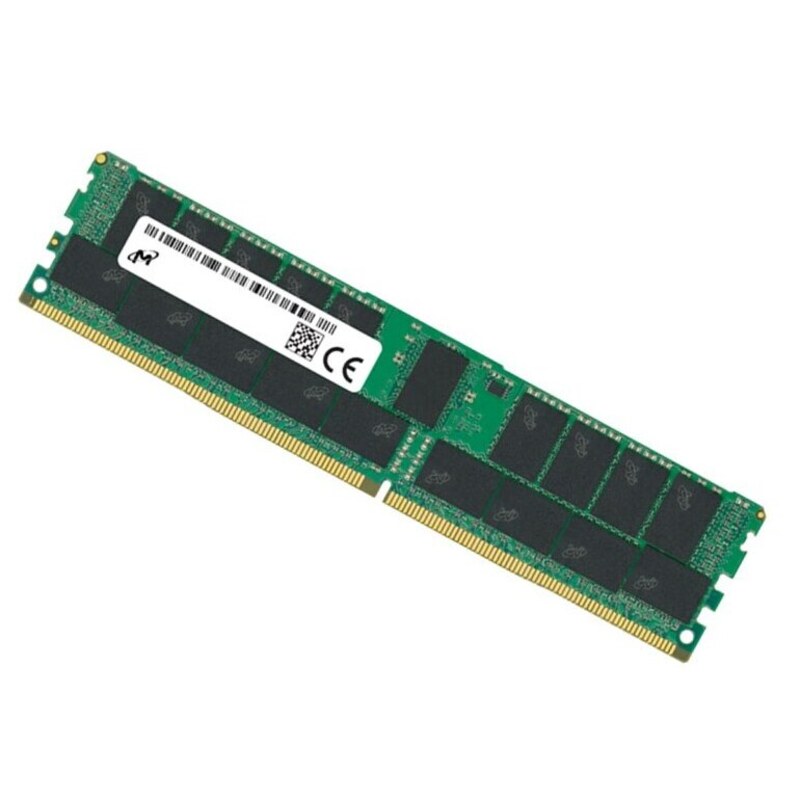
Micron MTA18ASF4G72AZ-3G2B1 32GB RAM 3200MHz PC4-25600 Cas-22 DDR4 SDRAM ECC Registered 288-Pin. New Sealed in Box (NIB) with 3 Year Warranty
| SKU/MPN | Warranty | Price | Condition | You save |
|---|---|---|---|---|
| MTA18ASF4G72AZ-3G2B1 | 1 Year Warranty | $448.00 | New (System) Pull | You save: $156.80 (26%) |
| MTA18ASF4G72AZ-3G2B1 | 1 Year Warranty | $1,104.00 | New Sealed in Box (NIB) | You save: $386.40 (26%) |
The Micron MTA18ASF4G72AZ-3G2B1 is a high-capacity DDR4 SDRAM memory module engineered for enterprise-grade servers and professional workstations. Designed to deliver consistent throughput, improved reliability, and dependable data integrity, this 32GB memory solution supports demanding computing environments that require stable performance under continuous workloads.
DDR4 ECC Registered memory modules represent a core component in modern enterprise computing environments where stability, accuracy, and uptime are mission-critical. The Micron MTA18ASF4G72AZ-3G2B1 32GB DDR4 SDRAM module is engineered for data centers, virtualization platforms, cloud infrastructure, and enterprise servers that demand dependable memory performance under continuous workloads. This category of memory modules focuses on delivering consistent throughput, reduced latency variation, and enhanced data integrity through advanced error correction mechanisms.
DDR4 SDRAM represents a substantial evolution over previous DDR generations, offering higher bandwidth, lower operating voltage, and improved power efficiency. Operating at 1.2V, DDR4 memory modules reduce overall energy consumption while maintaining robust performance characteristics. The PC4-25600 specification corresponds to a theoretical peak bandwidth of 25.6GB/s per module, supporting data-intensive workloads such as virtualization, database management, analytics, and high-performance computing.Advanced DDR4 architectures utilize optimized prefetch buffers, improved bank group structures, and refined signal integrity designs. These features allow DDR4 RDIMM modules to scale effectively in dual-socket and multi-socket server platforms, ensuring stable operation even when all memory channels are fully populated.
CAS latency (CL22) defines the number of clock cycles required for the memory module to respond to a read command. While lower CAS latency values are often associated with faster response times, enterprise memory prioritizes stability and predictable performance over marginal latency reductions. The CL22 timing profile is optimized for sustained workloads, ensuring consistent access times across prolonged operational cycles.In server environments, predictable latency and memory stability contribute more to real-world performance than raw timing specifications. ECC Registered DDR4 modules are tuned to maintain signal integrity and timing consistency across varying thermal and electrical conditions.
The registered design significantly reduces the electrical load on the memory controller by buffering address and command signals. This enables server platforms to support larger memory capacities per channel without compromising stability. Load reduction is particularly beneficial in dense memory configurations, such as systems utilizing multiple 32GB RDIMMs per channel.
32GB DDR4 RDIMM modules strike an optimal balance between capacity, cost efficiency, and scalability. They are widely deployed in enterprise servers to support virtualization hosts, private cloud deployments, and business-critical applications. By using multiple 32GB modules, organizations can scale system memory to hundreds of gigabytes or even terabytes, depending on platform support.This capacity tier is especially suitable for environments running multiple virtual machines, containerized applications, or in-memory databases. The ability to allocate sufficient RAM to each workload ensures reduced disk I/O, faster application response times, and improved overall system efficiency.
The dual rank x8 configuration enhances memory performance by allowing the memory controller to interleave accesses between ranks. Rank interleaving improves effective bandwidth utilization and reduces idle cycles, particularly in multi-threaded and multi-core server processors.x8 DRAM chips are commonly preferred in enterprise environments due to their compatibility with ECC implementations and broad platform support. Dual rank designs also provide a favorable balance between capacity density and signal stability.
Error-Correcting Code (ECC) memory is designed to detect and correct single-bit errors while identifying multi-bit errors that may require system intervention. In enterprise systems, even a single uncorrected memory error can lead to application crashes, data corruption, or system downtime. ECC memory significantly reduces these risks, making it a standard requirement for servers and workstations handling critical data.The ECC implementation in DDR4 RDIMM modules uses additional parity bits to validate data integrity during read and write operations. This continuous verification process ensures that data stored in memory remains accurate throughout its lifecycle.
System stability is directly influenced by memory reliability. ECC RDIMMs contribute to longer system uptimes by preventing memory-related crashes and reducing the frequency of hardware-related incidents. This reliability translates into lower maintenance costs and improved operational efficiency.
The 288-pin RDIMM form factor is the standard for DDR4 server memory modules. This design ensures compatibility with a wide range of enterprise-grade motherboards and server platforms. Proper pin alignment and mechanical design contribute to secure installation and reliable electrical connections.DDR4 RDIMMs are keyed differently from other memory types to prevent incorrect installation. This physical distinction helps protect systems from compatibility issues and potential hardware damage.
While raw frequency contributes to performance, enterprise memory design emphasizes balanced throughput and efficiency. ECC Registered DDR4 modules are optimized to deliver consistent performance across varying workloads, ensuring predictable behavior in production environments.
Modern server CPUs utilize multi-channel memory architectures to maximize bandwidth. Populating all memory channels with matched RDIMMs enhances overall system performance and reduces memory access contention.
Choosing high-quality ECC Registered memory contributes to sustained performance over time, reducing the need for frequent replacements and minimizing operational disruptions.


 Contact Us
 Information
 Catalog
 Solid State Drives (SSD)
 Network Switches
 Hard Disk Drives
 HBA & Controllers
 PC & Servers
 PC & Server Memory
 CPU & Processors
 Network Routers
 Power Supplies
 Tape Drives & Libraries
 Network Devices
 Computer & Network Cables