
(7% discount is applied at checkout)
Cart is empty
Your go-to destination for cutting-edge server products
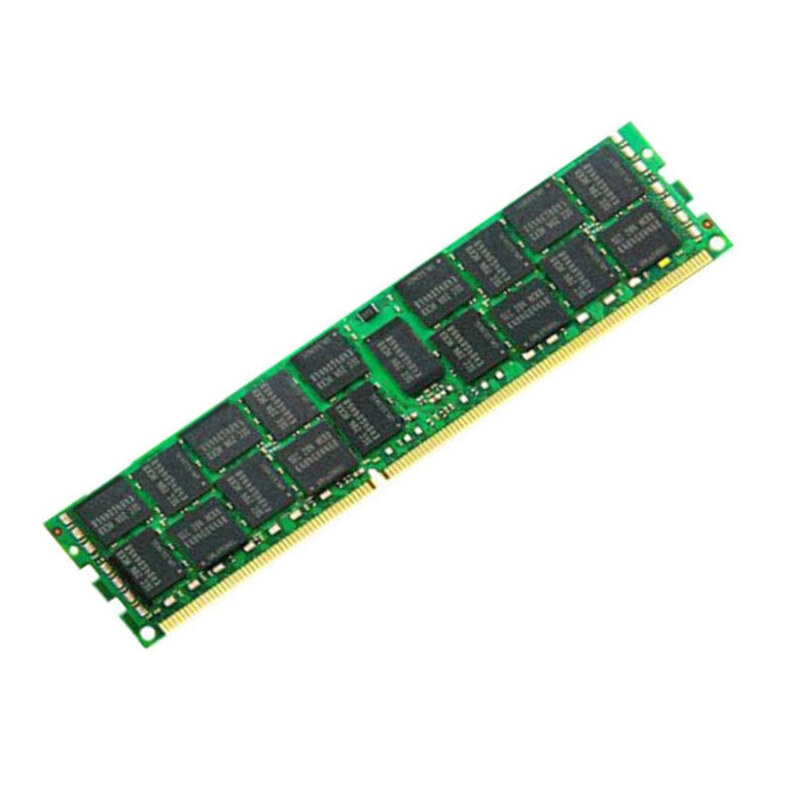
Micron MTA18ASF2G72PDZ-2G6D1 16GB Memory Pc4-21300R DDR4 SDRAM 2666MHz ECC Registered 288 Pin. New Sealed in Box (NIB) with 3 Year Warranty
| SKU/MPN | Warranty | Price | Condition | You save |
|---|---|---|---|---|
| MTA18ASF2G72PDZ-2G6D1 | 1 Year Warranty | $339.00 | New Sealed in Box (NIB) | You save: $118.65 (26%) |
| MTA18ASF2G72PDZ-2G6D1 | 1 Year Warranty | $242.00 | New (System) Pull | You save: $84.70 (26%) |
The Micron MTA18ASF2G72PDZ-2G6D1 delivers reliable server-grade performance with advanced DDR4 technology, ensuring stability and efficiency for enterprise workloads.
In the realm of enterprise computing, data integrity and system stability are paramount. This is where Error-Correcting Code (ECC) Registered memory, specifically known as Registered DIMMs (RDIMMs), becomes the cornerstone of reliable server and workstation infrastructure. The Micron MTA18ASF2G72PDZ-2G6D1 is a quintessential example of this memory class, engineered for mission-critical environments where downtime is not an option. Unlike standard Unbuffered DIMMs (UDIMMs) used in consumer desktops, RDIMMs incorporate a register (or buffer) between the memory controller and the DRAM chips. This register handles electrical load, reducing strain on the memory controller and allowing systems to support significantly higher quantities of memory modules per channel—a critical capability for data-intensive applications in servers, high-performance computing (HPC), and virtualization hosts.
Error-Correcting Code (ECC) is an advanced feature integrated directly into modules like the Micron 16GB DDR4-2666. ECC works by adding extra bits (in this case, 8 bits for every 64-bit word) to create a checksum. When data is written, the module calculates and stores this checksum. Upon reading the data, it recalculates the checksum and compares it to the stored value. If a single-bit error (a "soft error" caused by cosmic rays, electrical interference, or other factors) is detected, the ECC circuitry automatically corrects it on the fly without any notification. For multi-bit errors, which are rarer, the system can flag the error and halt to prevent data corruption. This proactive error management is essential for financial databases, scientific simulations, file servers, and any application where data accuracy is non-negotiable.
It is crucial to distinguish between memory module types to ensure proper system compatibility and performance.
RDIMMs, such as the Micron MTA18ASF2G72PDZ-2G6D1, offer the optimal balance of performance, capacity, and cost for most enterprise applications. The register buffers the command, address, and clock signals, enabling superior signal integrity and higher module counts. They are the standard choice for mainstream servers from vendors like Dell, HPE, Lenovo, and Cisco.
UDIMMs have no register or buffer. They offer lower latency in very small configurations but place a direct electrical load on the memory controller. This limits the number of modules that can be installed per channel (typically 1-2), making them unsuitable for high-capacity server applications, though common in desktops and entry-level workstations.
LRDIMMs utilize a memory buffer (iMB) that buffers not only the address and command lines but also the data lines. This further reduces the electrical load compared to RDIMMs, allowing for the highest possible memory capacities and speeds in a system. They are typically used for maximum capacity configurations but come at a higher cost and power consumption.
The part number MTA18ASF2G72PDZ-2G6D1 is a detailed blueprint of the module's capabilities. Understanding this alphanumeric code and its underlying specifications is key to verifying compatibility and performance expectations for your server platform.
The Micron part number provides a structured breakdown of the module's key attributes: MT: Micron Technology. A18A: Denotes the specific component family and technology (DDR4). SF: Indicates the module is an ECC Registered RDIMM. 2G72: Refers to the organization (2G x72). This signifies the module has 2 gig (2 billion) addresses, each 72 bits wide (64 data bits + 8 ECC bits). P: Represents the revision of the component. DZ: Indicates a specific thermal sensor profile or feature set. 2G6D1: This suffix details the speed grade (PC4-21300, DDR4-2666) and other timing characteristics.
This module offers a substantial 16GB capacity in a single module, providing significant headroom for applications and virtual machines. Its speed is defined as DDR4-2666MHz. The "DDR4" denotes the fourth generation of Double Data Rate SDRAM, offering improved performance and lower voltage than DDR3. The "2666" refers to the data rate in millions of transfers per second (MT/s). The corresponding module designation, PC4-21300, derives from this: 2666 MT/s * 8 bytes (64-bit width) = ~21,300 MB/s of theoretical peak bandwidth. This high bandwidth is crucial for reducing data bottlenecks in multi-core processors and bandwidth-sensitive workloads.
The module operates at a standard 1.2V, a reduction from the 1.5V or 1.35V common in DDR3 technology. This lower voltage translates directly into lower power consumption and reduced heat generation within the server chassis. The integrated thermal sensor (as suggested by the part number suffix) allows the system to monitor module temperature and manage performance or cooling proactively.
Memory timing is expressed as a series of numbers, with CL19 (CAS Latency 19) being the primary and most referenced timing for the Micron MTA18ASF2G72PDZ-2G6D1. CAS Latency is the number of clock cycles between the processor's request for data and the moment the data is available from the module. In this case, at a clock cycle of approximately 0.75 nanoseconds (for 2666 MT/s), a CL19 translates to a latency of about 14.25 nanoseconds. While higher-speed modules often have higher CAS Latency numbers in cycles, the actual time in nanoseconds may be similar or even lower. It is vital to use the timings prescribed by your server's BIOS and chipset for optimal stability.
Beyond CL, other key timings like tRCD (RAS to CAS Delay), tRP (RAS Precharge Time), and tRAS (Active to Precharge Delay) work in concert to define overall module responsiveness. These are typically configured automatically via the SPD (Serial Presence Detect) chip on the module, which communicates the correct JEDEC-standard timings to the server's BIOS upon boot.
The module utilizes the 288-pin interface standard for all DDR4 memory. This physical design is incompatible with DDR3 (240-pin) or DDR5 (288-pin with a different key notch position) sockets. The edge connector has a single key notch, positioned to prevent insertion into an incorrect socket type. The length is standard for a Dual In-line Memory Module (DIMM), typically 133.35mm, ensuring it fits into standard server and workstation memory slots.
The "Dual Ranked" specification of this Micron module is a pivotal design aspect impacting both performance and maximum system capacity. A "rank" is an independent set of DRAM chips on the module that is accessed at one time by the memory controller. Think of it as a logical subdivision within the physical module.
A dual rank module like the MTA18ASF2G72PDZ-2G6D1 presents two separate ranks to the memory controller. While only one rank can be active at any given moment, the controller can perform interleaving—switching between ranks with minimal delay. This can lead to more efficient utilization of the memory bus and potentially higher effective bandwidth compared to a single-rank module of the same capacity and speed, especially in multi-threaded workloads. Furthermore, because ranks share the same electrical channel, dual rank modules allow a system to reach higher total memory capacities without needing to populate every physical slot, as each dual rank DIMM counts as two logical loads.
Single Rank (1Rx4 or 1Rx8) modules are simpler, often have slightly lower latency for a single access, and place less electrical load on the channel, which can sometimes allow for higher speeds at the margin. However, for the vast majority of server applications, the capacity and interleaving advantages of Dual Rank (2Rx4 or 2Rx8) modules make them the preferred and more common choice for capacities of 16GB and above in the DDR4 generation.
The Micron MTA18ASF2G72PDZ-2G6D1 is not a consumer-grade component. Its design dictates specific compatibility requirements and optimizes it for particular heavy-duty workloads.
This module is designed for servers and workstations based on Intel Xeon Scalable Processors (Purley platform and later, such as the C62x series chipsets), Intel Xeon E5-2600 v3/v4 families (Grantley platform), and select AMD EPYC 7001/7002 series platforms (Naples/Rome). It is absolutely critical to consult your system or motherboard manufacturer's Qualified Vendor List (QVL) or memory compatibility tool to confirm this specific part number or its specifications are supported. Using non-QVL memory can lead to boot failures, reduced performance, or system instability.
For optimal performance in multi-channel architectures (like dual, triple, or quad-channel), modules should be matched in capacity, speed, rank, and ideally, manufacturer and part number. Mixing different modules may cause the system to run all memory at the speed and timings of the slowest module, or may prevent advanced channel interleaving features from functioning correctly.
The combination of ECC reliability, registered design, and 2666MHz speed makes this memory ideal for a wide array of enterprise and professional workloads.
Hypervisors like VMware vSphere, Microsoft Hyper-V, and KVM require ample, reliable memory to host multiple virtual machines (VMs). The 16GB capacity per module allows for dense VM consolidation, while ECC ensures the integrity of the virtualized environment.
SQL databases (Microsoft SQL Server, Oracle DB, MySQL) heavily rely on system memory for caching and transaction speed. ECC protection is critical to prevent silent data corruption in financial records, customer data, and inventory management systems.
Simulations in engineering, climate research, and genomics process vast datasets in memory. The bandwidth of DDR4-2666 helps feed multiple CPU cores, and ECC is often a mandatory requirement for the accuracy of long-running computational jobs.


 Contact Us
 Information
 Catalog
 Solid State Drives (SSD)
 Network Switches
 Hard Disk Drives
 HBA & Controllers
 PC & Servers
 PC & Server Memory
 CPU & Processors
 Network Routers
 Power Supplies
 Tape Drives & Libraries
 Network Devices
 Computer & Network Cables