
(7% discount is applied at checkout)
Cart is empty
Your go-to destination for cutting-edge server products
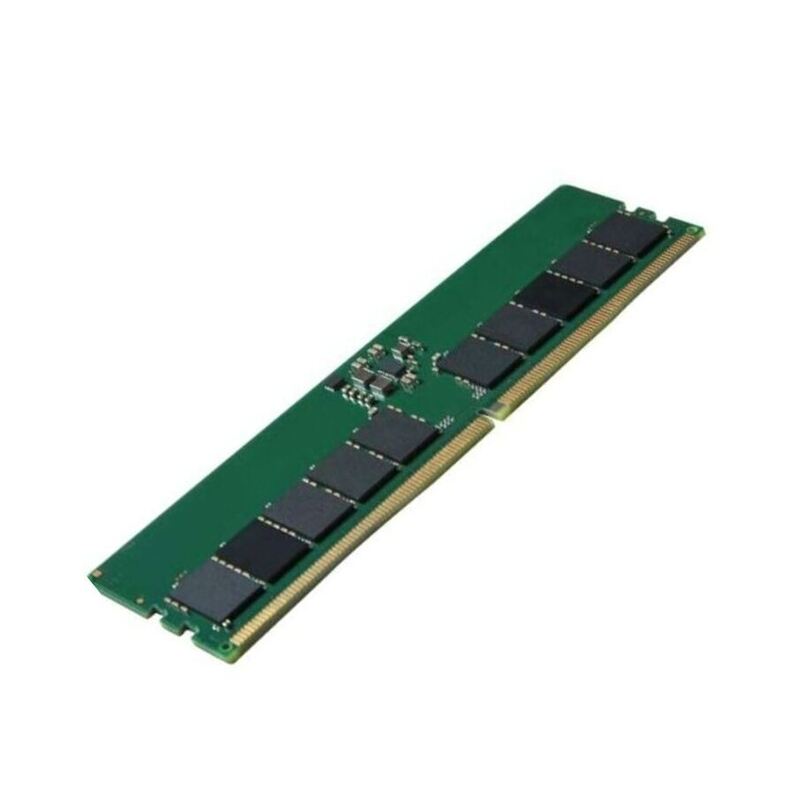
Micron MTA18ASF4G72AZ-3G2B1R 32GB 3200Mhz PC4-25600 Cl22 DDR4 SDRAM Ecc Reg Ram. New Sealed in Box (NIB) with 3 Year Warranty
This high-performance memory module is engineered to meet the demanding requirements of enterprise servers, data centers, and professional workstations. Designed with stability, efficiency, and scalability in mind, it delivers dependable performance for mission-critical computing environments that require consistent uptime and data accuracy.
Shipping and Handling
The Micron MTA18ASF4G72AZ-3G2B1R belongs to the enterprise-focused DDR4 ECC Registered memory category, a segment engineered to support mission-critical computing environments. This class of memory is designed specifically for servers, data centers, virtualization platforms, and high-performance workstations that require stability, consistency, and long-term reliability. DDR4 SDRAM ECC Registered RAM modules are widely adopted in professional infrastructures where uptime, data accuracy, and predictable performance are mandatory rather than optional.
DDR4 SDRAM represents a significant advancement over previous memory generations, providing higher transfer rates, improved power efficiency, and greater overall scalability. Modules in this category operate at a nominal voltage of 1.2V, reducing power consumption while supporting higher frequencies such as 3200MHz. This efficiency is particularly valuable in data centers where energy costs and thermal management are critical considerations.The DDR4 architecture introduces improved bank group structures and enhanced prefetch mechanisms, allowing memory controllers to access data more efficiently. These architectural improvements translate into higher throughput and reduced latency for demanding applications. In enterprise environments, this results in faster database transactions, smoother virtualization performance, and improved responsiveness for large-scale analytical workloads.
Memory modules rated at PC4-25600 are designed to deliver a theoretical bandwidth of up to 25.6GB per second per module. This high data transfer rate is essential for modern processors that rely on fast memory access to maintain peak efficiency. In multi-core server CPUs, memory bandwidth can often become a bottleneck, and PC4-25600 DDR4 memory helps alleviate this limitation.Operating at 3200MHz, this category of memory supports high-frequency data access patterns commonly found in virtualization hosts, in-memory databases, and cloud computing platforms. The ability to sustain high throughput ensures that multiple workloads can run concurrently without experiencing significant performance degradation.
CAS latency, often abbreviated as CL, represents the delay between a memory request and the moment data becomes available. A CL22 rating is optimized for stability and compatibility at higher frequencies such as 3200MHz. In enterprise memory design, slightly higher latency values are often balanced against improved reliability and signal integrity.For server and workstation applications, consistent latency behavior is more important than achieving the lowest possible latency. CL22 DDR4 ECC Registered memory ensures predictable access times, which is critical for applications that depend on consistent response characteristics, such as transactional databases and virtual machine hosting environments.
ECC memory is a defining feature of this category, providing built-in mechanisms to detect and correct single-bit memory errors. In large memory configurations, the probability of random bit errors increases due to factors such as electrical interference, cosmic radiation, and component aging. ECC technology mitigates these risks by automatically correcting errors before they can affect system operations.This capability is especially valuable in enterprise servers that run continuously for extended periods. ECC memory helps maintain data accuracy, system stability, and overall reliability, reducing the likelihood of crashes, data corruption, or silent errors that could compromise critical workloads.
Registered DIMMs, also known as RDIMMs, incorporate a register between the memory controller and the DRAM chips. This register buffers command and address signals, reducing electrical load on the memory controller. As a result, systems can support higher memory capacities and more populated memory channels without sacrificing stability.The registered design is essential for enterprise platforms that require large memory footprints. By improving signal integrity, RDIMMs enable reliable operation in configurations with multiple memory modules per channel, a common requirement in multi-socket server architectures.
The combination of ECC and registered architecture makes this category ideal for mission-critical systems. ECC ensures data correctness, while the register enhances scalability and reliability. Together, these features provide a robust foundation for applications where errors or downtime could result in significant financial or operational consequences.Industries such as finance, healthcare, scientific research, and cloud service providers rely heavily on ECC RDIMM memory to ensure uninterrupted service and accurate data processing. This category is therefore a cornerstone of professional computing infrastructure.
A 32GB memory module represents a high-density solution that allows system builders to maximize total system memory without occupying excessive slots. This density is particularly advantageous in servers with limited DIMM slots, enabling higher overall memory capacity while preserving room for future expansion.High-density modules reduce the total number of DIMMs required, which can simplify system design and improve airflow within the chassis. Improved airflow contributes to better thermal management, enhancing system longevity and reducing the risk of overheating in densely populated server environments.
DDR4 ECC Registered memory modules are engineered to be compatible with a wide range of enterprise-grade motherboards and processors. They are designed to meet strict industry standards, ensuring seamless integration with server platforms from leading CPU manufacturers.Compatibility considerations include support for registered memory, ECC functionality, and appropriate memory speeds. Systems designed for RDIMM memory leverage advanced memory controllers capable of managing large memory configurations with high reliability.
Multi-socket servers benefit greatly from high-capacity, high-speed memory modules. Each processor socket typically has its own memory channels, and balanced memory configurations are essential for optimal performance. Using consistent 32GB DDR4 ECC Registered modules across all channels helps maintain uniform memory access patterns.Balanced configurations reduce non-uniform memory access penalties and ensure that workloads are evenly distributed across available resources. This is particularly important for parallel computing applications and large-scale virtualization deployments.
The defining strength of this category lies in its ability to balance performance, capacity, and reliability. High-speed operation ensures that processors are well-fed with data, while large capacity supports memory-intensive applications. ECC and registered architecture safeguard data integrity and system stability.This balanced approach makes DDR4 ECC Registered memory an essential component in modern professional computing environments, supporting both current workloads and future scalability requirements.


 Contact Us
 Information
 Catalog
 Solid State Drives (SSD)
 Network Switches
 Hard Disk Drives
 HBA & Controllers
 PC & Servers
 PC & Server Memory
 CPU & Processors
 Network Routers
 Power Supplies
 Tape Drives & Libraries
 Network Devices
 Computer & Network Cables