
(7% discount is applied at checkout)
Cart is empty
Your go-to destination for cutting-edge server products
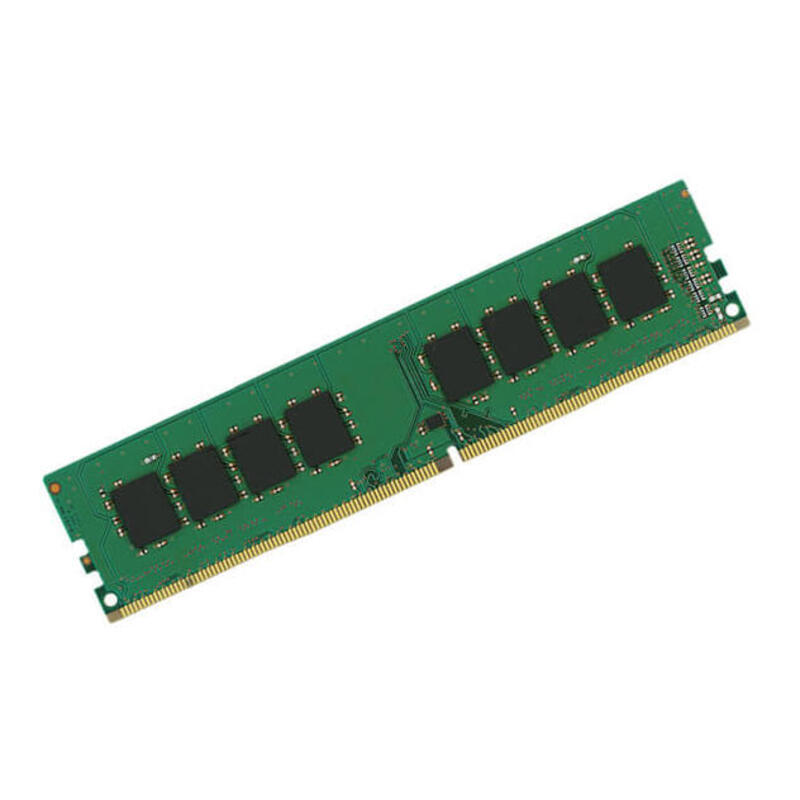
Micron 16GB 1X16GB 2400MHZ PC4-19200 Cl17 Ecc Registered DUAL RANK DDR4 SDRAM 288-Pin Dimm Memory Module MTA18ASF2G72PDZ-2G3A1. New Sealed in Box (NIB)
| SKU/MPN | Warranty | Price | Condition | You save |
|---|---|---|---|---|
| MTA18ASF2G72PDZ-2G3A1 | 1 Year Warranty | $550.00 | New Sealed in Box (NIB) | You save: $192.50 (26%) |
| MTA18ASF2G72PDZ-2G3A1 | 1 Year Warranty | $184.00 | New (System) Pull | You save: $64.40 (26%) |
The Micron MTA18ASF2G72PDZ-2G3A1 DDR4 SDRAM is a high-performance memory module that offers a capacity of 16GB. This generous amount of memory is crucial for users who require fast and efficient data processing capabilities. Whether you are a gamer, a content creator, or a professional in the field of graphic design, having a sufficient amount of memory is essential for running resource-intensive applications smoothly.
In the realm of enterprise computing, data center reliability, and high-performance workstations, memory is not merely a component—it is the lifeblood of system stability and data integrity. The transition to DDR4 technology marked a significant leap forward, offering enhanced speeds, greater bandwidth, improved power efficiency, and increased module densities. Within this ecosystem, modules like the Micron MTA18ASF2G72PDZ-2G3A1 represent the gold standard for servers and mission-critical systems. This specific module belongs to the category of DDR4 ECC Registered DIMMs (RDIMMs), a class of memory engineered for unparalleled reliability and performance in multi-channel architectures.
The part number itself is a detailed blueprint of the module's capabilities. Breaking down the Micron MTA18ASF2G72PDZ-2G3A1 provides a complete technical profile essential for system compatibility and performance forecasting.
This module is a powerhouse of server-grade engineering. Its primary specifications define its place in demanding computing environments.
The module boasts a substantial 16GB capacity. It is configured as a 1x16GB stick, meaning it is a single module that provides 16 gigabytes of memory. This density is ideal for populating multi-socket servers with high total memory capacities without exhausting all available memory slots, allowing for future expansion.
It operates at a base 2400MHz (Megahertz) frequency. This correlates to a PC4-19200 data transfer rate. The "PC4" denotes DDR4, and the "19200" refers to the peak transfer rate in megabytes per second (MB/s)—in this case, 19,200 MB/s. This speed ensures rapid data movement between the CPU and memory, reducing bottlenecks in data-intensive applications.
The module features a CAS Latency timing of CL17. Latency measures the delay between a memory controller's request and the data's availability. In server environments, a balance between raw speed (MHz) and latency is key for optimal real-world performance.
Beyond basic specs, this module incorporates critical technologies that distinguish server memory from standard desktop RAM.
The ECC capability is paramount for data integrity. ECC memory can detect and correct single-bit data errors on the fly, preventing silent data corruption that could lead to system crashes, computational errors, or data loss. This is a non-negotiable feature for financial computing, scientific research, database servers, and any system where uptime and accuracy are critical.
The "Registered" designation, synonymous with "RDIMM," indicates the module includes a register (or buffer) on the DIMM. This register acts as an intermediary between the memory controller and the DRAM chips. It reduces the electrical load on the memory controller, allowing a system to support a larger number of memory modules and higher total capacities with greater stability. This comes with a negligible one-clock-cycle latency penalty but is essential for scalable server configurations.
The Dual Rank configuration means the module's 16GB capacity is organized into two separate sets (ranks) of memory chips that the memory controller can address independently. This allows for slight performance improvements through rank interleaving, where accesses to one rank can be prepared while another is busy, improving overall memory efficiency compared to a Single Rank module of the same capacity.
The module uses the standard 288-pin DIMM form factor for DDR4 memory. It is designed for use in servers, workstations, and specific motherboards that explicitly support DDR4 ECC Registered (RDIMM) memory. It is physically and electrically incompatible with UDIMMs (Unbuffered DIMMs used in desktops) and LRDIMMs (Load-Reduced DIMMs).
To fully appreciate the engineering behind this module, one must understand the core technologies that define its category. DDR4 ECC RDIMMs are built upon a foundation of innovations designed for the data center era.
DDR4 memory introduced several key improvements that directly impact performance and efficiency in server environments.
DDR4's operating voltage was lowered to 1.2V (from DDR3's 1.5V), reducing power consumption and heat generation—a critical factor in dense server racks. The architecture supports higher data rates, starting at 2133MHz and scaling beyond 3200MHz, providing a significant bandwidth boost crucial for multi-core processors handling parallel workloads.
DDR4 introduced the concept of bank groups, allowing for more efficient access patterns. Commands to different bank groups can be executed in a more overlapped manner, improving effective bandwidth and reducing contention, which is beneficial for server applications with random access patterns.
Error Correction Code is not merely a feature; it is an insurance policy for data integrity. As memory densities increase and transistor sizes shrink, the susceptibility to soft errors from background radiation or electrical noise grows.
ECC memory modules include extra memory bits (e.g., 8 bits for a 64-bit word) that store an encrypted checksum of the data. Every time data is read, the memory controller recalculates the checksum and compares it to the stored value. Single-bit errors are detected and corrected instantly. Most ECC implementations can also detect, but not correct, multi-bit errors, signaling a system alert.
By correcting errors transparently, ECC memory prevents what would otherwise be catastrophic system crashes, kernel panics, or corrupted calculation results. This directly translates to higher system availability (uptime) and reliable output, justifying its use in any business-critical or scientific computing infrastructure.
The registered (buffered) design of RDIMMs is a key enabling technology for modern servers with large memory capacities.
In a system with many memory modules, the electrical load on the memory controller's address and command buses becomes excessive, degrading signal integrity and limiting the number of modules that can be reliably supported. The register on an RDIMM refreshes and drives these signals, presenting a single, clean load to the memory controller regardless of how many DRAM chips are on the module.
This allows server platforms to support much higher total memory capacities—often reaching several terabytes per socket—by populating all available memory channels with high-density modules like the 16GB Micron unit. This scalability is essential for in-memory databases (e.g., SAP HANA), virtualization hosts with many VMs, and large-scale data analytics platforms.
The specific characteristics of the Micron MTA18ASF2G72PDZ-2G3A1 make it suited for a well-defined set of computing applications where its combination of capacity, reliability, and performance delivers tangible value.
This is the primary domain for this memory module. It is designed to operate 24/7 in controlled environments.
In virtualization hosts (using VMware vSphere, Microsoft Hyper-V, or KVM), physical memory is the most critical resource for VM density. Multiple 16GB RDIMMs allow for the creation of large, consolidated pools of RAM to host dozens of virtual machines, improving hardware utilization and efficiency. The ECC feature is vital to protect the integrity of all VMs running on the host.
Database management systems (Microsoft SQL Server, Oracle DB, MySQL) are heavily dependent on memory for caching query results, indexes, and frequently accessed data. Larger memory capacities reduce disk I/O, which is the primary bottleneck for database performance. The 2400MHz speed and ECC functionality ensure fast, reliable data access for mission-critical transactional and analytical workloads.
Beyond general enterprise servers, this memory serves in more specialized roles.
Workstations for Computer-Aided Design (CAD), 3D animation, scientific simulation, and video editing often use server-grade platforms (like Intel Xeon W or AMD Threadripper Pro) that support ECC RDIMM memory. The 16GB capacity per module provides a high ceiling for total system memory, which is essential for manipulating massive datasets and complex models, while ECC safeguards the integrity of long-running renders or simulations.
High-end network switches, firewalls, and storage area network (SAN) controllers often utilize buffered ECC memory for caching, routing tables, and operating system execution. The reliability offered by this memory category is non-negotiable for infrastructure that forms the backbone of IT operations.
Selecting the correct server memory is a precise process. Installing an incompatible module can lead to system failure or degraded operation.
The module is exclusively compatible with systems designed for DDR4 ECC Registered DIMMs. This includes platforms built around Intel Xeon Scalable processors (Purley and later platforms), select Intel Xeon E5/E7 v3/v4 families, AMD EPYC processors, and AMD's previous-generation server CPUs. The system's motherboard must explicitly state support for RDIMMs in its qualified vendor list (QVL) or product specifications.
For optimal performance, it is strongly recommended to populate memory in identical sets per channel (same manufacturer, part number, capacity, speed, and rank). Mixing modules of different speeds, ranks, or densities can cause the entire memory subsystem to operate at the speed of the slowest module and may disable advanced channel optimization features.
Modern server CPUs feature multi-channel memory controllers (e.g., 6-channel, 8-channel). The performance of the Micron 16GB RDIMM is maximized when installed in matched sets to enable these wide channels. For example, installing one module per channel (e.g., eight 16GB modules in an 8-channel system) provides vastly superior bandwidth compared to a configuration that leaves channels partially populated or unbalanced.
Motherboards have specific guidelines regarding the number of ranks per channel. A common rule is "2 ranks per channel" for optimal signal integrity. Since this is a Dual Rank module, populating one such module per channel satisfies this rule. Populating two Dual Rank modules per channel (creating 4 ranks per channel) may force the system to lower the operating speed (e.g., from 2400MHz to 2133MHz) to maintain stability. Consulting the system manufacturer's configuration guide is essential.


 Contact Us
 Information
 Catalog
 Solid State Drives (SSD)
 Network Switches
 Hard Disk Drives
 HBA & Controllers
 PC & Servers
 PC & Server Memory
 CPU & Processors
 Network Routers
 Power Supplies
 Tape Drives & Libraries
 Network Devices
 Computer & Network Cables