
(7% discount is applied at checkout)
Cart is empty
Your go-to destination for cutting-edge server products
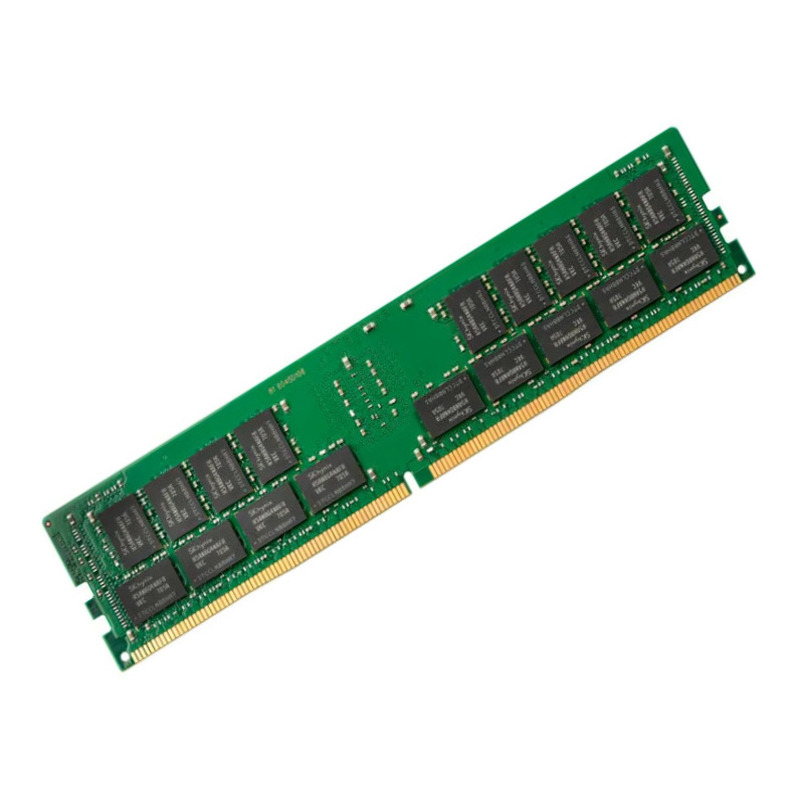
Micron MTA18ASF2G72PDZ-2G3D1 16GB DDR4 SDRAM 2400MHZ PC4-19200 Cl17 Ecc Registered Dual Rank 288-Pin Dimm Memory Module. New Sealed in Box (NIB)
| SKU/MPN | Warranty | Price | Condition | You save |
|---|---|---|---|---|
| MTA18ASF2G72PDZ-2G3D1 | 1 Year Warranty | $550.00 | New Sealed in Box (NIB) | You save: $192.50 (26%) |
| MTA18ASF2G72PDZ-2G3D1 | 1 Year Warranty | $184.00 | New (System) Pull | You save: $64.40 (26%) |
The Micron MTA18ASF2G72PDZ-2G3D1 represents a specific and critical class of memory designed for professional and enterprise-grade computing systems. This 16GB module is not standard desktop RAM; it is engineered for servers, high-end workstations, and network hardware that demand unwavering reliability, data integrity, and sustained performance under continuous operation.
The Micron MTA18ASF2G72PDZ-2G3D1 represents a specific and powerful class of server memory engineered for stability, reliability, and performance in demanding computational environments. This 16GB module is not a standard desktop DIMM; it is a crucial component built for servers, high-end workstations, and data center infrastructure where data integrity and uptime are paramount. Its technical specifications—ECC, Registered, Dual Rank, and a 2400MHz speed—define its role within the ecosystem of enterprise-grade hardware. This module is part of Micron's proven portfolio of DRAM solutions, leveraging their in-house semiconductor fabrication to ensure quality and compatibility.
Before a deep dive, the fundamental technical attributes of this module are: a capacity of 16GB (1x16GB), a data transfer rate of 2400 Megatransfers per second (MT/s), marketed as PC4-19200, with CAS Latency (CL) timings of 17. It incorporates Error-Correcting Code (ECC), is a Registered (RDIMM) type, features a Dual Rank design, and uses the standard 288-pin DDR4 SDRAM DIMM form factor. The part number "MTA18ASF2G72PDZ-2G3D1" follows Micron's specific coding system, which encapsulates these features and its manufacturer origins.
Micron's part numbering system provides a detailed blueprint of the module's characteristics. Breaking down "MTA18ASF2G72PDZ-2G3D1" reveals its core identity. MT designates it as a Micron Technology product. A18A refers to the component's architecture and revision. SF indicates a registered DIMM (RDIMM) with ECC. 2G72 details the organization: 2 Gig (chips) x 72 bits (data width including ECC). P signifies a 288-pin DIMM. DZ denotes a specific rank and revision. Finally, the suffix -2G3D1 specifies the speed (2400MT/s at CL17) and the module's timing profile. This precise nomenclature allows system integrators and IT professionals to ensure absolute compatibility with their target platforms.
The Micron MTA18ASF2G72PDZ-2G3D1 embodies several key DDR4 server memory technologies that differentiate it from consumer-grade parts.
ECC is a non-negotiable feature for mission-critical systems. It provides hardware-level error detection and correction.
An ECC module, like this Micron one, has an extra memory chip per 64-bit data word, creating a 72-bit bus (8 bits for ECC). These extra bits store a special code. When data is written, the memory controller calculates a code based on the data bits. This code is stored alongside the data. Upon reading, the controller recalculates the code and compares it to the stored one. If a single bit has flipped (a "single-bit error"), the ECC logic can identify and correct it instantly without any operating system or application involvement. It can also detect, but not correct, multi-bit errors.
Single-bit flips, caused by cosmic rays, electrical noise, or other factors, are more common than generally perceived. In a desktop, this might cause a minor glitch or crash. In a server handling financial transactions, database queries, or virtual machines, such an error could corrupt data, crash critical services, or propagate incorrect calculations. ECC prevents this silently and automatically, ensuring data integrity and system reliability.
Registered memory is a cornerstone of server memory scalability and stability.
An RDIMM places a register (or buffer) between the memory controller and the DRAM chips. This register buffers the command and address signals (but not the data signals) for one clock cycle. While this adds a tiny amount of latency (typically one clock cycle), it provides significant electrical benefits.
The memory controller sees only the electrical load of the register, not the load of all the individual DRAM chips on the module. This drastically reduces the electrical strain on the memory controller. Consequently, RDIMM systems can support much higher total memory capacities—often many terabytes—and more DIMMs per channel (usually 2 or 3) compared to unbuffered memory (UDIMMs), which are limited in capacity and number of modules per channel. The Micron MTA18ASF2G72PDZ-2G3D1 is designed explicitly for these scalable, multi-DIMM server platforms.
Rank is a logical organization of memory chips on a module.
A rank is a set of DRAM chips that work together to fill the data width of the memory bus (72 bits for ECC modules). A Dual Rank (2R) module, like this Micron one, has two independent sets of these chips on the same PCB. They cannot be accessed simultaneously, but the memory controller can interleave operations between the two ranks, effectively hiding some latency and improving performance compared to a Single Rank (1R) module of the same capacity in many workloads.
Dual Rank modules provide a good balance of performance, capacity, and cost. They place a slightly higher electrical load on the memory channel than Single Rank modules but less than Quad Rank. Server motherboards have specific guidelines for populating ranks per channel for optimal performance and compatibility, making the "2R" designation a critical factor in system configuration.
The module's performance is defined by its data rate and latency timings.
The "2400MHz" refers to the module's data transfer rate in Megatransfers per second (MT/s). In DDR (Double Data Rate) memory, data is transferred on both the rising and falling edges of the clock cycle. Therefore, the effective clock speed of the I/O bus is 1200MHz, but the data rate is 2400 MT/s. The "PC4-19200" is the module's theoretical peak bandwidth specification. PC4 denotes DDR4. The number (19200) represents the transfer rate in Megabytes per second (MB/s). It is calculated as: 2400 MT/s * 8 bytes (64-bit bus) = 19,200 MB/s. This is the peak bandwidth for a single module in a single-channel configuration.
CAS Latency (CL) is the most prominent of several memory timings. It represents the number of clock cycles between the memory controller issuing a read command and the first piece of data being available. A CL of 17 at 2400MT/s translates to a real-time latency in nanoseconds (ns). The formula is: (CL / Transfer Rate in MHz) * 2000. For this module: (17 / 2400) * 2000 ≈ 14.17 nanoseconds. This is a standard latency for 2400MT/s server-grade RDIMMs. Other timings (tRCD, tRP, tRAS) are also part of the module's SPD (Serial Presence Detect) profile and are optimized by Micron for stable operation in server environments.
The module uses the standard DDR4 DIMM (Dual In-line Memory Module) form factor with 288 pins. The key notch is in a different position compared to DDR3, preventing accidental insertion into the wrong slot. The length is 133.35mm (5.25 inches), and the height can vary but conforms to standard server specifications for clearance in dense 1U and 2U chassis.
DDR4 operates at a lower voltage than DDR3, typically 1.2V. This reduction, from DDR3's 1.5V, results in significant power savings, especially critical in data centers with thousands of modules. The Micron MTA18ASF2G72PDZ-2G3D1 operates at this standard 1.2V. Its power draw is managed and will be within the specifications for enterprise server power delivery subsystems.
This module is not universally compatible. It is designed for specific server platforms.
The Micron MTA18ASF2G72PDZ-2G3D1 is compatible with a wide range of enterprise servers from major OEMs like Dell EMC (PowerEdge), HPE (ProLiant), Lenovo (ThinkSystem), Cisco (UCS), as well as white-box server motherboards from Supermicro, ASRock Rack, and others. It is intended for Intel Xeon Scalable processors (Purley platform and later, e.g., Skylake-SP, Cascade Lake-SP) and AMD EPYC (Naples, Rome, and later) platforms that support DDR4-2400 RDIMMs. It is crucial to verify the specific server's qualified vendor list (QVL) or memory compatibility guide before purchase.
For optimal performance, modules should be installed in matching sets per channel, following the server manufacturer's population rules. Most modern servers support multi-channel architectures (e.g., 6-channel on Intel, 8-channel on AMD EPYC). Populating all channels with identical modules (in speed, capacity, rank, and timing) is essential to maximize memory bandwidth. This 16GB module can be combined with others of the same specification to build total system memory of 64GB, 128GB, 512GB, or more, depending on the server's maximum capacity and slot count.
This type of memory is the lifeblood of: Enterprise servers running databases (SQL, Oracle), Virtualization hosts (VMware vSphere, Microsoft Hyper-V), Cloud infrastructure, High-Performance Computing (HPC) clusters, and Business-critical application servers. Its ECC protection ensures data integrity for these workloads, while its RDIMM design allows for the large memory capacities they require.


 Contact Us
 Information
 Catalog
 Solid State Drives (SSD)
 Network Switches
 Hard Disk Drives
 HBA & Controllers
 PC & Servers
 PC & Server Memory
 CPU & Processors
 Network Routers
 Power Supplies
 Tape Drives & Libraries
 Network Devices
 Computer & Network Cables