
(7% discount is applied at checkout)
Cart is empty
Your go-to destination for cutting-edge server products
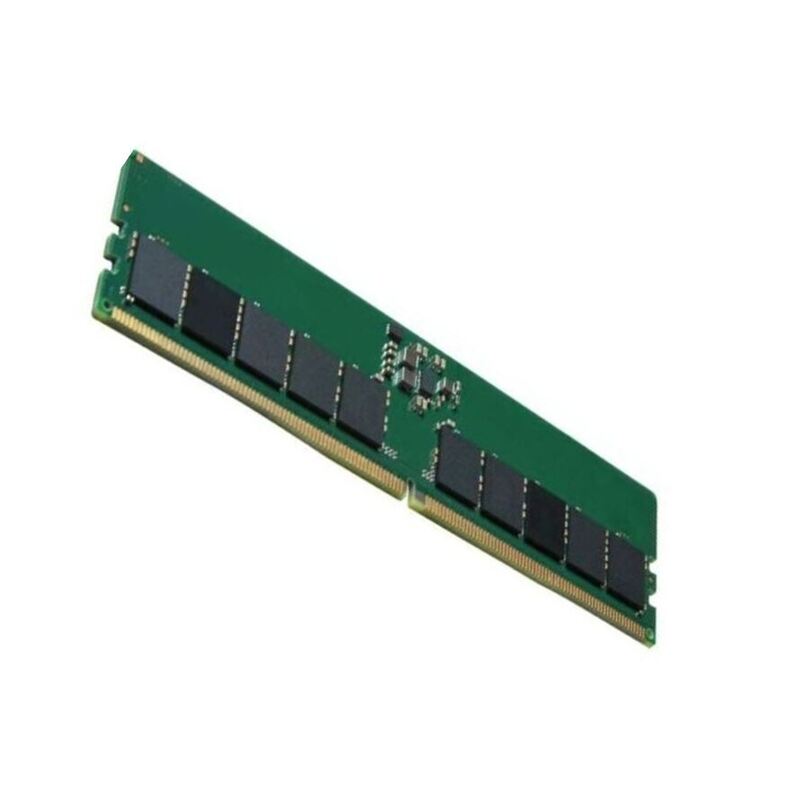
Micron MTA18ASF2G72PDZ-2G6B1 16GB PC4-21300 DDR4-2666MHz CL19 288-Pin DIMM 1.2V Dual Rank Memory Module. New Sealed in Box (NIB) with 3 Year Warranty
The Micron MTA18ASF2G72PDZ-2G6B1 Memory Module is equipped with a substantial capacity of 16GB, making it an ideal choice for users who require high-performance memory for their computing needs. Micron DDR4 Registered DIMMs (RDIMMs) offer a superior memory solution, designed for enhanced system performance and reliability. These memory modules are built to handle modern workloads, providing fast data transfer and substantial bandwidth improvements.
At the heart of reliable enterprise computing and data center operations lies robust server memory. The category of server-grade DDR4 memory represents a critical component class engineered for maximum uptime, consistent performance under relentless loads, and unwavering data integrity.
The alphanumeric string "MTA18ASF2G72PDZ-2G6B1" is a detailed technical specification in itself, following Micron's part numbering convention. Breaking it down provides a complete profile of the module's capabilities:
The prefix "MT" identifies the manufacturer as Micron Technology, a global leader in memory and storage solutions.
This indicates a standard assembly, typically a full-sized DIMM module.
The "18" is a key digit. In Micron's code, this often represents a density of 16GB per module, organized in a dual-rank configuration. Dual-rank modules present two sets of memory banks to the memory controller, improving efficiency by allowing interleaved access, which can boost performance in server workloads compared to single-rank modules of the same capacity.
This segment pinpoints the product family. The "ASF" code is crucial as it denotes a DDR4, ECC, Registered DIMM. The "F" often signifies a standard height (though not low-profile) module with the registered and ECC functionality integral to its design.
This segment details the internal DRAM chip composition. "2G" refers to 2-gigabit (Gb) DRAM chips. "72" indicates the module's data width, which is 72 bits. This is a hallmark of ECC memory: a standard data bus is 64 bits wide, and ECC adds an additional 8 bits for error correction, totaling 72 bits.
This letter designates the product revision or specific design variant, which can relate to minor component or PCB layout changes.
"DZ" specifies the module's operational characteristics. The "D" typically indicates a normal commercial temperature range (0°C to 85°C TC). The "Z" often relates to the power supply architecture and signaling levels standardized for DDR4 (1.2V).
This is the speed grade. "2G6" translates to a data rate of 2666 million transfers per second (MT/s), which is marketed as DDR4-2666. The "G6" part of the code correlates to the specific latency bins at this speed.
The final suffix "B1" usually refers to the specific revision of the underlying DRAM components used on the module, ensuring consistency and traceability.
The Micron 16GB DDR4-2666 RDIMM is defined by a comprehensive set of electrical, physical, and performance parameters that dictate its compatibility and operation within a server system.
This module operates on the DDR4 SDRAM (Double Data Rate 4 Synchronous Dynamic Random-Access Memory) interface. The "DDR4-2666" designation means it performs 2666 million data transfers per second across its data pins. With a 64-bit data bus (72-bit with ECC), this yields a theoretical peak bandwidth of approximately 21.3 GB/s per module (2666 MT/s * 8 bytes / 1000). This high bandwidth is essential for feeding data-hungry multi-core CPUs in servers.
The module's primary timing is expressed as CL19. CAS Latency (CL) is the number of clock cycles between the memory controller issuing a read command and the first piece of data being available. A CL19 at 2666 MT/s represents a balance between speed and responsiveness optimized for server stability. It's critical to note that latency in nanoseconds is a more comparable metric across different speeds. For this module, the CAS latency in nanoseconds is calculated as (CL / Frequency in MHz) * 2000. With a 2666 MT/s data rate and a 1333 MHz clock, the CL19 latency is approximately 14.25 nanoseconds.
The module operates at a standard DDR4 voltage of 1.2V, a significant reduction from the 1.5V or 1.35V of DDR3. This lower voltage directly translates to reduced power consumption and heat generation at the DIMM level, a critical factor when multiplying by dozens or hundreds of modules in a data center rack. The module supports DDR4's advanced power management features, such as the CA and CS ODT (On-Die Termination) for improved signal integrity at higher speeds.
The module conforms to the DDR4 standard 288-pin Dual In-Line Memory Module (DIMM) form factor. The pin count and key notch position are physically different from DDR3's 240-pin design, preventing accidental insertion into an incompatible motherboard slot. The connector is designed for reliable insertion and secure latching in server environments.
This is a dual-rank (2R) module built using x8-organized DRAM chips. A "rank" is an independent set of DRAM chips that is accessed simultaneously. Dual-rank modules effectively double the amount of memory accessible per chip select signal without increasing the physical slot count. The x8 organization (8-bit wide DRAM chips) is common in server memory as it offers a good balance of capacity, reliability, and support for advanced features like SDDC (Single Device Data Correction) with appropriate chipkill-level protection when supported by the platform.
Error-Correcting Code (ECC) is implemented via the additional 8 bits (72 total). It uses a SECDED (Single Error Correction, Double Error Detection) code. Beyond basic ECC, this module category supports further reliability, availability, and serviceability (RAS) features mandated by server platforms. These may include:
The Micron MTA18ASF2G72PDZ-2G6B1 is not a universal component. Its compatibility is strictly defined by the server platform's CPU and chipset.
This module is designed for use in servers based on specific Intel Xeon Scalable processor families (such as the Skylake-SP, Cascade Lake-SP, and related generations) or compatible AMD EPYC platforms that officially support DDR4-2666 RDIMMs. Compatibility is determined by the memory controller integrated into the CPU. The system's BIOS/UEFI and chipset must also be designed to initialize and manage the electrical and timing requirements of registered, buffered memory. It is imperative to consult the server manufacturer's (Dell, HPE, Lenovo, Supermicro, etc.) qualified vendor list (QVL) or memory configuration guide to verify explicit compatibility for a specific system model, as subtleties in firmware can affect operation.
This 16GB density at 2666MT/s is a workhorse component in a wide array of enterprise environments. Its primary applications include:
Servers running hypervisors like VMware vSphere, Microsoft Hyper-V, or KVM require large pools of reliable memory to host multiple virtual machines. A single server populated with multiple 16GB RDIMMs can easily reach 256GB, 512GB, or more, allowing for dense VM consolidation, which improves hardware utilization and reduces data center footprint and power costs.
Enterprise databases (Microsoft SQL Server, Oracle DB, SAP HANA) perform significantly faster when working datasets can be cached in RAM. The high capacity and bandwidth of RDIMMs accelerate transaction processing, analytics, and reporting. For in-memory databases, the total system memory capacity is the primary constraint, making high-density, reliable modules essential.
Large-scale web servers, application servers, and caching servers (e.g., Memcached, Redis) benefit from high memory capacity and bandwidth to serve concurrent users and hold frequently accessed data in fast memory, reducing latency and backend database load.
Clusters used for scientific simulations, financial modeling, and media rendering often use server-class hardware for stability during long-running jobs. The ECC protection ensures computational accuracy, while the bandwidth supports the movement of large datasets between CPUs and memory.


 Contact Us
 Information
 Catalog
 Solid State Drives (SSD)
 Network Switches
 Hard Disk Drives
 HBA & Controllers
 PC & Servers
 PC & Server Memory
 CPU & Processors
 Network Routers
 Power Supplies
 Tape Drives & Libraries
 Network Devices
 Computer & Network Cables