
(7% discount is applied at checkout)
Cart is empty
Your go-to destination for cutting-edge server products
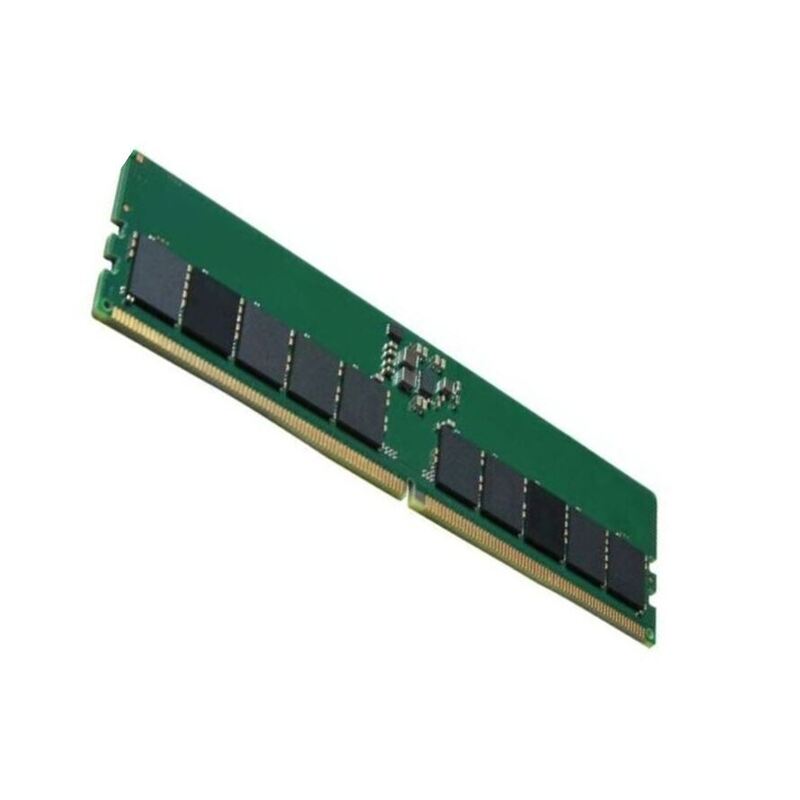
Micron MTA18ASF2G72PDZ-2G6E1 16GB Memory PC4-21300 DDR4 2666MHz ECC Reg 288Pin. New Sealed in Box (NIB) with 3 Year Warranty
| SKU/MPN | Warranty | Price | Condition | You save |
|---|---|---|---|---|
| MTA18ASF2G72PDZ-2G6E1 | 1 Year Warranty | $242.00 | New (System) Pull | You save: $84.70 (26%) |
| MTA18ASF2G72PDZ-2G6E1 | 1 Year Warranty | $339.00 | New Sealed in Box (NIB) | You save: $118.65 (26%) |
Micron DDR4 Registered DIMMs are engineered to deliver superior performance and reliability for demanding computing environments. These high-performance memory modules are designed to meet the needs of modern applications, with optimized speeds, capacity options, and energy efficiency.
The category of ECC Registered DDR4 server memory represents a critical class of components engineered explicitly for system stability, data integrity, and optimal performance in demanding computational environments. Modules like the Micron MTA18ASF2G72PDZ-2G6E1 are not standard consumer memory; they are purpose-built for servers, high-end workstations, storage systems, and networking hardware where uninterrupted operation and error-free data processing are non-negotiable.
DDR4 SDRAM (Double Data Rate 4 Synchronous Dynamic Random-Access Memory) constitutes the fourth generation of DDR technology, offering significant advancements over its predecessor, DDR3. The architecture operates at lower voltages while achieving higher data transfer rates and increased module densities.
Operating at a standard 1.2 volts—a reduction from DDR3's 1.5V—DDR4 modules like the Micron 16GB 2666MHz achieve markedly improved power efficiency. This lower voltage is crucial in data centers where power consumption and heat generation directly impact operational costs and cooling infrastructure requirements.
The "PC4-21300" and "DDR4-2666MHz" specifications define the module's speed. PC4-21300 denotes the peak theoretical bandwidth of approximately 21,300 MB/s (or 21.3 GB/s) in a single module. The "2666MHz" refers to the data transfer rate, meaning 2,666 million transfers per second per pin. This high bandwidth is essential for handling intensive data streams in virtualization, database management, and scientific computing applications.
This memory category is defined by two foundational technologies that differentiate it from unbuffered desktop memory: Error-Correcting Code (ECC) and a Registered (or Buffered) design.
ECC is a non-optional feature for mission-critical systems. It detects and corrects the most common types of internal data corruption. Single-bit errors are corrected on-the-fly, while multi-bit errors are detected and reported, preventing corrupted data from propagating through the system and causing crashes, miscalculations, or data integrity issues. This is paramount in financial modeling, genomic research, and enterprise server environments where a single bit-flip can have significant consequences.
The Micron module incorporates extra memory bits (typically 8 bits for every 64-bit word) to store an encrypted code. When data is written, a code is calculated and stored alongside it. Upon readback, the code is recalculated and compared. A mismatch triggers the correction circuitry to fix the error without any performance lag noticeable to the system.
The "Registered" designation (RDIMM) indicates the presence of a register, or buffer, on the module itself. This buffer sits between the system's memory controller and the DRAM chips. It handles electrical load, refreshing, and signal integrity for the memory chips.
By reducing the electrical load on the memory controller, registered modules enable more stable operation with higher numbers of memory modules per channel and support for higher-density chips. This allows servers to be populated with large total memory capacities—essential for in-memory databases (like SAP HANA) and large-scale virtualization hosts. The dual-rank design of this specific Micron module (two sets of memory chips addressed in turn) further optimizes signal integrity and capacity within a channel.
Every segment of the part number conveys specific technical information about the module's configuration and capabilities.
This is a single 16-gigabyte module. The capacity is achieved using high-density DDR4 SDRAM chips in a specific organization. This density is ideal for expanding system memory in a flexible manner, allowing administrators to scale total system memory by populating available DIMM slots.
The "x8" refers to the data width of the individual DRAM chips (8 bits). These chips are organized on the module to create a "Dual Rank" structure. A rank is an independent set of DRAM chips that can be accessed simultaneously by the memory controller. Dual-rank modules provide a good balance of performance, capacity, and electrical load, often allowing higher speeds and capacities compared to quad-rank modules in the same system.
The CAS Latency (CL) of 19 clock cycles is a measure of the delay between the memory controller requesting data and the data being available. In the context of server memory, while lower latency is beneficial, it is often balanced against other factors like stability, capacity, and overall throughput. The CL19 at 2666MHz represents a standard timing for this class of ECC Registered memory, optimized for reliable operation.
The module uses the standard 288-pin Dual In-line Memory Module (DIMM) layout for DDR4. The physical notch on the connector is in a different position than DDR3, preventing accidental insertion into an incompatible motherboard slot. The design ensures proper mechanical alignment and electrical connection within server-grade memory slots.
This memory category is not universally compatible. It requires a motherboard and CPU platform explicitly designed to support DDR4, ECC functionality, and Registered (RDIMM) modules.
The Micron MTA18ASF2G72PDZ-2G6E1 is engineered for compatibility with server platforms from major OEMs like Dell (PowerEdge), HPE (ProLiant), Lenovo (ThinkSystem), and Cisco (UCS), as well as motherboards based on Intel Xeon Scalable (e.g., Purley, Whitley platforms) or AMD EPYC processors. It is critical to consult the system's qualified vendor list (QVL) to ensure validated compatibility for optimal performance and support.
This type of memory is deployed in scenarios demanding high reliability and large memory pools. Common applications include enterprise servers acting as virtualization hosts (VMware vSphere, Microsoft Hyper-V), file and database servers (Microsoft SQL Server, Oracle DB), mail and collaboration servers, and high-performance computing (HPC) clusters. Its ECC protection makes it unsuitable for consumer desktop platforms, which typically use unbuffered, non-ECC DDR4.
In a server context, performance is evaluated differently than on a desktop. Pure MHz speed is just one factor in a larger equation that includes bandwidth, latency, rank interleaving, and overall system configuration.
Server memory performance scales with the number of populated memory channels. Modern server CPUs typically feature multi-channel memory controllers (e.g., 6 or 8 channels). To achieve peak bandwidth, channels should be populated symmetrically. A single module like this one would operate in a single-channel mode; optimal performance is achieved by installing multiple modules across all available channels, as per the system manufacturer's population guidelines.
The dual-rank design of this module can offer slight performance advantages over single-rank modules in some access patterns due to rank interleaving, which allows one rank to be accessed while another is preparing data. It also represents the most common and widely compatible rank configuration for 16GB and 32GB DDR4 server modules.


 Contact Us
 Information
 Catalog
 Solid State Drives (SSD)
 Network Switches
 Hard Disk Drives
 HBA & Controllers
 PC & Servers
 PC & Server Memory
 CPU & Processors
 Network Routers
 Power Supplies
 Tape Drives & Libraries
 Network Devices
 Computer & Network Cables