
(7% discount is applied at checkout)
Cart is empty
Your go-to destination for cutting-edge server products
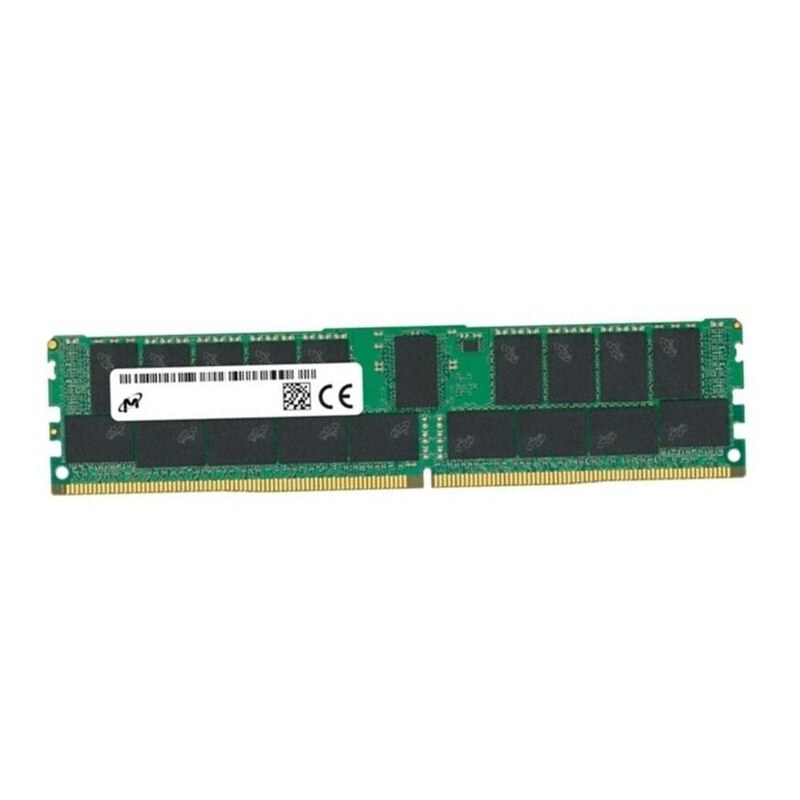
Micron MTA18ASF2G72PZ-3G2R1R 16GB 3200Mhz PC4-25600 CL22 ECC Registered Dual Rank X8 1.2v DDR4 SDRAM 288-pin RDIMM Memory Module. New Sealed in Box (NIB) with 3 Year Warranty
The Micron DDR4 registered memory module is engineered to deliver consistent performance, enhanced stability, and enterprise-level reliability for modern server and workstation platforms. Designed with advanced error correction and registered signal processing, this memory solution is ideal for data-intensive environments that demand accuracy, uptime, and efficiency.
DDR4 ECC Registered (RDIMM) memory modules represent a critical category within enterprise and data center computing environments. Designed to deliver stability, scalability, and long-term reliability, this class of memory is optimized for servers, workstations, and mission-critical systems that operate continuously under demanding workloads. The Micron MTA18ASF2G72PZ-3G2R1R 16GB DDR4-3200 RDIMM belongs to this advanced memory category, emphasizing error correction, signal integrity, and performance consistency across enterprise platforms.
DDR4 SDRAM is the fourth generation of Double Data Rate synchronous dynamic random-access memory, engineered to deliver higher bandwidth and improved power efficiency compared to previous generations. Within server memory categories, DDR4 SDRAM has become the dominant standard due to its balance of speed, capacity scalability, and thermal efficiency. Operating at 1.2 volts, DDR4 RDIMM modules reduce power consumption and heat output, making them suitable for dense server deployments and energy-conscious data centers.
Registered DIMMs introduce a register between the memory controller and the DRAM chips, buffering command and address signals. This design reduces electrical stress on the memory controller, allowing systems to populate more memory modules per channel without compromising signal integrity. RDIMM architecture is a cornerstone of scalable server memory categories, supporting higher capacities and improved stability compared to unbuffered alternatives.The presence of a register enables enterprise platforms to achieve greater memory density while maintaining consistent clock speeds. As server processors continue to evolve with more cores and higher memory demands, RDIMM memory remains the preferred choice for balanced performance and scalability.
Dual rank memory modules, such as those in this category, feature two independent sets of memory banks that can be accessed alternately. This design improves memory efficiency by allowing better utilization of the memory bus, often resulting in improved throughput compared to single-rank configurations.In multi-channel server architectures, dual rank RDIMM modules contribute to enhanced memory interleaving and improved overall system performance. These benefits are particularly noticeable in workloads that involve parallel processing, large datasets, or frequent memory access operations.
The x8 DRAM configuration refers to the data width of each memory chip on the module. In x8-based ECC RDIMM categories, the module uses multiple x8 DRAM chips combined with ECC parity bits to provide robust error correction capabilities. This organization is widely supported across server platforms and aligns with industry best practices for enterprise memory design.Compared to x4 configurations, x8 memory strikes a balance between performance, compatibility, and cost efficiency. It is commonly deployed in general-purpose servers, virtualization hosts, and enterprise workstations.
Operating at 3200MHz, DDR4-3200 RDIMM memory represents the upper tier of DDR4 performance specifications. This frequency provides enhanced bandwidth for data-intensive tasks while maintaining the reliability standards required in enterprise environments. The CL22 latency rating balances responsiveness and stability, ensuring consistent performance under sustained workloads.Within the DDR4 RDIMM category, 3200MHz modules are often selected for modern server platforms that leverage high-core-count processors. These systems benefit from increased memory throughput, reducing bottlenecks and improving overall computational efficiency.
CAS latency (CL22) defines the delay between a memory request and data availability. In enterprise memory categories, latency is optimized alongside stability rather than raw responsiveness. CL22 at 3200MHz delivers predictable timing behavior that supports reliable multi-threaded operations and consistent application performance.Memory timing stability is critical in servers that handle concurrent workloads, virtual machines, and large-scale databases. DDR4 ECC RDIMM modules are engineered to maintain timing accuracy even under high thermal and electrical stress.
With a PC4-25600 rating, this category of memory provides substantial bandwidth to support demanding enterprise workloads. High bandwidth enables faster data transfers between memory and CPU, improving performance in tasks such as data analytics, virtualization, and content delivery services.In multi-channel memory architectures, combining multiple RDIMM modules further increases aggregate bandwidth, allowing systems to scale efficiently as workload demands grow.
Operating at a nominal voltage of 1.2V, DDR4 RDIMM memory reduces power consumption compared to previous DDR generations. Lower voltage operation translates to reduced heat output, contributing to improved thermal management and lower cooling requirements in data center environments.Energy efficiency is a critical factor in large-scale deployments, where cumulative power savings can significantly reduce operational costs over time. This makes DDR4 ECC RDIMM categories attractive for organizations focused on sustainability and cost optimization.
Scalability is a defining attribute of DDR4 ECC Registered memory categories. RDIMM architecture allows systems to support higher total memory capacities by reducing signal loading, making it possible to populate all memory slots without sacrificing stability.This scalability supports future growth, enabling organizations to expand memory resources as application demands increase. DDR4 RDIMM memory remains relevant across multiple server generations, offering long-term value and compatibility.
The 288-pin RDIMM form factor is a standardized physical design used across DDR4 server memory categories. This design ensures secure installation, reliable electrical connectivity, and compatibility with server and workstation motherboards designed for RDIMM modules.The physical layout accommodates additional components such as the register and ECC logic, distinguishing RDIMM modules from unbuffered DIMMs used in consumer systems.
The registered architecture improves signal integrity by buffering command and address lines, reducing noise and timing issues. This stability is essential in high-frequency DDR4-3200 operation, where precise signal timing is critical for reliable data transmission.


 Contact Us
 Information
 Catalog
 Solid State Drives (SSD)
 Network Switches
 Hard Disk Drives
 HBA & Controllers
 PC & Servers
 PC & Server Memory
 CPU & Processors
 Network Routers
 Power Supplies
 Tape Drives & Libraries
 Network Devices
 Computer & Network Cables