
(7% discount is applied at checkout)
Cart is empty
Your go-to destination for cutting-edge server products
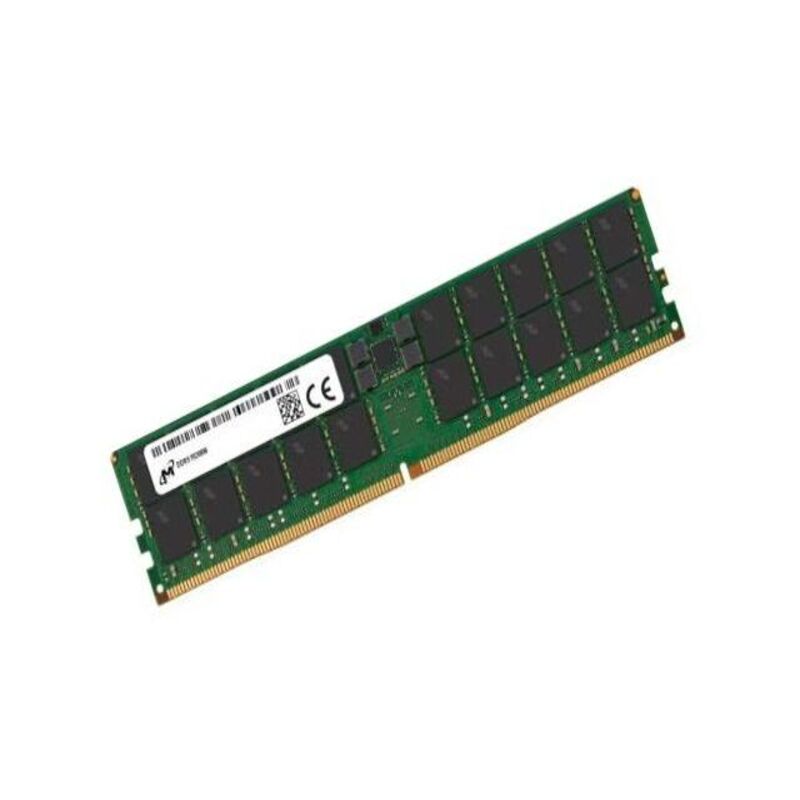
Micron MTA72ASS8G72LZ-2G9J1 64GB PC4-23400 DDR4-2933MHz 288-Pin 1.2V Memory Module. New Sealed in Box (NIB) with 3 Year Warranty
| SKU/MPN | Warranty | Price | Condition | You save |
|---|---|---|---|---|
| MTA72ASS8G72LZ-2G9J1 | 1 Year Warranty | $1,340.00 | New Sealed in Box (NIB) | You save: $469.00 (26%) |
| MTA72ASS8G72LZ-2G9J1 | 1 Year Warranty | $720.00 | New (System) Pull | You save: $252.00 (26%) |
The Micron MTA72ASS8G72LZ-2G9J1 is a high-performance 64GB DDR4-2933MHz ECC registered memory module designed for enterprise-grade servers and workstations. Built with reliability and speed in mind, this component ensures stable operation for demanding applications.
The Micron MTA72ASS8G72LZ-2G9J1 64GB 4Rx4 PC4-23400 DDR4-2933MHz ECC Memory module represents a high-density enterprise-grade memory category engineered for mission-critical server and workstation environments. This category encompasses advanced DDR4 registered ECC memory modules designed to support modern data center workloads, virtualization platforms, cloud infrastructure, and high-performance computing applications. Memory modules within this classification are manufactured to stringent reliability and compatibility standards, ensuring sustained performance under continuous operation and heavy transactional loads.
This category focuses on server memory solutions that prioritize data integrity, scalability, and operational stability. DDR4 ECC registered memory is specifically designed to address the requirements of enterprise systems where uptime, accuracy, and long-term durability are essential. By integrating error correction technology with high-capacity architectures, this memory category supports workloads that demand precision, such as database management, analytics, virtualization, artificial intelligence processing, and enterprise resource planning platforms.
At the core of this category is the 64GB capacity configuration, which enables enterprise systems to handle large datasets and memory-intensive applications efficiently. High-density memory modules reduce the number of DIMM slots required to achieve optimal system capacity, allowing improved airflow, power efficiency, and scalability within server chassis. This capacity level is especially valuable in multi-socket server architectures where maximizing memory per CPU is critical to performance optimization.
The 4Rx4 configuration found in this category refers to a quad-rank design using x4 DRAM chips, a layout commonly deployed in enterprise server environments. This architecture enhances memory parallelism and improves reliability when paired with registered DIMM technology. The quad-rank structure allows for efficient memory addressing and optimized bandwidth utilization across multiple channels, supporting demanding workloads that rely on consistent and predictable memory access patterns.
Registered DIMM, or RDIMM, technology is a defining characteristic of this memory category. RDIMMs include a register between the memory controller and DRAM chips, reducing electrical load on the memory controller. This design allows systems to support higher memory capacities and more populated DIMM configurations without compromising signal integrity or performance stability.
Enterprise server platforms frequently rely on registered memory to maintain stability under high memory densities. The use of RDIMM technology in this category enables support for large-scale deployments, multi-channel memory architectures, and sustained workloads that operate around the clock. This makes the category well-suited for data centers, private clouds, and enterprise IT environments where reliability is non-negotiable.
The DDR4-2933MHz frequency specification defines the performance class of this memory category. Operating at an effective data rate of 2933 megatransfers per second, these modules provide substantial bandwidth improvements over previous DDR generations. The PC4-23400 rating indicates a theoretical bandwidth of 23.4GB per second per module, enabling rapid data transfer between memory and processor.
High-frequency DDR4 memory supports modern CPU architectures that leverage fast memory access to improve overall system performance. Applications such as virtualization, real-time analytics, and large-scale simulations benefit significantly from increased memory bandwidth. This category is optimized to meet the demands of processors designed for DDR4-2933 support, ensuring compatibility and performance alignment with contemporary enterprise hardware platforms.
Memory modules in this category are validated for compatibility with a wide range of modern server processors that support DDR4 registered ECC memory. This includes enterprise-class CPUs designed for scalability, security, and performance. Proper compatibility ensures that memory operates at its rated speed and capacity, avoiding downclocking or configuration issues.
System integrators and IT administrators rely on memory categories such as this to ensure seamless deployment across standardized server platforms. Compatibility testing and adherence to industry standards allow these modules to integrate smoothly into enterprise infrastructures, reducing deployment complexity and maintenance overhead.
Scalability is a defining feature of this memory category. As organizations expand their IT infrastructure, memory requirements often increase to support new applications, users, and data volumes. High-capacity 64GB modules enable systems to scale memory resources efficiently without requiring extensive hardware changes.
This scalability supports a wide range of use cases, from expanding virtualization clusters to enhancing database performance and supporting advanced analytics workloads. By deploying memory modules from this category, organizations can future-proof their systems and adapt to evolving performance and capacity demands.


 Contact Us
 Information
 Catalog
 Solid State Drives (SSD)
 Network Switches
 Hard Disk Drives
 HBA & Controllers
 PC & Servers
 PC & Server Memory
 CPU & Processors
 Network Routers
 Power Supplies
 Tape Drives & Libraries
 Network Devices
 Computer & Network Cables