
(7% discount is applied at checkout)
Cart is empty
Your go-to destination for cutting-edge server products
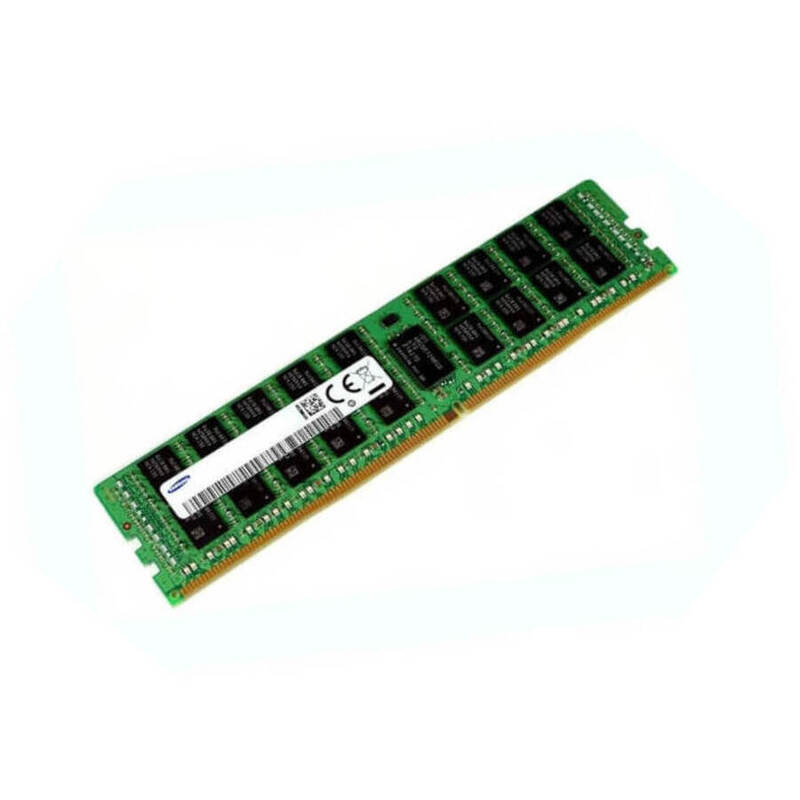
Samsung M393A8G40MB2-CVFBY 64GB Memory 2933MHZ SDRAM DDR4 PC4-23400 Cl21 Ecc Registered. New Sealed in Box (NIB) with 3 Years Warranty
| SKU/MPN | Warranty | Price | Condition | You save |
|---|---|---|---|---|
| M393A8G40MB2-CVFBY | 1 Year Warranty | $950.00 | New (System) Pull | You save: $332.50 (26%) |
| M393A8G40MB2-CVFBY | 1 Year Warranty | $1,099.00 | New Sealed in Box (NIB) | You save: $384.65 (26%) |
The Samsung M393A8G40MB2-CVFBY Memory is a powerful memory module that offers a massive capacity of 64GB. With such a large capacity, this memory module is perfect for users who require high-performance computing and storage capabilities.
One of the key benefits of the 64GB capacity is the ability to handle intensive multitasking with ease. Whether you are running multiple applications simultaneously, working with large datasets, or editing high-resolution multimedia files, this memory module provides you with the necessary space to handle these tasks without any performance issues.
Understanding Samsung's part number nomenclature provides immediate insight into the module's core specifications. The string "M393A8G40MB2-CVFBY" is not arbitrary; it is a detailed blueprint. "M" signifies a memory module. "393" indicates it is a registered DIMM (RDIMM) intended for servers. "A8" denotes a 64GB capacity. "G40" refers to the component organization and data width. "M" stands for 1.2V DDR4 voltage. "B2" specifies the revision. The suffix "CVFBY" is particularly crucial: "C" represents the generation (DDR4), "VF" indicates 2933Mbps speed, "B" signifies CL21 timings, and "Y" confirms it is an ECC RDIMM. This alphanumeric code is a compact technical datasheet, ensuring precise identification for compatibility and procurement.
The module offers a substantial 64GB capacity in a single stick. This high-density design is essential for maximizing memory capacity per memory channel on the server motherboard, allowing for greater total system memory with fewer populated slots. The "2Rx4" designation is a key architectural feature. "2R" means dual-rank, indicating the module's DRAM chips are organized into two independent sets (ranks) that the memory controller can address alternately, improving efficiency over single-rank modules. "x4" refers to the data width of the individual DRAM chips, meaning they have 4 data bits per chip. This x4 configuration is fundamental for supporting advanced error correction as it enables the dedicated ECC (Error-Correcting Code) bits. This structure is optimal for servers where data integrity and large memory pools are non-negotiable.
The dual-rank (2R) design of this module strikes an excellent balance between performance, density, and electrical load. While not as performant as single-rank modules in some ultra-low latency scenarios, dual-rank modules provide better bandwidth utilization by allowing the memory controller to interleave operations between the two ranks, hiding precharge and activation delays. This leads to more efficient pipeline usage on the memory bus. In a server environment where many modules are used concurrently across multiple channels, this design supports sustained high throughput essential for parallel workloads.
Performance in server memory is defined by the interplay of frequency, latency, and power draw. This module is engineered to deliver a robust balance suitable for data center deployment.
The module operates at a data rate of 2933 million transfers per second, expressed as 2933Mbps or MT/s. This is also commonly labeled under its standardized PC4 (Pin Count 4 for DDR4) designation: PC4-23400. The number "23400" is derived from the module's theoretical peak bandwidth in megabytes per second (MB/s). Calculating this involves multiplying the transfer rate (2933 MT/s) by the module's data width in bytes (64 bits = 8 bytes). 2933 * 8 = approximately 23,464 MB/s, rounded to the marketing term PC4-23400. This high bandwidth is critical for feeding multi-core processors, reducing bottlenecks in data-intensive tasks, and ensuring smooth operation of memory-hungry applications.
While speed dictates how fast data can be transferred, latency measures the delay before a transfer begins. The primary latency metric is CAS Latency (CL), which for this module is CL21. This means it takes 21 clock cycles for the memory to deliver a requested column of data after receiving the column address. At 2933Mbps, the actual time in nanoseconds is calculated. With a clock cycle time of approximately 0.68 nanoseconds (ns) for 2933Mbps, a CL21 translates to a real-world latency of about 14.3 ns. This CL21 timing is typical and optimized for high-density, high-speed server modules, prioritizing stability and capacity alongside responsive performance.
The module operates at the standard DDR4 voltage of 1.2 volts, a significant reduction from the 1.5V common in DDR3 technology. This lower voltage is a cornerstone of DDR4's efficiency improvements, directly reducing the power consumption and heat output of the memory subsystem. For data centers operating thousands of servers, even a fractional watt reduction per memory module aggregates to substantial operational cost savings (OPEX) and a lower thermal footprint, enhancing overall data center power usage effectiveness (PUE).
What truly distinguishes server memory from standard desktop memory are the embedded features for fault tolerance and signal integrity. The Samsung M393A8G40MB2-CVFBY incorporates two critical technologies: Error-Correcting Code (ECC) and a Registered (Buffered) design.
ECC is a non-optional feature for enterprise servers. It detects and corrects the most common types of data corruption in real-time. Single-bit errors (where one bit flips state) are corrected automatically without any system interruption. Multi-bit errors (two or more bits in the same word) are detected and reported to the system, which can then initiate a preventative shutdown or alert. This hardware-level data integrity is vital for preventing silent data corruption, which could lead to computational errors, database corruption, or application crashes in financial, scientific, and transactional systems.
The "x4" DRAM chip configuration is intrinsically linked to the ECC function. A standard non-ECC 64-bit module uses sixty-four 8-bit (x8) chips. For ECC, an additional 8 bits are needed for the error-correcting code, creating a 72-bit wide data path. Using x4 chips naturally provides this width: with eighteen chips (each contributing 4 bits), you achieve exactly 72 bits (18 x 4 = 72). This elegant arrangement allows the ECC logic to function with optimal granularity, protecting data at the chip level and ensuring maximum reliability.
This module is a Registered DIMM (RDIMM). Unlike unbuffered DIMMs (UDIMMs) that place a direct electrical load on the server's memory controller, an RDIMM incorporates a register (or buffer) on the module itself. This register sits between the memory controller and the DRAM chips. It buffers the command and address signals, reducing the electrical load on the memory controller. This allows a server system to support a much greater number of memory modules per channel (typically up to 3 RDIMMs vs. 2 UDIMMs) and higher total capacities without signal degradation. The trade-off is an additional clock cycle of latency due to the buffering process, a cost overwhelmingly justified in server environments by the gains in capacity and system stability.
The module adheres to strict industry-standard dimensions and pin configurations to ensure broad compatibility within its intended ecosystem.
The module utilizes a 288-pin edge connector, the standard for all DDR4 DIMMs. The pin layout and key notch position are specifically defined for RDIMMs, preventing accidental insertion into a motherboard slot designed for unbuffered (UDIMM) or load-reduced (LRDIMM) memory. The pinout includes all necessary signals for data (including ECC bits), address, control, and the Serial Presence Detect (SPD) EEPROM, which stores the module's specifications for automatic configuration by the system BIOS/UEFI.
The Samsung M393A8G40MB2-CVFBY is designed for enterprise servers from major OEMs like Dell EMC (PowerEdge), HPE (ProLiant), Lenovo (ThinkSystem), Cisco (UCS), and Supermicro, as well as custom whitebox server builds. It is compatible with server platforms powered by Intel Xeon Scalable Processors (Purley platform and later, e.g., Skylake, Cascade Lake) and AMD EPYC processors that support DDR4-2933 RDIMMs. It is critical to always consult the server manufacturer's memory qualified vendor list (QVL) or system-specific compatibility guide to confirm this exact part number is validated for a given server model. Mixing memory modules of different speeds, ranks, or densities can lead to the system downclocking to a lower common speed or failing to boot.
The combination of high density, robust speed, and enterprise-grade reliability makes this memory module suitable for a wide array of demanding workloads.
In virtualized environments, physical servers host multiple virtual machines (VMs). Each VM requires an allocation of RAM. High-density 64GB modules allow server administrators to populate a system with enormous total memory (e.g., 1TB or more in a dual-processor system), enabling a high VM density per host. This improves consolidation ratios, reduces hardware footprint, and optimizes software licensing costs. The ECC feature is paramount here to protect the integrity of multiple, disparate workloads running on a single physical machine.
Applications like SAP HANA, Oracle Database In-Memory, and various big data frameworks (e.g., Apache Spark) leverage vast amounts of system RAM to hold active datasets for ultra-low latency processing. The speed of DDR4-2933 facilitates rapid data access, while the 64GB capacity per module allows for the construction of large, contiguous in-memory pools. ECC ensures the analytical results and transactional data remain uncorrupted, which is critical for business intelligence and real-time decision-making systems.
HPC clusters solving complex computational problems in fields like computational fluid dynamics, genomic sequencing, and climate modeling require not only powerful CPUs but also high-memory bandwidth and capacity. The PC4-23400 bandwidth of this module helps feed data-hungry processors, and the large capacity supports massive datasets. The reliability offered by ECC and registered design ensures long-running simulations and calculations are not undermined by soft memory errors, which could invalidate days or weeks of computation.
Placing this specific module in context with other server memory types clarifies its optimal use case.
While both are buffered, Load-Reduced DIMMs (LRDIMMs) use an additional buffer on the data lines (not just the address/command lines) to further reduce electrical load. This allows for even higher capacities (e.g., 128GB per module at the time of DDR4) and more modules per channel. However, LRDIMMs typically have slightly higher latency and cost. The Samsung M393A8G40MB2-CVFBY RDIMM is the performance and value-optimized choice for mainstream high-density deployments where ultimate per-channel capacity is not the sole requirement.
Server memory speed is often dictated by the processor generation and system architecture. DDR4-2933 represents a high-performance tier for mainstream Intel Xeon Scalable and AMD EPYC platforms. Compared to slower modules, it provides approximately a 10% bandwidth increase over 2666Mbps and a 22% increase over 2400Mbps. This directly translates to faster data processing for memory-bound applications. However, the system will operate all memory at the speed of the slowest installed module, so consistent speed across all slots is recommended.


 Contact Us
 Information
 Catalog
 Solid State Drives (SSD)
 Network Switches
 Hard Disk Drives
 HBA & Controllers
 PC & Servers
 PC & Server Memory
 CPU & Processors
 Network Routers
 Power Supplies
 Tape Drives & Libraries
 Network Devices
 Computer & Network Cables