
(7% discount is applied at checkout)
Cart is empty
Your go-to destination for cutting-edge server products
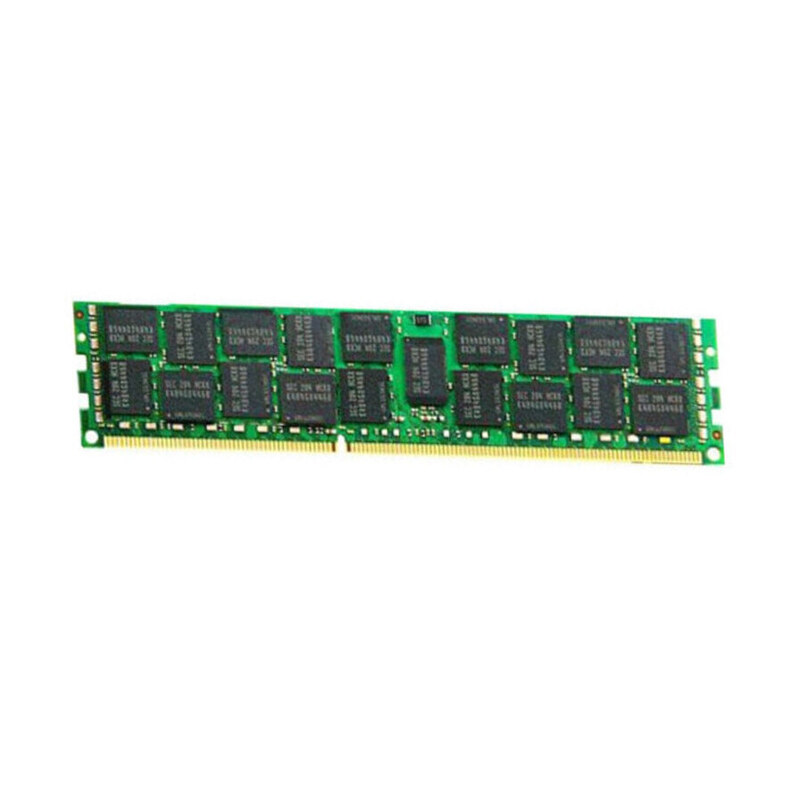
Supermicro MEM-DR412MC-ER32 128GB 3200MHz PC4-25600 CL22 ECC Registered Quad Rank x4 1.2V DDR4 SDRAM 288-Pin RDIMM RAM. New Sealed in Box (NIB) - Samsung Version
| SKU/MPN | Warranty | Price | Condition | You save |
|---|---|---|---|---|
| MEM-DR412MC-ER32 | 1 Year Warranty | $1,560.00 | New (System) Pull | You save: $546.00 (26%) |
| MEM-DR412MC-ER32 | 1 Year Warranty | $2,099.00 | New Sealed in Box (NIB) | You save: $734.65 (26%) |
The Supermicro MEM-DR412MC-ER32 is a high-capacity DDR4 SDRAM memory module designed for enterprise-grade performance and reliability. With advanced ECC technology and quad-rank architecture, this module ensures stability and efficiency for demanding workloads.
High-capacity server memory modules play a crucial role in modern enterprise computing environments. The Supermicro MEM-DR412MC-ER32 128GB 3200MHz PC4-25600 CL22 ECC Registered Quad Rank x4 1.2V DDR4 SDRAM 288-Pin RDIMM RAM represents a category of advanced server memory designed to deliver exceptional reliability, scalability, and performance for demanding workloads. This category focuses on enterprise-grade DDR4 Registered DIMM (RDIMM) memory modules engineered specifically for professional servers, virtualization infrastructures, data centers, and high-performance computing systems.
The growing complexity of modern enterprise workloads has dramatically increased the demand for reliable and high-capacity system memory. From virtualization hosts running dozens of virtual machines to big data platforms processing massive datasets, server memory modules such as the Supermicro MEM-DR412MC-ER32 are designed to ensure stability, data integrity, and consistent performance. With a massive 128GB capacity per module, this type of memory belongs to the high-density RDIMM category that enables servers to scale memory resources efficiently while maintaining optimal operational reliability.
The category of 128GB DDR4 ECC Registered RDIMM memory modules includes hardware engineered specifically for enterprise servers and professional computing platforms. Unlike consumer-grade memory, registered DIMMs incorporate additional circuitry that improves signal integrity and stability when large numbers of memory modules are installed in a server motherboard. This design allows servers to operate with extremely high memory capacities without compromising reliability.
DDR4 RDIMM memory modules in this category typically operate at advanced speeds such as 3200MHz, delivering significant improvements in bandwidth compared to previous generations. The PC4-25600 specification indicates a theoretical bandwidth of 25.6 GB/s per module, enabling servers to process complex workloads efficiently. The combination of high speed, large capacity, and ECC error correction makes this memory category essential for mission-critical systems where performance and reliability must coexist.
Memory modules with 128GB capacity are designed for enterprise-level servers that require large amounts of RAM to handle advanced workloads. This capacity tier is commonly used in high-density computing environments such as virtualization clusters, cloud infrastructure nodes, in-memory databases, and large-scale data analytics platforms.
Servers equipped with multiple 128GB RDIMM modules can easily reach terabytes of total memory capacity. This makes it possible for organizations to run memory-intensive applications without experiencing bottlenecks caused by insufficient RAM. The category of 128GB DDR4 RDIMM modules therefore supports infrastructure scalability while maintaining system stability and efficiency.
One of the defining characteristics of this memory category is the 3200MHz operating speed. DDR4 memory running at 3200MHz provides a balance between high performance and energy efficiency. In server environments where large volumes of data are constantly processed, higher memory frequency translates into improved data throughput and reduced latency for memory operations.
The PC4-25600 classification represents the module’s maximum data transfer rate, which reaches up to 25.6 GB per second. For enterprise workloads such as virtualization or database management systems, this level of bandwidth ensures that processors receive data quickly and efficiently. As modern CPUs feature multiple cores and threads, high-speed memory modules are essential to prevent bottlenecks between the processor and memory subsystem.
Error Correcting Code (ECC) technology is one of the most important features of enterprise memory modules. ECC memory is capable of detecting and correcting single-bit memory errors that may occur during normal system operation. These errors can be caused by electrical interference, cosmic radiation, or other environmental factors that affect semiconductor components.
In mission-critical systems such as financial databases, scientific computing environments, or cloud platforms, data corruption can lead to serious operational issues. ECC memory ensures that errors are automatically corrected before they impact system performance or data accuracy. This reliability makes ECC RDIMM modules the preferred choice for enterprise servers and professional workstation environments.
ECC memory adds additional parity bits to each data word stored in RAM. These bits allow the memory controller to detect and correct errors during data retrieval. When a single-bit error occurs, the ECC algorithm identifies the corrupted bit and reconstructs the correct value automatically. This process happens transparently without interrupting system operations.
The presence of ECC technology significantly improves system uptime and reduces the risk of unexpected crashes caused by memory errors. For organizations that rely on continuous server availability, the ECC feature is an essential component of enterprise memory solutions.
Registered DIMM architecture is specifically designed to support systems with a large number of memory modules. In RDIMM memory, a register chip sits between the memory controller and the DRAM chips on the module. This register buffers memory commands and addresses, reducing the electrical load on the memory controller.
By buffering signals, RDIMM modules allow servers to maintain stable operation even when many DIMMs are installed simultaneously. This capability is essential for enterprise systems that require high memory capacity. The registered design enables improved scalability compared to unbuffered DIMM modules commonly used in consumer PCs.
RDIMM modules are optimized for servers that run continuously under heavy workloads. The register chip ensures cleaner signal transmission and helps maintain timing accuracy across the memory bus. As a result, RDIMM memory modules provide higher reliability when operating in multi-DIMM configurations.
Enterprise servers often support dozens of DIMM slots, and RDIMM technology makes it possible to populate those slots without causing signal degradation. This is one of the main reasons why registered memory is widely used in data centers and enterprise computing environments.
The quad rank x4 design found in high-density RDIMM modules represents a specialized memory architecture that maximizes storage capacity while maintaining high performance. In a quad rank configuration, the memory module contains four sets of DRAM ranks that can be accessed independently by the memory controller.
Each rank acts as a separate block of memory that can be addressed individually. This structure improves memory interleaving and allows the controller to optimize data access patterns. The x4 organization refers to the width of the DRAM chips used in the module, which contributes to improved error correction capabilities and better reliability in ECC environments.
Quad rank memory modules provide higher capacity compared to dual rank or single rank alternatives. This design enables a single DIMM slot to hold significantly more memory, which is particularly valuable in servers with limited DIMM slots per CPU channel.
Additionally, quad rank architecture enhances performance in certain workloads by allowing the memory controller to interleave operations across multiple ranks. This improves efficiency and helps maintain high throughput in memory-intensive applications.
Power efficiency is a major consideration in large-scale data center deployments. DDR4 memory modules operating at 1.2V provide improved energy efficiency compared to older DDR3 modules that typically required 1.5V or higher. Lower operating voltage reduces overall power consumption and heat generation within the server system.
For data centers that deploy thousands of servers, even small reductions in power consumption per component can lead to significant energy savings over time. Efficient memory modules contribute to lower operational costs and support environmentally sustainable computing practices.
Reduced voltage also leads to improved thermal characteristics. Servers running high-density memory configurations generate considerable heat, and effective thermal management is essential for maintaining hardware longevity. DDR4 RDIMM modules designed for 1.2V operation produce less heat, allowing cooling systems to operate more efficiently.
This characteristic becomes increasingly important in high-density server racks where airflow and cooling capacity are limited. Lower heat output helps maintain stable operating temperatures and reduces the likelihood of thermal throttling.
The 288-pin RDIMM form factor is the standard physical interface used by DDR4 server memory modules. This configuration ensures compatibility with modern server motherboards designed to support DDR4 memory technology. The pin layout provides the electrical connections necessary for data transmission, power delivery, and signal communication between the memory module and the motherboard.
Server manufacturers design their platforms to support specific types of memory modules, and the 288-pin RDIMM format ensures seamless integration with compatible systems. Proper compatibility ensures that the memory module operates at its intended speed and performance levels.
The standardized 288-pin interface allows IT administrators to upgrade server memory with minimal complexity. As long as the server platform supports DDR4 RDIMM modules and the appropriate capacity specifications, administrators can install additional modules to expand memory resources.
This flexibility makes high-capacity RDIMM memory an ideal upgrade solution for organizations looking to enhance server performance without replacing existing hardware infrastructure.
Virtualization platforms rely heavily on large memory pools to run multiple virtual machines simultaneously. Each virtual machine requires dedicated RAM resources to operate efficiently, and servers hosting dozens of virtual machines must provide sufficient memory capacity to avoid performance bottlenecks.
High-density memory modules allow virtualization hosts to allocate memory resources effectively across multiple workloads. This improves consolidation ratios and allows organizations to maximize the efficiency of their hardware infrastructure.
Enterprise databases benefit significantly from large memory capacities. In-memory database technologies store active datasets directly in RAM rather than relying solely on disk storage. This dramatically improves query performance and reduces latency for data retrieval operations.
Servers equipped with high-capacity RDIMM modules can maintain large portions of their database in memory, allowing applications to access information quickly and efficiently. This capability is essential for organizations that rely on real-time data processing.
Scientific research, engineering simulations, and artificial intelligence workloads often require substantial memory resources. High-performance computing systems depend on large memory pools to process complex algorithms and analyze massive datasets.
128GB RDIMM modules allow HPC systems to scale memory capacity to meet the demands of computational workloads. The combination of high capacity and fast DDR4 speeds ensures that processors can access data efficiently during large-scale computations.


 Contact Us
 Information
 Catalog
 Solid State Drives (SSD)
 Network Switches
 Hard Disk Drives
 HBA & Controllers
 PC & Servers
 PC & Server Memory
 CPU & Processors
 Network Routers
 Power Supplies
 Tape Drives & Libraries
 Network Devices
 Computer & Network Cables