
(7% discount is applied at checkout)
Cart is empty
Your go-to destination for cutting-edge server products
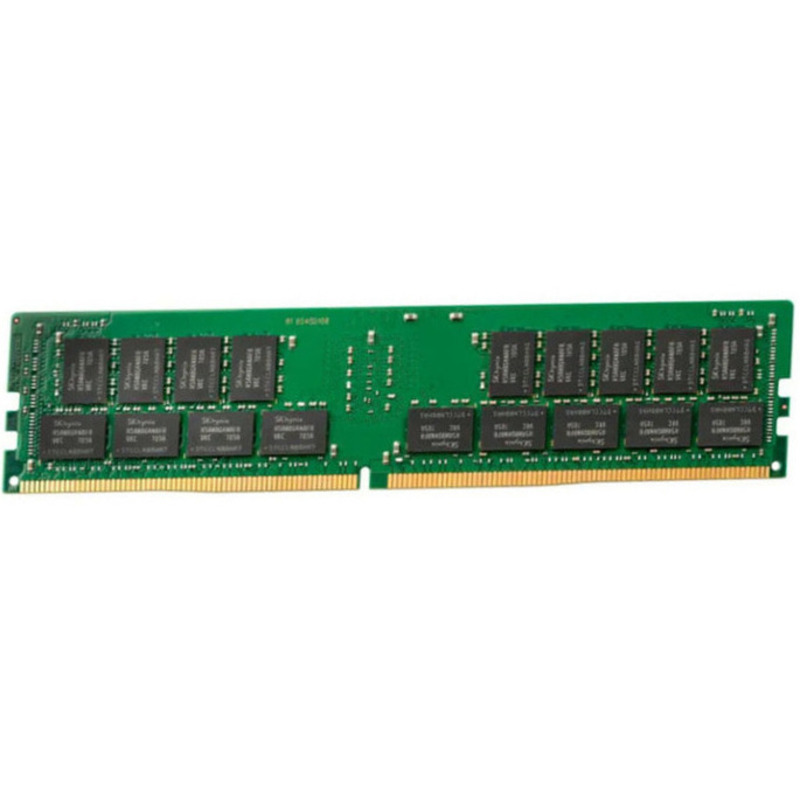
Supermicro MEM-DR416L-CL06-ER32 16GB DDR4 3200MHz PC4-25600 ECC Registered RDIMM 2Rx8 CL22 Memory Module. New Sealed in Box (NIB) with 3 Year Warranty - Micron Version
The Supermicro MEM-DR416L-CL06-ER32 is a high-performance 16GB DDR4 3200MHz PC4-25600 ECC Registered RDIMM memory module designed for enterprise-grade servers. This advanced module ensures reliability, speed, and efficiency for demanding workloads.
The Supermicro MEM-DR416L-CL06-ER32 16GB DDR4 3200MHz PC4-25600 ECC Registered RDIMM 2Rx8 CL22 memory module represents a highly reliable and performance-driven solution designed specifically for enterprise-grade servers and data center environments. This category of memory modules is engineered to meet the increasing demands of modern computing workloads, including virtualization, database management, cloud computing, artificial intelligence, and high-performance computing. Built with precision and strict quality standards, this module ensures seamless integration with compatible server motherboards and delivers consistent performance under heavy workloads.
With the growing complexity of server operations, memory plays a critical role in maintaining system efficiency and responsiveness. The Supermicro MEM-DR416L-CL06-ER32 stands out due to its advanced ECC Registered architecture, high frequency operation, and optimized latency, making it suitable for mission-critical applications where uptime and data integrity are paramount. Its 16GB capacity provides a balanced configuration for scaling server performance without compromising stability.
DDR4 technology has become the standard for modern server memory due to its improved bandwidth, energy efficiency, and scalability compared to previous generations. Operating at a speed of 3200MHz, this memory module significantly enhances data transfer rates, enabling faster processing and reduced latency across applications. The PC4-25600 classification indicates a peak bandwidth of 25.6GB/s, which is essential for handling data-intensive workloads efficiently.
Compared to DDR3, DDR4 offers lower operating voltage, typically around 1.2V, which reduces power consumption and heat generation. This is particularly beneficial in large-scale data centers where energy efficiency directly impacts operational costs. Additionally, DDR4 modules support higher density configurations, allowing servers to scale memory capacity without requiring additional hardware.
The 3200MHz frequency of the Supermicro MEM-DR416L-CL06-ER32 ensures faster data access and improved system responsiveness. Higher memory speeds reduce bottlenecks in data processing pipelines, which is crucial for applications such as real-time analytics, virtualization, and high-frequency trading platforms. The increased bandwidth allows CPUs to access data more quickly, improving overall system throughput.
In environments where multiple virtual machines run simultaneously, faster memory ensures smooth performance and minimizes latency issues. This makes the module particularly suitable for cloud infrastructure providers and enterprise IT departments managing virtualized workloads.
The ECC Registered RDIMM design is one of the defining features of this memory module. ECC, or Error-Correcting Code, is a technology that detects and corrects single-bit memory errors, preventing data corruption and system crashes. This capability is essential in server environments where data accuracy and system stability are critical.
Registered DIMMs, also known as buffered memory, include a register that reduces the electrical load on the memory controller. This allows servers to support more memory modules per channel, increasing overall capacity without compromising performance. The combination of ECC and Registered architecture ensures that the Supermicro MEM-DR416L-CL06-ER32 delivers both reliability and scalability.
Data integrity is a fundamental requirement in enterprise computing environments. Memory errors, even minor ones, can lead to data corruption, application failures, or system downtime. ECC memory continuously monitors and corrects errors in real time, ensuring that data remains accurate and consistent.
This level of reliability is particularly important in industries such as finance, healthcare, and telecommunications, where data accuracy is critical. The Supermicro MEM-DR416L-CL06-ER32 provides peace of mind by minimizing the risk of memory-related issues and ensuring uninterrupted operation.
The 2Rx8 configuration refers to the dual-rank design of the memory module, with each rank consisting of x8 data width chips. This configuration strikes a balance between performance and capacity, allowing efficient data access and improved parallelism. Dual-rank modules can provide better performance in certain workloads compared to single-rank modules, as they allow interleaving between ranks.
The organization of memory chips plays a significant role in determining performance characteristics. The 2Rx8 layout ensures optimal compatibility with a wide range of server platforms while maintaining high efficiency in data handling. This makes the module suitable for various enterprise applications.
Dual-rank memory modules offer improved performance by enabling memory controllers to access one rank while the other is being refreshed. This parallelism reduces idle time and increases overall efficiency. In high-demand environments, this translates to faster data processing and improved system responsiveness.
Additionally, dual-rank modules often provide better compatibility with server motherboards, making them a versatile choice for system upgrades and expansions.
CAS latency, measured as CL22 in this module, represents the delay between a memory controller request and the availability of data. While higher frequencies often come with slightly increased latency, the overall performance gain from higher bandwidth typically outweighs the latency difference. The CL22 latency of the Supermicro MEM-DR416L-CL06-ER32 is optimized for stability and performance in server environments.
Latency optimization is crucial for applications that require fast data retrieval, such as database queries and real-time processing. The balance between speed and latency ensures that this module delivers consistent performance across various workloads.
Achieving the right balance between speed and latency is essential for maximizing server performance. While lower latency is desirable, higher memory speeds can significantly improve overall throughput. The 3200MHz frequency combined with CL22 latency provides an optimal configuration for modern server applications.
This balance ensures that the memory module can handle both high-speed data transfers and efficient data access, making it suitable for diverse workloads.
The Supermicro MEM-DR416L-CL06-ER32 is designed to be compatible with a wide range of server platforms, particularly those that support DDR4 ECC Registered memory. It is commonly used in enterprise servers, workstations, and data center systems that require high reliability and performance.
Compatibility is a critical factor when selecting memory modules, as mismatched components can lead to system instability. This module is engineered to meet industry standards, ensuring seamless integration with supported hardware configurations.
As a product from Supermicro, this memory module is optimized for use with Supermicro server motherboards. It undergoes rigorous testing to ensure compatibility and performance within Supermicro systems. This integration provides users with a reliable and efficient solution for upgrading or building server infrastructure.
Using certified memory modules helps maintain system stability and ensures that servers operate at peak performance levels.
Data centers rely heavily on high-performance memory to support their operations. The Supermicro MEM-DR416L-CL06-ER32 provides the necessary performance and reliability to handle large-scale workloads. Its ECC Registered architecture ensures data integrity, while its high speed supports efficient data processing.
Cloud infrastructure providers benefit from the scalability and efficiency of this memory module, allowing them to deliver reliable services to their customers.
Scalability is an important factor in server memory selection. The Supermicro MEM-DR416L-CL06-ER32 allows systems to expand memory capacity as needed, supporting future growth and increasing workload demands. Its compatibility with high-density configurations ensures that servers can scale efficiently.
Future-proofing is achieved through the use of advanced DDR4 technology and industry-standard specifications. This ensures that the module remains relevant and compatible with evolving server architectures.


 Contact Us
 Information
 Catalog
 Solid State Drives (SSD)
 Network Switches
 Hard Disk Drives
 HBA & Controllers
 PC & Servers
 PC & Server Memory
 CPU & Processors
 Network Routers
 Power Supplies
 Tape Drives & Libraries
 Network Devices
 Computer & Network Cables