(7% discount is applied at checkout)
Cart is empty
Your go-to destination for cutting-edge server products
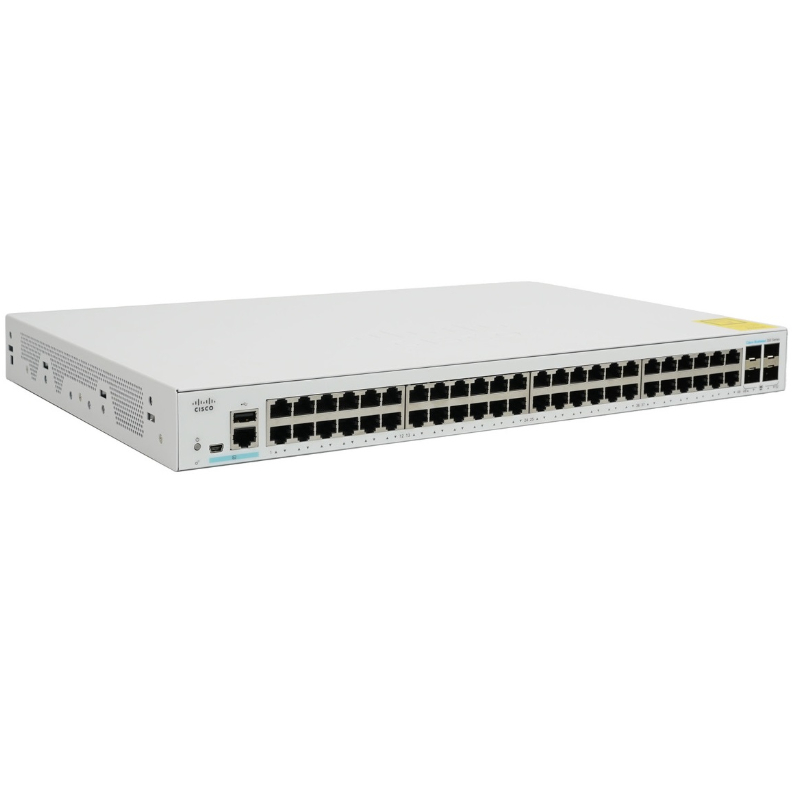


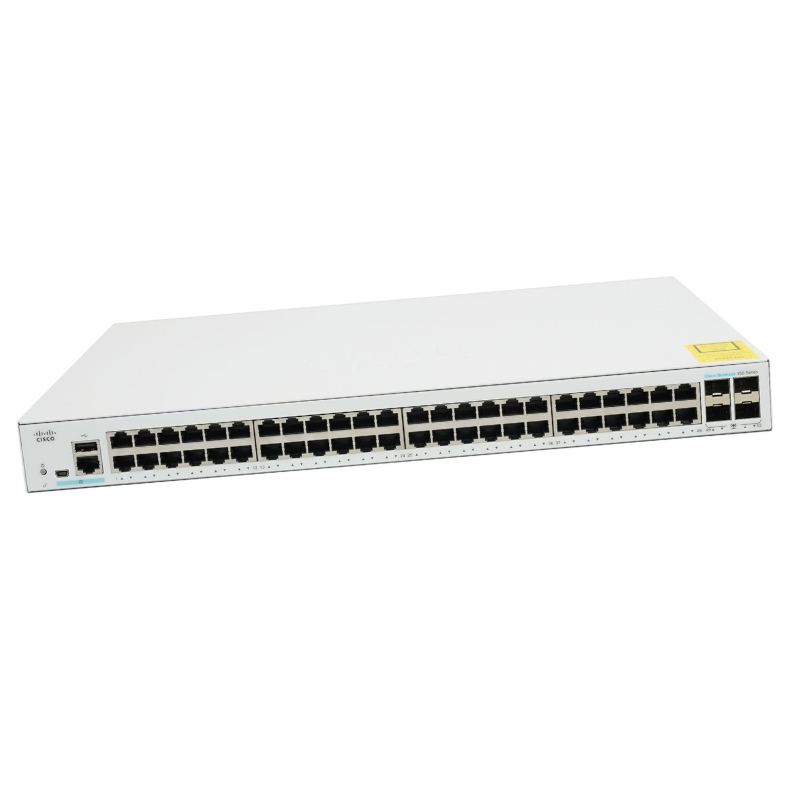
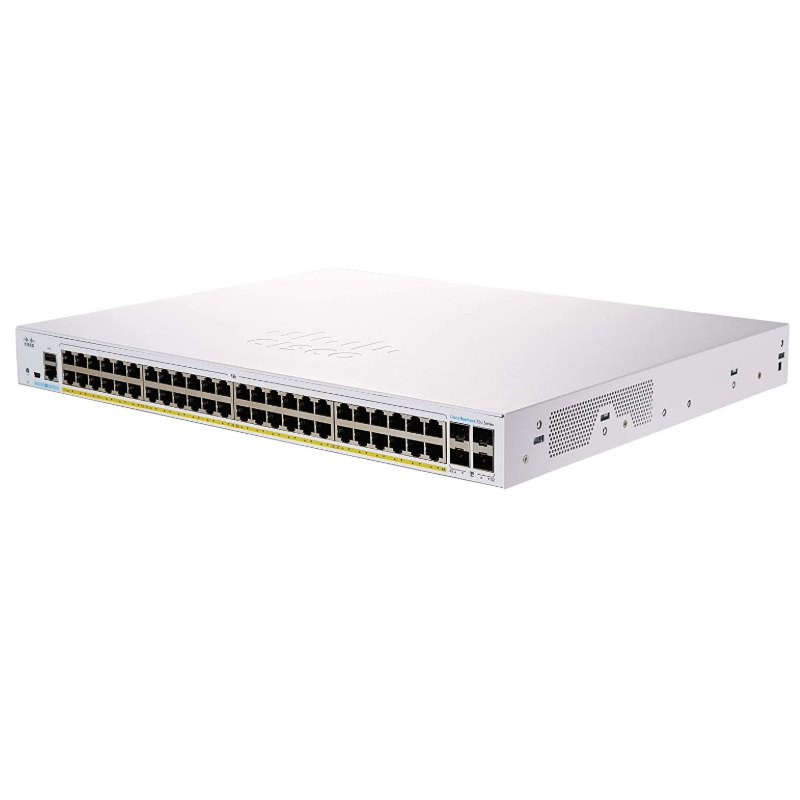
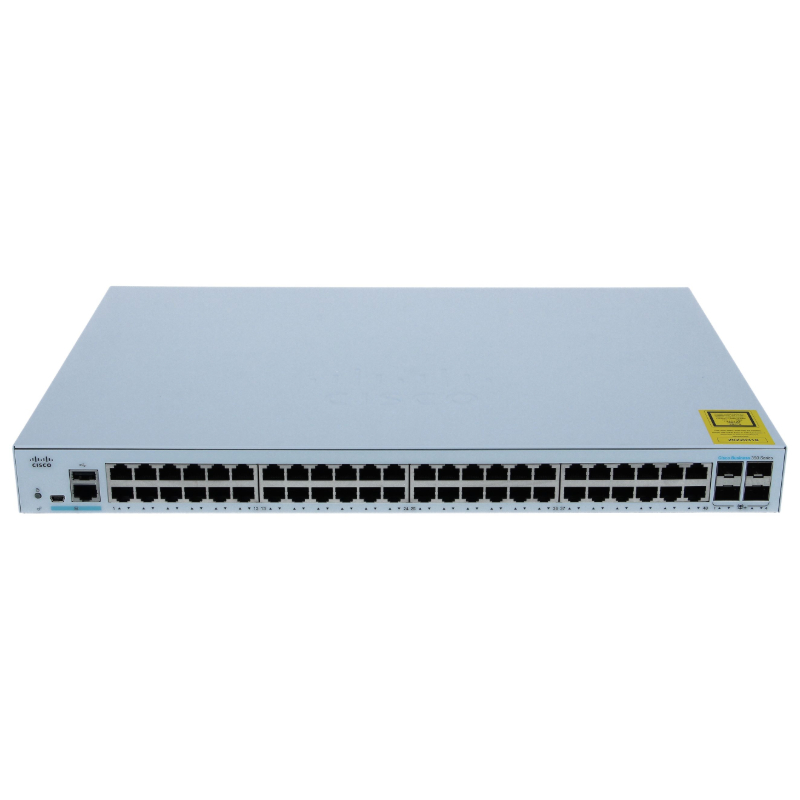
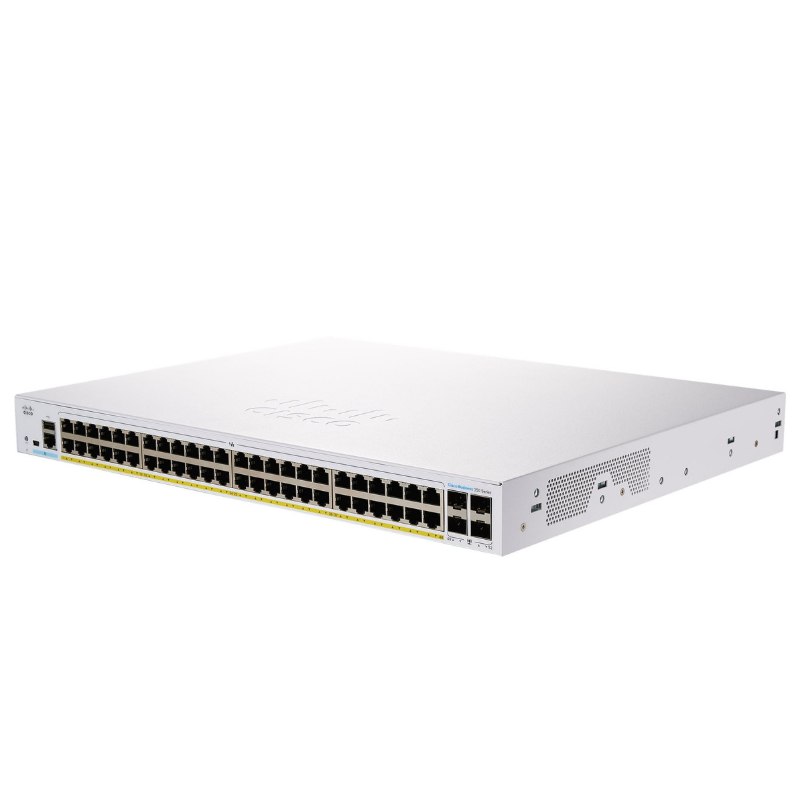
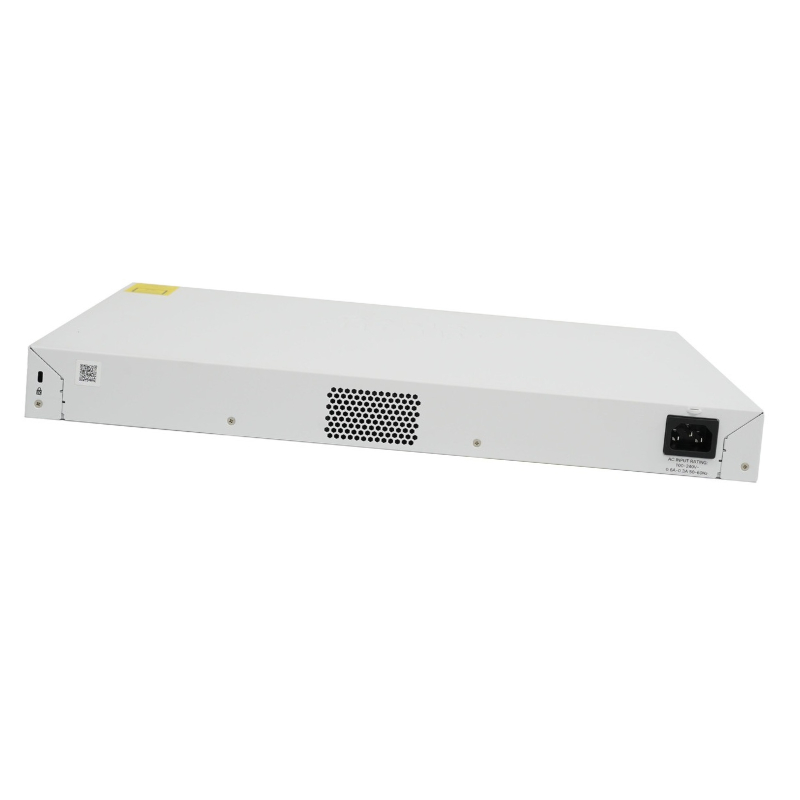
Cisco CBS350-48T-4X-NA 350 CBS350-48T-4X 48 Ports Manageable 2 Layer Ethernet Switch. Factory-Sealed New in Original Box (FSB) with 1 year replacement warranty
| SKU/MPN | Warranty | Price | Condition | You save |
|---|---|---|---|---|
| CBS350-48T-4X-NA | 1 Year Warranty | $925.00 | Excellent Refurbished | You save: $323.75 (26%) |
| CBS350-48T-4X-NA | 1 Year Warranty | $1,730.00 | Factory-Sealed New Retail in Original Box (FSB) | You save: $605.50 (26%) |
The Cisco CBS350-48T-4X-NA is a high-performance, Layer 3 managed switch engineered for businesses seeking dependable connectivity, enhanced security, and efficient network control. Designed with 48 Gigabit Ethernet ports and 4 high-speed 10G SFP+ uplinks, it supports modern workloads, scalable topologies, and optimized traffic handling across diverse environments.
Built for reliability, this rack-mountable switch offers a robust chassis suitable for enterprise cabinets and professional network layouts.
This model supports widely used routing standards, enabling efficient packet distribution across complex networks.
Supports a wide range of IEEE standards including 802.3, 802.1Q, 802.1X, 802.3ab, 802.3ae, 802.3x, 802.3ad (LACP), 802.1p, 802.1s, 802.1w, 802.1ab, 802.3an, 802.3az, and more, ensuring broad compatibility across advanced networking ecosystems.
The Cisco CBS350-48T-4X-NA 350 series 48 ports manageable 2-layer Ethernet switch represents a class of business-grade access and aggregation switches designed for small to medium-sized enterprises, branch offices, and campus edge deployments that require enterprise features without the complexity of a full data center platform. This category page focuses on the CBS350-48T-4X-NA model and its closely related subcategory devices, describing design intent, operational benefits, management approaches, performance expectations, and deployment patterns. Emphasis is placed on the switch’s role as a reliable network building block that balances throughput, manageability, and predictable interoperability in multi-vendor or Cisco-centric networks. The content below is written to help buyers, network planners, and integrators understand how this 48-port switch fits into modern access-layer architectures and to highlight the attributes that make it appropriate for use as an access or aggregation switch in business environments.
The CBS350-48T-4X-NA category is engineered for organizations that need a solid mix of port density and uplink flexibility while retaining centralized management capabilities. Typical use cases include office floor connectivity where dozens of wired endpoints such as desktop systems, VoIP handsets, wireless access points, and small servers must be aggregated into a single network segment. Another common scenario is branch or remote office consolidation, where an on-site IT team expects enterprise-level functionality—VLAN segmentation, secure management, access control lists, and quality of service—without the cost and configuration overhead of an advanced modular switch. The switch is also well suited for converged access environments where voice, video, and data coexist and where administrators require deterministic performance and predictable QoS behavior.
Purchasing a CBS350-48T-4X-NA-class switch category delivers tangible business benefits through reduced operational complexity, improved security at the network edge, and longevity of deployment. From a return-on-investment perspective, the category provides a high port count in a compact form factor, consolidating connections that otherwise would require multiple smaller switches. The availability of multiple high-speed uplinks simplifies network design by enabling direct connections to distribution or core layers and by reducing the need for intermediate aggregation devices. Energy-efficient design, when present in a product family, lowers ongoing operating costs, and firmware support/updates extend product life and protect the investment. When evaluating total cost of ownership, decision makers should consider the minimized downtime due to robust management features and the decreased administrative workload thanks to centralized configuration options.
At the heart of this switch category is an emphasis on manageable Layer 2 functionality paired with advanced features that were once only found in higher-tier product lines. The "48T" nomenclature in the model name highlights its 48 copper Ethernet ports, which handle the majority of edge connectivity requirements. The "4X" suffix indicates the presence of multiple high-speed uplink ports, giving network architects the necessary bandwidth to interconnect with a distribution layer or to support uplink redundancy. This combination of many access ports with a handful of uplinks is ideal for environments where edge-to-core traffic patterns require both capacity and resilience.
The category emphasizes robust Layer 2 switching capabilities including VLAN support for logical segmentation, dynamic link aggregation for bandwidth scaling and redundancy, and multicast handling for video and conferencing traffic. Administrators get predictable behavior for MAC learning and forwarding, plus controls to mitigate common access-layer issues such as broadcast storms and network loops. The switches in this family typically include intelligent forwarding features to prioritize latency-sensitive traffic and to maintain session persistence for critical applications.
Quality of Service is a central capability when voice and video traffic share the same physical infrastructure as regular data. The category includes mechanisms to classify, mark, and prioritize traffic so that voice and collaboration services maintain low latency, jitter, and packet loss characteristics. Multiple queues per port, configurable scheduling algorithms, and CoS/DSCP mapping capabilities allow administrators to implement QoS policies aligned with business priorities. Effective QoS design reduces user impact from congestion and enables consistent application performance even during peak usage.
Security at the access layer is non-negotiable for modern networks, and the CBS350-48T-4X-NA category addresses this need with a suite of features that enable both preventive and detective controls. Role-based access, 802.1X port authentication, and MAC-based access control furnish flexible methods for authenticating users and devices. Access control lists (ACLs) at Layer 2 through Layer 3 boundaries permit granular enforcement of traffic policies. The switches also commonly support secure management protocols, such as HTTPS and SSH, to protect administrative sessions. Network segmentation using VLANs, plus private VLAN or port isolation techniques where available, helps prevent lateral movement by unauthorized devices.
Lifecycle management of switch firmware is crucial for security and stability. This category encourages administrators to implement a disciplined firmware update cadence and to use images that support secure boot and verified firmware to reduce the risk of tampering. Centralized management platforms or out-of-band management consoles allow operators to schedule and apply updates across many switches, streamlining patching and compliance activities. Vendor-supplied release notes and security advisories should be reviewed regularly to align firmware updates with organizational risk tolerance and maintenance windows.
The access switch category is central to converged infrastructures that carry voice, wireless, and IoT traffic alongside traditional data flows. Integration with enterprise wireless systems is simplified when the switch provides Power over Ethernet in applicable models, inline power management, and automated VLAN assignment for wireless client traffic. Voice deployments benefit from dedicated voice VLANs and LLDP-MED or CDP support for endpoint classification and automatic provisioning. The switch category enables unified communication services to coexist with business applications on a single wired fabric while maintaining the performance and isolation requirements of each service type.
Modern applications such as unified communications, video conferencing, and cloud-based collaboration place unique demands on the edge. This category supports the predictable low-latency forwarding necessary for these experiences through careful buffer management, QoS configuration, and prioritization of real-time traffic. For cloud-first architectures, the switch edge often functions as a bridge between local user devices and cloud-based services, making consistent policy enforcement and secure egress controls important considerations.
Enterprise edges increasingly host a diverse set of connected devices beyond traditional computers: access control systems, IP cameras, environmental sensors, and other IoT endpoints. These devices often have differing traffic patterns, security postures, and power requirements. The category provides tools to segment and secure these devices while offering the necessary connectivity options for both powered and non-powered devices. Administrators should plan network segmentation and apply access controls tailored to the device class to reduce attack surfaces and to manage bandwidth consumption effectively.
Physical considerations impact both operational simplicity and long-term maintainability. The CBS350-48T-4X-NA category generally shares standard 1U rack form factors, clear front-panel port labeling, and accessible management interfaces. Rack planning should account for cable routing, airflow, and power provisioning. Proper cabling practices, including the use of labeled patch panels and color-coded cables for different services or VLANs, simplify day-to-day maintenance and speed troubleshooting. When installing multiple switches, ensure adequate spacing for ventilation and follow vendor recommendations for ambient temperature and humidity.
Understanding power consumption and cooling needs is essential for reliable operation. Although some switches in similar families may offer power provisioning options, the 48-port copper variants typically consume a modest amount of AC power relative to larger chassis-based systems. When planning racks and closets, factor in the aggregate power draw of all devices, include redundancy for power supplies where offered, and ensure that cooling systems can sustain the expected heat load. Proper cable management also contributes to effective airflow, preventing hotspots that can lead to early hardware failure.
Securing the physical location of access switches complements network-level security controls. Ensure that wiring closets are locked, that cabinets are monitored, and that access is controlled through established procedures. Where available, enable chassis-level protections, such as secure console access and password policies, to prevent unauthorized configuration changes. The combination of physical and logical protections reduces the likelihood of internal threats and improves the integrity of network operations.


 Contact Us
 Information
 Catalog
 Solid State Drives (SSD)
 Network Switches
 Hard Disk Drives
 HBA & Controllers
 PC & Servers
 PC & Server Memory
 CPU & Processors
 Network Routers
 Power Supplies
 Tape Drives & Libraries
 Network Devices
 Computer & Network Cables