(7% discount is applied at checkout)
Cart is empty
Your go-to destination for cutting-edge server products
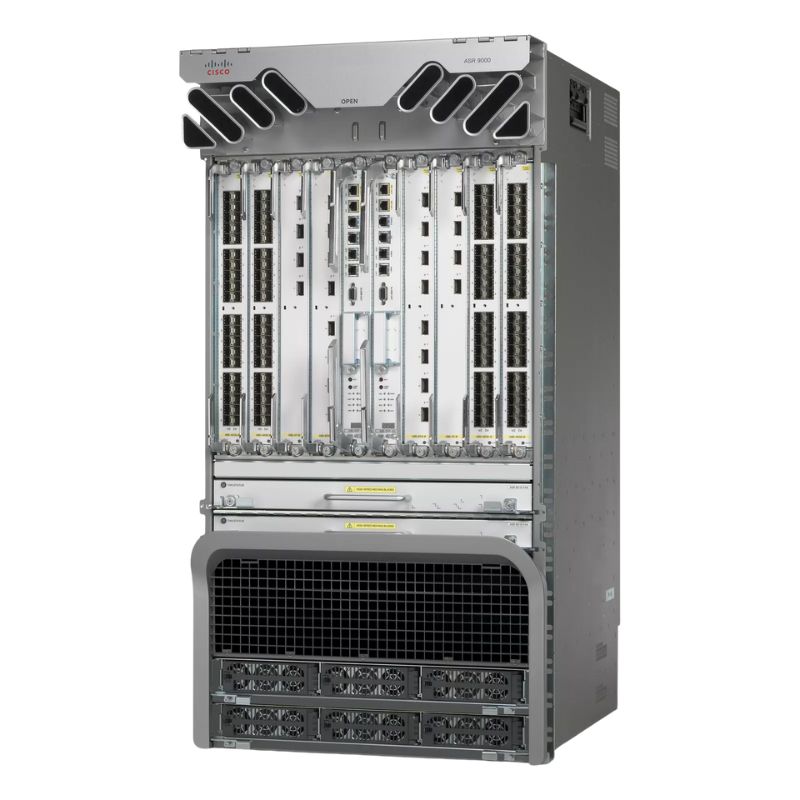


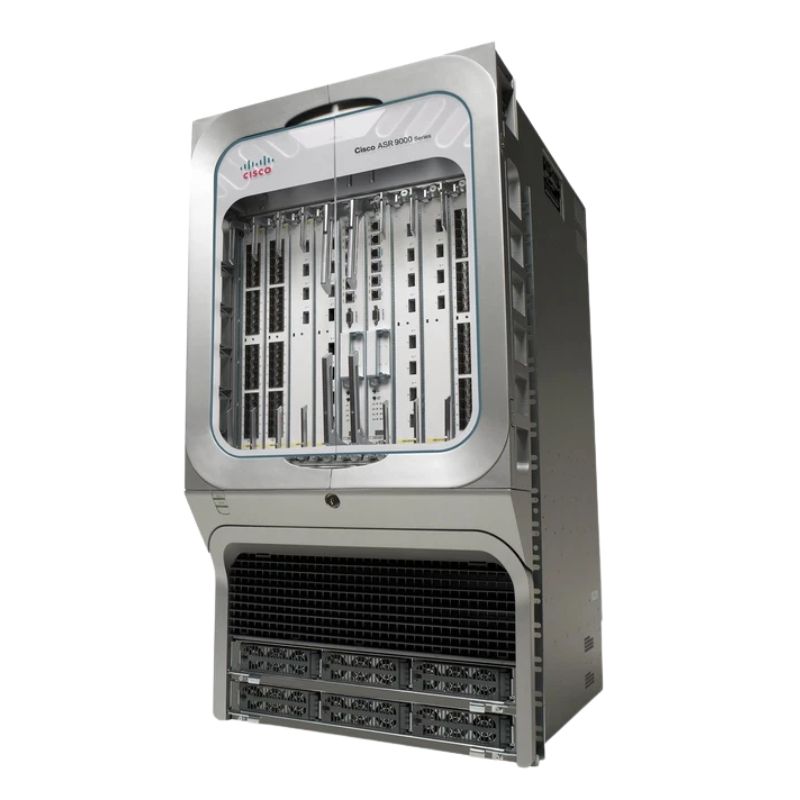
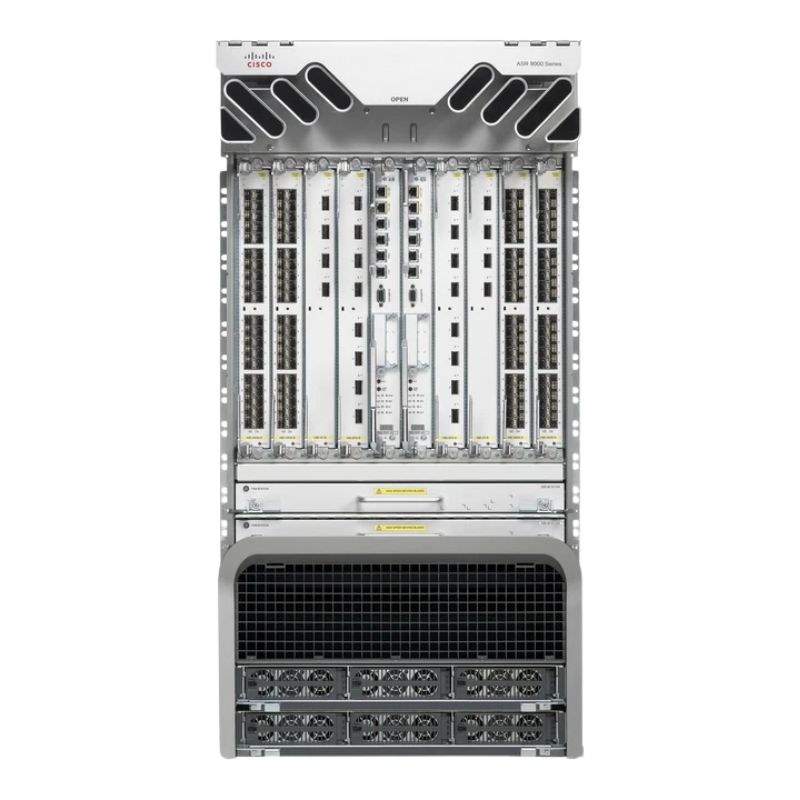
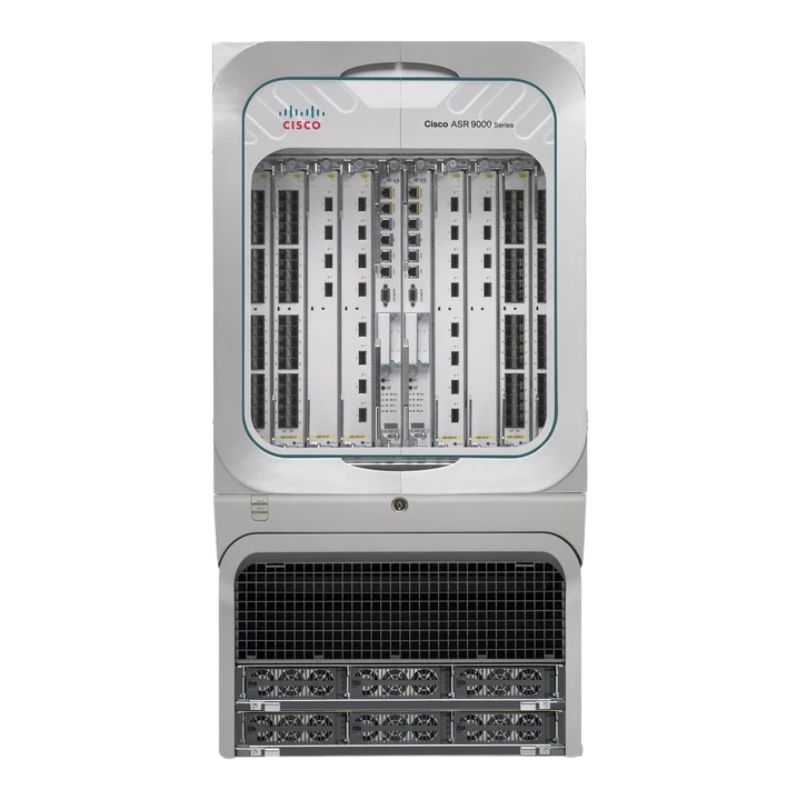
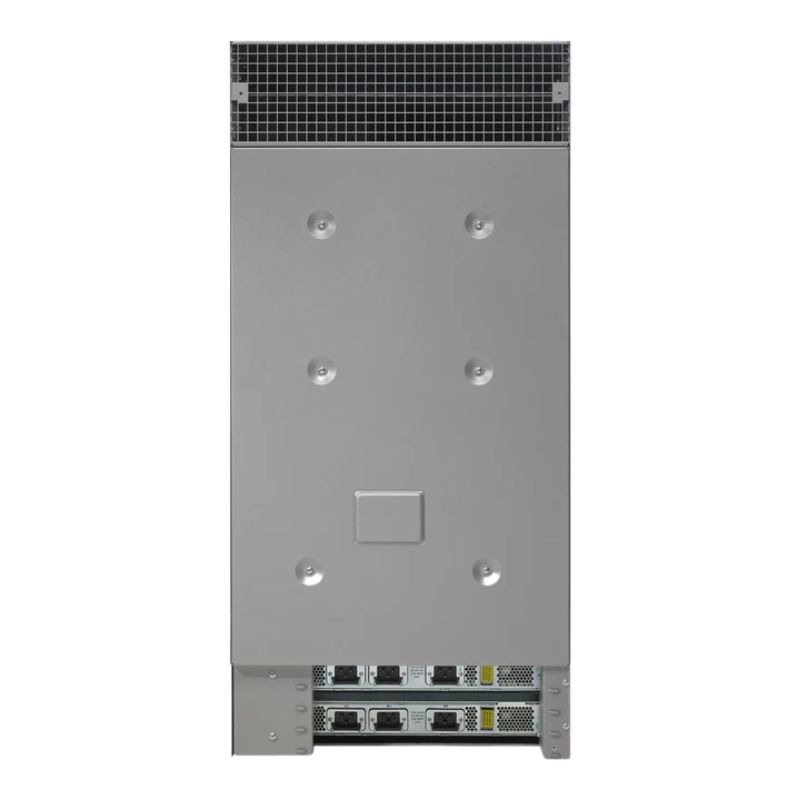
Cisco ASR-9010-AC-V2 Aggregation Services Router 9010 Chassis. Excellent Refurbished with 1 year replacement warranty
The Cisco ASR-9010-AC-V2 is a robust Aggregation Services Router chassis engineered for scalability, redundancy, and carrier-grade networking. With modular slots, advanced power systems, and Cisco IOS XR software, it is designed to meet the demands of large-scale service provider infrastructures.
The Cisco ASR-9010-AC-V2 Aggregation Services Router 9010 Chassis represents a high-capacity, carrier-grade routing platform engineered for service provider networks, large enterprise WAN aggregation, and mission-critical core infrastructure deployments. Designed within the Cisco Aggregation Services Router (ASR) portfolio, the ASR 9010 chassis delivers advanced scalability, modular expansion capabilities, and resilient system architecture that supports modern IP/MPLS backbones and next-generation internet edge services.
As a chassis-based routing system, the Cisco ASR-9010-AC-V2 provides a flexible foundation for integrating route processors, line cards, fabric modules, and redundant power systems, enabling operators to build highly available and performance-optimized network environments. The AC V2 variant enhances power efficiency and operational stability, making it suitable for high-density data routing applications and large-scale aggregation layers in telecom and ISP infrastructures.
The Cisco ASR-9010 chassis is built around a modular architecture that separates control, forwarding, and service functions into independent components. This design enables service providers to scale bandwidth, processing capability, and feature sets without replacing the entire system. The chassis supports redundant route processors and distributed forwarding engines, ensuring continuous operation even during hardware maintenance or unexpected failures.
The internal architecture is optimized for deterministic performance, allowing predictable throughput under high traffic loads. This is essential in environments where network reliability and uptime are critical, such as metropolitan aggregation points, internet exchange nodes, and carrier backbone intersections.
The ASR-9010-AC-V2 variant introduces improved alternating current power supply design with enhanced energy efficiency and load balancing capabilities. The power subsystem is engineered to support redundant configurations, ensuring uninterrupted operation in case of power module failure. This redundancy is essential for telecom-grade deployments where downtime directly impacts service-level agreements.
The chassis power architecture is optimized to distribute load evenly across internal components, reducing thermal stress and improving long-term hardware reliability. Intelligent power management mechanisms continuously monitor system consumption and adjust distribution dynamically based on operational load.
The Cisco ASR-9010-AC-V2 is designed to support extremely high forwarding capacity, making it suitable for aggregation of large-scale broadband, mobile backhaul, and enterprise traffic. The system supports distributed forwarding across multiple line cards, enabling parallel processing of network traffic and reducing bottlenecks at the chassis level.
This architecture allows service providers to efficiently manage increasing bandwidth demand driven by cloud computing, video streaming, IoT connectivity, and 5G mobile networks. The platform can be expanded incrementally, allowing network operators to scale capacity without disruptive infrastructure replacement.
The chassis supports a variety of interface modules and service line cards, allowing customization based on network requirements. These modules enable support for Ethernet, MPLS, and high-speed transport interfaces, providing flexibility for both legacy network integration and next-generation IP services.
Each line card operates independently with localized processing capabilities, reducing latency and improving traffic handling efficiency. This distributed processing model ensures consistent performance even under heavy traffic congestion scenarios.
The Cisco ASR-9010-AC-V2 supports advanced routing protocols including Border Gateway Protocol (BGP), Open Shortest Path First (OSPF), Intermediate System to Intermediate System (IS-IS), and Multiprotocol Label Switching (MPLS). These protocols enable the router to function effectively in complex, multi-domain network environments.
MPLS support allows for traffic engineering, enabling service providers to optimize routing paths based on bandwidth availability, latency requirements, and service priorities. This capability is particularly important for delivering differentiated services such as voice, video, and high-priority enterprise data.
The control plane architecture of the ASR 9010 is engineered to handle large-scale routing tables and frequent updates without compromising system stability. Redundant route processors ensure continuous operation and seamless failover, minimizing disruptions during maintenance or hardware events.
This resilience is critical in backbone environments where routing table sizes can exceed millions of entries, requiring efficient memory management and high-speed computation for convergence operations.
The Cisco ASR-9010-AC-V2 is widely deployed in service provider core networks where it functions as a high-capacity aggregation point. It consolidates traffic from multiple access networks, including broadband DSL, fiber-to-the-home (FTTH), mobile networks, and enterprise WAN links.
By aggregating diverse traffic streams, the chassis enables efficient bandwidth utilization and simplifies core network design. This reduces operational complexity while improving overall network performance and manageability.
In mobile network architectures, the ASR-9010-AC-V2 plays a critical role in transporting traffic between radio access networks and core mobile switching systems. It supports high-throughput, low-latency forwarding required for LTE and 5G deployments.
The system's ability to handle large volumes of real-time traffic makes it suitable for supporting ultra-reliable low-latency communication services and enhanced mobile broadband applications.
Large enterprises use the ASR 9010 chassis as a WAN aggregation and edge routing platform, connecting branch offices, data centers, and cloud environments. The system supports secure and efficient data transport across geographically distributed infrastructures.
Its scalability allows enterprises to adapt to increasing data demands driven by digital transformation, hybrid cloud adoption, and distributed application architectures.
The Cisco ASR-9010-AC-V2 incorporates redundant route processors and switch fabric modules to ensure continuous system availability. In the event of a component failure, backup modules automatically take over operations without service interruption.
This redundancy is a key requirement for carrier-grade environments where downtime can result in significant financial and operational impact. The architecture ensures seamless failover and state synchronization between active and standby components.
The ASR-9010-AC-V2 supports advanced Quality of Service mechanisms that allow administrators to prioritize traffic based on application type, service level agreements, and business requirements. This ensures that critical services receive necessary bandwidth and low latency even during peak usage periods.
Traffic classification and scheduling are handled at both hardware and software levels, providing deterministic performance for voice, video, and mission-critical data applications.
Traffic engineering capabilities allow network operators to control the flow of data through the network based on predefined policies. This enables optimal utilization of available bandwidth while avoiding congestion and network bottlenecks.
The integration of MPLS traffic engineering ensures that data paths are dynamically adjusted based on real-time network conditions, improving efficiency and reliability across the infrastructure.
The Cisco ASR-9010-AC-V2 incorporates multiple layers of security features designed to protect network infrastructure from unauthorized access and malicious traffic. These include access control mechanisms, routing authentication, and control plane protection features.
Security policies can be applied at different levels of the network stack, ensuring comprehensive protection across both data and control planes.
The platform supports virtualization technologies that allow multiple logical routers to operate on a single physical chassis. This enables service providers to segment network services for different customers or applications while maintaining isolation and security.
Virtual routing instances improve operational efficiency and allow flexible service deployment without additional hardware investment.
The Cisco ASR-9010-AC-V2 is frequently deployed in data center interconnect scenarios where high-bandwidth, low-latency connectivity is required between geographically distributed facilities. The chassis ensures reliable transport of large-scale data flows across backbone networks.
In ISP environments, the ASR 9010 serves as a backbone aggregation platform, connecting regional networks to core internet infrastructure. Its scalability and resilience make it suitable for handling fluctuating traffic loads associated with consumer and enterprise internet usage.
The platform supports convergence of multiple service types including internet access, voice communication, video streaming, and cloud connectivity. This consolidation reduces infrastructure complexity while improving operational efficiency and service delivery consistency.


 Contact Us
 Information
 Catalog
 Solid State Drives (SSD)
 Network Switches
 Hard Disk Drives
 HBA & Controllers
 PC & Servers
 PC & Server Memory
 CPU & Processors
 Network Routers
 Power Supplies
 Tape Drives & Libraries
 Network Devices
 Computer & Network Cables