(7% discount is applied at checkout)
Cart is empty
Your go-to destination for cutting-edge server products
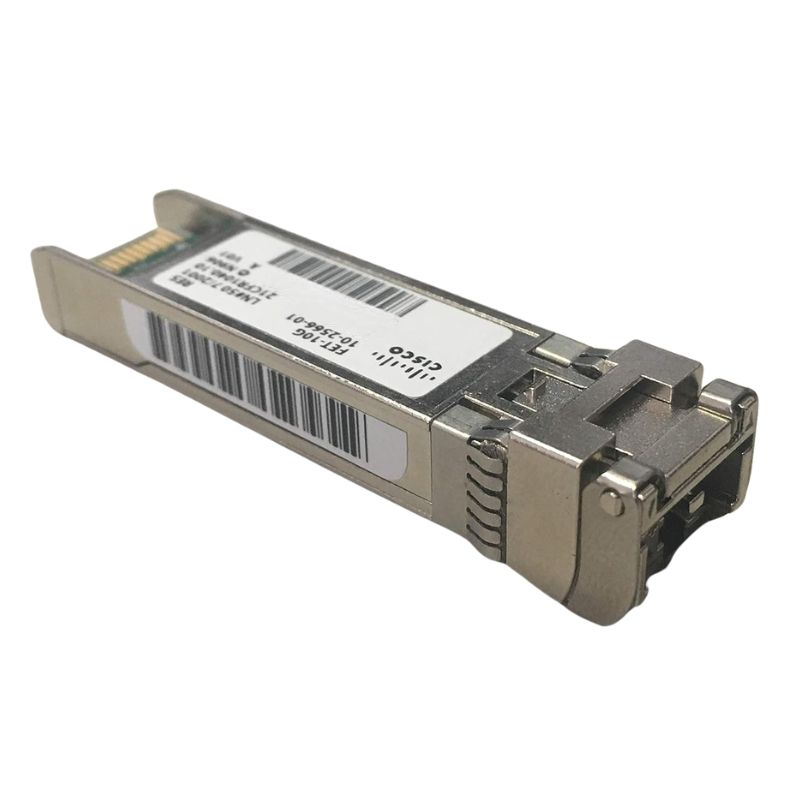


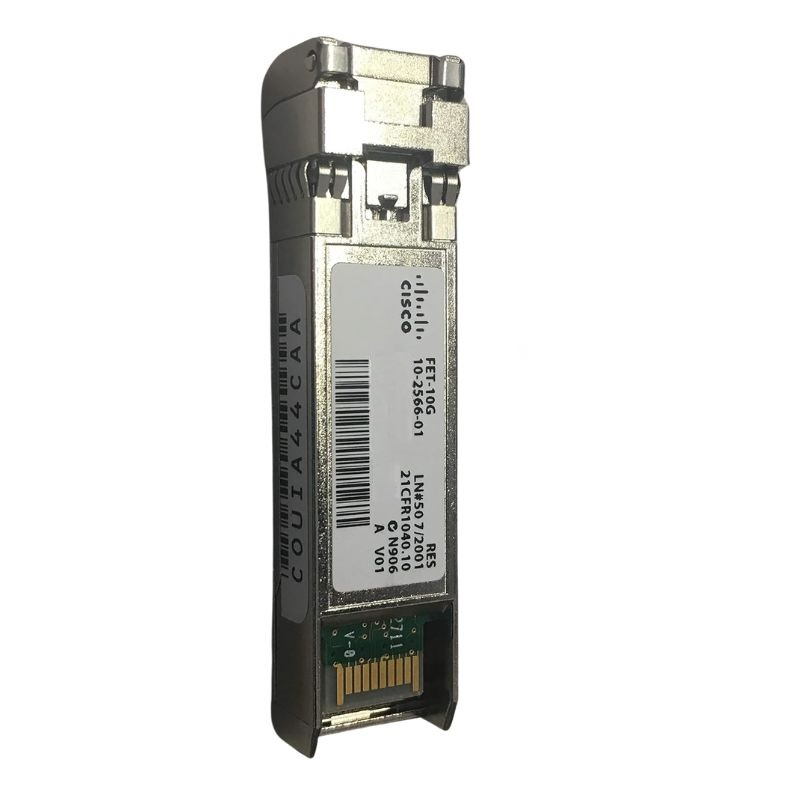
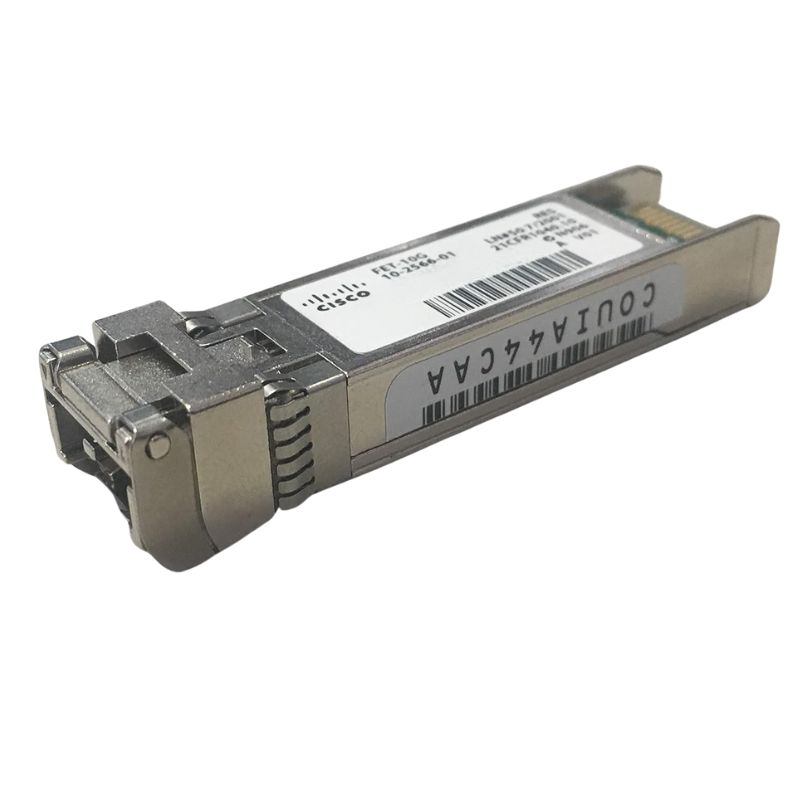
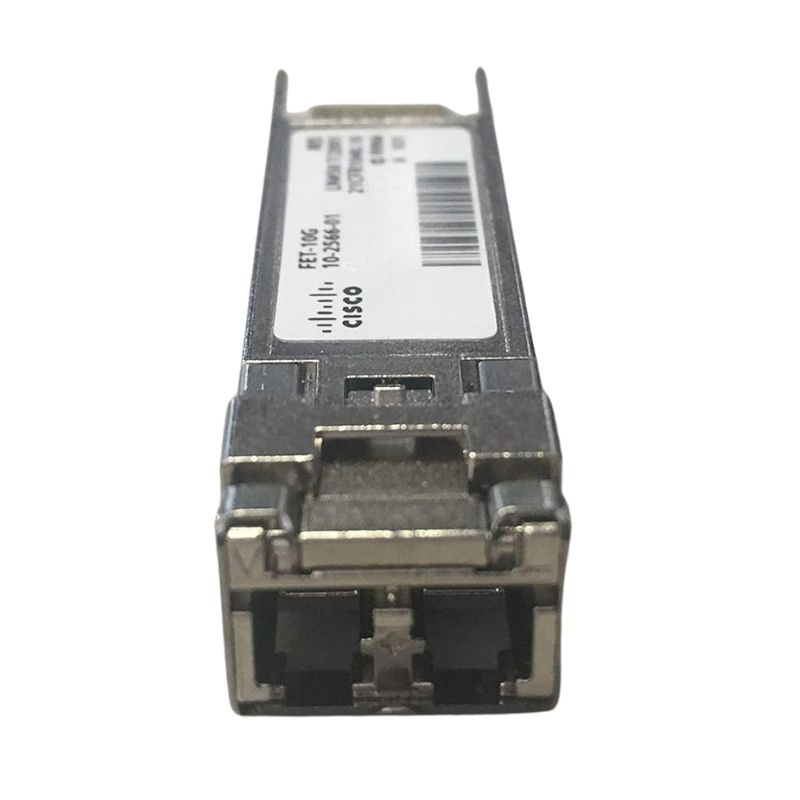
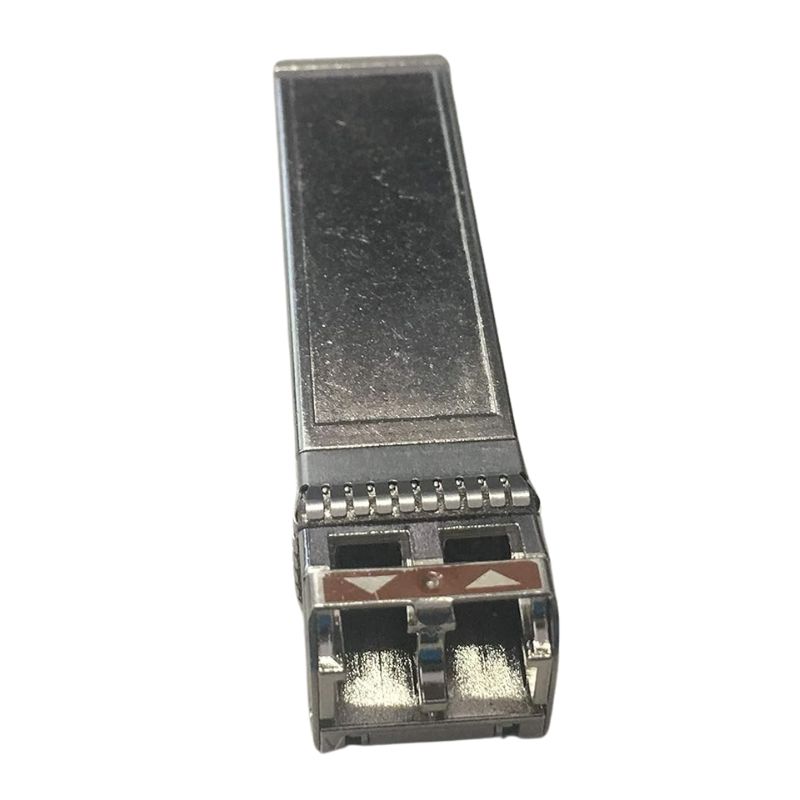
Cisco 10-2566-01 Fabric Extender SFP+ Transceiver. Excellent Refurbished with 1 year replacement warranty
The Cisco 10-2566-01 10Gbps SFP+ Optical Fabric Extender Transceiver Module is a high-performance networking component designed to deliver reliable, high-speed optical connectivity in modern data center and enterprise environments. This transceiver is engineered to support seamless integration with fabric extender architectures, ensuring efficient and scalable network performance.
The Cisco 10-2566-01 10Gbps SFP+ optical Fabric Extender transceiver module represents a highly specialized class of high-speed optical networking components engineered for enterprise-grade data center interconnectivity. Designed for seamless integration within Cisco Fabric Extender (FEX) architectures, this transceiver plays a critical role in enabling ultra-fast, low-latency, and highly reliable data transmission across modern network infrastructures. As data demands continue to escalate across cloud computing, virtualization, and high-performance computing environments, optical SFP+ modules such as this one have become foundational building blocks for scalable and efficient networking ecosystems.
This category encompasses high-performance 10 Gigabit Ethernet optical transceivers that are optimized for Fabric Extender deployments, ensuring consistent throughput, minimal packet loss, and compatibility with Cisco switching environments. The Cisco 10-2566-01 module, including variants such as Cisco 10-2566-01 10Gbps SFP+ Optical Fabric Extender Transceiver Module, is engineered to meet stringent performance and interoperability requirements in mission-critical networking environments where downtime or latency degradation is not acceptable.
SFP+ optical transceivers serve as the physical interface between network switches and fiber optic cabling, converting electrical signals into optical signals and vice versa. Within the 10Gbps category, these modules enable high-bandwidth communication across short and long distances depending on fiber type and optical specification. The Cisco 10-2566-01 is specifically tailored for Fabric Extender systems, where centralized switching architecture requires efficient and predictable communication between parent switches and remote line cards.
In enterprise networks, this architecture allows organizations to consolidate switching intelligence while distributing port density, significantly simplifying management overhead while improving scalability. The SFP+ form factor ensures compact integration while maintaining high thermal efficiency and power optimization, which is essential in dense data center environments.
Fabric Extender technology operates by extending the switching fabric of a parent switch to remote modules that function as satellite line cards. The Cisco 10-2566-01 transceiver enables this extension over optical fiber, ensuring that remote devices behave as if they are directly connected to the central switching core. This architecture reduces configuration complexity and enhances operational consistency across distributed networking environments.
The efficiency of this system lies in its ability to centralize control plane operations while distributing data plane connectivity. This reduces the need for independent switching logic at every access layer device, leading to lower operational costs and improved network predictability.
The Cisco 10Gbps SFP+ optical module category relies on laser-based light transmission through fiber optic cables. Data signals are encoded into light pulses, transmitted through single-mode or multi-mode fiber depending on deployment requirements, and then decoded back into electrical signals at the receiving end. This process enables extremely high-speed data transmission with minimal electromagnetic interference.
Unlike copper-based Ethernet solutions, optical transceivers eliminate issues related to crosstalk, attenuation over medium distances, and electrical noise. This makes them ideal for environments such as data centers, financial trading platforms, and large-scale cloud infrastructure deployments where data accuracy and timing are critical.
The Cisco 10-2566-01 module is designed to maintain signal integrity across variable environmental conditions. Built-in error correction compatibility and precise optical calibration help reduce bit error rates and ensure consistent transmission quality. These features are essential in maintaining synchronization across Fabric Extender architectures where even minor latency variations can impact application performance.
Advanced modulation techniques and wavelength stabilization ensure that optical signals remain consistent even across longer cable runs or in environments with temperature fluctuations. This stability is a key factor in maintaining enterprise-grade service-level agreements.
The defining feature of this category is its ability to support sustained 10 Gigabits per second throughput. This bandwidth is sufficient for high-volume server clusters, virtualization workloads, and storage area networks. The Cisco 10-2566-01 ensures that this bandwidth is fully utilized without bottlenecks caused by encoding inefficiencies or hardware mismatches.
By optimizing packet forwarding efficiency, the module supports low-latency communication between endpoints, which is essential for applications such as real-time analytics, distributed databases, and high-frequency transaction systems.
Latency is a critical performance metric in any high-speed network. The optical design of SFP+ transceivers inherently reduces propagation delay compared to traditional copper-based alternatives. In Fabric Extender environments, the Cisco 10-2566-01 contributes to near-line-rate performance, ensuring that data packets are transmitted and received with minimal delay.
This is particularly important in environments where microsecond-level latency differences can significantly impact computational performance or user experience.
The Cisco 10-2566-01 module is engineered for seamless compatibility with Cisco Fabric Extender systems and supported switch families. This tight integration ensures that configuration, monitoring, and management processes remain consistent across the entire network infrastructure. Compatibility is achieved through standardized SFP+ interfaces and Cisco-validated firmware communication protocols.
Network administrators benefit from reduced configuration complexity since the module is automatically recognized and integrated into the broader Cisco networking environment, reducing the need for manual tuning or vendor-specific adjustments.
In enterprise data centers, this category of optical transceiver is deployed to interconnect server racks, aggregation switches, and core switching layers. Its ability to support high-density port configurations makes it ideal for virtualization clusters and cloud service providers that require scalable and flexible infrastructure.
The modular nature of Fabric Extender systems allows organizations to expand network capacity without redesigning the entire switching architecture, making this transceiver category highly cost-effective over time.
The small form-factor pluggable plus (SFP+) design is optimized for high-density networking environments. Its compact size allows multiple transceivers to be installed in a single switch chassis without excessive heat generation or spatial limitations. This density is essential for modern data centers where rack space is a premium resource.
Efficient thermal design is a critical aspect of optical transceiver engineering. The Cisco 10-2566-01 module is designed to operate within strict power budgets while maintaining optimal performance. Low power consumption reduces overall system heat output, which in turn minimizes cooling requirements and operational costs.
Advanced heat dissipation mechanisms ensure that performance remains stable even under sustained high-throughput conditions, making it suitable for continuous enterprise workloads.
Reliability is a cornerstone of Fabric Extender architecture. The Cisco 10-2566-01 contributes to high availability by ensuring consistent optical link performance and rapid recovery in case of transient failures. Redundant link configurations can be implemented to further enhance resilience, allowing traffic to reroute seamlessly in the event of a failure.
Modern SFP+ modules include diagnostic monitoring interfaces that allow administrators to track parameters such as optical power levels, temperature, and voltage. These diagnostics are essential for proactive maintenance and early detection of potential failures, reducing downtime and improving overall network stability.
As cloud computing continues to evolve, network scalability has become a primary concern for infrastructure designers. The Cisco 10-2566-01 supports scalable Fabric Extender deployments that allow organizations to expand network capacity horizontally without significant architectural redesign.
This scalability is particularly beneficial for hyperscale data centers where thousands of virtual machines must communicate efficiently across distributed systems.
Virtualized environments rely heavily on fast and predictable network communication. SFP+ optical modules ensure that virtual machine migrations, storage synchronization, and distributed processing tasks occur without network-induced delays. This improves overall system efficiency and reduces operational bottlenecks.
Optical fiber provides inherent security advantages over copper-based transmission, as it is significantly more difficult to tap or intercept without detection. The Cisco 10-2566-01 module contributes to a secure physical layer infrastructure that supports sensitive enterprise and financial data transmission.
Organizations operating in regulated industries such as finance, healthcare, and government benefit from the deterministic nature of optical transmission. The reduced risk of electromagnetic interference ensures that transmitted data remains intact and uncorrupted across the network path.
While 10Gbps remains widely deployed, the industry is steadily transitioning toward 25Gbps, 40Gbps, and 100Gbps optical technologies. However, SFP+ modules like the Cisco 10-2566-01 continue to play a crucial role in legacy systems and cost-optimized deployments where 10Gbps remains sufficient.
Future networking architectures increasingly rely on software-defined networking (SDN), where hardware components such as optical transceivers become part of a programmable infrastructure. This allows dynamic traffic management and improved resource allocation across distributed networks.
Deploying SFP+ optical modules in Fabric Extender architectures allows enterprises to reduce overall infrastructure costs by centralizing switching intelligence and simplifying access layer design. This reduces both capital and operational expenditures while maintaining high performance.
Standardized deployment of Cisco optical modules ensures consistent behavior across network segments, reducing configuration drift and simplifying troubleshooting processes. This consistency is essential for maintaining service quality in large enterprise environments.


 Contact Us
 Information
 Catalog
 Solid State Drives (SSD)
 Network Switches
 Hard Disk Drives
 HBA & Controllers
 PC & Servers
 PC & Server Memory
 CPU & Processors
 Network Routers
 Power Supplies
 Tape Drives & Libraries
 Network Devices
 Computer & Network Cables