(7% discount is applied at checkout)
Cart is empty
Your go-to destination for cutting-edge server products
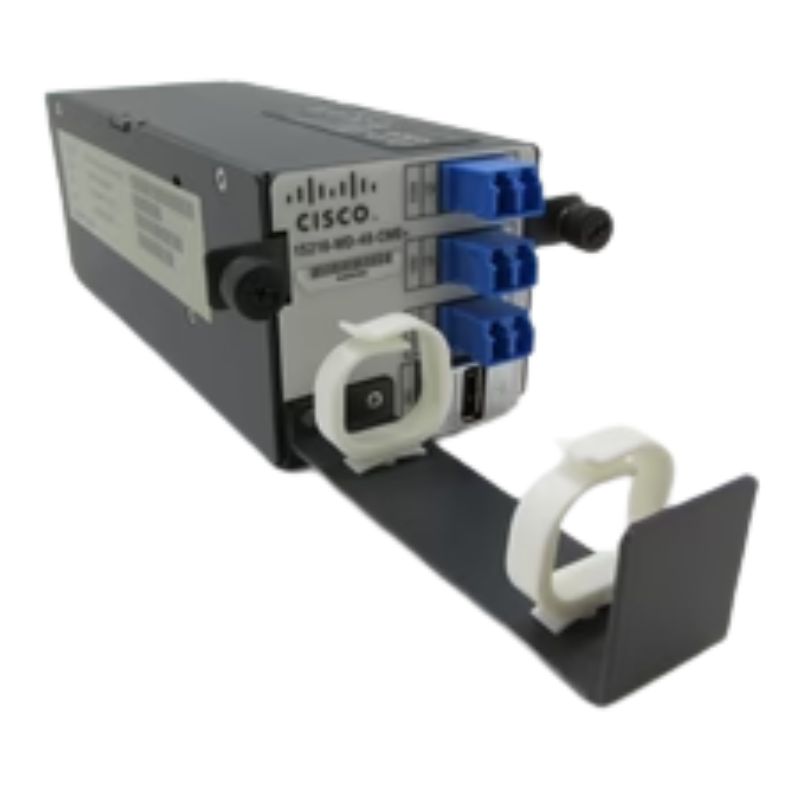


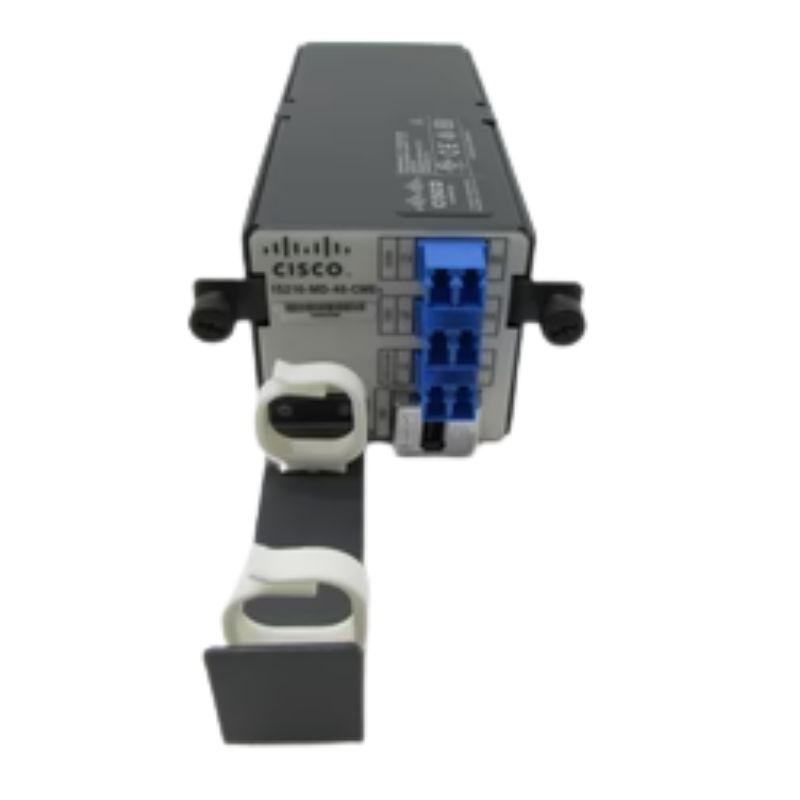
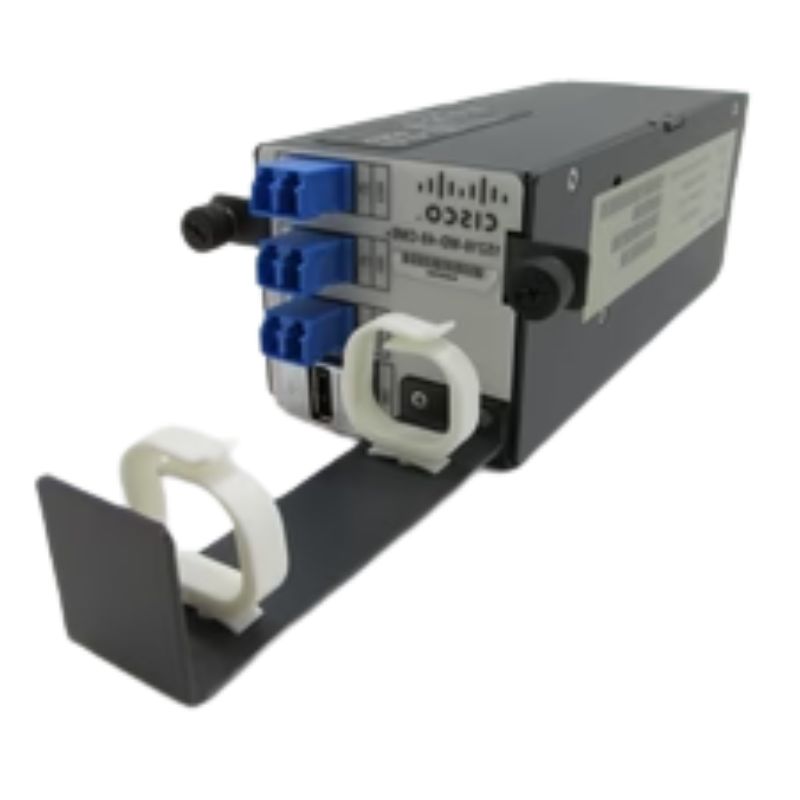
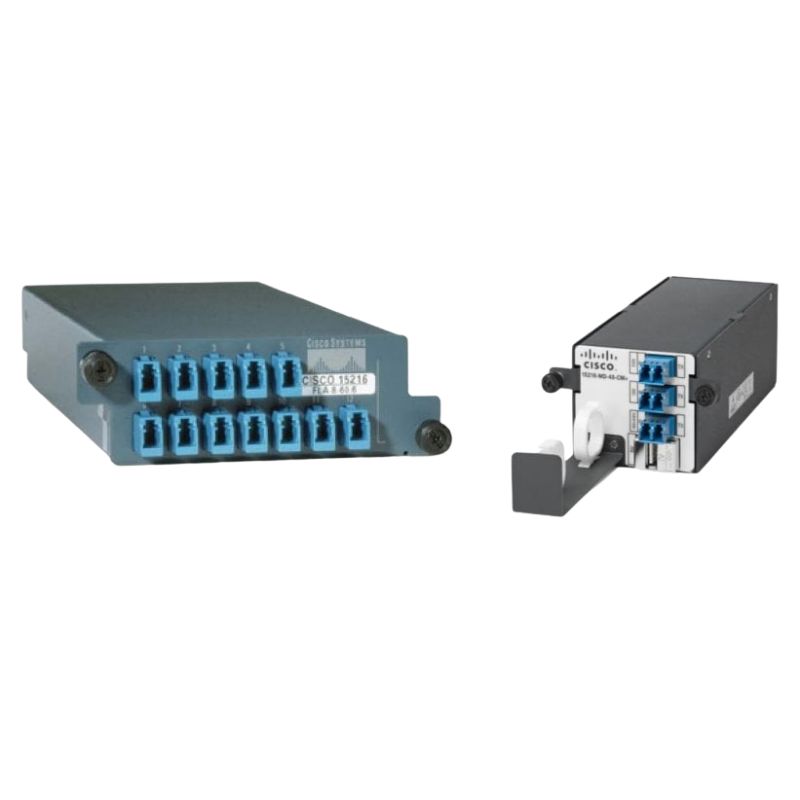
The Cisco 15216-MD-ID-50 Mux/Demux Plugin Interleaver Module is a high-performance passive optical networking component designed to optimize wavelength management in dense optical communication systems. This module supports advanced interleaving and de-interleaving functions to enhance network scalability, efficiency, and signal integrity.
The Cisco 15216-MD-ID-50 Mux/Demux Plugin Interleaver Module is a specialized optical networking component designed for dense wavelength division multiplexing (DWDM) environments, where efficient spectrum utilization, signal integrity, and high-capacity transport are essential. Positioned within advanced optical transport architectures, this module plays a critical role in interleaving optical channels across a defined grid, enabling carriers and enterprise backbone operators to maximize fiber utilization without requiring additional physical infrastructure. The module integrates seamlessly into Cisco optical platforms and is commonly deployed in carrier-grade metro and long-haul networks where scalability, reliability, and wavelength precision are mandatory.
Interleaving technology is fundamental in modern DWDM systems, where channel spacing is reduced to accommodate a higher number of wavelengths over a single fiber pair. The Cisco 15216-MD-ID-50 module performs optical interleaving by combining or separating odd and even channels in a structured spectral pattern. This process enables network designers to effectively double channel density within a given spectral band, significantly enhancing throughput without additional fiber deployment. In high-capacity environments, such as backbone aggregation networks or intercity optical links, this capability becomes essential for meeting exponential bandwidth growth demands driven by cloud computing, video streaming, and large-scale data replication.
The module is engineered for compatibility with Cisco’s 15200 series optical transport platforms, aligning with modular optical add-drop multiplexing systems. As part of Cisco’s optical ecosystem, supported by Cisco, the 15216-MD-ID-50 interleaver module fits into a broader suite of wavelength management components including mux/demux filters, optical amplifiers, and reconfigurable optical add-drop multiplexers. This integration allows network operators to build highly flexible and scalable optical networks capable of supporting both legacy and next-generation services within a unified infrastructure.
The plugin design of the Cisco 15216-MD-ID-50 ensures straightforward insertion into designated slots within compatible chassis systems. This architecture supports hot-pluggable deployment in controlled environments, reducing downtime during upgrades or expansions. The module’s passive optical nature means it does not require electrical power to function, thereby improving reliability and reducing operational complexity. Its design is optimized for minimal insertion loss and high channel isolation, ensuring that signal degradation is kept within acceptable operational thresholds even in high-density channel configurations.
At the core of the Cisco 15216-MD-ID-50 module is its precision-engineered interleaving filter technology, which ensures accurate wavelength separation and recombination. The device operates within the ITU-T grid, supporting tightly spaced channel plans that are essential for modern DWDM deployments. Its optical performance is characterized by low insertion loss, high adjacent channel isolation, and stable temperature-independent operation, which is critical in environments where thermal fluctuations can impact signal fidelity.
The module’s interleaving function enhances spectral efficiency by arranging optical channels in alternating frequency patterns. This structured arrangement allows service providers to optimize the usable portion of the C-band or extended wavelength bands, depending on deployment requirements. By enabling precise channel alignment, the module reduces crosstalk and improves signal-to-noise ratios across long-distance fiber links, which is particularly valuable in submarine landing stations, metro aggregation points, and regional interconnect facilities.
Maintaining signal integrity in DWDM systems is a complex challenge due to the close proximity of wavelengths. The Cisco 15216-MD-ID-50 addresses this through advanced thin-film filter technology that ensures high channel isolation between adjacent wavelengths. This minimizes interference and reduces the likelihood of optical impairments such as four-wave mixing and cross-phase modulation. The result is a more stable optical transport environment capable of supporting high bit-rate transmission protocols including 10G, 40G, and 100G services.
The Cisco 15216-MD-ID-50 module is widely used in a variety of deployment scenarios where wavelength management and network scalability are key priorities. In carrier-grade backbone infrastructures, it enables efficient utilization of existing fiber assets, reducing capital expenditure on new fiber deployment. In metro optical rings, it supports high-density service aggregation, allowing multiple service providers or enterprise customers to share the same physical infrastructure while maintaining logical separation of services.
In metropolitan networks, where traffic aggregation from multiple access points converges, the interleaver module plays a crucial role in balancing channel distribution. It enables network engineers to segment traffic into structured wavelength groups, improving overall network efficiency and simplifying optical routing strategies. This is particularly important in urban environments where fiber resources are constrained and demand continues to increase due to broadband expansion and enterprise connectivity requirements.
In long-haul optical transport systems, the module contributes to maintaining signal clarity over extended distances. By ensuring precise wavelength interleaving, it reduces the need for frequent regeneration and signal correction, thereby lowering operational costs. When combined with optical amplification systems, it supports extended reach capabilities across national and international backbone networks.
The Cisco 15216-MD-ID-50 is engineered for long-term operational reliability in demanding network environments. Its passive optical construction eliminates many of the failure points associated with active electronic components. The module is designed to operate within strict environmental tolerances, ensuring consistent performance across temperature variations commonly encountered in telecom central offices and outdoor enclosure systems.
The module’s compact form factor allows for efficient use of rack space within optical distribution frames. Its plugin design supports straightforward installation and replacement procedures, reducing maintenance windows and simplifying network upgrades. The mechanical structure is reinforced to withstand repeated handling during network reconfiguration cycles, which is common in dynamic service provider environments.
Thermal stability is a critical requirement for optical interleaving components. The Cisco 15216-MD-ID-50 is designed using materials and coatings that minimize thermal drift, ensuring that wavelength alignment remains stable across varying operating conditions. This is particularly important in high-density installations where heat accumulation can affect optical performance if not properly managed through system design and airflow engineering.
As network demand continues to evolve, scalability remains a key requirement for optical transport infrastructure. The Cisco 15216-MD-ID-50 supports scalable architecture by enabling incremental capacity expansion without requiring complete system redesign. Operators can introduce additional wavelength channels into existing infrastructure, leveraging the interleaving function to maintain spectral order and minimize disruption to live traffic.
The module is compatible with evolving optical transmission standards that support higher modulation formats and increased spectral efficiency. As service providers transition toward 400G and beyond transmission rates, the role of precise wavelength management becomes even more critical. The interleaver module helps maintain structured spectral allocation, which is essential for advanced coherent optical systems.
Modern optical networks increasingly rely on automated provisioning and intelligent network management systems. The Cisco 15216-MD-ID-50 fits into these architectures by providing predictable optical behavior that can be modeled and managed within software-defined networking frameworks. This allows operators to optimize wavelength assignment dynamically while maintaining stability across the physical layer.
By improving fiber utilization and reducing the need for additional physical infrastructure, the Cisco 15216-MD-ID-50 contributes directly to operational cost savings. Network operators can extend the life of existing fiber plant investments while supporting increased service demand. The reduction in required amplification and regeneration points also lowers energy consumption, contributing to greener network operations and improved sustainability metrics.
One of the key advantages of deploying interleaver modules is the ability to maximize existing fiber capacity. Instead of deploying new fiber routes, operators can introduce additional wavelengths into existing channels, effectively multiplying network capacity without significant civil engineering costs. This is particularly valuable in densely populated urban regions where fiber deployment is both expensive and logistically challenging.
Within modern optical ecosystems, the Cisco 15216-MD-ID-50 serves as a foundational building block for high-capacity wavelength management. It enables service providers to build modular, scalable, and highly efficient transport networks that can adapt to changing traffic demands. As optical networks continue to evolve toward higher capacities and more dynamic service delivery models, the importance of precise interleaving technology becomes increasingly central to infrastructure design strategies.


 Contact Us
 Information
 Catalog
 Solid State Drives (SSD)
 Network Switches
 Hard Disk Drives
 HBA & Controllers
 PC & Servers
 PC & Server Memory
 CPU & Processors
 Network Routers
 Power Supplies
 Tape Drives & Libraries
 Network Devices
 Computer & Network Cables