(7% discount is applied at checkout)
Cart is empty
Your go-to destination for cutting-edge server products
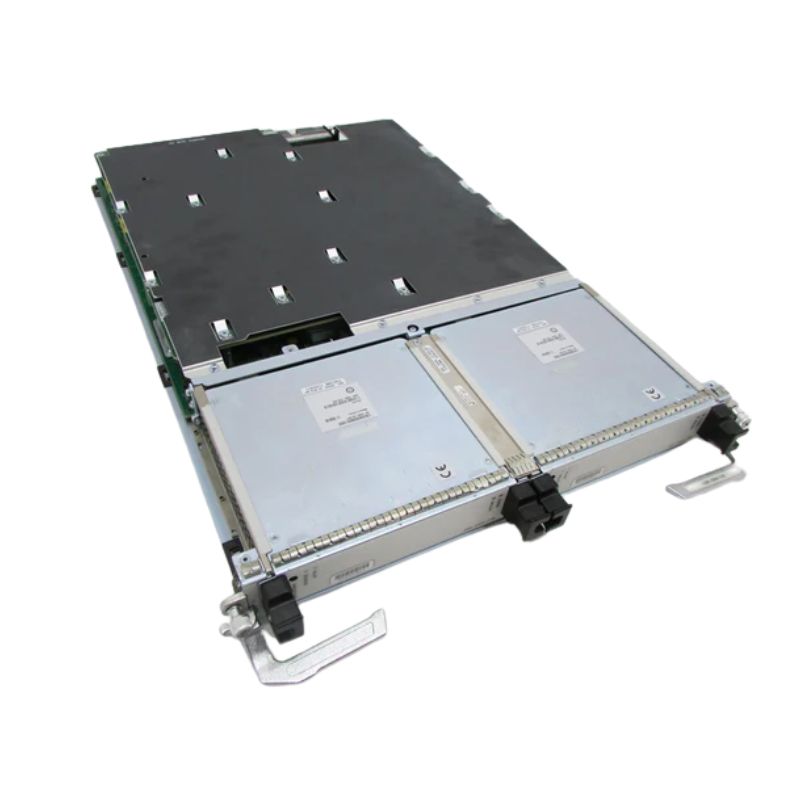


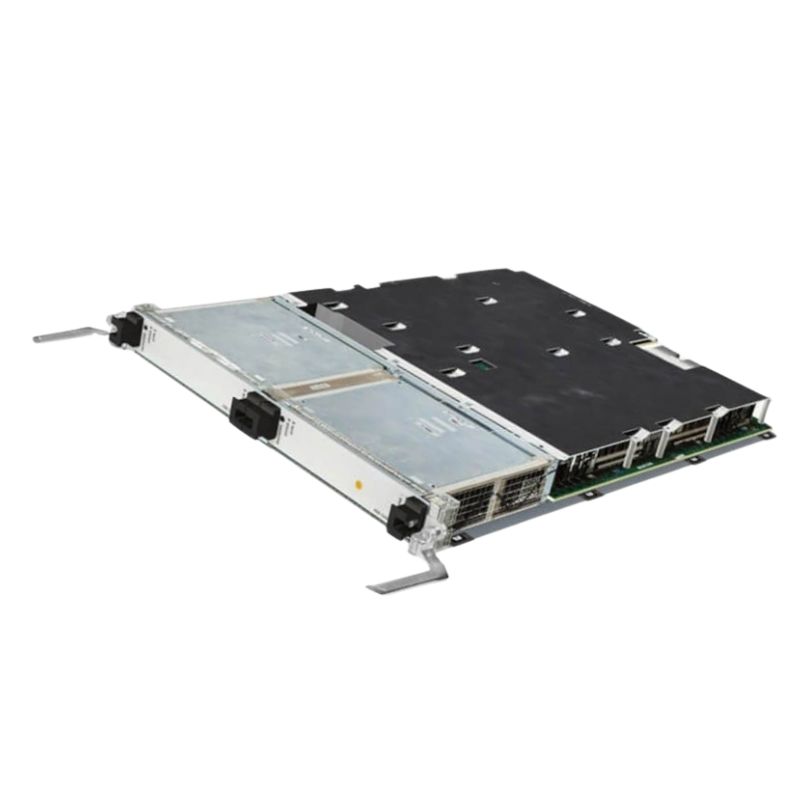
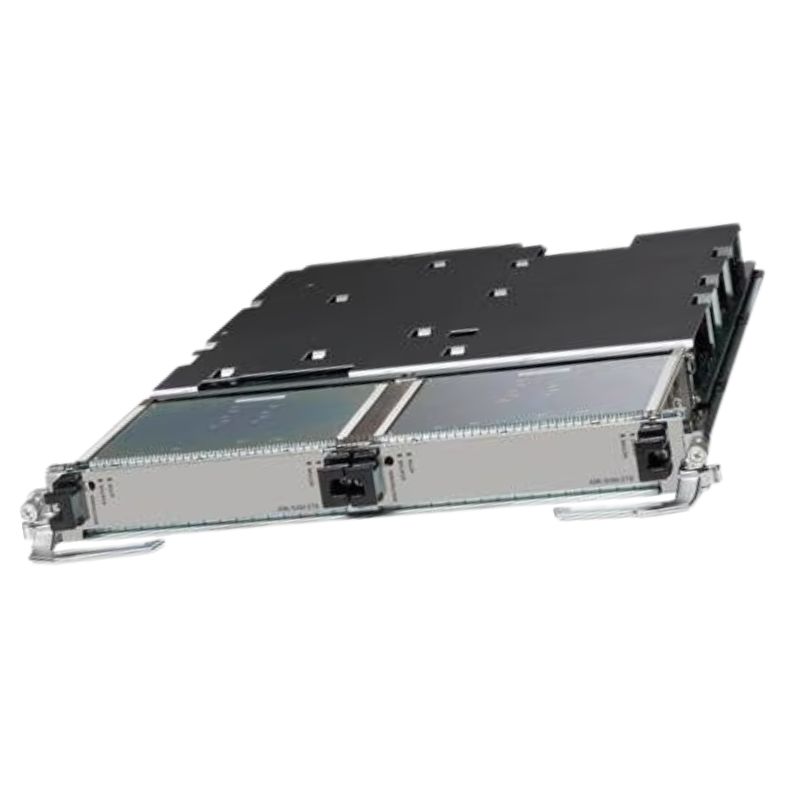
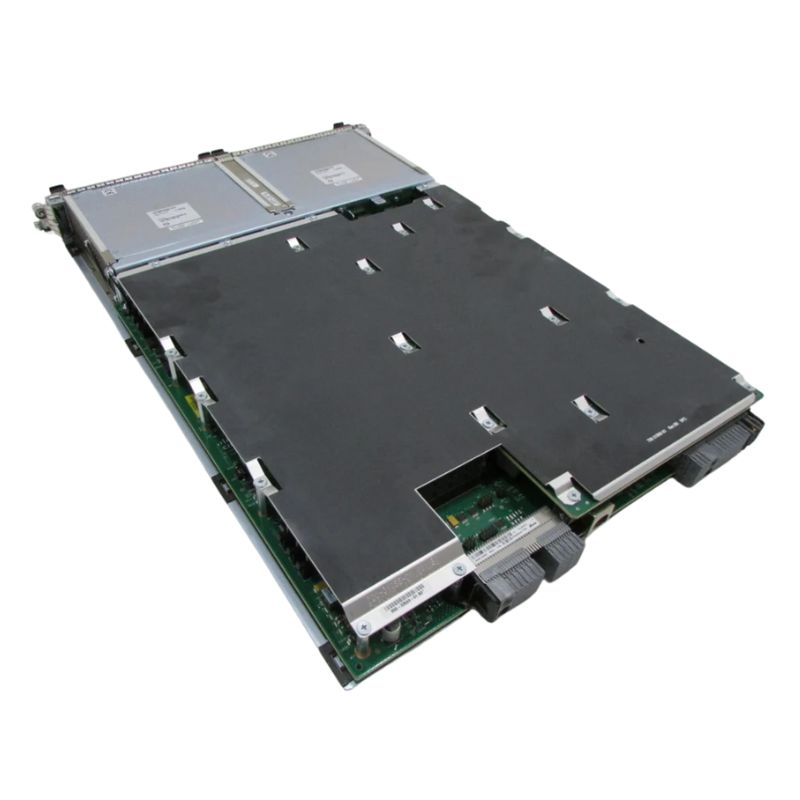
Cisco A9K-ISM-100 ASR Service Module. Excellent Refurbished with 1 year replacement warranty
Discover the Cisco A9K-ISM-100, an integrated service module engineered for the ASR 9000 platform. This high-performance router module combines dual CPUs, extensive memory, and durable storage to support large-scale carrier-grade network functions such as large-session NAT, CGN, DS-Lite and MAP-T deployments.
Compact form-factor designed to fit within ASR 9000 modules with ease:
In the demanding realm of high-performance service provider and large enterprise networks, the ability to efficiently process and manage vast amounts of data-plane traffic is paramount. The Cisco ASR 9000 Series stands as a cornerstone of this environment, and its true power is harnessed through its modular, distributed architecture. At the heart of this system are the Integrated Services Modules (ISMs), which deliver dedicated, scalable compute resources for critical network functions. The Cisco A9K-ISM-100 is a foundational component in this ecosystem, providing a robust, dual-CPU processing complex designed to offload and accelerate essential services within the ASR 9000 chassis. This module is not merely an add-on; it is a strategic investment in network intelligence, resilience, and future-proof scalability.
The A9K-ISM-100 is engineered to deliver integrated service processing, effectively acting as a high-powered "blade server" within the router. By dedicating its resources to tasks such as deep packet inspection, encryption, quality of service (QoS), and accounting, it liberates the main Route Switch Processor (RSP) to focus on its core competency: ultra-fast routing and forwarding. This separation of duties is a key architectural advantage, ensuring that the introduction of advanced services does not compromise the raw routing performance of the ASR 9000 platform.
The Cisco A9K-ISM-100 is defined by its purpose-built hardware design, which balances processing power with the reliability required for 24/7/365 operation. Its specifications lay the groundwork for consistent, high-throughput service delivery.
At its core, the module features a sophisticated multi-core processing architecture designed for parallelized data plane tasks.
The "2x CPU" designation signifies a dual-processor architecture. This design provides inherent redundancy and load-balancing capabilities at the hardware level. The specific CPUs used are optimized for the networking workloads typical in carrier environments, offering high clock speeds and efficient cache structures to handle millions of packets per second.
The substantial 48 Gigabytes of DRAM is a critical specification. This abundant memory serves multiple functions: it acts as a high-speed buffer for packet processing queues, holds the state information for numerous simultaneous sessions (e.g., for firewall or NAT services), and stores the extensive routing and policy tables needed for advanced feature sets. This capacity ensures that performance remains stable even under heavy load or during table convergence events.
The module is designed for seamless insertion into the ASR 9000's modular line card bays. It communicates with the RSP and line cards via the chassis's high-speed, non-blocking switching fabric.
The A9K-ISM-100 connects to the ASR 9000's internal fabric, ensuring that traffic between line cards and the services module has minimal latency and maximal bandwidth. This fabric-centric design prevents bottlenecks, allowing services to be applied at line rate, depending on the specific feature complexity.
As a service module, it is engineered with the same rigorous power and thermal management as other chassis components. It supports hot-swappable insertion and removal (OIR), allowing for upgrades or replacements without impacting other modules or causing a network outage. Its power draw is managed by the chassis's integrated power supplies, and it features optimized airflow designs to align with the ASR 9000's cooling system.
The Cisco A9K-ISM-100 transforms the ASR 9000 from a high-capacity router into a converged, multi-service platform. Its processing power is allocated to a range of software-defined features, enabled by Cisco IOS XR Software.
One of the most resource-intensive tasks in modern networks is the deep analysis of packet flows beyond simple header information. The A9K-ISM-100 provides the necessary horsepower for this.
The module can run NBAR2, a stateful classification engine that identifies thousands of applications, from business software to streaming protocols. This awareness is the foundation for intelligent traffic management, allowing operators to create policies based on application type rather than just IP address or port.
With application awareness comes the ability to enforce sophisticated QoS policies. The module can mark, police, shape, and queue traffic with extreme precision. For service providers, this means guaranteeing Service Level Agreements (SLAs); for enterprises, it ensures business-critical applications receive priority over recreational traffic.
As network security moves from the perimeter to every layer of infrastructure, the integration of security functions directly into the routing layer becomes essential.
The A9K-ISM-100 can terminate thousands of IPsec tunnels, providing encrypted overlay networks for VPN services (e.g., L3VPN, DMVPN). Offloading the encryption/decryption processes from the RSP to this dedicated module preserves overall system performance and allows for scalable, hardware-accelerated secure connectivity.
Running a full stateful firewall on a core router adds a critical layer of segmentation and threat mitigation. The module's memory and CPU resources are used to maintain connection state tables and inspect traffic flows between defined security zones within the network.
Beyond packet manipulation, the module assists in enhancing the control plane and network visibility.
Implementing BGP FlowSpec, which distributes traffic filtering and redirection rules via BGP, requires significant processing to apply these dynamic policies to the data plane. The A9K-ISM-100 is ideally suited to handle this workload, enabling rapid mitigation of distributed denial-of-service (DDoS) attacks or traffic engineering.
Modern networks rely on streaming telemetry (e.g., Model-Driven Telemetry - MDT) for real-time monitoring. The module can be tasked with collecting, aggregating, and exporting granular performance data from the ASR 9000's forwarding engines, providing invaluable insights for analytics and automation platforms.
The hardware capabilities of the A9K-ISM-100 are unlocked and managed exclusively through Cisco's carrier-grade operating system, IOS XR. This software provides the framework for service deployment, lifecycle management, and high availability.
In IOS XR, services are configured in a logical, layered manner that abstracts the physical hardware.
Administrators configure a Service Infrastructure, which defines the resources (CPU cores, memory) allocated from the ISM. Within this infrastructure, individual service contexts are created—logical instances for specific functions like a firewall context or an IPsec context. This allows for complete isolation and independent configuration of multiple services on a single physical module.
Network uptime is non-negotiable, and the module's operation is designed accordingly.
For critical services, multiple A9K-ISM-100 modules can be deployed in a redundant pair. Cisco IOS XR supports stateful synchronization between modules, ensuring that active sessions (e.g., firewall connections, VPN tunnels) are maintained without interruption if the active module fails. This is crucial for maintaining SLAs during hardware faults.
The combined hardware and software architecture supports ISSU. This allows the software running on the A9K-ISM-100 (or the entire IOS XR system) to be upgraded to a new version while the router continues to forward traffic, dramatically reducing planned maintenance windows and enhancing operational flexibility.
The deployment of A9K-ISM-100 modules is a strategic decision that aligns with specific network evolution goals. It is commonly found in several key scenarios.
In SP networks, the ASR 9000 often serves as a Provider Edge (PE) router or a broadband network gateway (BNG).
For thousands of subscribers, the module handles per-subscriber policy enforcement, session tracking, and hierarchical QoS (HQoS). This ensures fair bandwidth distribution and enforces tiered service plans directly at the network edge.
Providers offering managed CPE or "firewall as a service" can utilize the firewall and IPsec capabilities on the A9K-ISM-100 to deliver these services from the network cloud, reducing customer premises equipment cost and complexity.
Enterprises with massive campuses or multiple data centers leverage the ASR 9000 for core routing and WAN aggregation.
When connecting data centers over a service provider WAN or the internet, the module provides the high-throughput IPsec encryption needed to secure all intersite traffic, ensuring confidentiality and integrity across the DCI link.
Deploying a zone-based firewall in the core of an enterprise network allows for strict traffic control between departments, data classification zones (e.g., PCI DSS networks), or between user and data center segments, all performed at wire speed.


 Contact Us
 Information
 Catalog
 Solid State Drives (SSD)
 Network Switches
 Hard Disk Drives
 HBA & Controllers
 PC & Servers
 PC & Server Memory
 CPU & Processors
 Network Routers
 Power Supplies
 Tape Drives & Libraries
 Network Devices
 Computer & Network Cables