(7% discount is applied at checkout)
Cart is empty
Your go-to destination for cutting-edge server products
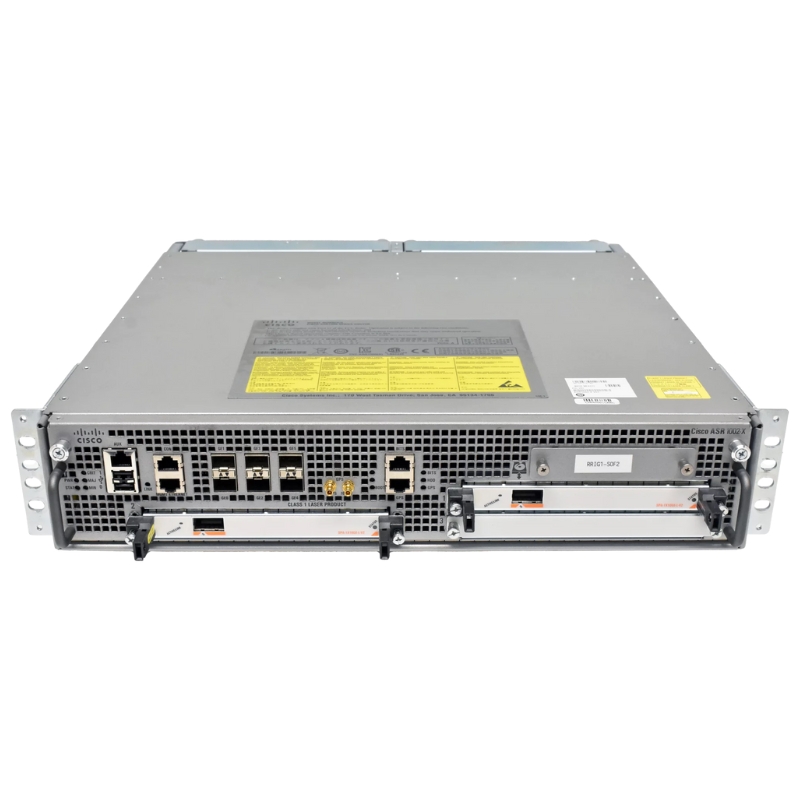


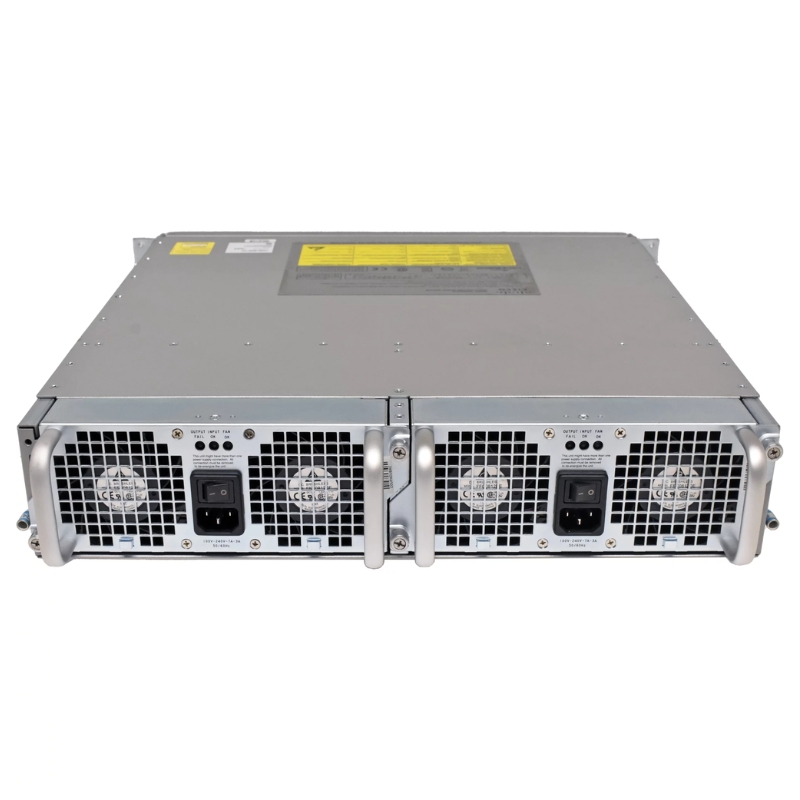
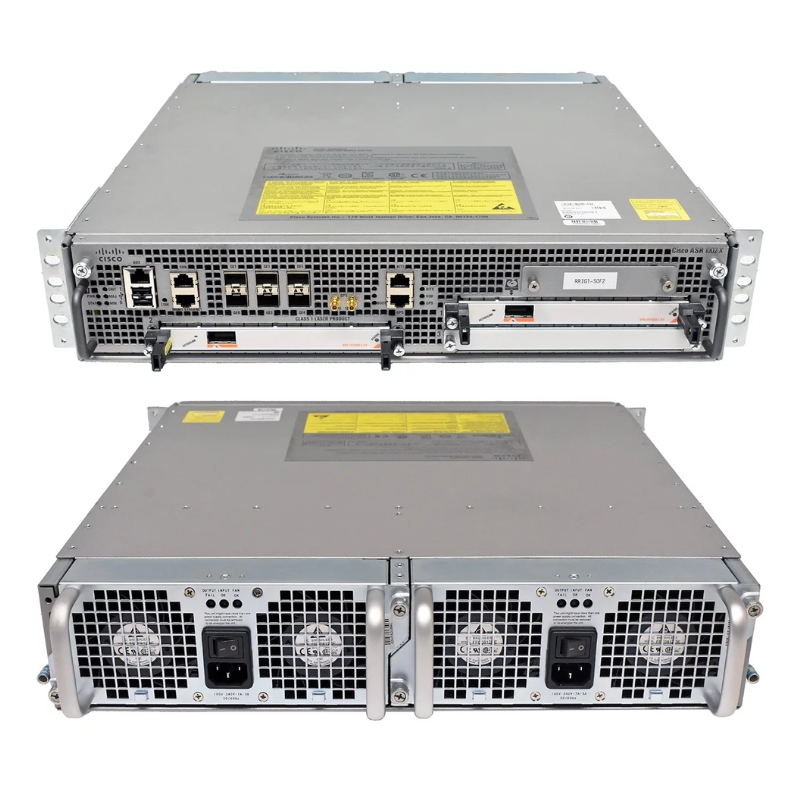
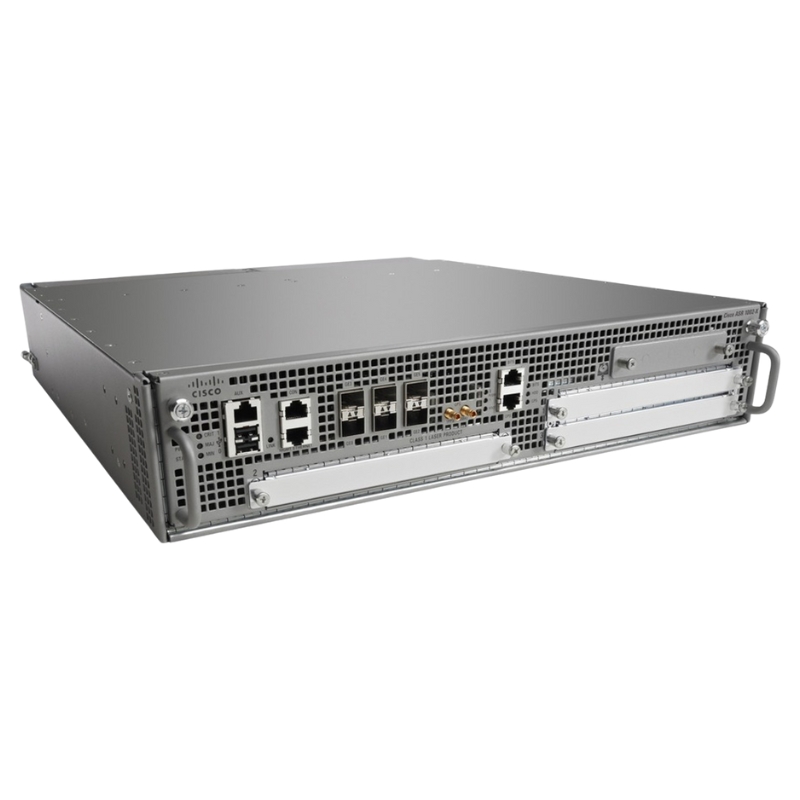
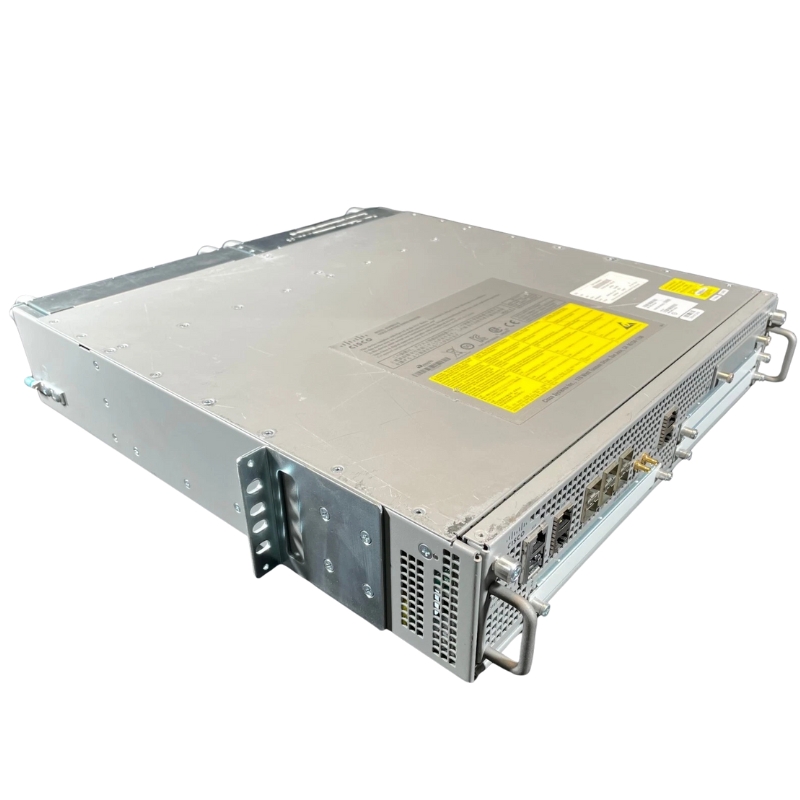
Cisco ASR1002-10G/K9 Aggregation Service Router with SFP 1002. Excellent Refurbished with 1 year replacement warranty
The Cisco ASR1002-10G/K9 Aggregation Service Router is engineered for enterprise and service provider networks requiring secure, scalable, and high-performance routing. With integrated SFP ports and advanced hardware acceleration, it ensures reliable connectivity and optimized throughput.
The Cisco ASR1002-10G/K9 Aggregation Service Router is part of the high-performance edge routing family developed engineered to deliver scalable, resilient, and carrier-grade routing capabilities for enterprise, service provider, and large campus network environments. This aggregation service router is designed to handle high-density traffic loads while maintaining optimized throughput efficiency, making it suitable for WAN edge deployments, internet peering, and secure enterprise interconnectivity.
Built on a modular and highly adaptable architecture, the Cisco ASR1002-10G/K9 integrates advanced forwarding capabilities with integrated services such as QoS, encryption, firewall integration, and deep packet inspection. The platform is optimized for environments requiring consistent uptime, predictable latency, and seamless scalability across distributed network infrastructures.
The processing core of the ASR1002-10G/K9 is engineered to support high-speed packet forwarding with minimal latency. Its architecture is based on Cisco’s high-end routing silicon and distributed forwarding design, ensuring that traffic flows are efficiently handled even under heavy load conditions. The embedded services processor is optimized to handle multiple concurrent routing tasks, making it ideal for service aggregation points where traffic convergence is significant.
The system is capable of supporting advanced routing protocols including BGP, OSPF, EIGRP, IS-IS, and MPLS-based architectures, enabling seamless integration into complex enterprise and carrier-grade networks. The hardware acceleration ensures that control plane and data plane operations remain separated for maximum stability and performance consistency.
The forwarding architecture is designed to reduce bottlenecks by distributing processing tasks across dedicated hardware modules. This allows the ASR1002-10G/K9 to maintain predictable performance even during peak traffic periods. The system leverages hardware-based forwarding engines that optimize packet inspection, classification, and routing decisions in real time.
This structure enhances scalability for cloud service providers and large enterprises that require uninterrupted data flow across geographically distributed locations. The router is capable of managing multiple virtual routing and forwarding instances, enabling logical segmentation of traffic within a single physical device.
The load distribution mechanism within the ASR1002-10G/K9 ensures efficient utilization of all available processing resources. Traffic is dynamically balanced across routing cores, minimizing congestion and preventing performance degradation during high-demand operations. This is essential for organizations handling large-scale data replication, VoIP traffic, and video streaming services.
The Cisco ASR1002-10G/K9 features flexible interface support with SFP-based connectivity options that allow seamless integration into existing fiber and copper infrastructures. The 10G-capable architecture ensures compatibility with high-speed backbone networks and aggregation layers.
The modular interface design enables organizations to customize network configurations according to bandwidth requirements and deployment scale. This flexibility is particularly beneficial in environments where network expansion is frequent and infrastructure adaptability is essential.
Uplink and downlink configurations within the ASR1002-10G/K9 are designed for scalability, allowing network architects to deploy configurations ranging from small enterprise edges to large-scale service provider aggregation nodes. The router supports multiple interface combinations that can be tailored for specific traffic engineering requirements.
This adaptability ensures that organizations can optimize bandwidth utilization while maintaining cost efficiency. The SFP-based architecture allows seamless upgrades to higher bandwidth modules without requiring complete system replacement.
Fiber optic integration is a critical component of the ASR1002-10G/K9 design. It supports long-distance transmission with minimal signal degradation, making it suitable for metropolitan area networks and wide area network deployments. The use of optical transceivers ensures low-latency communication across distributed infrastructure.
This capability is essential for enterprises that require reliable interconnection between data centers, branch offices, and cloud environments. The router’s optical compatibility ensures high throughput even over extended geographical distances.
The modular upgrade path allows organizations to expand network capabilities without disrupting existing services. Additional SFP modules and interface enhancements can be introduced gradually, ensuring continuous operational stability while scaling network capacity. This makes the ASR1002-10G/K9 a long-term investment for evolving network infrastructures.
Security is a fundamental aspect of the Cisco ASR1002-10G/K9 design. It incorporates advanced security frameworks that protect data integrity, prevent unauthorized access, and ensure secure communication across all network layers. These features are essential for enterprises operating in regulated industries or handling sensitive data.
The router supports encryption protocols, secure tunneling mechanisms, and integrated firewall capabilities that provide comprehensive protection against cyber threats. The security architecture is designed to operate without compromising performance, ensuring that high-speed data processing remains uninterrupted.
The ASR1002-10G/K9 supports hardware-accelerated encryption technologies that enable secure data transmission across public and private networks. This ensures that sensitive information remains protected during transit, particularly in VPN and WAN environments.
Encryption processes are optimized at the hardware level to minimize latency impact, allowing secure connections to maintain high throughput performance even under heavy traffic conditions.
Advanced traffic inspection systems within the router analyze data packets in real time to detect anomalies and potential security threats. These systems are designed to identify malicious patterns and prevent unauthorized access attempts before they impact network performance.
The integration of intelligent monitoring capabilities ensures continuous protection against evolving cyber threats, making it suitable for enterprise-grade security architectures.
Policy-based security enforcement enables administrators to define granular control rules for traffic flow, user access, and application-level permissions. This ensures that network resources are allocated securely and efficiently according to organizational policies and compliance requirements.
The Cisco ASR1002-10G/K9 is widely deployed in both service provider and enterprise environments due to its scalability and reliability. It is particularly effective in WAN edge routing, data center interconnects, and internet edge deployments where performance consistency is critical.
Its architecture supports multi-service integration, enabling organizations to consolidate routing, security, and traffic management into a single platform. This reduces operational complexity while improving overall network efficiency.
In WAN edge environments, the ASR1002-10G/K9 plays a crucial role in aggregating traffic from multiple branch locations. It ensures that data flows are optimized before entering core network infrastructure, reducing congestion and improving overall network responsiveness.
The router’s intelligent traffic engineering capabilities allow dynamic routing adjustments based on network conditions, ensuring optimal path selection and load balancing.
For data center interconnect applications, the ASR1002-10G/K9 provides high-capacity routing between geographically distributed facilities. It supports efficient data replication, cloud synchronization, and disaster recovery operations.
Its low-latency architecture ensures that critical workloads can be mirrored and synchronized across multiple environments without performance degradation.
Enterprises use the ASR1002-10G/K9 to consolidate multiple networking functions into a single platform. This reduces hardware overhead and simplifies network management while improving scalability and operational efficiency.
Quality of Service capabilities within the ASR1002-10G/K9 ensure that mission-critical applications receive prioritized bandwidth allocation. This is essential for environments supporting voice communication, video conferencing, and real-time data applications.
The router’s QoS engine classifies traffic based on predefined policies, ensuring that latency-sensitive applications maintain consistent performance even during network congestion.
Bandwidth allocation mechanisms allow administrators to define usage thresholds for different traffic categories. This ensures fair distribution of network resources and prevents bandwidth monopolization by non-critical applications.
Traffic shaping features regulate data flow to maintain network stability and avoid congestion during peak usage periods.
Latency optimization is achieved through intelligent packet scheduling and priority queuing mechanisms. These features ensure that time-sensitive data is transmitted with minimal delay, improving application responsiveness and user experience.
Operational efficiency is enhanced through centralized network management capabilities that allow administrators to monitor and configure the ASR1002-10G/K9 remotely. This simplifies network administration and reduces operational overhead.
The system supports integration with advanced network monitoring tools, enabling real-time visibility into traffic patterns, system performance, and security events.
Automation capabilities enable streamlined configuration deployment across multiple devices, reducing manual intervention and minimizing configuration errors. This is particularly valuable in large-scale network environments.
Performance monitoring tools provide detailed insights into network utilization, allowing administrators to identify bottlenecks and optimize traffic flow. Analytics-driven decision-making improves long-term network efficiency.
Integrated diagnostic tools continuously monitor system health and detect potential faults before they impact network operations. This proactive approach ensures high availability and system reliability.
The Cisco ASR1002-10G/K9 is designed with scalability in mind, supporting future network expansion and evolving technology standards. Its modular architecture ensures compatibility with emerging networking technologies and increasing bandwidth demands.
As organizations transition toward cloud-centric and hybrid infrastructure models, this router provides the flexibility required to adapt to changing network requirements without requiring complete infrastructure replacement.


 Contact Us
 Information
 Catalog
 Solid State Drives (SSD)
 Network Switches
 Hard Disk Drives
 HBA & Controllers
 PC & Servers
 PC & Server Memory
 CPU & Processors
 Network Routers
 Power Supplies
 Tape Drives & Libraries
 Network Devices
 Computer & Network Cables