(7% discount is applied at checkout)
Cart is empty
Your go-to destination for cutting-edge server products
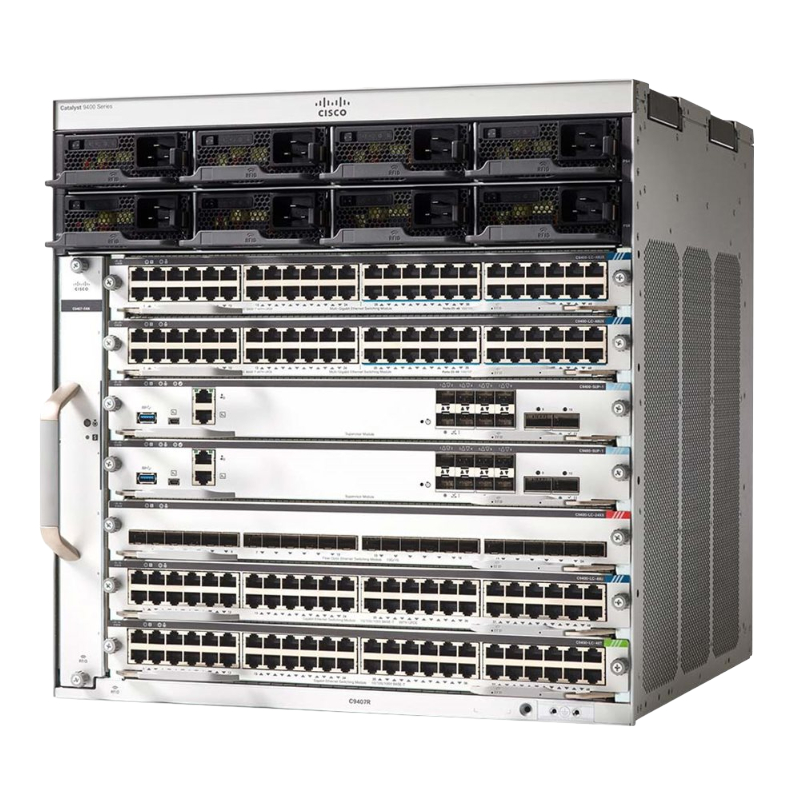


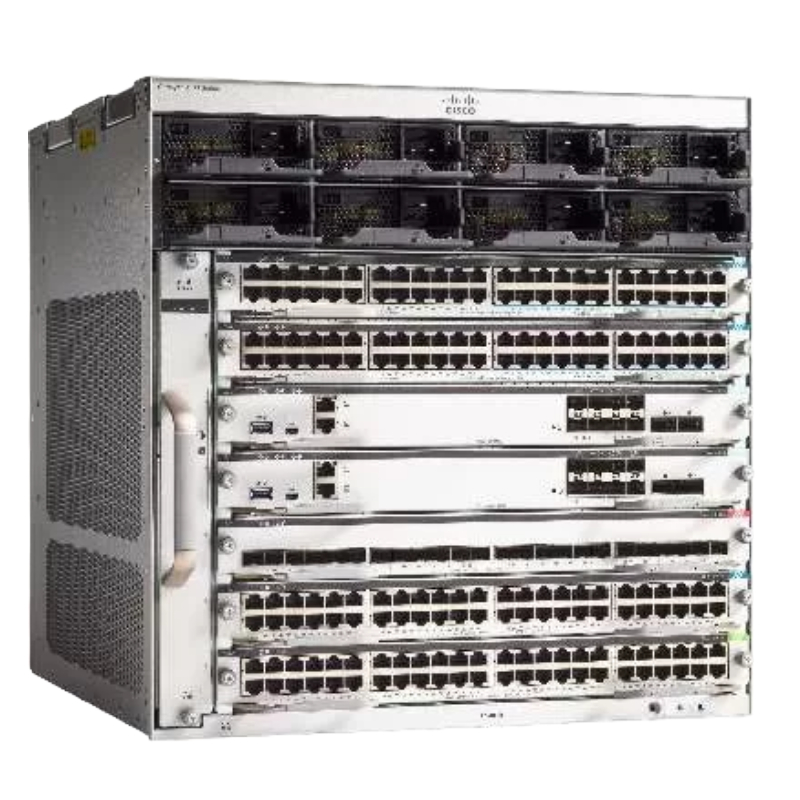
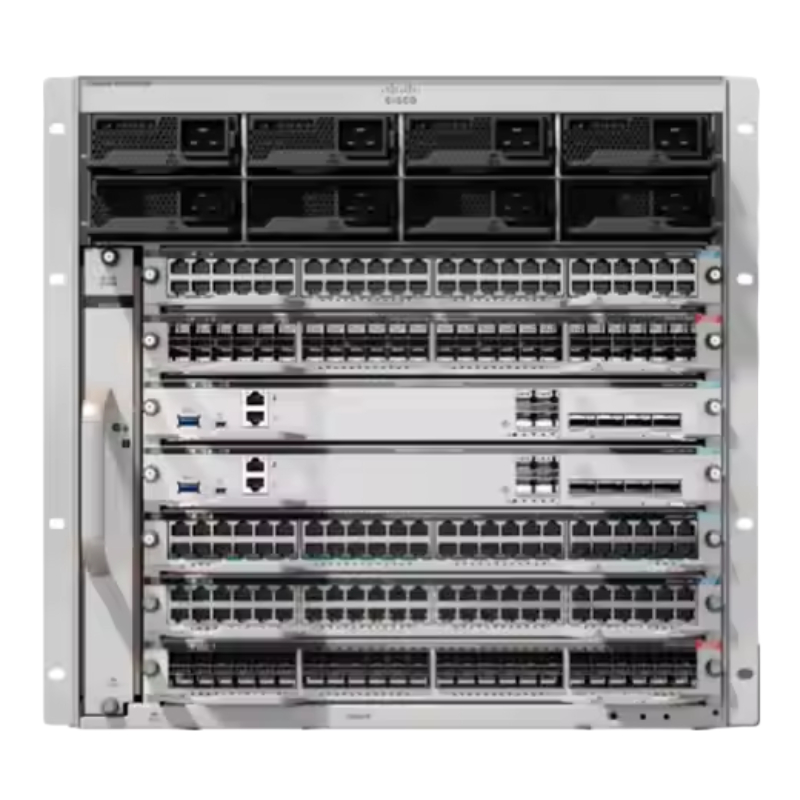
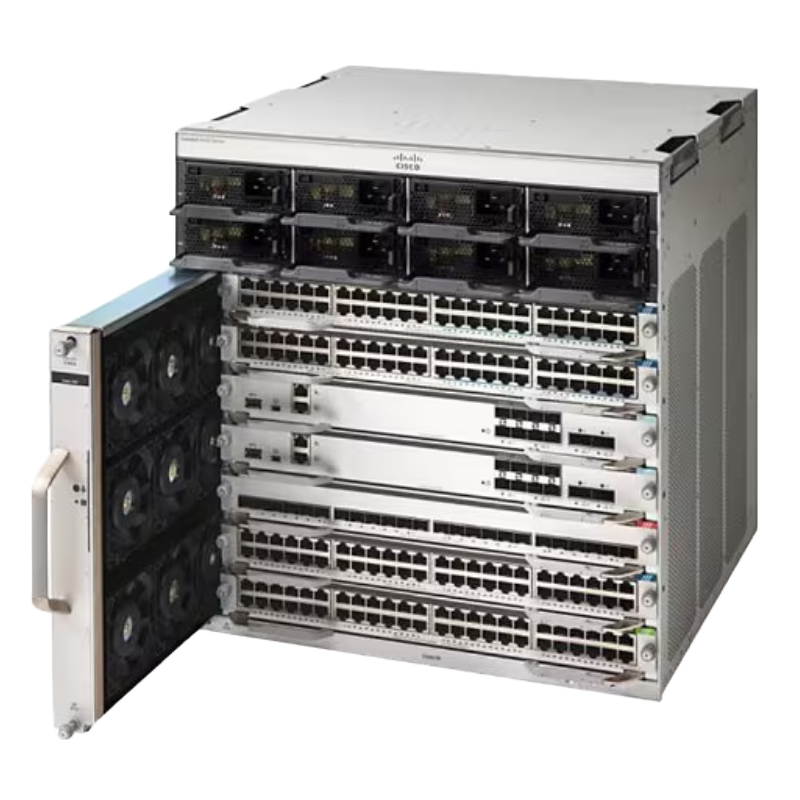
Cisco C9407R= Catalyst 9400 Series Chassis Switch 7 Slots. Excellent Refurbished with 1 year replacement warranty
| SKU/MPN | Warranty | Price | Condition | You save |
|---|---|---|---|---|
| C9407R= | 1 Year Warranty | $3,120.00 | Factory-Sealed New Retail in Original Box (FSB) | You save: $1,092.00 (26%) |
| C9407R= | 1 Year Warranty | $660.00 | Excellent Refurbished | You save: $231.00 (26%) |
The Cisco C9407R= Catalyst 9400 Series Chassis Switch is a high-performance, rack-mountable networking solution designed for modern enterprise networks. Engineered for reliability and scalability, this 7-slot chassis delivers advanced network functionality for organizations requiring robust Layer 3 switching, modular expandability, and superior manageability.
The Cisco C9407R= Catalyst 9400 Series seven-slot chassis represents a highly adaptable enterprise switching foundation designed to accommodate a wide spectrum of evolving network demands. Its flexible structural layout supports advanced supervisor modules, scalable line cards, and high-density uplinks that allow organizations to expand traffic capacity without interrupting ongoing operations. This platform is engineered with a focus on durability, investment protection, continual uptime, and comprehensive security, making it suitable for large enterprises, campus cores, and distribution layers that require high availability. The modular construction offers the ability to replace or upgrade components individually, enabling smooth transitions as network requirements grow or technologies advance.
The seven-slot framework of the Cisco C9407R= chassis supports a variety of line cards that deliver exceptional bandwidth capabilities and traffic management intelligence. Every slot is crafted to ensure optimal airflow, extended durability, and consistent electrical stability. The chassis housing is built from robust materials capable of maintaining structural integrity under demanding conditions found in large-scale enterprise deployments. With extended operational life in mind, the structural framework maintains compatibility with multiple generations of supervisors and line cards, ensuring that adoption of new features or improved performance levels does not require replacing the entire chassis. The design integrates intelligent cooling pathways and strategically placed fans to keep thermal conditions stable even as the system reaches peak throughput.
Power delivery in the C9407R= chassis is managed through high-efficiency supplies that maintain continuous current flow across all installed components. The redundant power subsystem prevents service disruption during failures by instantly compensating for any loss of input feed. The supervisory management system continually monitors internal voltages, adjusting them as necessary to sustain maximum operational stability. Dual power modules operate independently but coordinate to distribute load proportionally so that neither supply becomes overstressed. This approach significantly reduces the risk of downtime and promotes a resilient switching environment that can sustain mission-critical communication services across enterprise networks without interruption.
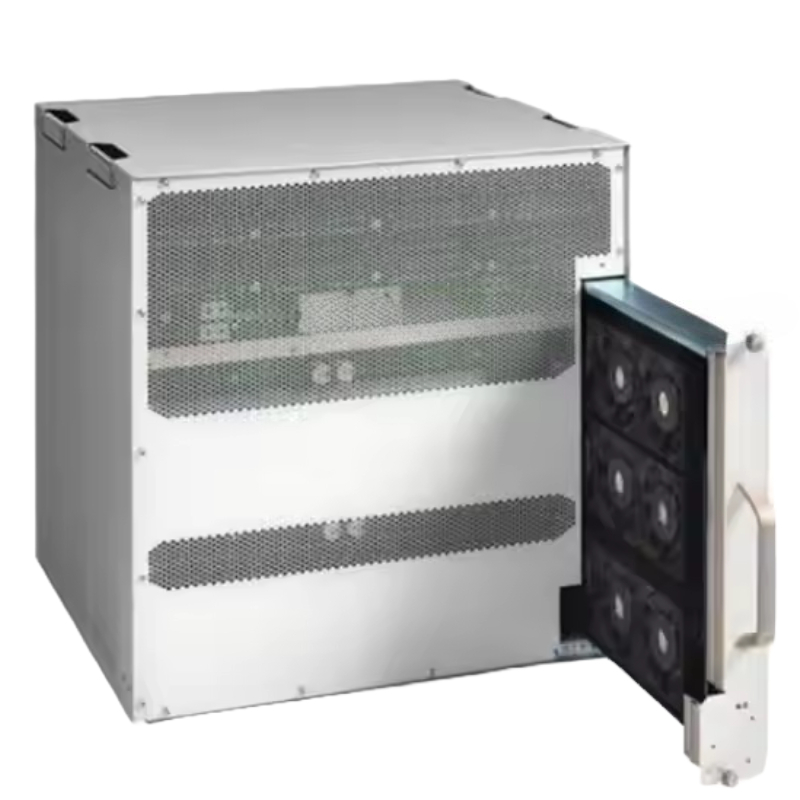
The thermal management mechanism inside the C9407R= chassis relies on a front-to-back airflow pattern designed to maintain uniform cooling levels across all hardware compartments. Precision-designed air channels reduce hotspots and enable sustained operation under substantial traffic loads. Enhanced fan-tray assemblies work with embedded temperature sensors to regulate cooling intensity based on real-time environmental readings. By dynamically adjusting airflow output, the chassis avoids unnecessary noise and power consumption while ensuring every component receives adequate thermal dissipation. This level of granularity in cooling control contributes to the chassis’ long-term reliability and consistent packet-forwarding performance.
The Cisco C9407R= chassis accommodates next-generation supervisor engines capable of supporting high-bandwidth enterprise architectures and software-defined networking capabilities. The supervisor is responsible for traffic orchestration, system control, and advanced policy implementation. With modular supervisor redundancy, the system can automatically switch to a backup supervisor upon primary failure, preserving forwarding operations without significant impact. The supervisors incorporate advanced routing functionalities, multilayer security constructs, and network automation tools to streamline administrative tasks and accelerate deployment cycles. As network traffic intensifies and application workloads evolve, the supervisor engines ensure consistent throughput and dependable forwarding logic while maintaining precise quality-of-service enforcement and segmentation controls.
Inside the C9407R= chassis, forwarding tables scale extensively, supporting large numbers of routes, MAC entries, and policy objects. This capacity positions the platform as an ideal fit for campuses experiencing rapid expansion across wired and wireless endpoints. The distributed architecture separates control-plane tasks from data-plane processing to deliver predictable latency, even during periods of elevated utilization. Built-in hardware acceleration components enable faster packet inspection and improved efficiency when handling complex security or segmentation requirements. The forwarding engine adapts dynamically to shifting traffic patterns, continually optimizing performance across multicast, unicast, and broadcast loads.
The C9407R= chassis supports modern network automation frameworks that simplify provisioning, configuration, monitoring, and troubleshooting tasks. Administrators can employ programmable APIs, controller-integrated tools, and software-defined orchestration systems to manage multiple chassis simultaneously. Through these mechanisms, large-scale deployments benefit from consistent configuration baselines, reduced operational errors, and faster rollout of new services. Comprehensive telemetry analytics offer real-time insights into network flows, device inventories, and health metrics to support proactive maintenance strategies. This integrated programmability increases overall network agility and allows organizations to implement efficient lifecycle management procedures for new infrastructure expansions.
Because of its robust supervisor architecture and versatile line card compatibility, the C9407R= chassis delivers substantial versatility for core, aggregation, and distribution roles. Whether the chassis is positioned at the center of a large campus or integrated into a complex multi-building network, it adapts seamlessly to diverse design patterns. It offers the flexibility to support high-density copper access modules, fiber-based uplinks, multi-rate ports, and advanced backbone connectivity options. Unified policy enforcement across wired and wireless domains allows enterprises to maintain consistent security and traffic control regardless of endpoint type or device location. This flexibility makes it an ideal switching foundation for organizations pursuing unified campus infrastructures.
The Cisco C9407R= chassis integrates a diverse catalog of line cards designed to accommodate a wide range of bandwidth requirements and port types. Line cards supporting Gigabit Ethernet, multigigabit interfaces, 10 Gigabit Ethernet, 25 Gigabit Ethernet, 40 Gigabit Ethernet, and 100 Gigabit Ethernet ports allow administrators to build scalable connectivity frameworks capable of supporting future growth. These cards incorporate enhanced forwarding hardware, security features, and power-efficient designs, enabling each individual module to contribute meaningfully to overall system performance. The plug-and-play integration process ensures that supervisors instantly recognize new modules and configure them within the existing network topology. This streamlined process allows continuous expansion without affecting active switching operations.
Uplink modules installed within the C9407R= chassis play a crucial role in improving backbone communication capacity. Administrators can deploy high-bandwidth uplinks to aggregate traffic from multiple access layers and forward it efficiently through regional or campus cores. The wide selection of uplink formats allows the chassis to interoperate with various aggregation switches, core routers, and distribution layers, enabling a seamless transition between hierarchical network tiers. High-throughput uplinks support extremely demanding applications, including real-time collaboration tools, cloud-based resources, hyperconverged data centers, and intensive multimedia workloads. The uplink system ensures traffic stability and reduces the risk of contention that may occur during transmission peaks.
The hot-swappable nature of the line cards enhances service continuity by permitting replacement or upgrades without shutting down the entire chassis. Maintenance operations are simplified because administrators can remove a specific line card, troubleshoot issues, or install a new module while the rest of the chassis remains active. This significantly reduces interruption compared to fixed-configuration switches where entire systems must be powered down to replace hardware. The design promotes operational efficiency during lifecycle updates and makes it possible for enterprises to modernize hardware gradually as their traffic demands grow. This approach supports organizations that wish to adopt future capabilities while retaining their existing infrastructure investments.
The architecture of the line cards used in the C9407R= chassis incorporates hardware-level optimizations that allow the switch to perform consistently under high-intensity data flows. Forwarding chips within the modules accelerate packet classification, security validation, and flow-based policy enforcement. As traffic volumes rise, the line cards distribute workloads to ensure balanced utilization, minimizing latency and preventing bottlenecks under heavy loads. These enhancements contribute to an overall stable environment that supports advanced applications such as virtual desktops, high-resolution video communications, large-scale IoT deployments, and bandwidth-intensive cloud operations. The continuous reliability makes the chassis a dependable backbone for organizations anticipating persistent traffic growth.
Security forms a central component of the C9407R= chassis design. Embedded hardware-based defense features offer robust protection against a variety of network threats, including unauthorized access attempts, spoofing attacks, and segmentation breaches. The chassis incorporates advanced encryption mechanisms, identity-based access controls, and network telemetry that supports rapid detection of abnormal traffic patterns. Intelligent security policies can be applied across multiple modules, allowing enterprises to enforce consistent protective measures across their entire switching domain. Through microsegmentation, administrators can isolate sensitive departments, applications, or user groups, ensuring that confidentiality is maintained even in high-density environments.
The policy enforcement capabilities of the C9407R= chassis allow administrators to define precise rules governing user behavior, application priorities, device access, and service quality. These rules are processed at the hardware layer to maintain rapid response speeds and avoid disruptions to normal traffic flows. When combined with powerful authentication tools, the chassis ensures that only verified users access critical network resources. The system continually monitors active flows, verifying that policies are followed and adjusting dynamically if required. This real-time enforcement ensures stable performance and reduces the risk of security vulnerabilities caused by misconfigured or outdated settings.
The platform supports encrypted communication mechanisms that safeguard sensitive information as it moves through the network. Real-time encryption capabilities ensure that data remains confidential, especially when being transported across public or unsecured links. Built-in hardware accelerators maintain high throughput while processing encrypted traffic, ensuring performance remains consistent regardless of encryption overhead. The system’s secure boot features and firmware verification safeguards prevent unauthorized software from being introduced during routine updates. This multi-layered defense significantly strengthens the network’s overall security stature and reduces risks associated with modern cyber threats targeting enterprise communication systems.
The chassis leverages telemetry-driven analytics to achieve comprehensive visibility into traffic flows. Administrators gain a granular view of applications, user behaviors, network paths, and device health metrics. These insights support rapid detection of anomalies, highlighting suspicious activity that could indicate intrusion attempts or misconfigured elements. Continuous streaming telemetry delivers near-instantaneous updates, allowing rapid response and minimizing potential impact. This visibility also assists planning efforts by identifying congestion points, underutilized links, and opportunities for optimization.
High availability stands at the forefront of the C9407R= chassis design. The platform incorporates redundant supervisors, power modules, fans, and uplinks that work together to maintain uninterrupted service. The switch’s stateful switchover capability enables seamless failover between supervisors, ensuring that traffic forwarding continues even if the primary control plane experiences issues. The design reduces recovery time and improves network resilience during unexpected outages or planned maintenance operations. As organizations depend more heavily on uninterrupted connectivity, the C9407R= chassis ensures stable and predictable performance across all core business functions.
Nonstop forwarding ensures that data-plane operations remain active while control-plane modules transition during failovers or upgrades. The system stores essential forwarding information and replicates critical states across redundant supervisors. This cohesive redundancy model minimizes packet loss and keeps communication paths active during transitions. Applications remain unaffected, and users experience no noticeable performance degradation. The chassis architecture ensures that this functionality operates seamlessly, even within intricate enterprise environments requiring continuous uptime across multiple interconnected systems.


 Contact Us
 Information
 Catalog
 Solid State Drives (SSD)
 Network Switches
 Hard Disk Drives
 HBA & Controllers
 PC & Servers
 PC & Server Memory
 CPU & Processors
 Network Routers
 Power Supplies
 Tape Drives & Libraries
 Network Devices
 Computer & Network Cables