(7% discount is applied at checkout)
Cart is empty
Your go-to destination for cutting-edge server products


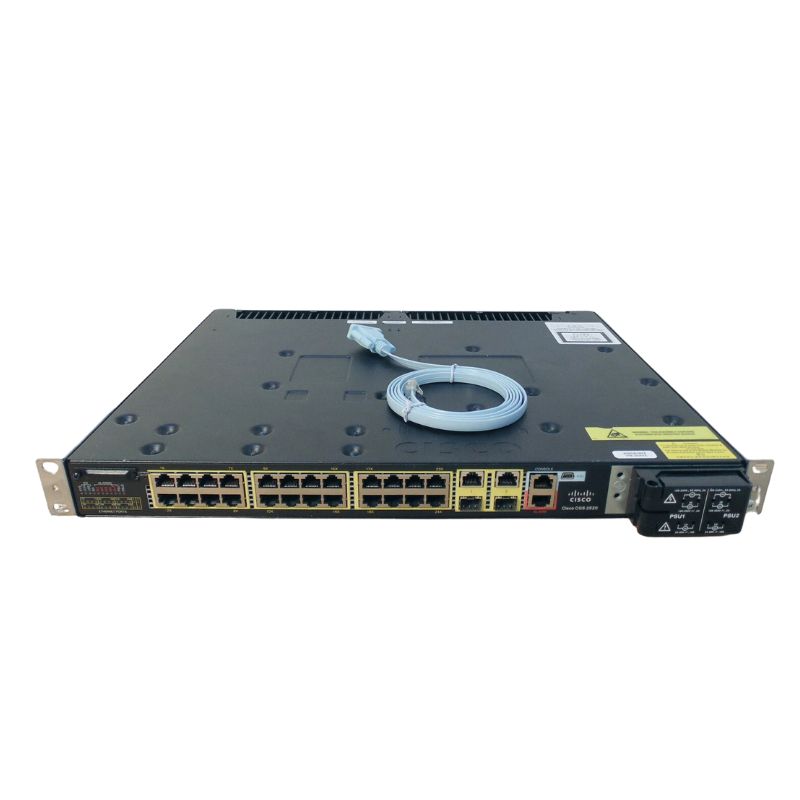
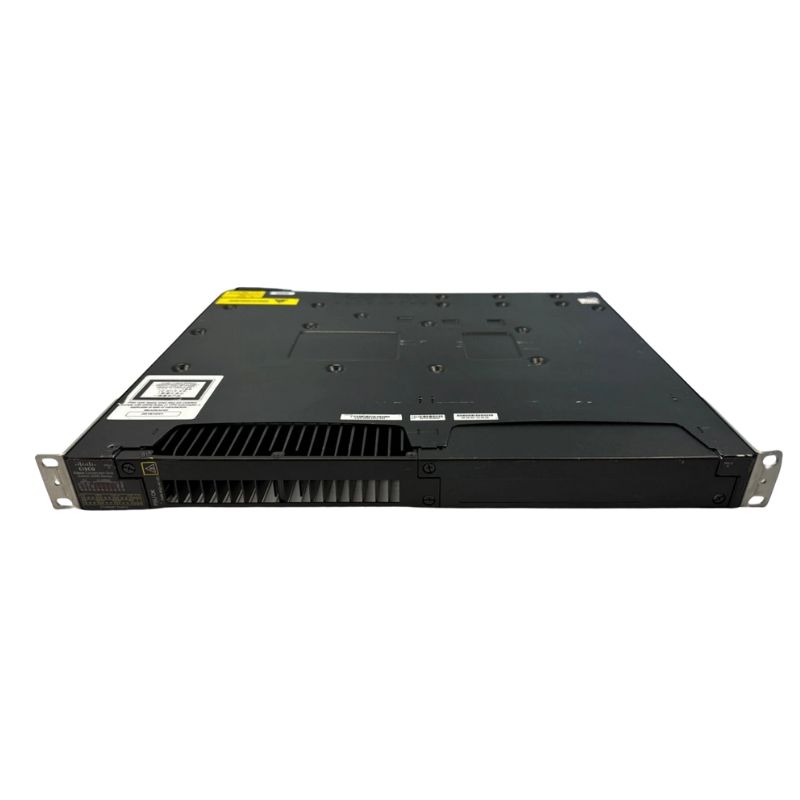
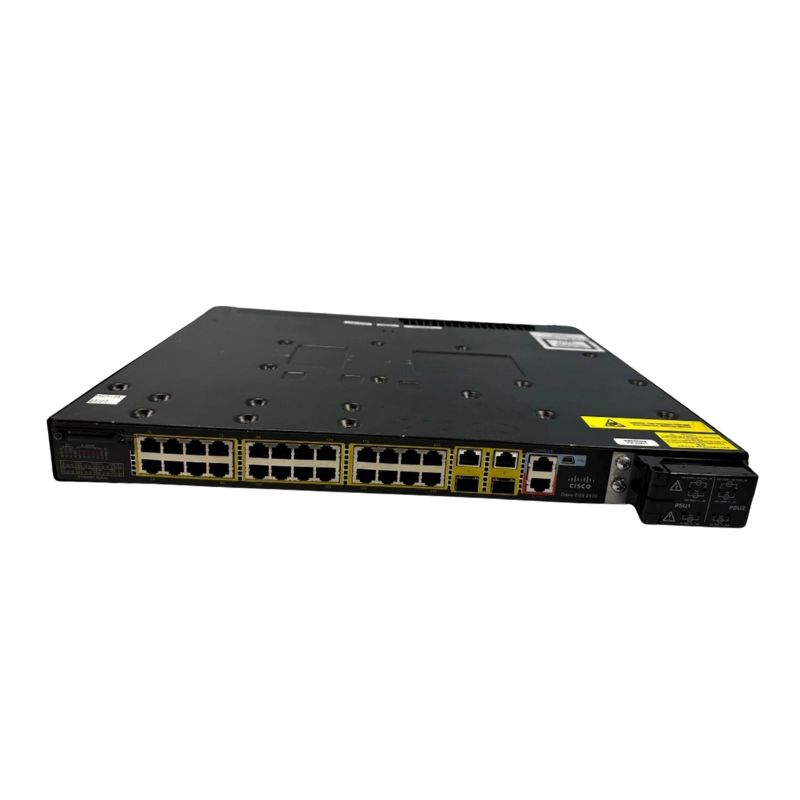
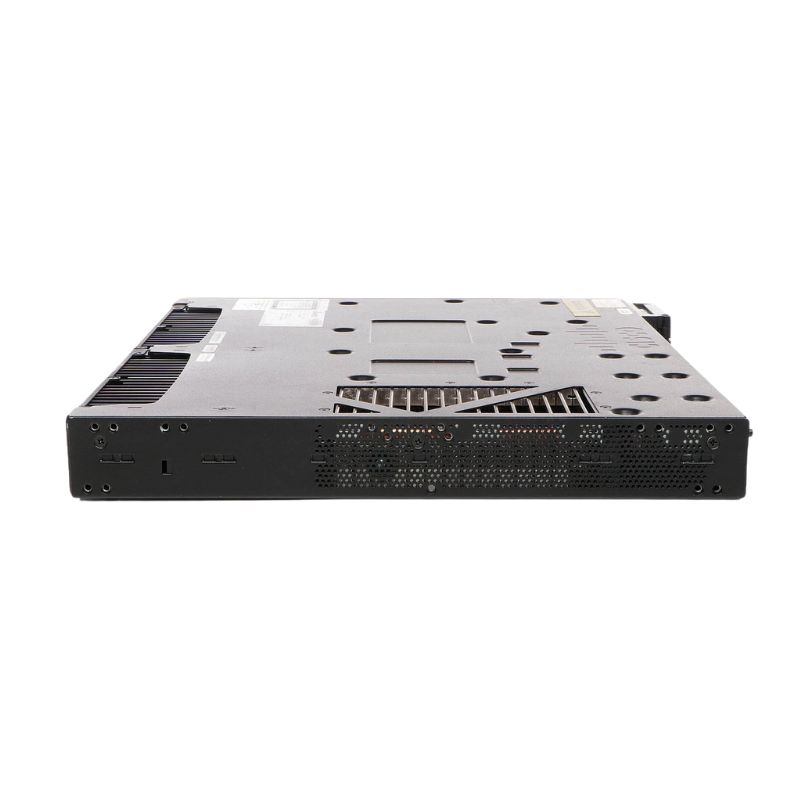
Cisco CGS-2520-24TC 24 Ports IE 2520 Manageable Switch. Excellent Refurbished with 1 year replacement warranty
| SKU/MPN | Warranty | Price | Condition | You save |
|---|---|---|---|---|
| CGS-2520-24TC | 1 Year Warranty | $595.00 | Factory-Sealed New in Original Box (FSB) | You save: $208.25 (26%) |
| CGS-2520-24TC | 1 Year Warranty | $189.00 | Excellent Refurbished | You save: $66.15 (26%) |
The Cisco CGS-2520-24TC is engineered to deliver reliable switching for demanding environments, offering enhanced manageability, durable architecture, and flexible connectivity. Its versatile configuration supports industrial, commercial, and enterprise-grade network setups.
Designed for high-efficiency traffic flow and uninterrupted operations, this switch features optimized forwarding rates, solid bandwidth support, and advanced management capabilities suitable for structured or expanding infrastructures.
The switch integrates multiple remote-monitoring protocols, improving visibility, diagnostics, and network performance optimization. Administrators can monitor traffic patterns, manage configurations, and automate tasks seamlessly.
This model provides extensive connectivity to support diverse deployment scenarios, from industrial control systems to enterprise LAN structures.
The unit comes equipped with a memory expansion slot to enhance operational capabilities.
The Cisco CGS-2520-24TC 24 Ports IE 2520 manageable switch represents a key product in the Cisco Industrial Ethernet family, designed specifically for demanding network environments where reliability, security, and manageability are essential. This category focuses on compact 24-port managed switches that combine hardened build quality with enterprise-grade features, allowing systems integrators, industrial IT managers, and infrastructure planners to deploy robust Layer 2 switching solutions across manufacturing floors, transportation hubs, utilities, and campus distribution points. The category emphasizes switches that provide deterministic connectivity, simplified configuration, and advanced management while minimizing downtime and maintenance complexity for industrial and commercial deployments.
Switches in this category are commonly deployed at the network edge where I/O devices, controllers, human-machine interfaces, IP cameras, and access points require reliable Ethernet connectivity. The Cisco CGS-2520-24TC is particularly well suited for environments that demand a 24-port footprint in a compact form factor, with both copper and uplink options available to suit various cabling topologies. Typical deployments include factory automation lines, process control rooms, smart building backbones, retail store networks, and municipal infrastructure. These switches support the operational requirement to sustain predictable connectivity under harsh physical conditions and fluctuating network loads.
The hardware design of switches in this category focuses on industrial robustness combined with enterprise-class switching performance. The chassis is compact and rack, DIN-rail, or cabinet mountable depending on the model variant, enabling flexible installation. Port density is optimized for small to medium aggregation roles with 24 fixed Ethernet ports suitable for connecting end devices and a small number of higher-speed uplinks for aggregation to distribution switches. Power options often include both AC and DC to align with the power distribution schemes commonly found in industrial environments. LED indicators provide clear status feedback at a glance, and ruggedized components increase resistance to vibration and temperature extremes. The CGS-2520-24TC specifically prioritizes long-term reliability so that maintenance windows are minimized and mean time between failures is maximized.
Media flexibility is a hallmark of this category: models typically support a mix of 10/100/1000 ports with optional fiber uplinks to bridge larger campus or plant networks. The CGS-2520-24TC configuration therefore fits a wide range of layering needs, enabling copper-based device connectivity together with fiber-based aggregation or redundancy links. This approach reduces the need for immediate infrastructure upgrades while providing a direct migration path to higher-speed backbones as bandwidth demands grow. Media conversion capabilities and varied transceiver support ensure the switch can interface with diverse physical layers and long-reach connections where necessary.
Category-level switching features address the demands for low-latency forwarding, traffic prioritization, and efficient handling of converged traffic types. These switches implement wire-speed switching for typical Ethernet frames and provide hardware-assisted forwarding for critical traffic patterns, enabling deterministic performance for time-sensitive protocols. Advanced buffering strategies and QoS controls ensure that latency-sensitive industrial protocols and voice or video streams receive appropriate priority treatment while general-purpose traffic is scheduled without starving essential services. The CGS-2520-24TC includes robust QoS features so that operations requiring prioritized flows, such as control commands or VoIP, remain predictable under heavy load.
Network segmentation through virtual LANs is central to securing and organizing industrial networks. This category supports flexible VLAN implementations that help separate traffic types—control plane, management, telemetry, and guest access—reducing broadcast domains and increasing security posture. The switch supports standard 802.1Q tagging, private VLANs where needed, and VLAN-based QoS policies. VLANs are essential for complying with industry segmentation best practices; they reduce the blast radius of incidents and enable more granular policy enforcement without complex overlay architectures.
Security is treated as a multi-layered discipline in this category and includes features that limit unauthorized access, detect anomalous behavior, and ensure traffic integrity. Access control at the switch level is implemented through mechanisms such as port security, MAC address filtering, and 802.1X authentication for devices that support it. Management plane protection includes role-based access controls and secure management protocols to prevent exposure of administrative interfaces. For industrial scenarios, the switch also supports secure boot or image authentication, ensuring that only validated firmware runs on the device. These capabilities collectively help operators meet regulatory and operational requirements by minimizing attack surfaces and improving traceability.
Management options for the CGS-2520-24TC category are designed to reduce operational overhead and accelerate deployments. Local command line interface (CLI) access, web-based GUIs, and support for SNMP enable both direct and centralized management strategies. Integration with network management platforms allows for inventory tracking, configuration templates, and bulk firmware updates, which are critical for large-scale rollouts. Additionally, support for scripting or automation through APIs or configuration templates can reduce human error and accelerate consistent provisioning across multiple devices. Many models in this family include features that allow for zero-touch deployment workflows so that devices can automatically register with central controllers when installed, drastically cutting the time from unboxing to production readiness.
Reliability features in this category are targeted at minimizing downtime and ensuring rapid recovery when faults occur. Redundancy mechanisms such as STP variants, rapid link failover, and link aggregation provide both path resilience and bandwidth scaling. For scenarios that require high availability, support for redundant power inputs and graceful restart mechanisms for control plane protocols allow devices to maintain forwarding state while management processes recover. Diagnostic capabilities such as cable diagnostics, interface error counters, and syslog integration provide operators with actionable telemetry that speeds troubleshooting and reduces mean time to repair. The CGS-2520-24TC is engineered with these principles in mind so that industrial operators can maintain continuous operations even under failure conditions.
The software stacks that accompany switches in this category are crafted to deliver both functional richness and long-term supportability. Firmware releases are managed to provide security patches, feature updates, and performance improvements across the product lifecycle. Manufacturers typically publish clear support timelines for major firmware branches to help customers plan upgrade windows and maintain compliance. The ability to roll back firmware and to maintain configuration compatibility between versions is also emphasized to minimize operational disruption during maintenance cycles. The CGS-2520-24TC benefits from these software lifecycle practices, which enable predictable upgrade paths and consistent platform behavior over time.
These switches are often integrated into layered network designs where access layer devices feed aggregation and core switches. They support common industry protocols for bridging into these higher-level architectures including VLAN trunking, Link Aggregation Control Protocol (LACP), and routing support for certain models. Integration is straightforward when following standard topologies, and the switches provide interoperability with other vendor equipment through adherence to open standards. For enterprises modernizing their networks, the CGS-2520-24TC can function as a cost-effective access layer device that supports growth strategies without sacrificing manageability or feature parity.
In manufacturing, the CGS-2520-24TC category is used to connect programmable logic controllers, machine vision cameras, and operator workstations across assembly lines. The deterministic features help preserve timing for control loops and reduce jitter for synchronized operations. In transportation, such as rail or Intelligent Transportation Systems, these switches enable communications for signaling, surveillance, and passenger information systems where uptime is mission-critical. In utilities and energy, they facilitate remote monitoring and control functions for substations or distributed generation sites, often pairing with serial-to-Ethernet converters or protocol gateways. In campus deployments, they serve as distribution or access switches for departmental networks, supporting a mix of IP telephony, wireless access, and workstation connectivity.
Scalability in this category is addressed through modular design philosophies at the network level. While each switch provides a fixed port count, the architecture permits stacking or aggregated uplinks to increase total port capacity and resilience. Future-proofing strategies encourage selecting models that offer higher-speed uplinks, modular SFP/SFP+ cages, or software features that anticipate evolving security and automation requirements. The CGS-2520-24TC supports these strategies by enabling gradual expansion of both network capacity and feature utilization without wholesale replacements, making it a pragmatic choice for organizations that expect incremental growth.
Buying decisions in this category should consider not only initial acquisition cost but also operational expenses associated with deployment, management, and lifecycle maintenance. Energy efficiency, firmware stability, and centralized management capabilities reduce operational overhead by minimizing physical interventions and streamlining updates. Long support windows and predictable maintenance schedules reduce unplanned expenses and help smooth budgeting for IT operations. The CGS-2520-24TC often strikes a balance between capital expenditure and operational savings by delivering durable hardware and a robust software feature set that lowers the total cost of ownership over the product’s useful life.
When evaluating switches in this category, buyers typically assess port density and types, uplink capability, environmental tolerances, security features, and support for centralized management. They weigh immediate technical needs against projected growth and consider compatibility with existing cabling and monitoring systems. Warranty terms, optional maintenance contracts, and vendor reputation for firmware support also guide purchasing decisions. The CGS-2520-24TC frequently appears on shortlists where a blend of industrial robustness and economical manageability is required, offering a competitively rich feature set for its class.
This category should be distinguished from larger enterprise core switches that provide multi-terabit throughput and advanced Layer 3 routing capabilities. It is also different from small unmanaged switches designed strictly for plug-and-play use without advanced security or management. The CGS-2520-24TC sits in the middle ground: more capable than unmanaged edge switches yet more compact and cost-effective than full-featured enterprise chassis. This middle ground makes the product especially appealing for edge deployments where control and reliability matter but extreme throughput and complex routing are not required.
Vendor support options for devices in this category typically include hardware replacement plans, software maintenance subscriptions, and access to knowledge bases and technical support. For critical deployments, organizations may opt for extended service level agreements that guarantee rapid replacement and prioritized technical assistance. Professional services such as site surveys, configuration templates, and commissioning help ensure that the switch integrates seamlessly into complex environments. These services reduce deployment risk and accelerate time to production for projects using the CGS-2520-24TC family of switches.
Optimizing deployments in this category involves thoughtful network design, consistent naming and addressing schemes, and disciplined configuration management. Planning for adequate power provisioning, cable management, and cooling improves reliability. Enforcing consistent firmware baselines and leveraging centralized management tools reduce configuration drift and security exposure. When connecting time-sensitive devices, ensure QoS policies are applied end-to-end and that monitoring is configured to alert on latency or packet loss trends. Thoughtful redundancy planning using link aggregation and rapid failover protocols will enhance resilience without significantly increasing complexity.


 Contact Us
 Information
 Catalog
 Solid State Drives (SSD)
 Network Switches
 Hard Disk Drives
 HBA & Controllers
 PC & Servers
 PC & Server Memory
 CPU & Processors
 Network Routers
 Power Supplies
 Tape Drives & Libraries
 Network Devices
 Computer & Network Cables