(7% discount is applied at checkout)
Cart is empty
Your go-to destination for cutting-edge server products
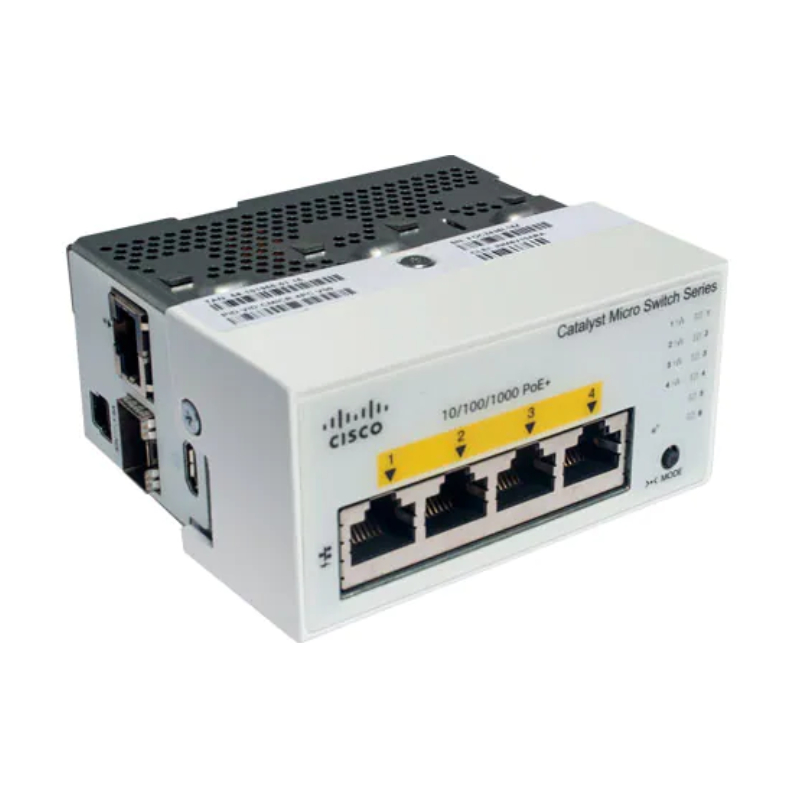


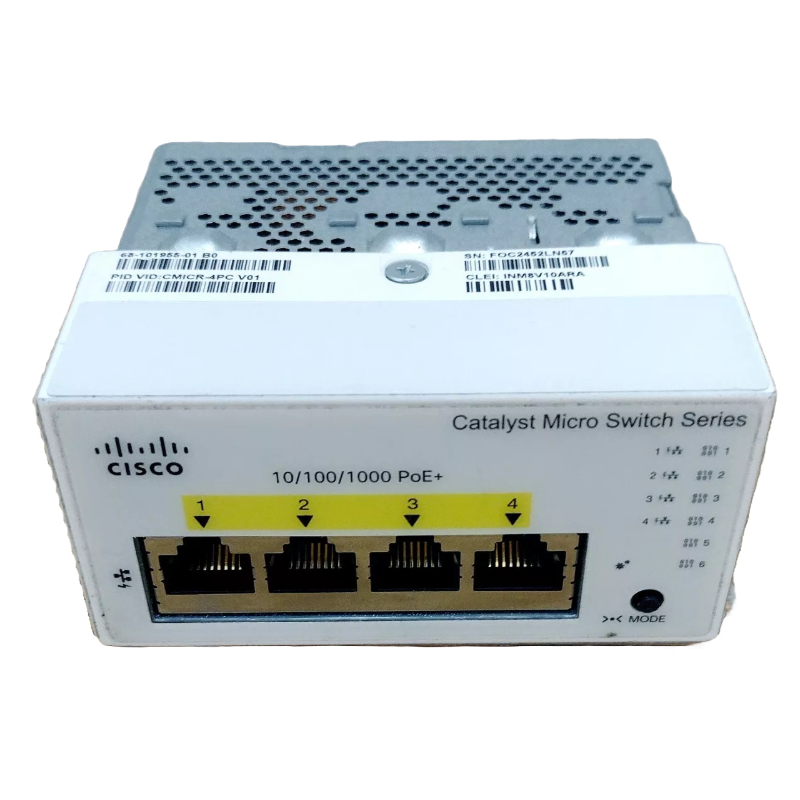
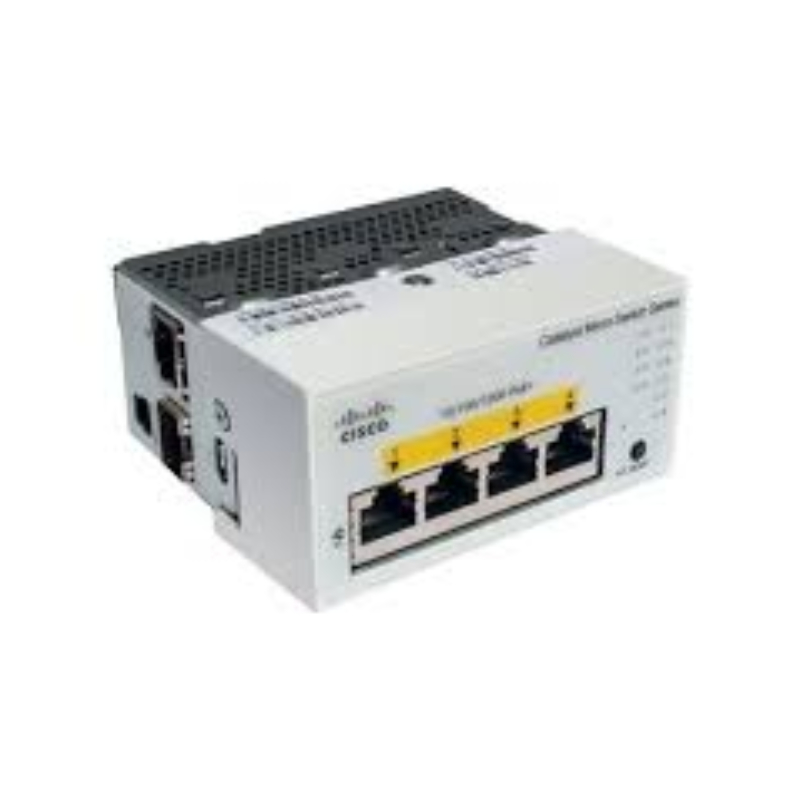
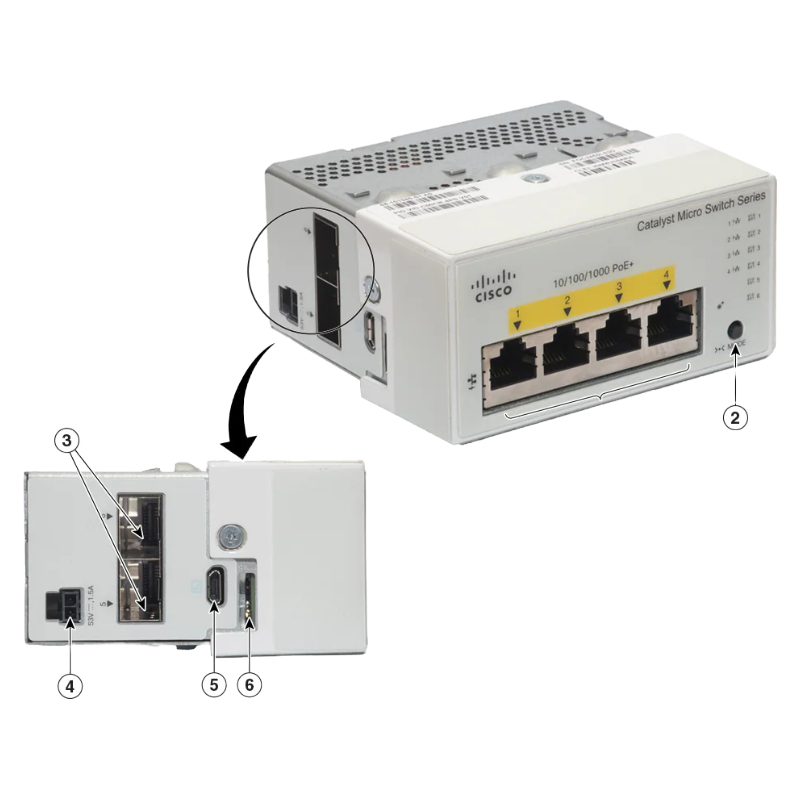
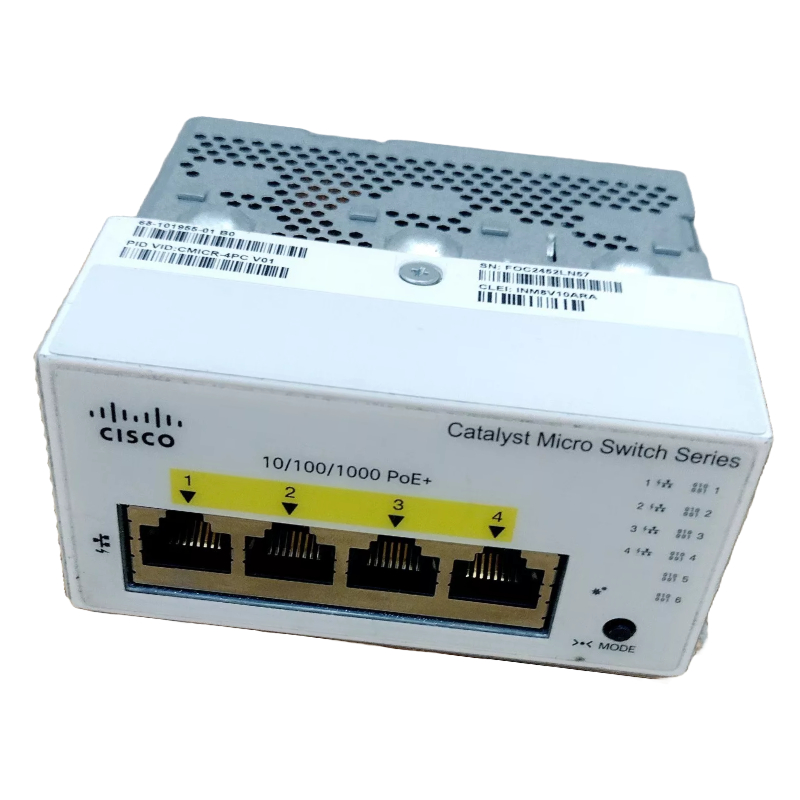
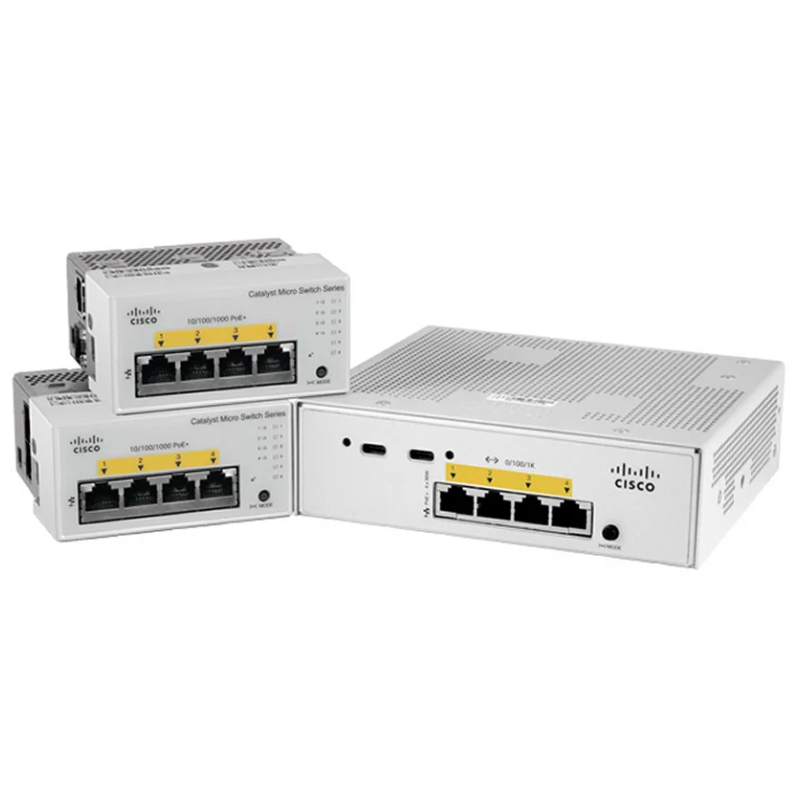
Cisco CMICR-4PC 6-Ports Ethernet Switch. Excellent Refurbished with 1 year replacement warranty
The Cisco CMICR-4PC is a compact yet robust networking solution engineered for environments that require reliable connectivity, Power over Ethernet capabilities, and streamlined management. Designed for wall-mount installations, this switch blends efficient performance with enterprise-class security features and flexible configuration options.
The Cisco CMICR-4PC 6-Ports Ethernet Switch is presented as a compact, enterprise-minded network component designed to address the needs of small edge aggregation, compact wiring closets, and specialized industrial and commercial applications. Its six-port configuration positions it between consumer-grade home switches and larger campus devices, offering a balance of physical density, manageability, and performance suitable for voice, video, and data traffic at the network edge. The product description emphasizes reliability, predictable latency, and the operational controls expected from professional networking equipment while remaining physically small enough to deploy in constrained locations.
The CMICR-4PC 6-Ports Ethernet Switch is engineered with a focus on stable packet forwarding, flexible port configuration, and network control features that integrate smoothly into modern enterprise topologies. Typical technical attributes highlighted for a device in this category include support for industry-standard Ethernet speeds, robust forwarding performance sufficient for small aggregation roles, and a chassis architecture optimized for heat dissipation and long-term continuous operation. Its physical footprint and port count make it an ideal candidate for points of presence where space is at a premium but manageability cannot be compromised.
With six physical Ethernet ports, the switch is commonly used to connect a mix of user devices, IP phones, wireless access points, and uplinks to higher-tier switches or routers. Port flexibility is a central selling point: ports can be allocated for access, trunking, or link aggregation roles, offering administrators granular control of traffic flows. For deployments requiring segmentation, VLANs can be assigned per port to separate voice and data or to isolate management traffic from end-user flows. This port-level flexibility supports a broad array of deployment patterns without needing more complex or larger equipment.
Performance expectations for a six-port managed switch are centered on low-latency switching, wire-speed forwarding for typical frames, and quality of service mechanisms that prioritize latency-sensitive traffic. The CMICR-4PC’s architecture is intended to handle mixed traffic patterns—concurrent video streams, voice packets, and bursty file transfers—without introducing excessive jitter or packet loss. Prioritization rules and queue management allow administrators to enforce service levels for critical applications, ensuring voice and video maintain clarity and synchronization in environments where real-time performance matters.
Manageability elevates a small switch from a simple connectivity device to a network policy enforcement point. Administration interfaces typically include a web-based GUI for rapid configuration, a command line interface for scripting and precise control, and SNMP support for integration with centralized monitoring systems. These management avenues allow technicians to provision VLANs, apply ACLs, configure port mirroring for diagnostics, and push firmware updates securely. When integrated into an overall Cisco environment, features such as centralized authentication and automated policy deployment can simplify operations at scale.
Security on small managed switches encompasses access control at the port level, traffic-filtering rules, and integration with identity and access management systems. Port-based security mechanisms prevent unauthorized devices from injecting traffic, while MAC address filtering and dynamic port locking reduce the risk of man-in-the-middle scenarios at the edge. Role-based administrative access restricts who can change configuration settings, and secure management protocols such as HTTPS and SSH protect credentials and configuration data in transit. When combined with network-wide policies, the switch becomes an enforcement point for segmentation strategies that limit lateral movement and contain breaches.
Logical segmentation through Virtual LANs is a primary tool for organizing network traffic without additional cabling. The CMICR-4PC’s support for multiple VLANs allows administrators to segregate corporate desktops, guest wireless, voice infrastructure, and management consoles. This isolation is not only an organizational convenience but a security imperative: separating sensitive control plane traffic from user traffic reduces the attack surface and simplifies compliance with regulatory frameworks that demand controlled access to systems and data. Traffic isolation is further reinforced with ACLs and per-port QoS policies to prioritize and limit resource usage.
Edge switches are often deployed in non-ideal environments such as small wiring closets, retail backrooms, or industrial cabinets. The reliability profile for the CMICR-4PC includes considerations like fanless operation for silent deployment, passive cooling, and component choices rated for continuous operation over long service intervals. Ruggedized mounting options and secure enclosures allow deployment in restricted spaces while protecting the unit from accidental physical interference. Where applicable, industrial certifications and extended temperature ranges give operators confidence to use the device in harsher conditions than standard office equipment would tolerate.
Although redundancy is often associated with higher-tier aggregation switches, small edge devices can participate in uptime strategies through rapid reconfiguration and support for redundant uplinks. Link aggregation and fast convergence protocols reduce the impact of a single link failure, and careful cabling architecture ensures that a single physical failure does not isolate critical services. The switch’s predictable behavior under load and its ability to rapidly restore forwarding after transient conditions contribute to a resilient local network fabric.
Installing the CMICR-4PC requires attention to airflow, power provisioning, and cable management. Compact switches benefit from dedicated ventilation pathways and from being mounted in locations where cabling is neat and strain-relieved. Power provisioning decisions should consider whether Power over Ethernet is required for attached devices; if PoE is used, power budgets must be planned to avoid overload. For non-PoE deployments, separate power supplies and the potential for redundant power sources should be evaluated for mission-critical edge systems.
The six-port managed switch fits numerous real-world roles. In small branch offices, it provides local aggregation for a handful of workstations, printers, and IP phones while trunking uplinks to a border router. In retail and hospitality environments, it supports point-of-sale terminals and Wi-Fi access points with compact, unobtrusive hardware that can be locked away from customer reach. Industrial and manufacturing sites can use the switch for local device clusters, coordinating sensors and edge compute while keeping management infrastructure logically separated. Each scenario benefits from the predictable performance and manageability that a professional-grade switch delivers.
Voice over IP deployments often require strict prioritization and clean separation from file traffic. The CMICR-4PC can be configured to recognize voice VLANs and apply QoS to minimize latency and jitter. Similarly, wireless access points benefit from a small managed switch that provides VLAN tagging, power where needed, and per-port bandwidth controls. By offloading these services to localized switching hardware, overall network performance and user experience are improved without requiring large, centralized switching investments.
Retail point-of-sale systems and small edge compute devices often require secure, low-latency connectivity with limited physical space. The six-port switch provides direct, short-path connectivity and the administrative controls needed to isolate POS traffic from public networks. This reduces the attack surface and simplifies compliance with payment industry security standards when properly scoped and configured.


 Contact Us
 Information
 Catalog
 Solid State Drives (SSD)
 Network Switches
 Hard Disk Drives
 HBA & Controllers
 PC & Servers
 PC & Server Memory
 CPU & Processors
 Network Routers
 Power Supplies
 Tape Drives & Libraries
 Network Devices
 Computer & Network Cables