(7% discount is applied at checkout)
Cart is empty
Your go-to destination for cutting-edge server products
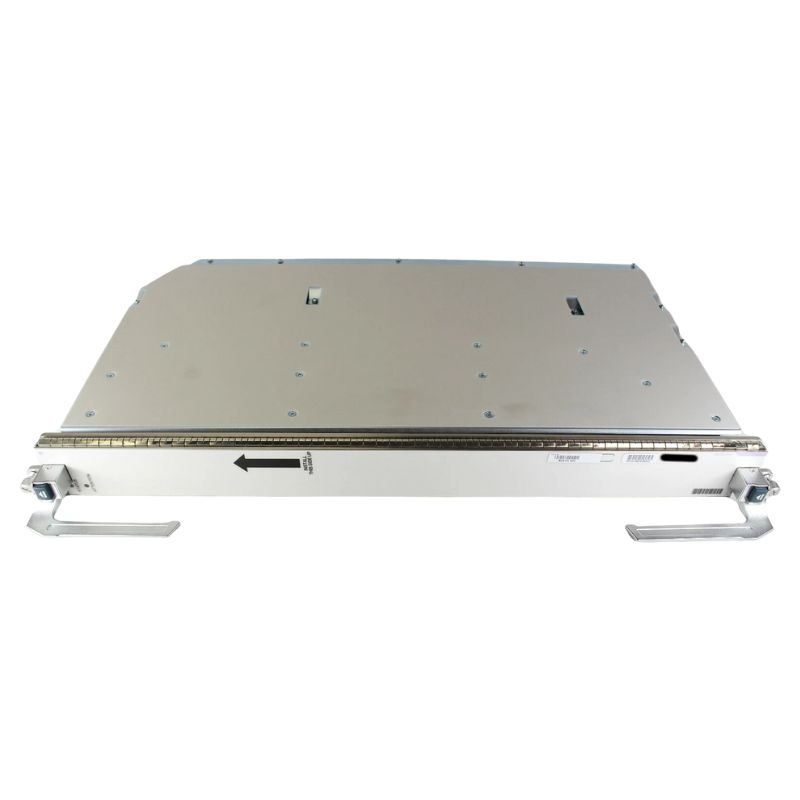


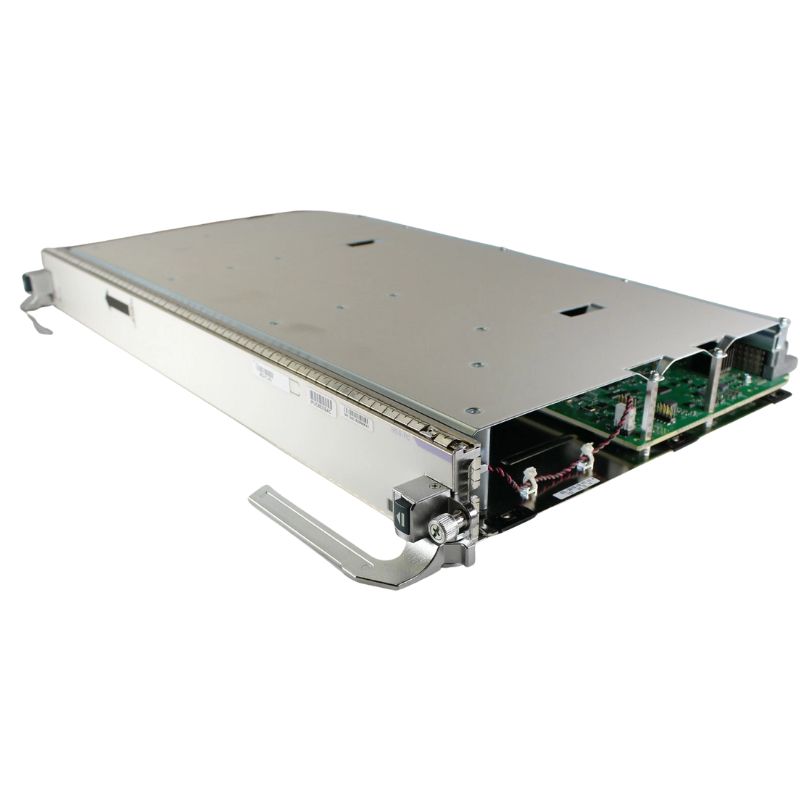
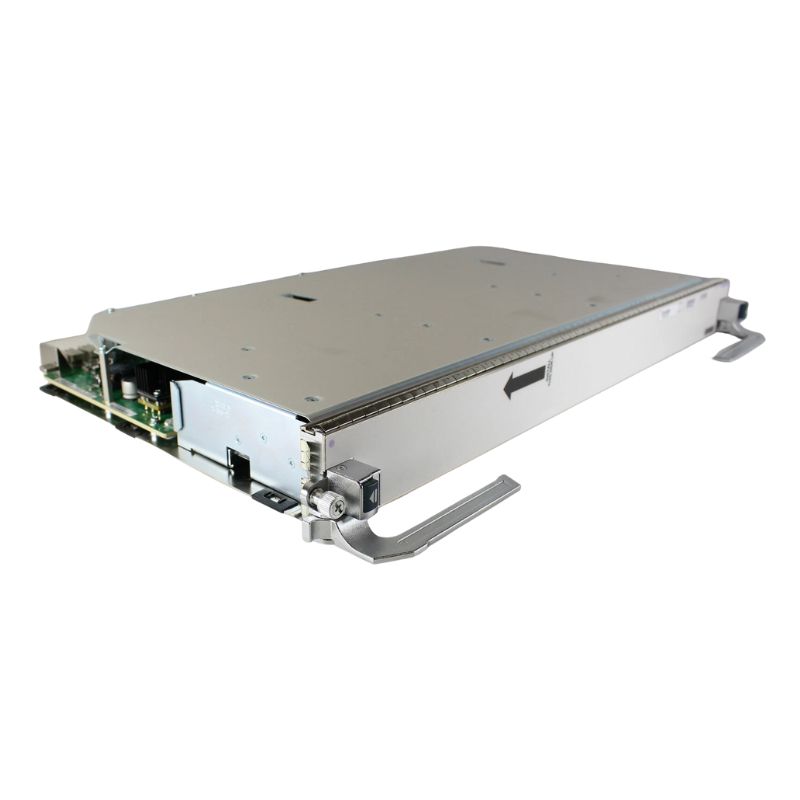
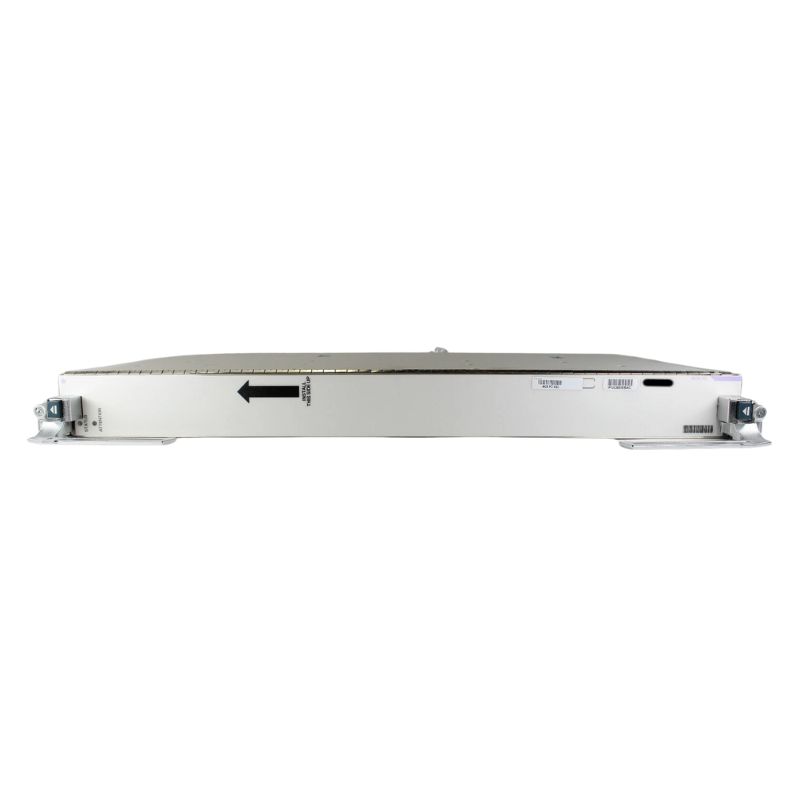
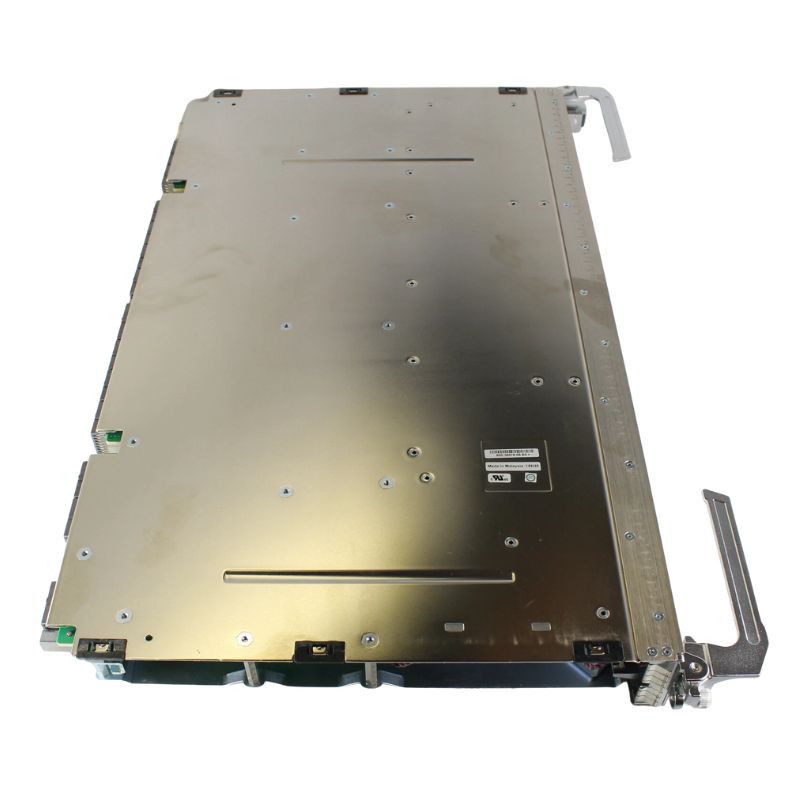
Cisco NC6-FC Network Convergence System 6008 Fabric Card. Excellent Refurbished with 1 year replacement warranty
The Cisco NC6-FC Network Convergence System 6008 Fabric Card represents a mission-critical switching and forwarding component engineered for carrier-grade network infrastructures. Designed to operate within high-density routing environments, this fabric module enhances system throughput, optimizes inter-slot communication, and supports scalable service delivery in modern telecom and enterprise backbone architectures. Built under Cisco’s advanced network convergence design philosophy, it ensures seamless packet transport, deterministic latency control, and resilient fabric-level redundancy for mission-critical deployments.
The Cisco NC6-FC Network Convergence System 6008 Fabric Card is a critical internal switching component designed to enable high-speed, non-blocking packet transport across the chassis backplane in carrier-grade routing environments. Within the architecture of the Cisco NCS 6008 platform, the fabric card operates as the central data movement engine, ensuring that traffic exchanged between line cards is efficiently distributed across the system with minimal latency and maximum throughput consistency. It serves as the backbone of the distributed forwarding model, allowing the chassis to scale bandwidth capacity while maintaining deterministic performance characteristics required in service provider core and edge networks.
As a fundamental part of the system’s modular design, the NC6-FC fabric card integrates tightly with route processors and line cards, enabling seamless packet switching across multiple service planes. It is engineered to support high-density traffic environments where aggregation, convergence, and packet optimization are essential. The architecture ensures that each packet is forwarded through optimized internal pathways, reducing congestion and ensuring uniform performance even under extreme load conditions.
The Cisco NC6-FC fabric card is designed specifically for integration into the Cisco NCS 6008 chassis, where it connects directly to high-speed backplane interfaces that interlink all installed line cards. The system utilizes a distributed fabric model, in which multiple fabric cards may operate concurrently to increase redundancy and aggregate switching capacity. This modular approach allows the platform to dynamically adapt to evolving network requirements without requiring architectural redesign or system downtime.
Within the chassis, the fabric card establishes a deterministic communication fabric that ensures each slot can communicate with any other slot at full line rate. This is particularly important in service provider environments where traffic must traverse multiple logical segments such as MPLS cores, aggregation layers, and service edge domains. The NC6-FC ensures that these transitions occur without packet loss or performance degradation.
The Cisco NC6-FC fabric card is built on a non-blocking architecture that guarantees full cross-sectional bandwidth across all connected line cards. This means that any port on any line card can communicate with another port simultaneously at line rate without contention within the fabric layer. This design principle is essential for modern service provider networks that require predictable performance under highly variable traffic patterns.
The internal switching mechanism of the fabric card is optimized for packet-based workloads typical in carrier Ethernet, IP/MPLS, and advanced transport networks. By eliminating internal bottlenecks, the fabric ensures that data forwarding remains consistent regardless of traffic bursts, routing updates, or service provisioning operations.
The data path architecture within the NC6-FC fabric card is engineered for extremely low latency packet transfers. Each packet entering the fabric is processed through high-efficiency forwarding pipelines that prioritize deterministic switching behavior. This ensures that latency-sensitive applications such as voice, video, and real-time financial data transmission maintain stability even in congested network conditions.
The fabric design also incorporates advanced buffering strategies to manage microbursts and traffic aggregation scenarios. These buffers are dynamically allocated based on traffic demand, ensuring efficient utilization of internal resources while maintaining strict quality-of-service guarantees across all active services.
One of the key advantages of the Cisco NC6-FC fabric card is its ability to support scalable network expansion without requiring structural redesign. As service providers increase bandwidth demand or expand service offerings, additional line cards and fabric capacity can be introduced to the system seamlessly. The fabric card plays a central role in maintaining consistent performance as system scale increases.
The modular architecture ensures that network operators can incrementally expand capacity while preserving operational continuity. This is particularly valuable in environments where uptime is critical and maintenance windows are limited. The NC6-FC fabric card enables horizontal scalability while preserving vertical performance integrity across the chassis.
In large-scale service provider deployments, the fabric card enables aggregation of massive traffic volumes across multiple service domains. Whether handling metro aggregation, backbone routing, or data center interconnect workloads, the NC6-FC fabric maintains consistent forwarding behavior. Its architecture is designed to accommodate increasing interface densities and evolving transport technologies without degradation in performance.
This scalability extends to both IPv4 and IPv6 environments, as well as advanced service encapsulations such as MPLS and segment routing. The fabric ensures that all encapsulated traffic types are processed uniformly, preserving service integrity across heterogeneous network environments.
The Cisco NC6-FC fabric card is engineered with high availability as a core design principle. In multi-fabric configurations, multiple cards operate in parallel to provide redundancy and load distribution. If a single fabric card experiences failure or degradation, the system automatically reroutes traffic through remaining operational fabric components, ensuring uninterrupted service continuity.
This redundancy model eliminates single points of failure within the chassis switching architecture. The system continuously monitors fabric health and performance metrics to ensure optimal operation and to proactively identify potential issues before they impact service delivery.
The fabric card incorporates advanced fault isolation mechanisms that prevent localized failures from propagating across the system. When anomalies are detected, traffic is dynamically rerouted through healthy fabric paths, maintaining system stability. Recovery operations are automated and designed to minimize disruption to live traffic flows.
These mechanisms are essential for carrier-grade environments where service level agreements require extremely high uptime and minimal packet loss. The NC6-FC fabric ensures that network operators can maintain operational continuity even under hardware stress conditions or partial system failures.
The Cisco NC6-FC fabric card supports advanced traffic engineering technologies including MPLS and segment routing, which are essential for modern service provider architectures. These technologies allow network operators to define explicit forwarding paths, optimize bandwidth utilization, and enforce service-level policies across the network.
The fabric card ensures that labeled traffic is processed efficiently across the chassis without introducing additional latency or processing overhead. This enables high-performance transport of complex service chains and multi-layer network architectures.
Deterministic forwarding behavior is a key requirement in service provider environments, and the NC6-FC fabric card is specifically designed to meet this requirement. By ensuring consistent packet handling across all traffic classes, the fabric supports predictable service delivery even in highly dynamic network conditions.
This is particularly important for applications requiring strict quality-of-service enforcement, such as enterprise VPNs, mobile backhaul traffic, and cloud interconnect services. The fabric ensures that service policies are enforced consistently at scale.
The Cisco NC6-FC fabric card operates in conjunction with a high-speed backplane architecture designed to support massive internal data movement. This backplane serves as the physical and logical medium through which all line cards communicate. The fabric card orchestrates traffic flow across this infrastructure, ensuring optimal utilization of available bandwidth.
The backplane design is optimized for low latency and high throughput, enabling the system to support next-generation service provider workloads. It minimizes internal contention while maximizing aggregate switching capacity across the chassis.
Signal integrity is a critical consideration in high-speed switching systems, and the NC6-FC fabric card incorporates advanced engineering techniques to maintain reliable data transmission. These include optimized signal routing, noise reduction mechanisms, and precise timing synchronization across fabric components.
These design elements ensure that high-frequency data transfer remains stable even under full system load, preserving packet integrity and reducing error rates in mission-critical deployments.
The Cisco NC6-FC fabric card operates in close coordination with the Cisco IOS XR operating system, which provides the control plane intelligence for the NCS 6008 platform. IOS XR manages routing decisions, policy enforcement, and system orchestration, while the fabric card executes high-speed data forwarding at the hardware level.
This separation of control and data planes enables highly scalable and resilient network operation. The fabric card acts as the execution layer for forwarding decisions made by IOS XR, ensuring that control plane intelligence is efficiently translated into packet movement across the system.
The architecture supporting the NC6-FC fabric card is designed for modern network automation frameworks. It supports programmable interfaces that allow operators to integrate the system into automated provisioning, monitoring, and orchestration workflows. This enables faster service deployment and improved operational efficiency in large-scale networks.
Automation capabilities also extend to telemetry collection and performance optimization, allowing continuous network tuning based on real-time operational data.
The Cisco NC6-FC fabric card is widely deployed in service provider core and edge environments where high throughput, reliability, and scalability are essential. It supports backbone routing, aggregation, and interconnection of large-scale network infrastructures.
Its ability to handle diverse traffic types makes it suitable for converged network architectures that integrate data, voice, and video services within a unified infrastructure.
In metro aggregation networks, the fabric card enables efficient consolidation of traffic from multiple access nodes. In data center interconnect scenarios, it ensures high-speed transport of large data volumes between geographically distributed facilities.
These deployment scenarios benefit from the fabric’s ability to maintain consistent performance across varying traffic loads and service types.


 Contact Us
 Information
 Catalog
 Solid State Drives (SSD)
 Network Switches
 Hard Disk Drives
 HBA & Controllers
 PC & Servers
 PC & Server Memory
 CPU & Processors
 Network Routers
 Power Supplies
 Tape Drives & Libraries
 Network Devices
 Computer & Network Cables