(7% discount is applied at checkout)
Cart is empty
Your go-to destination for cutting-edge server products
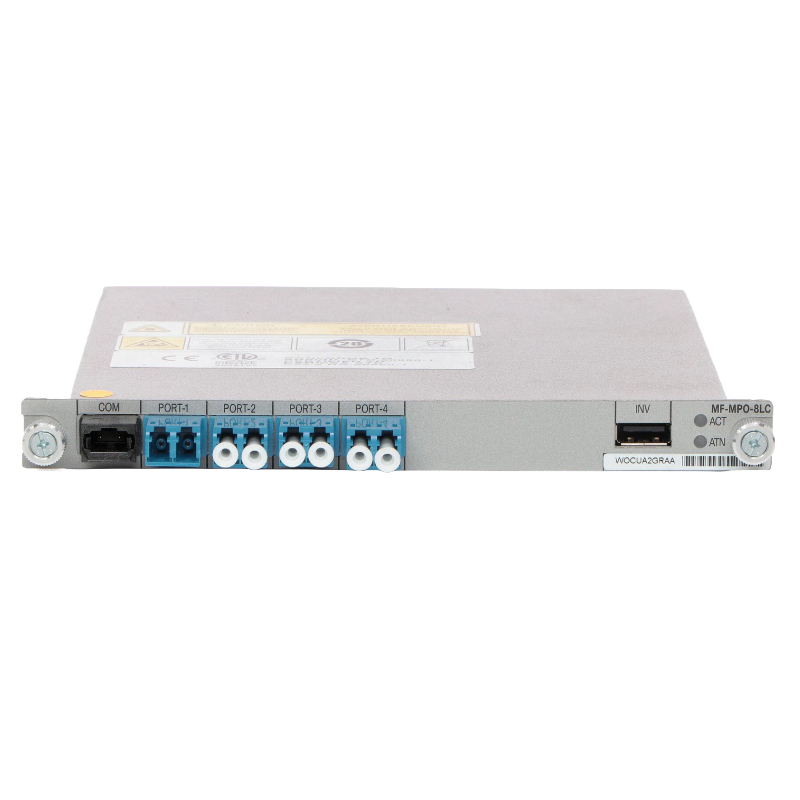


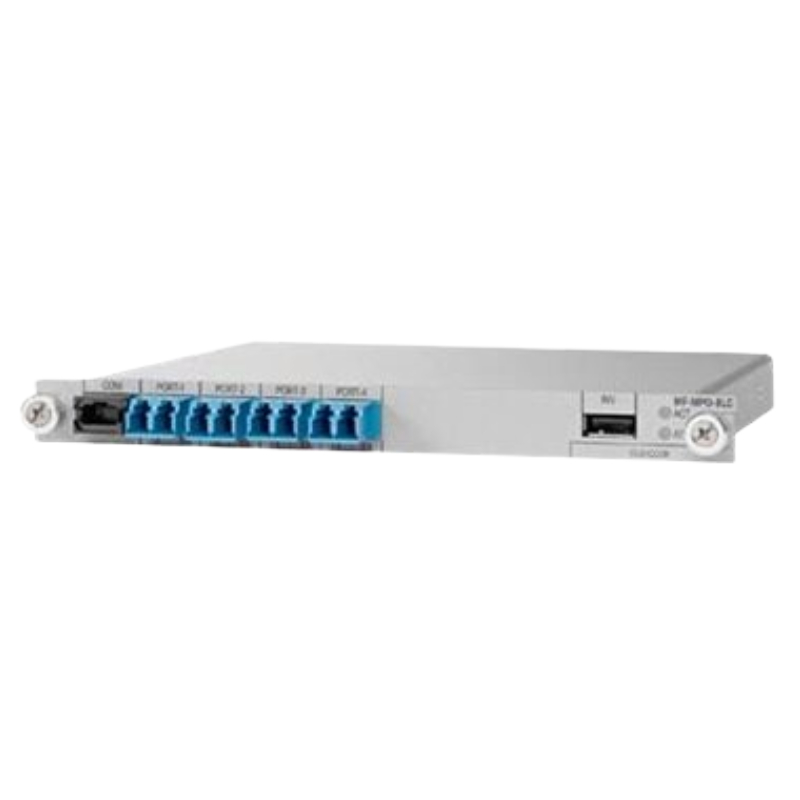
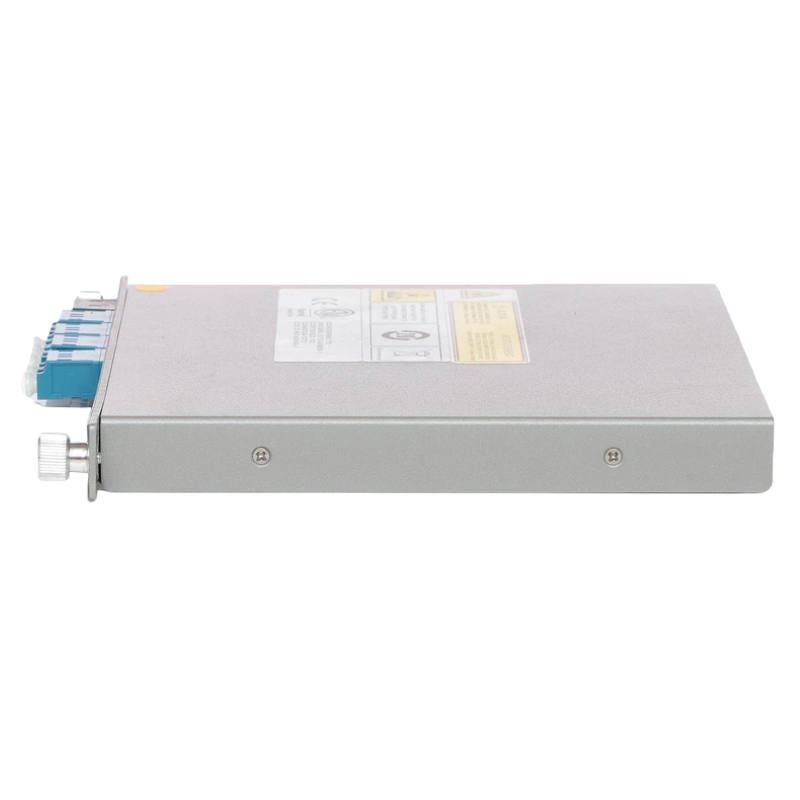
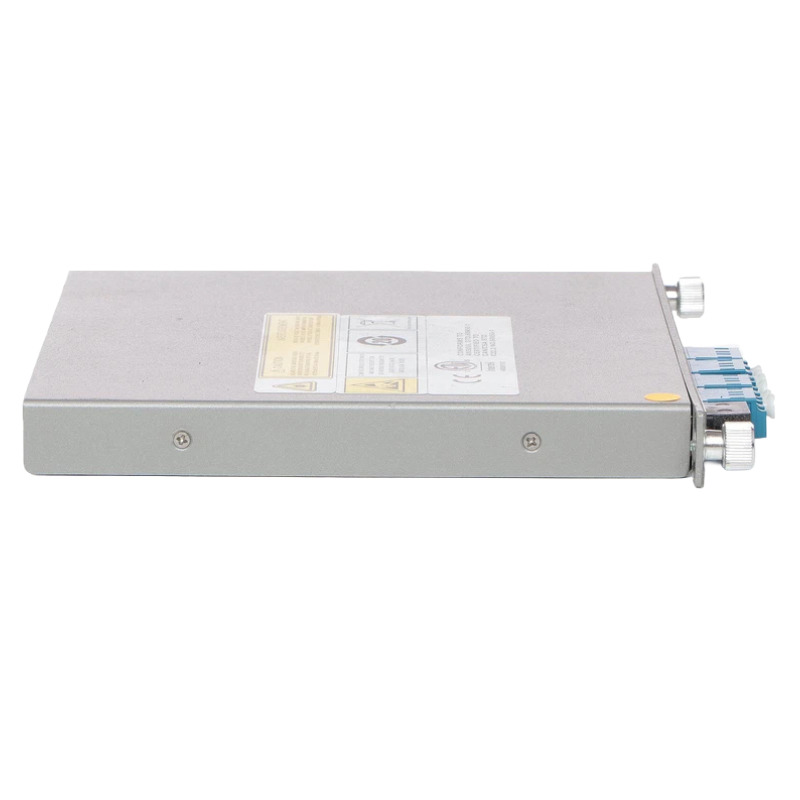
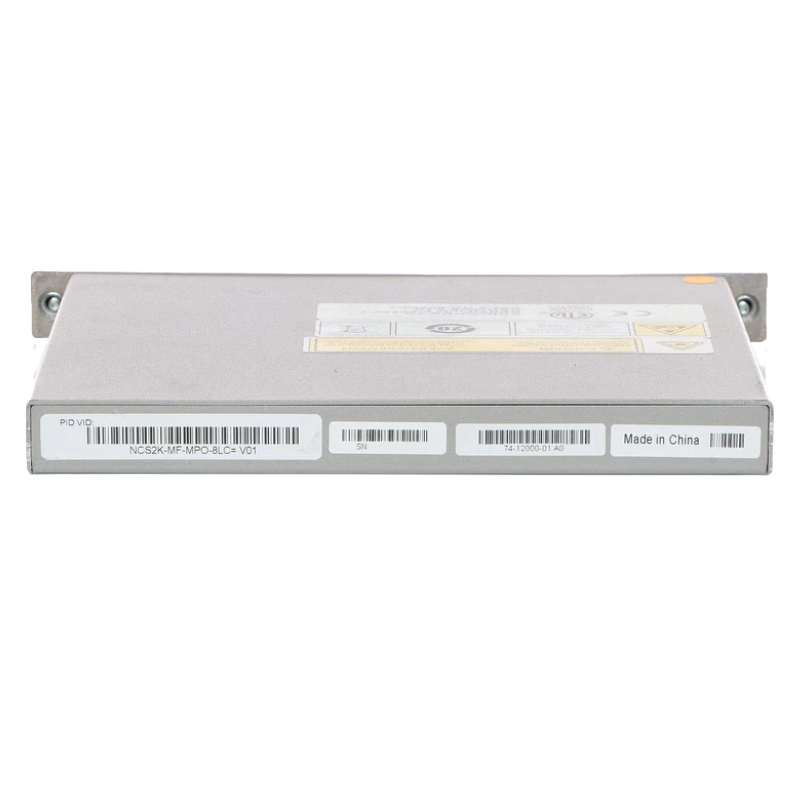
Cisco NCS2K-MF-MPO-8LC MPO to 8 Ports LC Fan-Out MF Unit Expansion Module. Excellent Refurbished with 1 year replacement warranty
The Cisco NCS2K-MF-MPO-8LC MPO to 8 Ports LC Fan-Out MF Unit Expansion Module is a high-performance optical fiber connectivity solution engineered for modern network infrastructures that require efficient fiber distribution, simplified cable management, and dependable signal transmission. Designed as a fan-out module, it converts a single MPO fiber connection into eight individual LC interfaces, allowing network administrators to maximize fiber utilization while maintaining organized cabling throughout the installation. This expansion module supports high-density optical deployments in enterprise, service provider, carrier-grade, and data center environments where reliable connectivity and scalability are essential.
The Cisco NCS2K-MF-MPO-8LC MPO to 8 Ports LC Fan-Out MF Unit Expansion Module is a highly specialized optical networking component designed to provide seamless connectivity between MPO connectors and individual LC ports. This fan-out solution is essential in environments where multiple optical fibers must be distributed efficiently from a single MPO interface into separate LC connections. By offering a structured and reliable method of fiber breakout, the module ensures that operators can achieve optimal performance, scalability, and flexibility in dense wavelength division multiplexing (DWDM) systems and other advanced optical infrastructures.
The Cisco NCS2K-MF-MPO-8LC module is engineered with a robust mechanical frame that ensures durability and long-term reliability. Its compact design allows efficient use of rack space, making it suitable for large-scale deployments where space optimization is critical. The module incorporates precision connectors that minimize insertion loss and maintain signal integrity across multiple wavelengths. The mechanical construction emphasizes stability, ensuring that the module can withstand demanding environmental conditions while delivering consistent performance.
The chassis integration is seamless, allowing operators to install the module without extensive reconfiguration. This modular approach reduces deployment time and simplifies maintenance, enabling operators to expand their networks quickly and efficiently. The mechanical design also incorporates advanced optical filters, ensuring minimal signal degradation and consistent transmission quality.
The Cisco NCS2K-MF-MPO-8LC MPO to 8 Ports LC Fan-Out MF Unit Expansion Module provides a wide range of functional capabilities that enhance the performance of optical networks. Its primary function is to enable efficient fiber breakout, allowing signals from a single MPO connector to be distributed across eight LC ports. This capability ensures that operators can achieve high-density connectivity while maintaining flexibility in network design.
The module supports colorless, directionless, and contentionless (CDC) architectures, which are essential for modern reconfigurable optical add-drop multiplexer (ROADM) systems. These features allow operators to add or drop wavelengths without being constrained by port or direction, significantly improving network agility and adaptability. The fan-out design also supports dynamic traffic engineering, enabling operators to optimize bandwidth utilization and ensure efficient resource allocation.
The Cisco NCS2K-MF-MPO-8LC module is widely used in various optical networking applications. In metropolitan networks, it enables efficient traffic distribution across multiple routes, ensuring that bandwidth is utilized effectively. In long-haul networks, the module provides redundancy and resilience, allowing service providers to maintain high availability even in the event of fiber cuts or equipment failures.
The module is also critical in data center interconnect (DCI) applications, where high-capacity and low-latency connections are required. By enabling efficient fiber breakout, the module ensures that data centers can communicate seamlessly, supporting cloud services, virtualization, and large-scale data processing. Its ability to support CDC architectures makes it ideal for environments where traffic patterns are dynamic and unpredictable, ensuring that operators can adapt to changing demands without compromising performance.
Deploying the Cisco NCS2K-MF-MPO-8LC MPO to 8 Ports LC Fan-Out MF Unit Expansion Module offers several advantages. Its ability to enable efficient fiber breakout ensures that networks are resilient and capable of handling high-density connectivity. This enhances service availability and reduces downtime. The module’s support for CDC architectures provides unparalleled flexibility, allowing operators to adapt to changing traffic patterns without being constrained by port or direction.
The eight-port design enables efficient interconnection between multiple nodes, optimizing bandwidth utilization. Its passive optical design reduces power consumption, making it a cost-effective solution for large-scale deployments. The module’s compatibility with the Cisco NCS 2000 series chassis ensures seamless integration, reducing deployment time and operational complexity. These advantages make the module an indispensable component in modern optical networks.
As data traffic continues to grow exponentially, the need for scalable and flexible optical networks becomes increasingly critical. The Cisco NCS2K-MF-MPO-8LC MPO to 8 Ports LC Fan-Out MF Unit Expansion Module provides a future-proof solution, enabling operators to expand their networks with ease. Its support for CDC architectures ensures that networks can adapt to changing traffic patterns, while its eight-port design provides the scalability required to handle increasing demands.
By deploying this module, operators can ensure that their networks are prepared to support emerging technologies such as 5G, cloud computing, and the Internet of Things (IoT). Its ability to provide redundancy and resilience ensures that networks can maintain high availability, even in the face of growing complexity and demand. This makes the module a critical component in future-proofing optical infrastructures.
The Cisco NCS2K-MF-MPO-8LC MPO to 8 Ports LC Fan-Out MF Unit Expansion Module is designed to enhance operational efficiency and reduce costs. Its passive optical design minimizes power consumption, reducing operational expenses. The module’s modular architecture reduces deployment time, enabling operators to expand their networks quickly and efficiently. Its compatibility with the Cisco NCS 2000 series chassis ensures seamless integration, reducing the need for extensive reconfiguration.
By optimizing bandwidth utilization and enabling efficient fiber breakout, the module ensures that resources are allocated efficiently. This reduces the need for additional infrastructure, resulting in significant cost savings. Its ability to provide redundancy and resilience also reduces downtime, ensuring that operators can maintain service availability without incurring additional costs. These operational efficiencies make the module a cost-effective solution for modern optical networks.


 Contact Us
 Information
 Catalog
 Solid State Drives (SSD)
 Network Switches
 Hard Disk Drives
 HBA & Controllers
 PC & Servers
 PC & Server Memory
 CPU & Processors
 Network Routers
 Power Supplies
 Tape Drives & Libraries
 Network Devices
 Computer & Network Cables